
Leaderboard
-

jayc
Moderators2Points6248Posts -

Crabby
Members1Points652Posts -

Rare Aqua
Members1Points35Posts -

sdlTBfanUK
Moderators1Points2346Posts
Popular Content
Showing content with the highest reputation on 01/30/21 in all areas
-
1 pointWith the wealth of knowledge from experienced keepers here in SKF, we should have a repository of Shrimp Diseases where people can come to diagnose and hopefully find a cure to their shrimp's ailment. Just like in the world of aquatic fish keeping where identification and diagnosis of diseases in fish and known cures are part and parcel of every aquatic forum, so should we have one for shrimp. Vorticella I'd like to start this database off with the not so uncommon Vorticella parasite which looks like White fungus or mould growth on the shell of the shrimp. Vorticella is actually a protozoa of 16 known species, not a fungus at all. Vorticella are aquatic organisms, most commonly found in freshwater habitats. They attach themselves to plant detritus, rocks, algae, or animals (particularly crustaceans). Vorticella are heterotrophic organsims. They prey on bacteria. Vorticella use their cilia to create a current of water (vortex) to direct food towards its mouth. Typically, Vorticella reproduce via binary fission. The new organism splits from the parent and swims until it can find something on which to anchor itself. If left untreated, vorticella have been known to cause the death of the shrimp it was attached to. Here are examples of what it looks like. Known cures: Salt bath with aquarium salts. Be careful not to use table salt with Iodine. Dosage: 1 teaspoon to 1 cup of clean tank water (not tap water). Duration: 30sec to 1 minute. You might need to repeat this a couple of times until the vorticella disappears, so keep the infected shrimp in a breeder or hospital tank (could be another cup of tank water). Possible causes: Poor water conditions. Increase water change frequency. Low doses of the salt bath have been know to be ineffective. Ick and fungus cure meds don't work on Vorticella. Seachem Paraguard could work as well at the full recommended dosage, since this is a parasitic med. But Seachem have admitted Paraguard isn't invertebrate safe. So only try paraguard as a last resort and drip it into the tank premixed from a bucket of tank water slowly . This treatment is in no way a replacement for good tank husbandry. So keep up with your water change routines, and removal debris and uneaten food. Please add if you know of more diseases, how you cured it, what you tried that worked and what didn't work. Cheers.
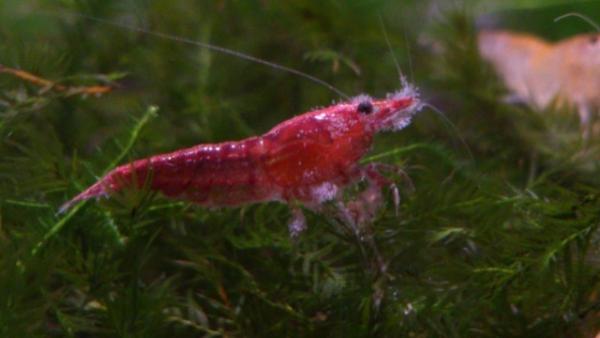
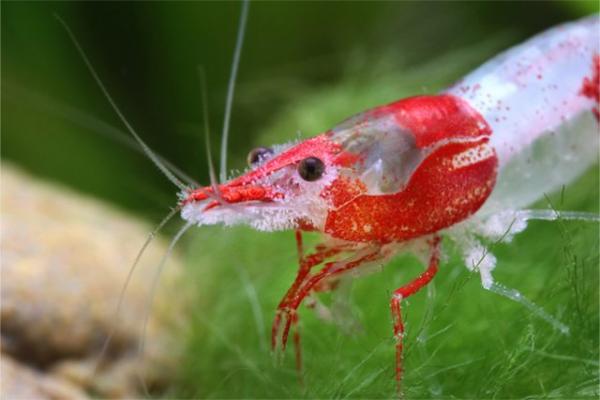
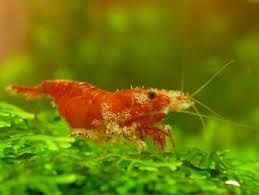 1 point
 -
 1 pointMy gosh, Simon your shrimp look amazing. In the beginning I also used the Zerowater product. Mostly to get the TDS meter that comes with. I've been using that same meter for 3 yrs. Sadly, my tanks are too big to keep using it for water changes and stuff. I use distilled drinking water now and it's working just fine. What substrate are you using? I used Tropica in one tank and Bright Well in the other. I had close to zero baby survival rate in the Tropica tank. The Bright Well tank was much better with the shrimp. Gonna try SL AQUA next.1 point
 -
1 point
-
This is brilliant Hervey, so much fantastic information here. Thank you for sharing with us!1 point
-
The in depth guide to keeping as well as breeding Amarinus lacustris by Hervey Doerr-Rolley Overview The aim of this article is to educate and warn people of the mistakes I made and how I was successful with breeding and keeping this species. I published an article about this species several years ago so thought it was time for an updated guide for anyone wanting to keep and breed this species. All my knowledge about this species has been developed over the 4 years I've kept this species as well as the many scientific articles I've studied, I first kept this species when I was 15 and now 19, my colony is still going strongly. Currently studying a bachelor of Marine science. Firstly I'd like to point out this species does not have a larval cycle, it is a far too common misconception people have. I believe this thought is derived from their much larger cousin the Amarinus laevis and the Thai micro crab, Limnopilos naiyanetri. Amarinus lacustris have fully formed offspring, meaning their offspring are essentially miniature adults once hatched from their egg. Some points of interest about this species, there are 8 instars before their pubertal moult. Females up to two moults before their pubertal moult can copulate and store spermatozoon, once she reaches the pubertal moult she can then impregnate herself without the need of copulation. The stored spermatozoon can then be used up to 15 separate brood cycles (15 clutches of eggs). Adult females can carry up to *35 eggs (anecdotal) and take around 25-30 days at 15 degrees Celsius to hatch as fully formed offspring. Water chemistry A. lacustris have a strong preference for hard water, I keep and breed mine in; pH: 8-8.2 Ammonia:0ppm Nitrate:0ppm Nitrite:0ppm KH:125ppm *25% water changes are done weekly* Breeding and Husbandry Key points for their care; Gravel substrate - fine pea gravel is best. Air pump sponge filters are essential as this provides cleaner water as well as a feeding ground for the offspring as well as adults. Mulm and moss are essential. A good rule of thumb from my experience is 500ml of aquarium space per baby-sub adult, and then 1L per adult crab, this allows for less aggression from male to male behavior. It is up to you but the less stocking density the better due to the aggression of breeding from males, keep in mind this aggression is only towards other males however females that are being copulated with may sustain serious injuries if too many males are kept together. The best ratios are two males to 8 females. When a female sheds she releases hormones into the water column just like shrimp, if any of you are familiar with breeding shrimp you can note this by the erratic and fast speeds the males zoom around the aquarium searching for the female, this is the same case with A. lacustris except the swimming, rather they crawl quickly around the aquarium in search for the female to copulate with. Once the male finds the female he will grasp the female tightly underside to underside in a 'hug' embrace, he will then fertilize the female. This embrace can last minutes or hours depending on the male. Eggs will soon become visible and as described above hatch within 25-30 days*. This species is a cold water crustacean so you must remember that, breeding will cease if the temperature goes above 22 Celsius. Keep them in a mature mulm filled aquarium with leaf litter (I use oak leaves) with plenty of hiding spots and moss, a 8pH and 15 Celsius and before you know it you will have berried females. Feeding Surprisingly my A. lacustris do not eat commercial foods, I feed mine cultured white worms which are perfect as they grow to a max size of 3cm and survive underwater for several days. I also add snails to my aquarium as the crabs feed on their feces. Funnily enough baby crabs will eat the white worms too once they are 2 instars old, so it is not uncommon to see a 2mm baby crab hanging on to a 2cm long white worm! I feed my crabs every 3 days and small amounts of the worms to reduce water quality issues. Common questions I am asked As I was the first person in Australia and the world to raise fully tank raised F2 offspring i have come across many commonly asked questions. "can I get these crabs in country x?" so far you can legally only get these crabs in their native geographical regions, however once these crabs are even more commonly bred their popularity over the Thai micro crab will be clearly abundant simply due to their ease of breeding which you know, therefore I wouldn't be surprised if these hit the international market once they're being large scale bred. "Do you have any for sale?" when I have crabs for sale I have a waiting list, If you want to ask questions or be on the waiting list email me: [email protected]. "can these go with fish x?" if the fish is 4cm or less they are fine generally, my opinion is keep the species only or with shrimp which leads to the next question "are the shrimp safe" and yes they are, however they are naturally scavengers so if you have dead or sick shrimp they will eat them, if your shrimp are healthy they will not predate on them. "how long do they live for?" they live for around 2-3 years+. "why are all my crabs dying" this question is addressed below; Major issue that needs to be addressed Since my first sales of A. lacustris I suddenly saw a spike of ads for them in Australia, unfortunately I could tell the individuals for sale were all wild caught and at best had only lived in an aquarium for a couple weeks of their life. This then would result in people encouraging the decimation and local extinction of the species in our waterways due to peoples greed of wanting to make a quick buck off this amazing native species. The crabs that I breed and sell are all aquarium raised individuals ONLY, I have put time, money and effort into the crabs I breed to ensure I do not impact the wild populations and offer aquarium suited specimens for people wanting to keep them. I have had a plethora of emails from people asking me why crabs they had sourced outside of my individuals had suddenly died off, this is simply due to the fact these crabs have not been aquarium raised and selectively bred for years like mine have. I find it horrendous that people think it is okay to collect many wild individuals to then sell knowing full well they will die within around a 3 month period just for their sake to make some 'fast' money. So please before you buy from a seller of these crabs ask as many questions as you can to find out how many generations old your crabs are and how long they've been bred for etc. If they cannot supply a high amount of detail or simply quote my articles about them do not buy from that seller. Do not support poachers for your aquarium! This applies with all species, worldwide. Thank you for reading my article, again if you have any questions feel free to email me as I'm always happy to help out ethical keepers and potential breeders of this species. Author and credits: Hervey Doerr-Rolley1 point
-
 So I did some more research on copepods, and there are care guides for shrimp which claim water quality/breeding/egg hatching are all diminished with too many in one tank. So I've resolved to feed hopefully most of them to a nano fish. I bought a micro sponge filter, oxydator, and dwarf hairgrass for ground cover. Plenty of hiding spaces under the moss, driftwood & stones. Anyone with rasboras able to confirm whether or not they eat copepods? I saw posts on this forum about hatchetfish and killifish specifically eating them, but I can't find the same for the rasboras. They are what I was planning to go with; 3 in my 2.5 gallon nanotank.1 point
 -
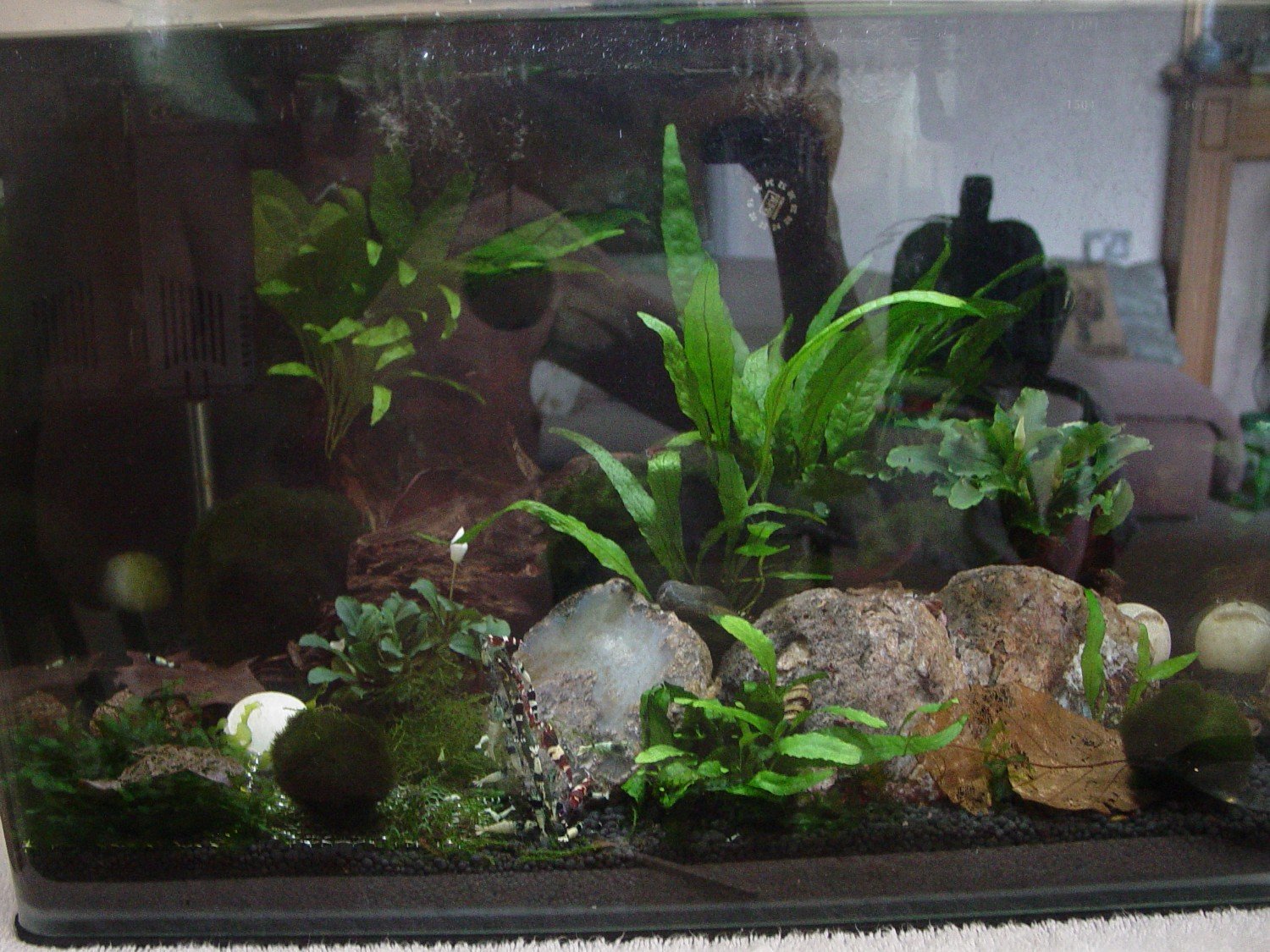
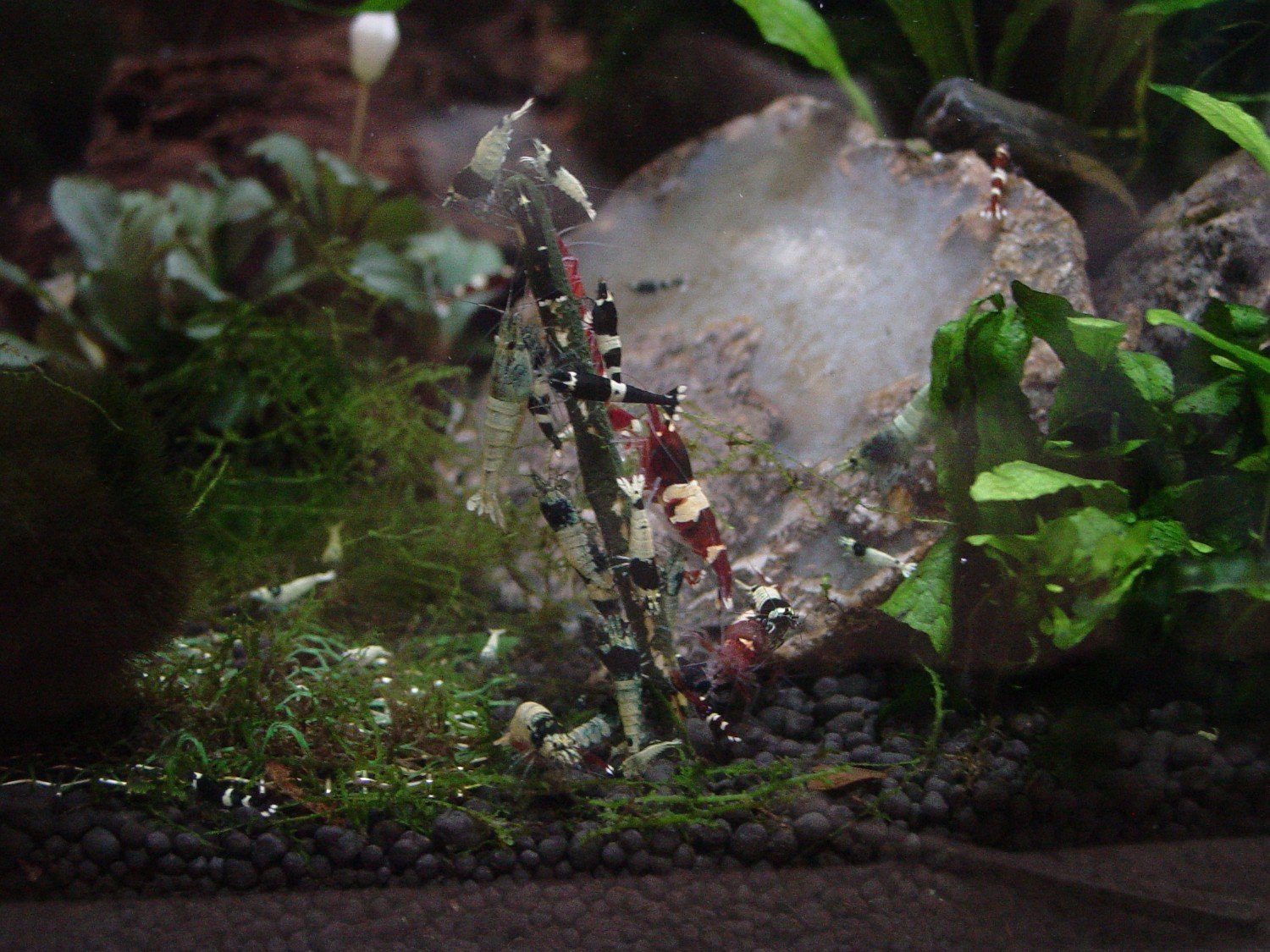
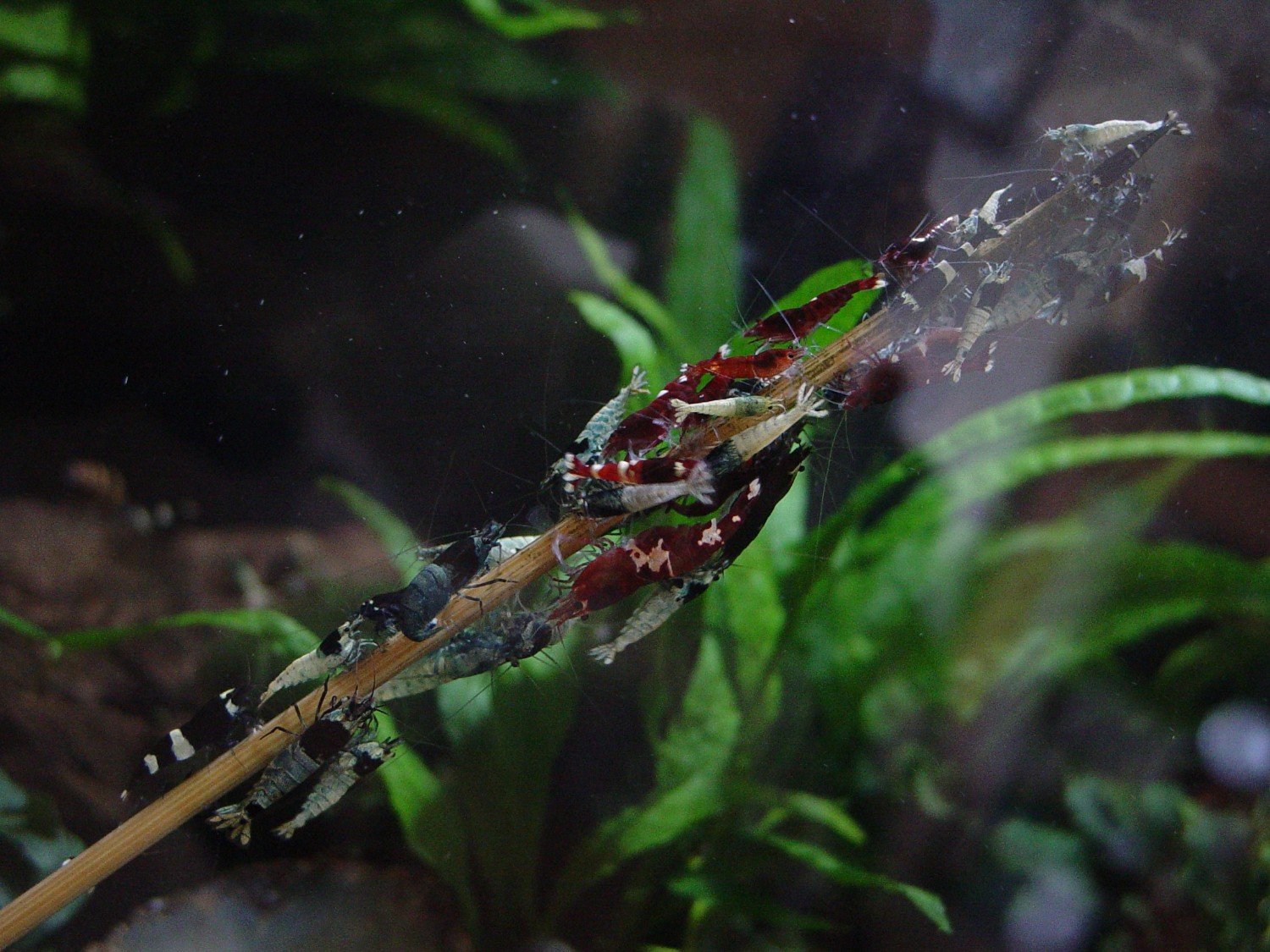
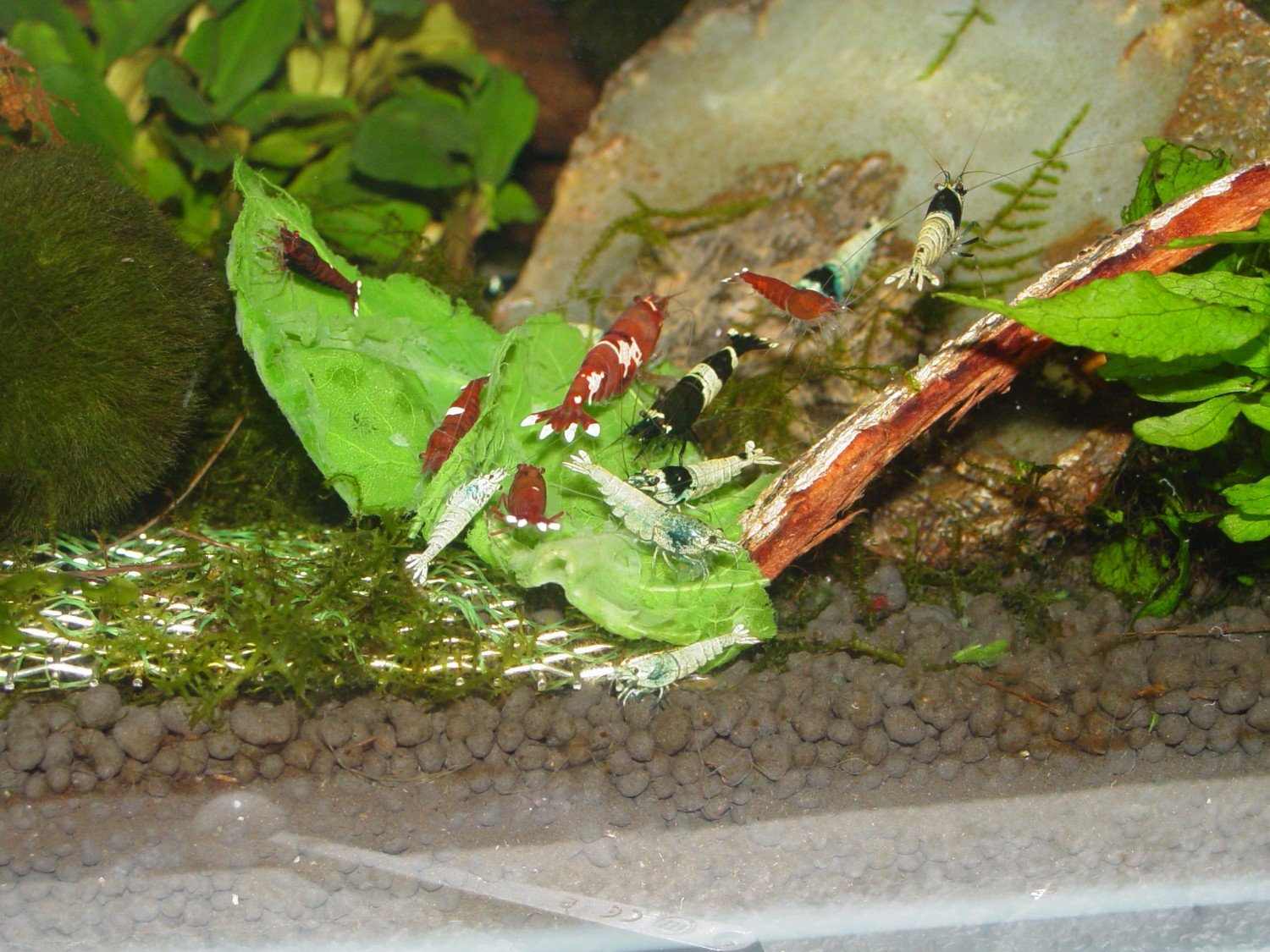
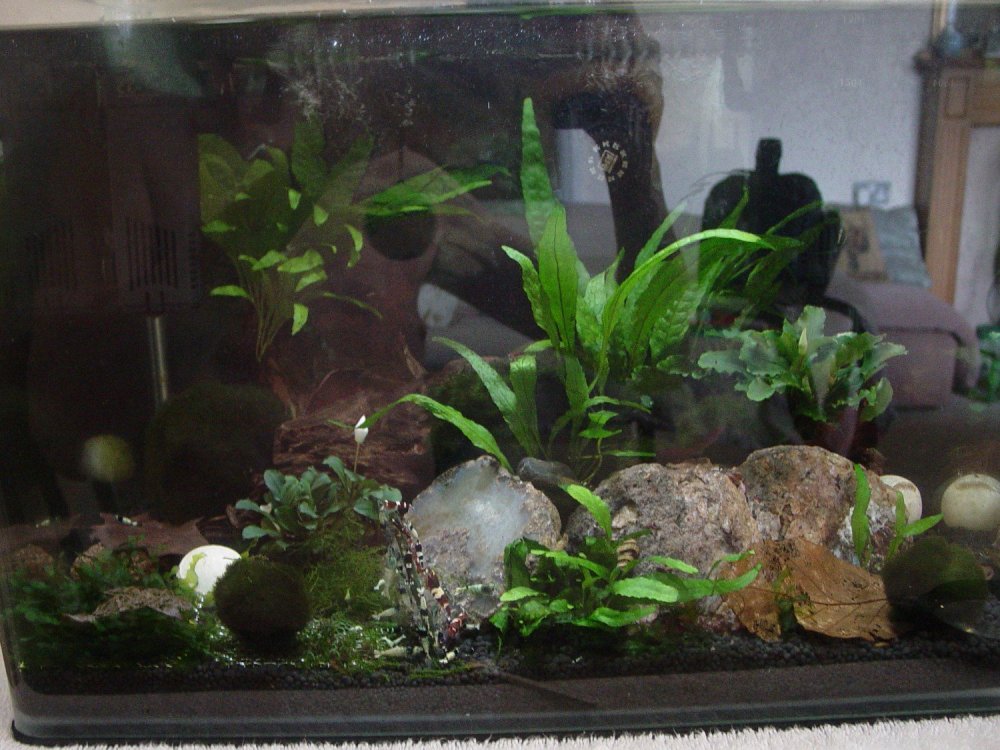
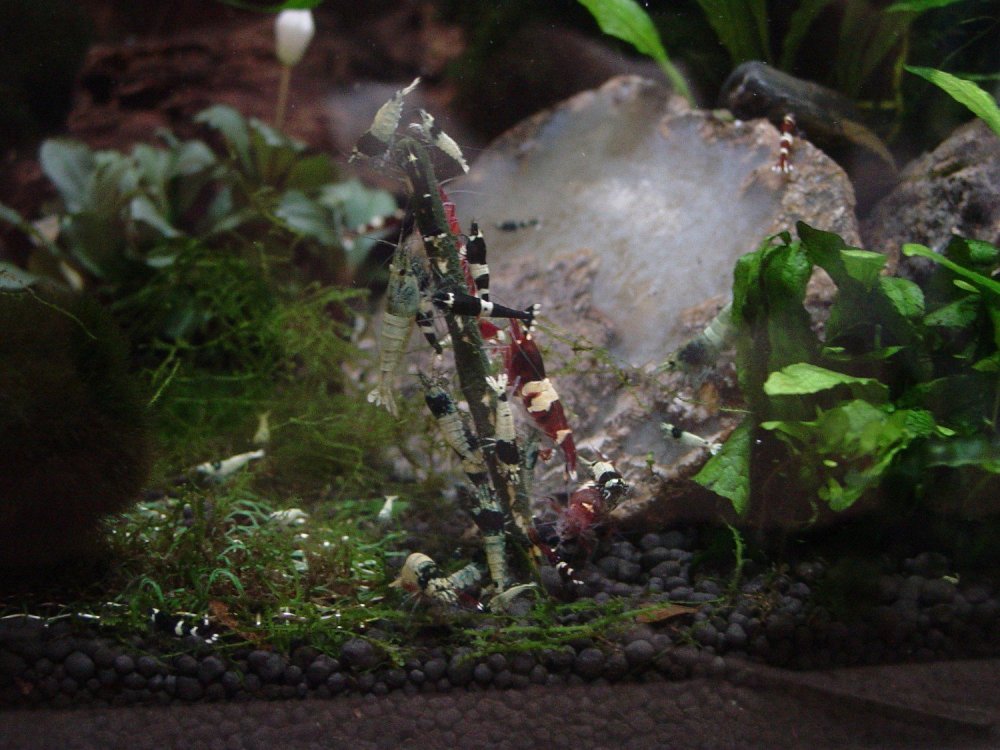
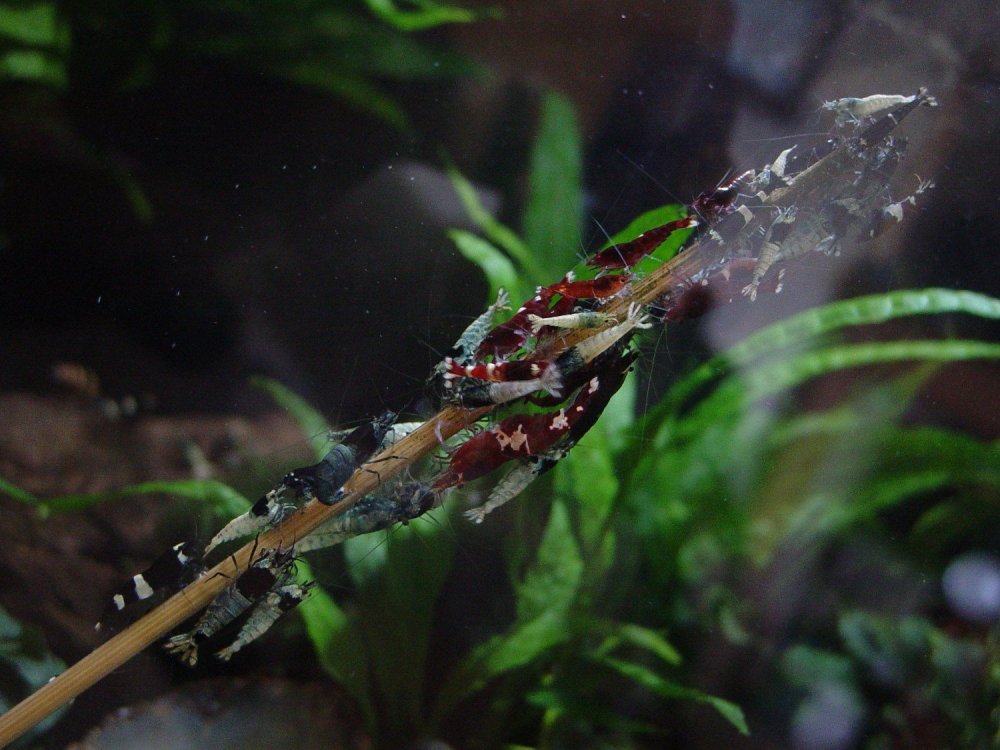
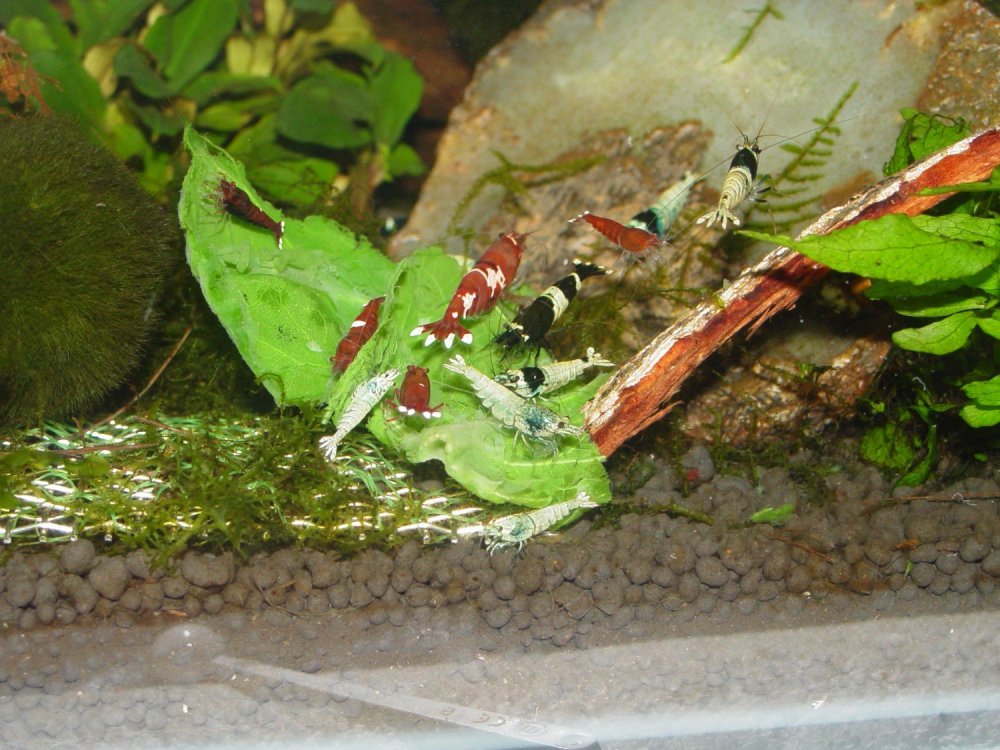
Anyone with very large, or many tanks will probably not be interested in this, aside from curiosity maybe, as I doubt this is cheaper than buying RO water. I am writing this purely in case it may help someone else who wants an easy alternative to RO water. I am housebound (have MS) and as such needed to find an easy alternative to RO water if I were to keep Taiwan bee shrimp successfully. I have red cherry shrimp in my 30L FISH tank (neon tetras, ember tetras, endler guppies) and they do well with virtually nil care (or attention since I mastered the TBs) other than dechlorinated tap water (which is needed for the fish anyway) so I won't go any further on that subject. About 3-4 years ago I set up a 15L shrimp tank and tried BRITA filtered tap water, but had no real success with that and so 2 years ago closed the tank down and stored it away assuming then that that would be it, no Taiwan Bee shrimp ever....... but after 2 years of no success, at that point it was a bit of a relief anyway to just be done and out of the way. You will see from the Tap water readings below that in theory the Parameters were pretty good but from my experiences I think you need to go back to NIL (so either RO or the zerowater) and remineralise as I guess that way you know what the tests are picking up is only what the shrimp need - this is only my belief I don't really know, but ie the tap water TDS (Ph, Gh, Kh etc) was ok but what was in the Tap water to make the TDS reading what it was, if that makes sense? I have read on many sites of people trying tap water , as I did, with good parameters but it not working so that is my theory anyway! And of course domestic water supply parameters can change and if there has been any repairs in the system that will change it etc so from my experience only way to go is take it back to NIL and remineralise....... A year ago (about a year after closing down the old shrimp tank) I came across a water filter jug from zerowater (www.zerowater.co.uk), an american product which I believe is available in Australia on Amazon, but may also be in shops out there for all I know). I thought, why not give that ago.... so I set up the old tank Oct 2017 (15L with the back part partitioned of for filter etc so probably 12L of useable aquarium) put some soil in and a few bits of Java fern and moss from the fish tank and ran it with the zerowater for a couple of months. I didn't ever get any Ammonia, Nitrite, or Nitrate reading but did see a bacteria bloom for a few days. I treated the zerowater as you would RO water, so added shrimp king mineral fluid gh+. There is a lot of info on the website about what it removes etc. Tap water PH7, Gh 5-6, Kh 3-4, TDS 174 Zerowater Ph6, Gh 0-1, kh 0-1, TDS 000 I added 6 blue bolts about 6-8 weeks later, then some red ruby and red wine a few weeks later and 3 blue steel in March 2018. All went quite well, though there were a few deaths but that may have been me as I am NO expert, I do drip acclimatise though. April 2018 Eggs started appearing (difficult to see on TB) and by the end of that month shrimplets, woohoo! Time for the new tank, dennerle 35L scapers which I got in May 2018 which I ran for a month with the zerowater, 2 cheap sponge only filters, heater, light, rock, wood, java fern, soil etc, and one sacrificial fish (don't worry he went in the fish tank afterwards as he survived). Then I transferred shrimps a dozen every other day(ish) etc. At this point I was obviously shutting down the small tank and although I had only bought a dozen shrimps originally, when I started removing stuff it turned out I had about 90 baby/juvenile shrimp in the tank, most were probably only days old (probably wasn't wise to transfer them at that stage really but I had too many anyway and wanted to get the old tank out of the way, as it was on the dining table). I THINK WE CAN SAFELY SAY THAT I HAVE CRACKED IT NOW, WITH THE HELP OF THE ZEROWATER FILTER JUG. So closed down the 15L end of June 2018. Daily now I see about 50 shrimps of half to full size in the new setup but haven't yet had any success with babies (though most of the shrimps may not yet be mature enough as I believe they need to be 6 months+), and with the hot spell (unusual for here when tank got to 30 degrees) and with me fine tuning the parameters, done now thankfully PH5.5-6, Gh 4.5, Kh 0-1, TDS 160 (something incidently I probably wouldn't have had to do if I had added the Gh+ from day 1 with the new tank). I will say that I NEVER had any Ammonia, Nitrate or Nitrite readings in the new tank either, but as with the small starter tank there were a couple of days of bacteria bloom. I expect babies will happen now I have stopped messing with the parameters, but there is always option B, set up the old small tank and use as a breeding tank, or C, buy more shrimps???? With the shock of how many babies there were hiding in the small tank, there could well be loads of babies in the new tank that are hiding anyway. I will give that a rethink if there haven't been any babies by xmas, though I have enough anyway at present. The only other things that may now affect babies (ie different than the smaller tank) is, the jets from the filters are a bit strong and circulate the water in the tank more, and I have rock (actually Geodes) in the tank??? I change 2L of water each week, mainly so I can squeeze the 2 sponges from the 2 filters and just clean the glass etc. I also use Fulvic acid, beta glucan and am just starting on bacter ae (hoping that may help babies). As with RO water, top up is pure zerowater and water change is zerowater with GH+ added. Each zerowater filter does about 100L of my water (about 6-8 months worth) but there is info on the website above that shows how many it will do on different TDS basic water etc. The filters aren't cheap at £20 each (I have bought 4 for £50 so much more reasonable, and they don't have a shelf life anyway. They are of course available readily in USA in places like Walmart as it is an American product. If anyone knows where you can get them in other countries it may be a good idea to add it to this string/topic etc to help others, as mentioned before I THINK you can get them on amazon.com.au for Australia. If anyone wants to ask any questions I will do my best to answer, but I am NO EXPERT by any measure. . Update 27 Sep 2018 I am daily seeing babies, in small numbers (all colour varieties), but from the top picture you can see there are a vast number of hiding places anyway, so there must be others. I have also seen a couple of shrimps heavy with eggs, grey, so they must be near birth............... I will keep this updated if there is anything worth reporting, or there seems to be any problems with using the zerowater filter jug as a substitute for RO water but so far (1 year now) all has been very successful. Update 7 Oct 2018 Probably be the last update - unless all goes wrong etc I am seeing lots of babies of varying sizes and patterns now (20 today), so much so that I am going to have to start culling to make room for just the ones I really want to keep, and enough room/food etc for babies! I will try taking one big one out each week when I do maintenance and see how that goes! Any questions just ask! BIG UPDATE 24 MARCH 2020 MORRISONS SUPERMARKETS HAVE STARTED SELLING ZEROWATER HERE IN THE UK! ALSO OCADO SELL ZEROWATER IN THE UK!
 1 point