

Leaderboard
-

Stanbiller63
New Member2Points3Posts -

sdlTBfanUK
Moderators2Points2346Posts -
NoGi
HOF Member1Points5858Posts -

Crabby
Members1Points652Posts
Popular Content
Showing content with the highest reputation on 09/30/20 in all areas
-
2 pointsHey all, New member here.. I recently shipped my fishes over states. SoI thought to share the method I used to ship this is very different from what I used to advise people. Hope you like it. 1. Obtain a sturdy box. I used to mess around with styrofoam lined boxes, but they're hard to get a hold of, not consistent in size when you do get them, and frankly annoying to store (large, unfoldable). Now my method is to get USPS priority mail shipping boxes. I go to the post office and ask politely and they give me a box for free https://store.usps.c...SS_PriorityMail I use the square-ish shaped box, not the rectangle. 2. Get some bags. I've stopped using breathable bags. They're fine, there's nothing wrong with them. It's just you can totally without meaning to overpack them with water. Not overpack, like, it's leaking. I mean overpack like, "It cost $15 to ship that package? Whaaa? Why? Oh, it's two pounds." It's just too easy to do. And also, those 2 mL thick shipping bags sold on aquabid.com in the shipping supplies section are like less than $4 for 50. You just can't beat that price, even using two bags like I do to eliminate the problem of edges (I always used to worry, with the breathable bags, that a fish would get stuck in a corner and get squished 3. Obtain heat packs if it is winter. Yes, I use heat packs for native fish. No, you don't always have to. No, you shouldn't auto-use a heat pack; if they get too hot they will cook and die. But heat packs do mean that I can ship all year round. (Not the week before Christmas! 2-3 day suddenly becomes a week and a half!) Yes, I have killed shipments of Elassoma gilberti with an unnecessary heat pack. But if the temperature range is 20-50 F, sure, stick a heat pack in there, it'll help them out. A lot of our native fish (especially the ones I breed) are from places like Florida. They don't like 40 degrees F. 4. Do not feed the fish before you ship. One of the very first google results for 'how to ship fish' tells you to put food into the bag so that they'll have something to munch on while they're in transit. *headdesk* That is the very worst possible advice you could give someone. In your aquarium, the ammonia that your fish excretes is converted to nitrite and then nitrate by beneficial bacteria or eaten by plants as ammonium. There are neither beneficial bacteria nor growing plants in your shipping bag, so any ammonia produced will simply stay as ammonia. And with such a small water volume, the tiny amount of ammonia produced builds up in concentration very quickly. The fish will be fine if it doesn't eat for a week. There is no fish I can think of that wouldn't survive that. Certain fish I don't starve. Small fish, like Elassoma and heterandria formosa (actually, the majority of fish I have at the moment), I don't bother to starve. 5. Tightly secure the top of the bag to be shipped. I used to say, "Tie it and put a rubber band on it" but now that I double bag using the 2 mL bags, I think the rubber band is overkill. *shrugs* Eh. 6. Clearly label the package. I do have something to say about this. Hand write your address, and don't write fragile on it. Clearly hand-writing your label is the best way to get it through shipping un-punted like a football. You know some people do that to packages marked fragile, you just know it. I read an article about people shipping force-meters through the mail to test whether the ones marked fragile were treated nicer. They were treated worse. Article: http://www.popularme...ckages?click=pp 7. Use enough tape. I use that clear packing tape they sell at Walmart and places. It's my go-to tape for everything, actually. Scotch tape is too tiny. 8. Secure the fish inside the box so they can't roll around. Easy to do when you're packing it with cellulose fiber. 9. Buy a tracking number and insurance. That two dollars is totally worth it. One time this person I sent fish to claimed that they never got them. I was like, "What do you mean you never got them? I shipped them to you." I ended up giving the person a full refund because I couldn't prove I had shipped the fish to them. So buy a tracking number, because that way you can't possibly get scammed I have used the insurance and had a very good experience. Citizenshipper generally took 7 days to deliver something I paid 2-3 day shipping on. Most important! 10. Obey the law. I was pretty annoying to my local wildlife people for a while there asking them lots of very, very specific questions about what it was legal to do. I also make sure when shipping plants that they're not a noxious species or banned in the state I'm shipping to. If you can't do things legally, don't do them at all. But it turns out it's easy to sell fish and plants legally, at least for me here in North Carolina. Hope you like2 points
-
1 pointI think he's right in saying 20-50. As the fish are usually unhappy with 40 degrees F, if the temperature is 50 and below, it is advisable to use a heatpack. Farenheight, by the way, not celsius. So he's pretty much saying if they're going to be too cold, use a heatpack. I totally over-explained that, but whatever ?1 point
-
1 pointThanks for taking the time to do this, it is very thorough and must have taken some time to do! I found it quite interesting even though it is something I wouldn't be doing. I have one query regarding 3. should that temperture range be 20-30 rather than 20-50 as you say they don't like 40??? Would you mind filling in the country on your profile so people can tell at a glance that you are USA based. It is clear by the end of the article but I wasn't sure whether you were Australia or USA as you both have STATES and use $ ! Simon1 point
-
1 pointI feel your frustration and it sounds similar to when I started with caridina shrimps when I wasn't using the right water and other bits etc. You can't really do much more at this point unless you are prepared to put 100% into it and get ready to try again properly from the start. This would mean buying all the needed test kits you are missing, PH, KH and I would buy a zerowater jug (about 200TRY, GBP20 https://www.ubuy.com.tr/en/brand/zerowater?q=ZeroWater&brand=ZeroWater (link for reference)), this actually won't cost a lot and will give you a better starting point. There is also the nitrate/nitrite and ammonia tests? If you are happy to get that stuff then I would mentally prepare for starting again but carry on as is with the 3 shrimp you have left whilst you get the stuff ready. When you have the needed stuff above it will be decision time based on whether you have any shrimps left? If all the shrimps have died then change out all the water for zerowater mixed to tds 140(approx) with shrimp specific GH+. You should now be all set as the GH+ will make the ideal water parameters from RO equivalent water. If, when you get the stuff ready you have a shrimp or 2 left then take them out in a small bowl and when you have redone the water in the tank you can acclimate those shrimps to the new water but be warned they will probably be so weak by then they are unlikely to survive ANOTHER change. If you want too you could slowly change the water just using the zerowater from when you get it, but that will take a long time to adjust the water and the existing shrimp would probably still die anyway, so I would go the change all the water and start afresh route and you could probably get new shrimps in 2-4 weeks! My zerowater makes water with a PH of about 5.0 - 5.5 and with the low PH ammonia is replaced by ammonium which isn't as toxic as ammonia! What GH+ are you using, is it a shrimp specific one? Always slowly add new water to the aquarium when shrimps are in the aquarium (not necessary when first filling the tank), and drip acclimate shrimps to the aquarium water slowly using a dripper. There is no 100% gaurantee even doing it this proper way will succeed but it should and if that doesn't work it makes more sense to then think of GIVING UP, but at least you have then given it a decent/proper try. It isn't going to cost that much as the test kits will last a long time and the zerowater filter should also though doing the initial change will use more than in normal weekly maintenance etc. I understand how deflating it can be and the thinking of quitting, even I have given up with one tank for caridina shrimp and used it for nano fish instead................ Simon PS, if you are unsure on anything please ask, I understand we may have a language difficulty so just ask for clarification!1 point
-
1 point
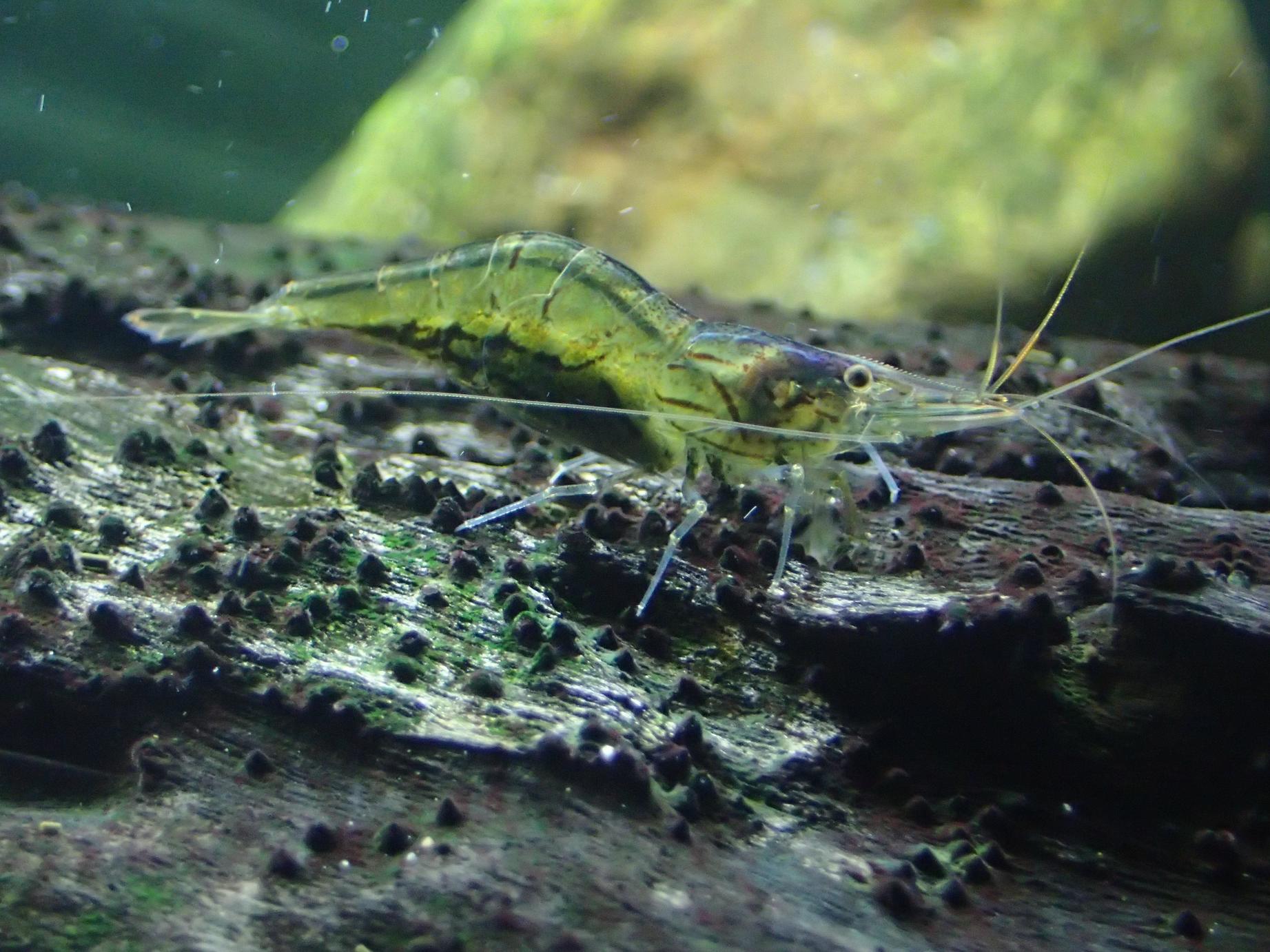 Authors: Bob Kroll, Dr. Benjamin Mos All the following information comes from personal observations, captive keeping and breeding. Longirostris are wide spread and the most abundant Caridina species in FNQ, found from at least south of Tully to Cooktown, and no doubt beyond. They are confined to coastal streams. I have found them up to 300m altitude in some creeks. To get to this height they have had to climb 50m high water falls. Habitat and Water Conditions Longirostris occur in both large rivers and small streams. In large systems, they require shelter from predators (particularly fish). Dense Vallisneria beds are their preferred habitat and they are in large numbers in these areas. In small streams at higher elevations, there is no plant cover and they tend to be in places where there is low numbers on fish predators. For this reason they are the dominant species in these areas. They can also be found in small and large leaf litter beds. From personal observations in these locations, they can occur in high densities (50 per 25cm2). The rocks and creek bed are clean of detritus and algae when they are at these densities, probably caused by the shrimp’s constant feeding actions. Longirostris are fairly forgiving so long as the water is clean and free from ammonia, nitrite and nitrate, and high amounts of phosphates (this applies to all aquatic animals to some degree). In the wild, they live in water that is always clear with a minimum visibility of 1 metre up to 5 metres. Hardness ranges from 0 KH and GH to 8 and 10 degrees of dH depending upon season and the creek where they occur. They have been kept at higher KH and GH and prospered under these conditions. pH is the least important parameter as the pH in their habitat changes from wet to dry season; lower in the dry season because of the leaf litter, higher in the wet because of increased water flow. Ranges from pH 6.6 to 7.4 are appropriate in aquariums. Temperature ranges from 16°C at altitude to 28°C lower down. Temperatures are highly variable year round. In some streams that run from the highest mountains, it is warmer in winter because of lower flow at this time. Similarly, water can be 24°C during winter because of ground water inflow into the creeks. After summer rain, temperatures can be 16-18°C. These tests have been conducted for two years in Harvey creek. Harvey creek flows from the second highest mountain in Queensland. The mountain is covered in rainforest. The following ratings denote ease of aquarium care from, 1 = easy to 10 = hard Availability 5 Keeping 1 Longevity 1 Breeding 6 Compatibility 1 Water parameters 2 Food Longirostris is a good algae eater and will eat anything it is offered. Vegetables are eaten readily, as are raw fish and prawn. All commercial fish and shrimp foods are taken with ease. Breeding Longirostris can be sexed by size differences. All big specimens are female (up to 4cm) whilst males are under 2.5cm. I don't know yet if the males remain small or change sex, that experiment is to come. A mature female can carry hundreds of eggs. The eggs are 0.4mm, the same sized egg as C. typus, but Longirostris are easier to breed than Typus. Aquarium breeding is achievable if they are kept on their own. As the shrimplets are small and free-swimming, they are open to attack from everything. The first food offered to shrimplets should be hard-boiled egg yolk, liquid fry food or spirulina in small amounts so as not to pollute the tank. The egg yolk can be offered through a piece of stocking, or in a small amount of water mashed up with a bar-mix/blender. I also use the bar-mix on the spirulina in a small amount of water. Both the egg yolk and spirulina mixes must be stored in the fridge to keep them fresh, and shaken before use. I use an eye dropper to feed because you have greater control over how much you feed. I also only keep each one for three days before making a new batch. As the shrimplets are so small, you can only raise a small number at a time. However this will lead to easier shrimp to breed as each generation may result in bigger shrimplets (essentially a selective breeding program where the shrimp cull themselves). Most hard to breed aquatic species get easier to breed through captive breeding, because the fry best suited to captivity survive and pass on these genes to the next generation. General Notes The term 'Glass shrimp' will be given to these as well as most common Australian shrimp. I feel it is too broad a term to give our native shrimp. When caught, most species will drop their colour making it difficult to get an accurate ID. However, some species can be quite spectacular when they are kept in the right conditions. For general ID, Longirostris has an easily distinguishable red vertical stripped pattern. For scientific purposes, the rostrum or nose of nearly all shrimp is how they are primarily identified, although there are many other ID protocols as well. The Longirostris has a long rostrum, not to be confused with the red nose (Gracilyrostris) which has a longer rostrum. One would think that Longirostris would have the biggest rostrum, but this is not so. Gracilyrostris has a more graceful nose but a bigger nose. Both these species are similar to two species collected near Darwin, Northern Territory, but are genetically different and breed slightly differently.1 point
 -
 0 pointsdeadts was start like no reason, I wasn't change anything, just weekly same water change (%10 - 15), I'm using Ro water, not with minerals, deaths start before water type changes , I did chage water type 1 week ago, ,tds was 160 ppm when deaths start, and I think maybe lower tds is will be better for shrimp and I get lower tds to 140 now, I know it's a lot but shrimps already dying and I have nothing left to do, I have left 3 shrimps now, 3 shrinps look good for now, no any deaths for 1 days. I think I should get KH test. if this 3 shrimps die too I will give up I think.. I use Ista shrimp soil 5.50 points