
Leaderboard
-

Jordan
Members3Points6Posts -

sdlTBfanUK
Moderators2Points2346Posts -

jayc
Moderators2Points6248Posts -

Crabby
Members1Points652Posts
Popular Content
Showing content with the highest reputation on 08/26/20 in all areas
-
1 pointHi Shrimp lovers, I tried to google this but could not find a result, I'm sorry if this is over asked or simple. As shrimp (for conversion sake let's say cherry) have varying degrees of PH tolerance, if you raised the female in a PH for 6.5 for example but before releasing her shrimplets you (safely and properly) acclimate her to a 7.5 or even 8, would the shrimplets be acclimated or would this shock them too much? I've also been told PH preference is generational so even a shrimp that is 4rd generation from a 6.5 tank great grandparent, it would not like a PH 8 even if it's direct parent lived it's whole life in the 8? (This second question seemed dubious to me but I thought I'd ask anyways) I hope this makes sense. TYIA.1 point
-
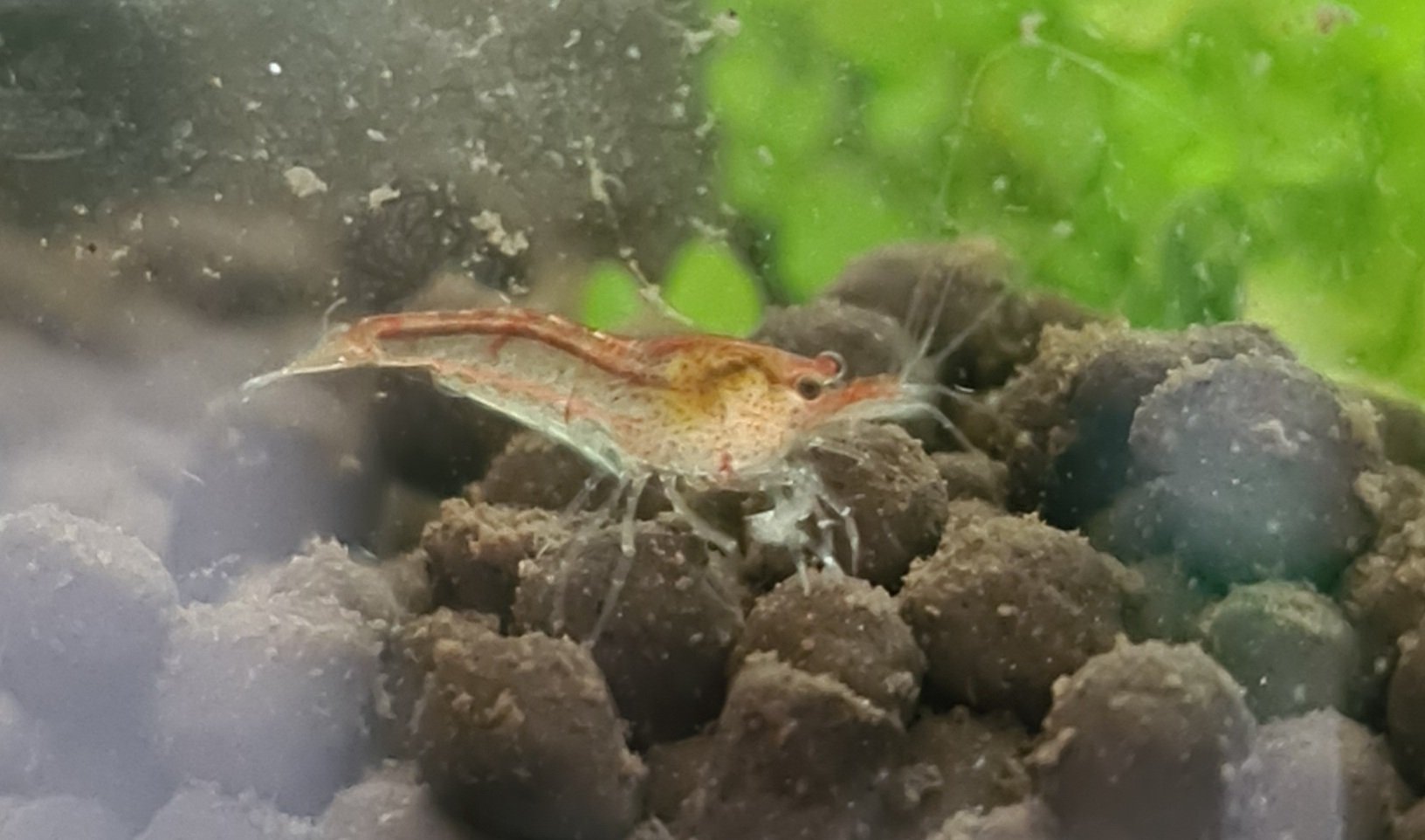
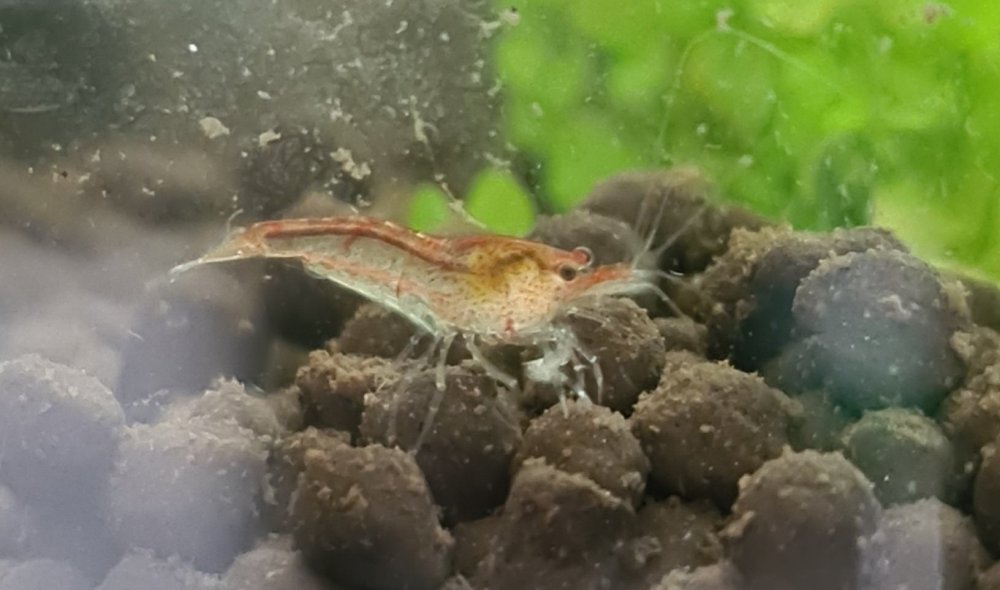
1 pointI've got a couple more pics. Much better than the above ones. I will pull out a magnifying glass and get some shots through that. To me, though, it doesn't look like scutariella (just realised I spelt it all wrong before), in that it seems to be a straight line along the rostrum, and it is orange, not white (as in the photos I see of scutariella when I google it, the disease looks white). It doesn't seem to protrude from the rostrum. Definitely not going to do anything until we identify what it actually is. Hoping it is just a colour morph that has come out as they've aged.1 point
-
1 pointEach species of shrimp do well in a specific range. In the cherry shrimp example, you wouldn't want to keep them in 6.5 pH, even if they acclimated to that low pH. Alternatively, you wouldn't want to keep them at 8 pH, the other extreme. They may acclimate to it and survive, but they wont thrive and will be more susceptible to diseases. What I'm trying to say is, if you are given a range where the shrimp will tolerate, try to pick the middle point and stick with it. pH stability is as important as setting the right pH. Shrimplets born in a tank of pH 8 will be acclimated to pH 8. BUT they will do better in pH 7.2. You didn't find many search results because no one recommends keeping cherry shrimp at pH 8, which is the upper most extreme of their tolerance. Don't get me wrong, it doesn't mean they wont survive in pH 8, I'm sure some one will tell me that their shrimp are doing fine in pH 8, BUT to them I say, they will do better in pH 7.2 (the middle of their tolerable range). pH tolerance is just like temperature tolerance. Cherry shrimp might tolerate up to 28degC. But no one tries to acclimate cherries to 28degC. Because long term exposure to such extreme parameters will cause disease or worse, death to the shrimp. - Long term exposure to high pH means that your KH is also high. - High KH water means it's hard water. - And hard water means shrimps have a harder time moulting and their eggs are harder leading to a more difficult time in fertilising and hatching. <-- so while you can change the pH of your tank, you can't change this !1 point
-
1 pointYou'll need to zoom way in on the head. But from initial estimation, it's Scut.1 point
-
1 pointMy (very limited) understanding is that PH varies anyway, day and night to a certain extent and I 'believe' that shrimps can be fine outside the normal range if the variance is slow. For instance I had hundreds of Taiwan bee shrimps in a tank that started at the ideal PH of 5.5 for nearly a year, I had (assumption) rock in the tank and over the period of over a year or two the PH went up (assuming the PH buffering of the substrate was exhausted) to over 8 without any shrimp becoming obviously ill or dying. All the other parameters didn't change much in the whole tank time. I removed the rock and was hoping to reduce the PH back to the 'BEST' range (would have taken a long time to be done safely), but before I finished that the heater stuck on and wiped out the tank occupants (gutted), but the PH never seemed to bother the shrimps even at way over their 'acceptable' range and I assume that was because it happened so slowly over a long period so they adapted? As my tank was over-run anyway, I don't actually know though whether they were still breeding normally at the high PH? The example you mention in the post I would think cherry shrimp would be fine anyway in a range of 6.5 to 8 and as long as they are acclimated slowly enough anywhere in that range would be ok. I BELIEVE that at PH 6.5 they don't breed as much as they do at higher PH? With my experience above, it shows that even sensitive shrimp (taiwan bee etc) may be ok outside the 'acceptable' range but it has to be done so gradually/slowly. If I bought some new Taiwan bee and had put them in PH8 they would almost certainly have died even with a days acclimating! I'm not surprised you can't find anything about it as I doubt anyone has tried to find out, and to a certain extent why would they (?) as it doesn't really seem to mean anything without knowing why you are asking or trying to accomplish by knowing the answer? Simon1 point
-
Hi Simon, Thanks for your reply. I really appreciate everyone's responses. I will refrain from naming the business until the issue is resolved, as I did email them with photos and we are waiting a week to determine how to proceed. Just in case this was a mistake and they sent me the wrong shrimp. Their response to my email was: "Give them a few days or a week you will see change. If they still like that in a week email me . They def get sold bloody as adults but should look Far better than that as juvie too1 point
-
 1 pointAlright so I got 12 new red cherry shrimp (my lfs had a buy 12 get 20% off) and 2 Australian Amano's which I'm excited about. Now I just tested the water again just to make sure all was good and again everything but the PH seems fine: Ph - 8.2 (this is the highest I've seen it. Measured at 6pm) GH - 7 KH - 3 TDS - 161 So I'm hoping whatever it was that was killing the shrimp wasn't the PH and now that I've fixed my TDS and using RO water it will be ok. I know was told not to worry too much about the PH considering now its gone beyond the maximum of 8 for cherries, should I be concerned? Either way I am more bugged by not knowing what is causing the Ph increases haha. Interestingly the PH seems to increases towards the end of the day. Plus with the skimmer I would have expected the extra aeration to help the ph drop. Anyways fingers crossed this next batch will do alright. I am trying to drip acclimate them for atleast 4 hours. I was an idiot however, and without thinking added a cup of the tank water into the bucket before emptying the shrimp bag into it... ?. I moved some of my darwins yesterday into my new tank and ofcourse had to add some tank water to move them in and thus accidently did the same thing here with the cherries ...1 point
 -
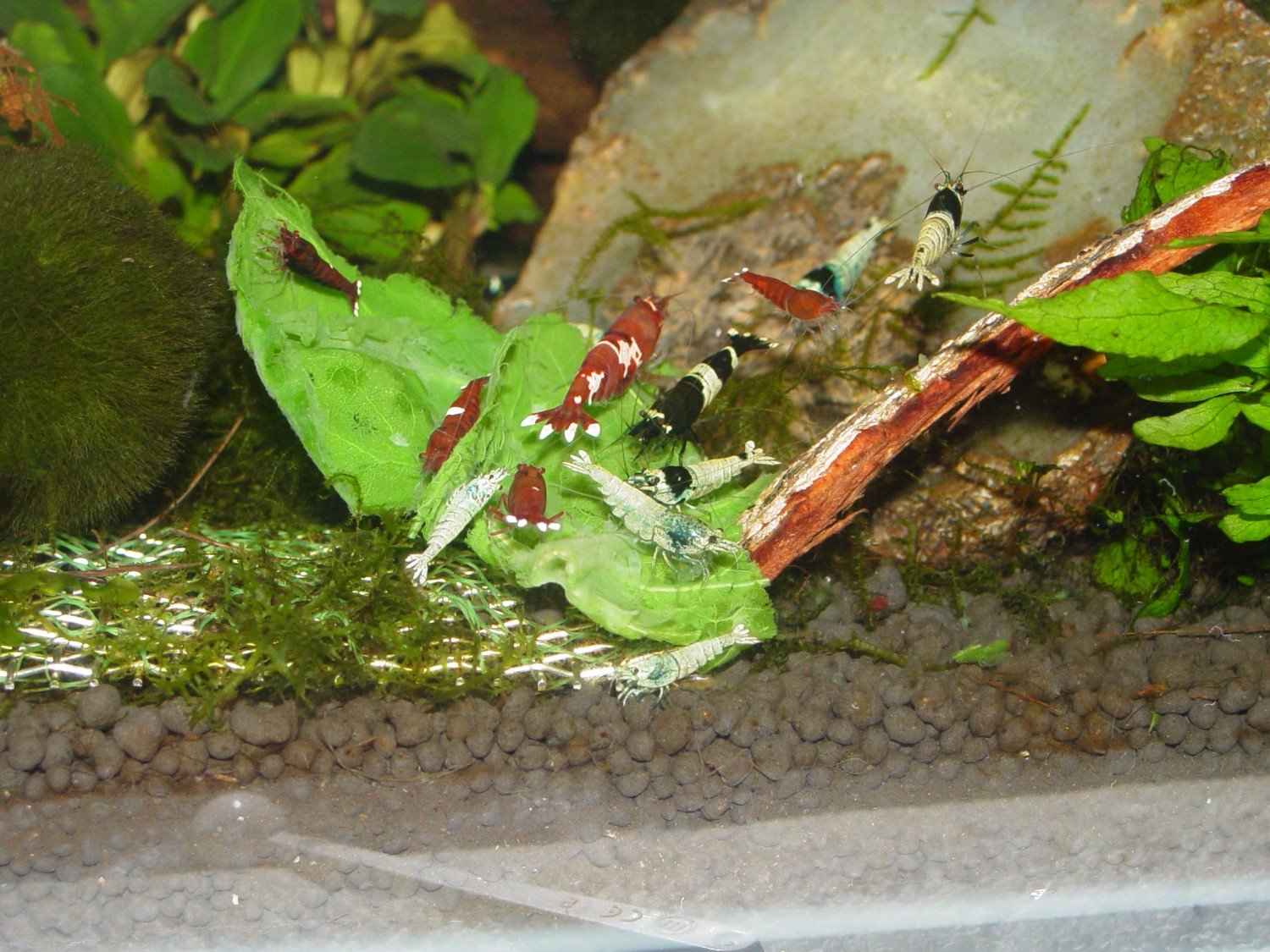
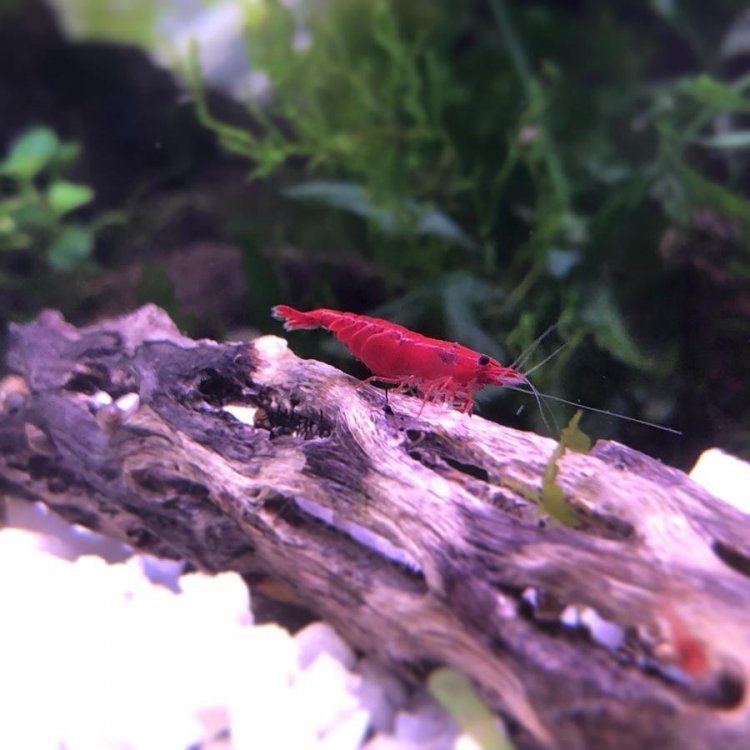
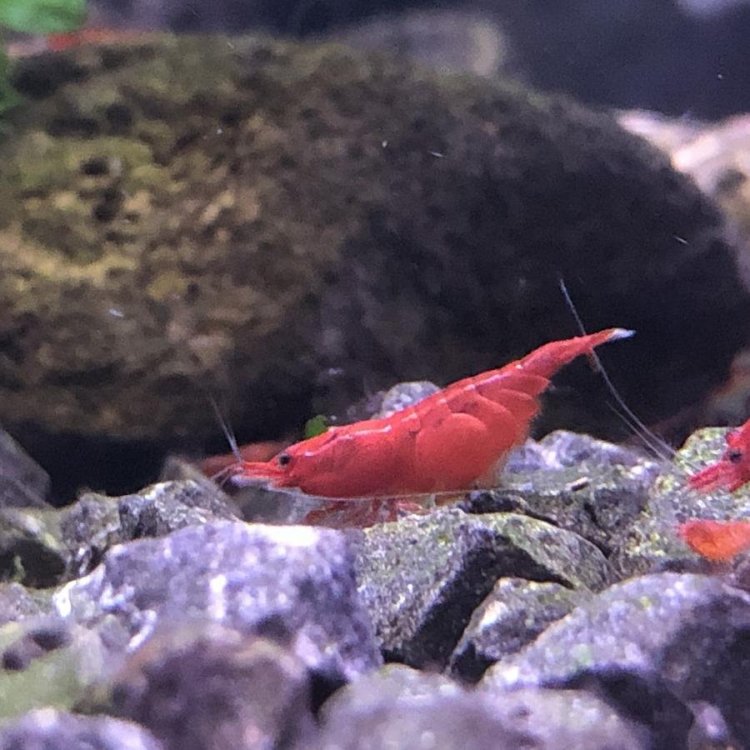
They had a photo on the site and they looked to be a good enough grade for the price, much higher grade than this. I have added another, clearer photo just to see your opinions. Here's two of the images they used on their site for the BM
 1 point
 -
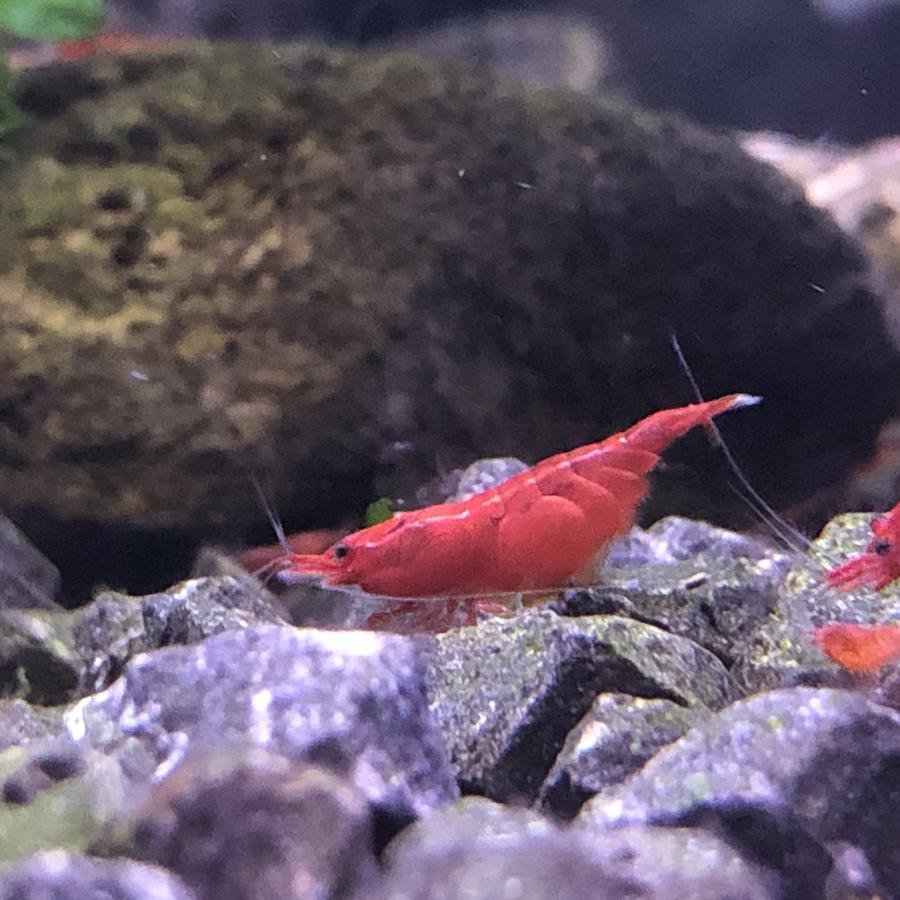
1 pointVery nice, lpvely colour. Hope they do well and you get some super babies in the near future . Simon1 point
-
0 pointsAwful pics, I know, I'll try to get some better ones with my phone. Just in case it is easily recognisable. I asked Alex from 'The Secret History Living Inside Your Aquarium' on a YT livestream about it, and he said he thought it was a disease, and should be treated similarly to scutelliara and nematodes.0 points