

Leaderboard
-

jayc
Moderators3Points6248Posts -

Steensj2004
Platinum Members2Points273Posts -
NoGi
HOF Member1Points5858Posts -

Oliveshrimp52
New Member1Points3Posts
Popular Content
Showing content with the highest reputation on 04/18/20 in all areas
-
Oh sorry. Of course there are many Dr Tim's products, was thought you were referring to the bacteria products. GH is way too high. Shrimps will have issues moulting. What's the TDS?1 point
-
The overwhelming majority of your bacteria is on surfaces, media, plants, rocks, and in substrate. The water has already been changed out as of today. The DR Tim’s is the pure ammonia. I always take the ammonia to around 4 ppm with ammonia. I wait till it’s zero, and repeat at more like 3-4ppm. As soon as the bacteria can take the ammonia to 0 within 24 hours, I consider it cycled. Either way, I have a while before I’ll add anything. Biofilm needs to build. I’ve switched the water out with remineralized RO water. GH:10-11 KH:3 Does that look to be a bit better?1 point
-
Sounds about right for a 10gallon. If you added a whole gallon, 10% of mature filter gunk, it will introduce millions of beneficial bacteria . I don't think Dr Tims did much in this case.1 point
-
Hi all, New to this forum and keeping Neocaridina. I was wondering if red colored neos are hardier than yellow or blue? I’ve lost all my yellow and many of the blue....but barely any reds. I unfortunately had a bacterial bloom, which is luckily cleared up and water parameters back to normal. But I was so curious why the reds fared the best (they all were approximately same size/age). thanks!!1 point
-
Yes, normal to have some undissolved. And shake before use. i use a syringe to get out only what I need in an exact amount.1 point
-
No-no, I was refusing to my other system. Simon and you were both very active on that thread. I was responding to his question about that tank. This tank will cycle for 6-8 weeks before neos are added. Long enough to really get some biofilm built up.1 point
-
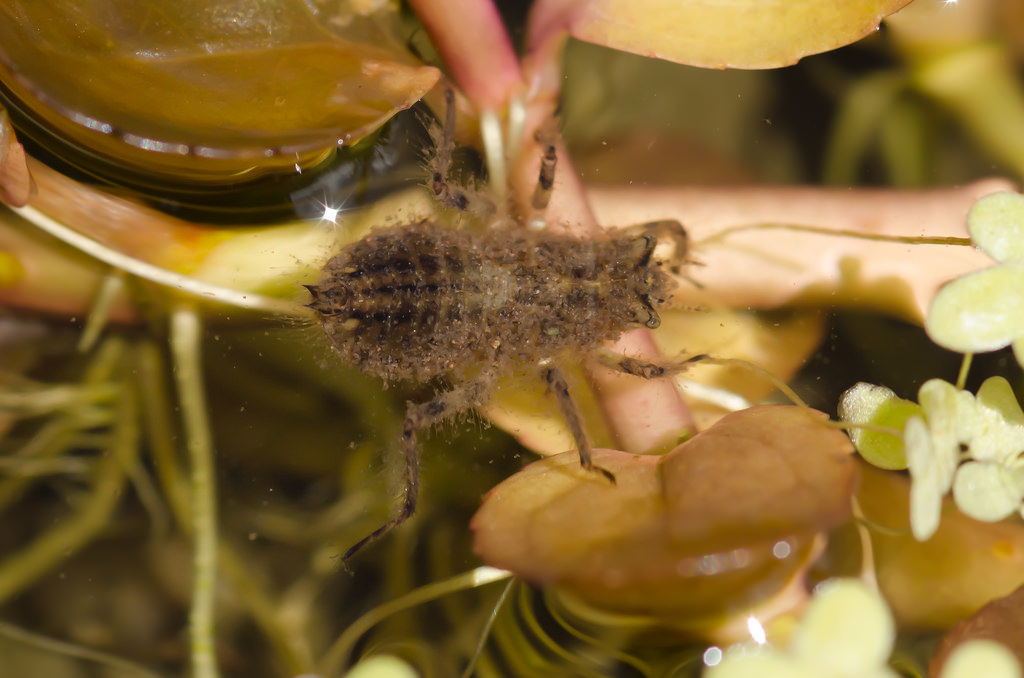 Dragonflies or Odonata Anisoptera, are a group of insects belonging to Class Insecta, Order Odonata and Suborder Anisoptera. Considered as ancient, their ancestors were around during the Jurassic Period, along with the dinosaurs. They are predators. Their life cycle breaks down into three distinct stages: the larval stage, the nymph stage and the adult stage. Nymphs can spend a number of years living in fresh water. The adults, which may only last a few days or weeks, can fly. Adults emerge to mate and repeat the dragonfly life cycle. The body length of the average adult dragonfly can vary between 2.54 cm to 10.16 cm. Ancient dragon flies could have a wingspan as large as 70 to 75 cm in extent. The juvenile, dragonfly nymph can range in size between 1.27 cm and 3.81 cm. The dragonfly nymph is a formidable predator. It spends its life just below the water surface, and has a “hinged labium, a form of a “toothed” lower jaw. It can extend this out every quickly then retract it. This way, the juvenile dragonfly can catch and eat tadpoles, mosquito larvae and even small fish. Does the dragonfly nymph pose a threat to fish and shrimps in an aquarium? The short answer is definitely yes. There may be as many as 1500 eggs originally hatched. Having come down to us from the Jurassic period, the Odonata Anisoptera juvenile is equipped with the equivalent of a “rapture like lower jaw”. They would have no problems consuming both small fish and shrimps in an aquarium. Bringing fresh water from natural sources may sound a good idea, but there could be a good chance that this could be contaminated with the dragonfly nymph. Another indication would be that both the small shrimps and fish are showing signs of stress. They are aware that there are dragonfly nymphs in there with them. Removing Odonata Anisoptera may not be that easy once the aquarium is infested with them. One method could be to use a plastic straw to suck the juveniles out individually. Plants and other water vegetation need to be agitated to get them to move, as the dragonfly nymph can remain very still. Dropping the water temperature in the aquarium by three to five degrees Celsius, might stress shrimps in the tank. This might also bring the dragonfly nymph to the surface. References https://en.wikipedia.org/wiki/Dragonfly https://en.wikipedia.org/wiki/List_of_Odonata_species_of_Australia http://www.state.ky.us/nrepc/water/dragfly.htm Photo Credit: dmills727 Flickr cc Photo Credit: Exmoor National Park Flickr cc1 point