

Leaderboard
-

jayc
Moderators2Points6248Posts -

wayne6442
Platinum Members1Points1137Posts -

lnox
Members1Points5Posts -

northboy
Members1Points1978Posts
Popular Content
Showing content with the highest reputation on 04/07/20 in all areas
-
1 point
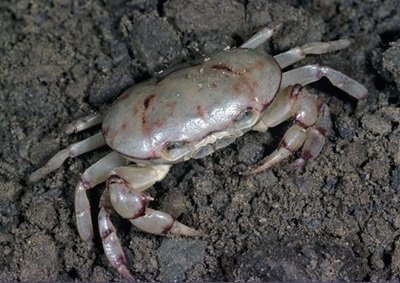 Australian Freshwater Crab Freshwater crabs can be found in the tropics and subtropics in most parts of the world. Out of a total of 6,700 species , there are more than 1,300 described species of freshwater crabs,and many more currently unknown to science. The IUCN (International Union for Conservation of Nature ) Red List has assessed all described species as “ data deficient”, as data on their ecology, reproductive biology and habitat requirements is lacking. (Austrothelphusa Transversa) The majority of species studied to date tend to occur in small geographic areas, have poor dispersal abilities and low fecundity (the ability to produce an abundance of offspring) thus making them highly susceptible to land use alterations, river regulation changes and climate change. Scientists in Australia are investigating the biology and ecology of our remarkable freshwater species in the tropical regions of northern Australia and the Torres Straits. Very little is known about many of the far northern species, however science has discovered that they have an amazing lifecycle, these crabs will dig tunnels in the creek banks at the end of the wet season and spend the hot and dry times in a prolonged state of torpor/dormancy, emerging again at the onset of the next seasons rains presumably to feed and reproduce. Females of the species A. Transversa have been documented carrying their young under their abdomen underground during the dry season and when the wet season arrives they will leave their mother growing up quickly before the next dry season. A.Transversa The most common species of freshwater crab found in the aquarium market in Australia are the Holthuisana sp. (Austrothelphusa) There are several sub species in this order: A. Agassizi A. Angustifrons A. Receki A. Tigrina A. Transversa A. Valeatula A. Wasselli With the most common on the market being A. Transversa and A. Agassizi : A. Agassizi (Freshwater Brown Back Crab) CARE: The two species A.Agassizi and A.Transversa are by nature amphibious and should be provided with an “Island” where they can leave the water at will . It seems they require atmospheric air for their gills to operate properly. In nature these crabs frequent inland rivers and billabongs in northern Australia that dry up in the winter. Water Quality: Temperature: 18 deg C. to 25 deg C. pH: 6.5 ------7.5 General Hardness Soft /Moderate The freshwater crab can not survive for long in very acid water. Make sure their wateris free from ammonia,nitrate and copper. Feeding: A true scavenger, they will eat most types of sinking fish food, blood worms, fresh vegetables and sometimes aquarium plants. Colour and Varieties: The A. Agassizi ( Brown Back Crab) can come in a variety of colour patterns e.g with an attractive pale fawn colour, with a chocolate brown irregular band crossing from front to back of the carpace or even a tiger stripe pattern. While the Colours of A. Transversa is mainly a shade of brown from yellowish to deep redish. Housing: Both species are great escape artists and can easily climb the silicone in the corners of most tanks. I have had them climb up air hoses and the water pick ups for the filters. They are fairly peaceful and can be trained to come to your fingers for food. If kept in a community tank ensure that there are no slow fish as the crabs are not adversed to a little fresh fish in the m Disclaimer: A. Transversa The information provided here is of a general nature only. Citation: The IUCN red list Dr Nathan Waltham: Ecology of Freshwater Crabs in Tropical northern Australia1 point
 -
1 pointIt's definitely not an amano. The claws (chelae) give it away. It depends where it has come from. It's definitely a juvenile and a Macrobrachium of some type. Too many varieties to pin point it specifically. Just make sure you don't keep it with Neocaridina or Caridina shrimps, cause that thing will hunt down and eat other small shrimp.1 point
-
 1 pointI'm in arizona usa. Yeah. I was shocked it was in with the amanos at petco. I really like him. But have no ideal what he is.1 point
 -
 1 pointAa you say Simon, the Amazonia in this tank is super old, probably close to 5 years, and I used tap water almost the entire time. It would've lost any buffering capacity yonks ago. Anyway, I bought a new ADA Mini M the other day ? I'll take my time setting it up over the next few months then transfer all the CRS in.1 point
 -
1 pointHi Simon, Thanks for your reply, i do agree they mean no harm with the shrimps as the tank is really thriving. I think i got them through a bunch of Malaysian Trump Snails that came along with the shrimps. other than that they're really an eye sore and also creepy looking. i definitely don't want them getting them attach to my hand while I'm cleaning the tank LOL. I'm on day 3 of dosing the tank, I'll let you know the outcome if No Planaria has gotten rid of them.1 point
-
1 pointShrimp can eat biofilm faster than it can grow, so you need to supplement with additional food. Veges, leaves, flowers, and bloodworms are some good choices.1 point
-
1 pointHowdy mate, I do have a number of tanks I will get going again, thanks for the welcome back I will catch up with a lot of people I have not had contact with in many years. Bob1 point
-
 1 pointDon't forget that your shrimp will decrease breeding in winter, which you are approaching! I would maybe change 20% water for a month and see if that makes a difference as you may still have a quantity of tap water in the tank if you are doing small changes of 10%. Not a lot of point though if you plan to reset the tank with new substrate! As you were using tap water at the start and that had a higher PH then the soil would have exhausted quicker so it may be a good idea to change the substrate. As you are using RO now the soil will buffer much longer and it looks from the last picture of the tank that there isn't too much grown in to make changing the substrate too difficult? It wound be easier to start the soil in a bucket for a month and then run the new setup for a month, this way the shrimps only need a new home for a month and maybe the CRS could go in with the bloody mary (the red cherry though???) for that time? At least if you do all that soon you will be done/set for the next breeding season! Having gone through this thread in its entirety I think the fact you started with tap water of a higher PH (admittedly only slightly) is what has caused this. Remember though, in reality it is all working pretty well and those shrimps will be used to those parameters (which aren't that bad anyway) so changing/messing will probably mean much work and loss of some shrimps, however if you are up for that, all considered I would change the substrate and because you will be using RO from the start in the long term it should pay off? You may not need to change the substrate for a long time or even ever when using RO water as the buffering won't be needed if the PH of the RO water is already perfect? Simon1 point