

Leaderboard
-

ineke
HOF Member1Points9026Posts -
NoGi
HOF Member1Points5858Posts
Popular Content
Showing content with the highest reputation on 10/08/18 in all areas
-
1 point
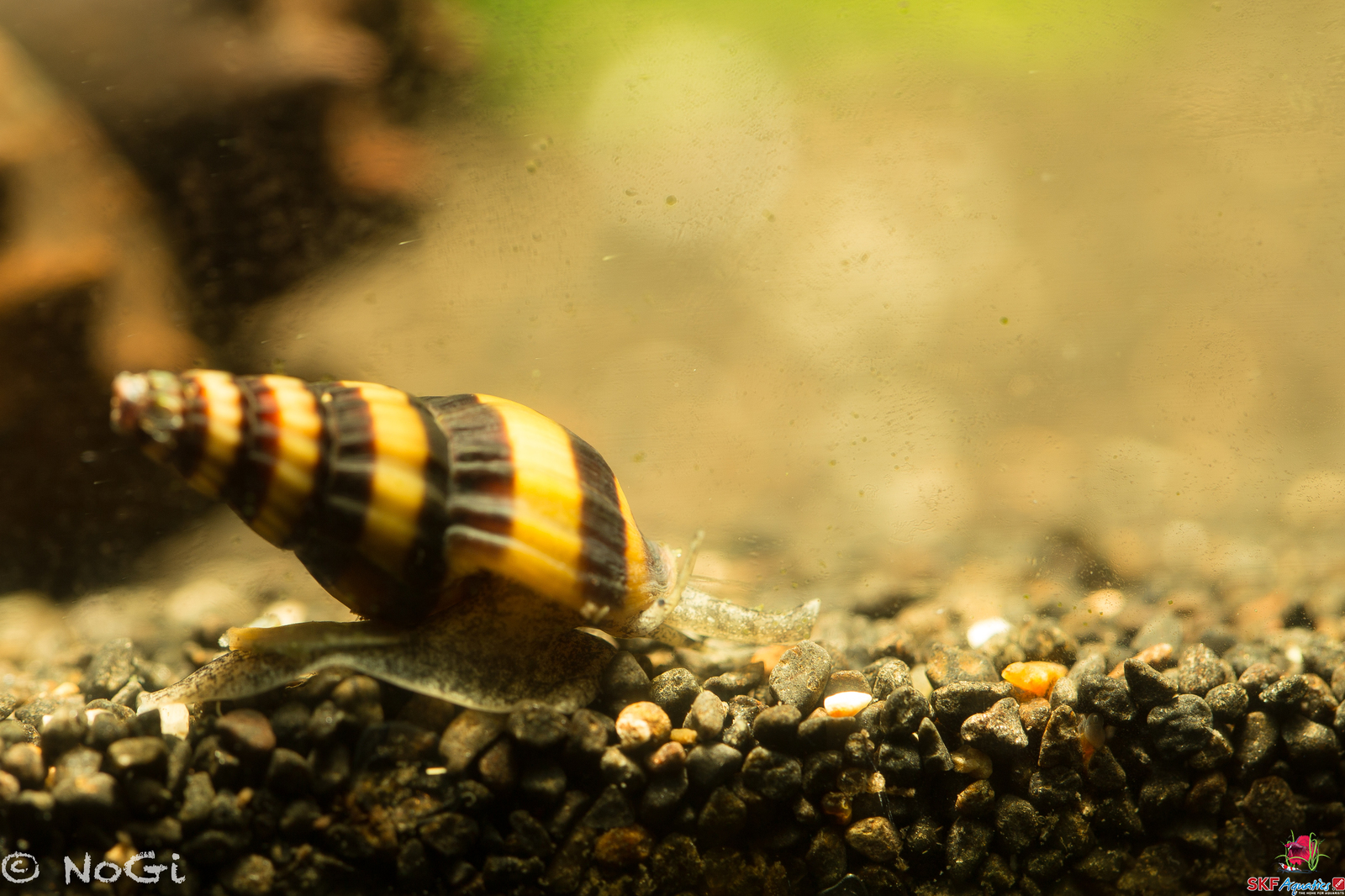 Clea helena is one of the most sought-after species in the aquarium business as it has the capability to hunt down pest snails; thus, helping solve the snail infestation concerns in fish tanks. Except for this, they are a peaceful community tank resident. Keep reading to know more about the assassin snail. Appearance Their shells are conical and are prominent because of their yellow and dark brown stripes – adding a splash of color inside the fish tank. Unlike other species, it is not possible to tell which a female assassin snail is and which a male is. They breathe by sticking out their siphon – like other snails. Clea helena grows as large as 0.5 inch or 1.3 cm. However, there were reports of finding bigger snails. As the large snails age, they begin to lose the tip of their shell. Natural Habitat Assassin snails are found in Southeast Asia and are native to Indonesia, Malaysia and Thailand. As freshwater aquatics, they occupy small bodies of water like streams and ponds. They prefer to live in areas where there are sandy or muddy substrates. Thus, if you are thinking about placing them in an aquarium, you should be able to reproduce a habitat like these conditions. Care It is so easy to look after an assassin snail. Water parameters are not essential, but to best care for them, keep them in water with medium hardness (pH 6.5-7.5). Their appearance may seem to point out that they move slowly but the truth is that they move quickly on any surface. Anyone can notice this particularly when they are hungry – and after they are fed as they disappear immediately. Feeding They eat other species of snails and worms, but they also devour anything they can find – including decaying fish and other small or soft-bodied invertebrates. Because of this, they do not give aquarists like you a hard time feeding them. If in case the tank has a significant population of snail, then you have nothing to worry about feeding them. Other aquarists feed them with brine shrimp, frozen blood worms and others. Breeding Some snails contain both the female and male reproductive organs. When they mate, they can produce eggs or young. However, these assassin snails are born a female or a male. Because you can’t tell their sex, buy 5 or 6 of them so you can at least be sure that you will have a male and a female. They mate for about 3 to 5 hours before they separate. Shortly thereafter, the female assassin snail will lay eggs (up to 4). These eggs, in a gelatinous square with a yellow centre appearance, emerge in a straight line. Feed them meaty food as it helps in good reproduction. Lifespan Clea helena can live around two years, but make sure that the aquarium is well-maintained and they can easily exceed this lifespan. Sources Clea helena (assassin snail) Clea helena Wikipedia Image Sources PKMousie Flickr cc1 point
 -
1 point
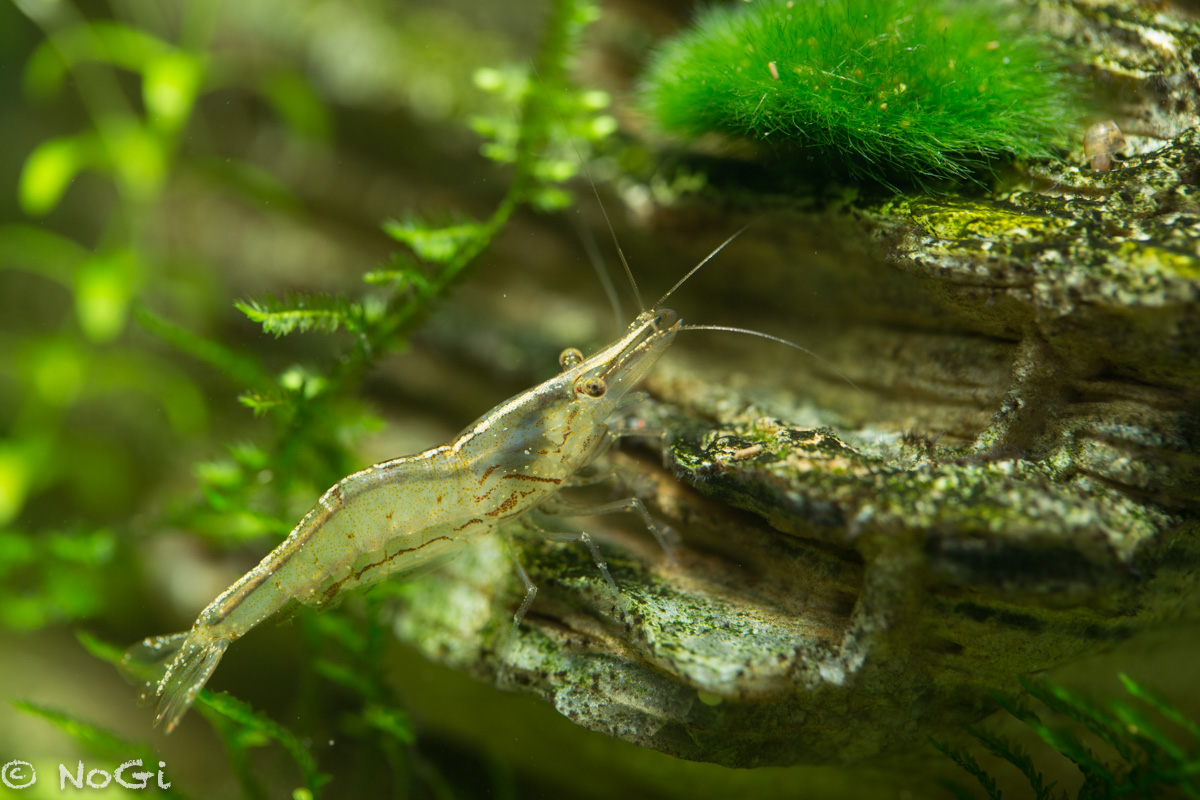
 So you went to the Local Fish Store and were seduced by a lovely Cherry Shrimp. The shop assistant said sure you can keep them with your fish - WRONG The shop assistant said just throw them in the water after a 4 or 5 minute float and adding a bit of tank water to the bag- WRONG Okay Cherries or Neocaridina Davidi are very easy to look after and can tolerate a wide range of water conditions and are infact very forgiving of our first attempts at shrimp keeping but lets try and do it simply but properly. First there are very few fish that you can keep with shrimp- some people have luck with various fish but generally if it fits in their mouth fish will eat it with very few exceptions except maybe the Otto. So step you need a shrimp specific tank planted preferably with moss. If you are going to only keep Cherries then any inert gravel will do. You need a very good water conditioner to treat the Chlorine and heavy metals so something like Prime When you get your shrimp home you will need to take your time acclimatizing them to your water conditions so it is preferable that you drip acclimatize the shrimp over an hour or 2 or if you are unable to drip them then pop 10-20ml of tank water into the bag every 5 minutes or so to get the water equal in the tank and bag. Release your shrimp and watch them explore –prepare to be mesmerized and want more. So it can be that simple and if you have a male and female they may and probably will breed but let's face it we really want to become proper shrimp keepers don't we? We want to learn all this new lingo like TDS, GH, KH etc. What foods to feed, what water parameters etc etc etc. Luckily the forum has all the answers and if you can't find the info just ask there are a lot of friendly people here willing to share their knowledge with you. This is a very simplified care sheet with much more involved information available but it can get you started. Water parameters for a Cherry Shrimp A fully cycled tank is paramount pH 6.4 - 7.6 Ammonia 0 Nitrites 0 Nitrates under 20 but preferably under 5 KH 0 - 10 GH 4 - 14 TDS 80 - 200 Temp 18 - 24 So a good water test kit is a very necessary item. A TDS pen (total dissolved solids) is important. Simple care needs Shrimp need stability in their water parameters, sudden changes are not good for them especially later if you change over to the harder to keep species. Weekly water changes of between 5 - 20% depending on the population density of your tank are necessary with the new water nicely aged and as near to the tank conditions as possible. Good quality and variety of food comes next. A mixture of commercially prepared and fresh fruit and veg (blanched spinach, broccoli, kale, fresh bananas, rock melon ) plus dried or blanched leaves like mulberry leaves, IAL (Indian Almond leaves) but all fed sparingly as shrimp graze on the bio film in your tank and don't need a lot of supplementation plus feeding large amounts can lead to planaria and ammonia spikes. It's a good idea to take out any left over food after a few hours except the IAL that can stay in the tank until just veins are left. There are several good threads about food and nutrition, Water parameters and also a glossary for those pesky abbreviations so look them up. Good luck with your new found hobby and don't be afraid to ask questions, it's the only way to learn!1 point