
Leaderboard
-

jayc
Moderators2Points6248Posts -

Madmerv
Members2Points219Posts -
Zoidburg
Members1Points403Posts -

Zebra
Members1Points294Posts

Popular Content
Showing content with the highest reputation on 07/13/17 in all areas
-
1 pointHey @Tayloss It is really up to you on how you go about getting the water you are after. Pure RO with a set amount of SS minerals makes it easy to measure out and will be pretty exact every time. If your tap water does not change during the year, and a lot do, then using that will save you some cash and can be just as easy measuring volumes. The tap water does add some variables into the mix because you dont know the condition or composition of the pipework upstream of your house as well as not knowing what quantity of additives the 17yo apprentice has added that day/week. Generally it is pretty good in my country and you can check with the local council to get a water report. A PH of 7.5 is fine for cherries. Anything really from the high 6's to the high 7's is ok but having it stable is the key. They dont like swings. With pure RO and SS minerals the PH will even out with the substrate and other tank hardscape having the biggest effect. Driftwood and leaves will bring it down and any stone with calcium carbonate in it will raise it up. This is a rabbit hole that goes very deep. I have read some some stuff where the authors might know what they have said but i'm sure that if i did a 4 year degree on it i would still be lost. Lol1 point
-
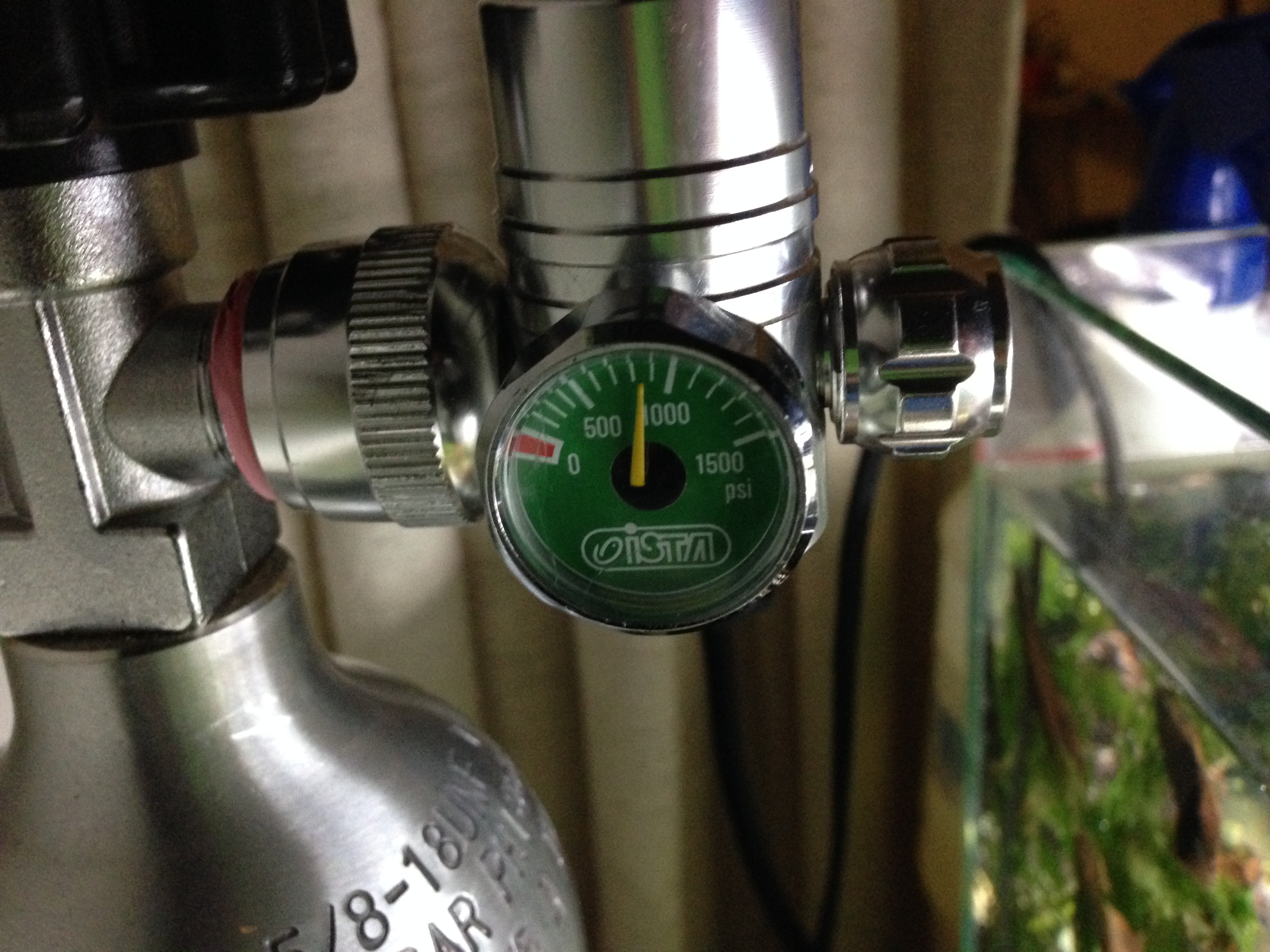
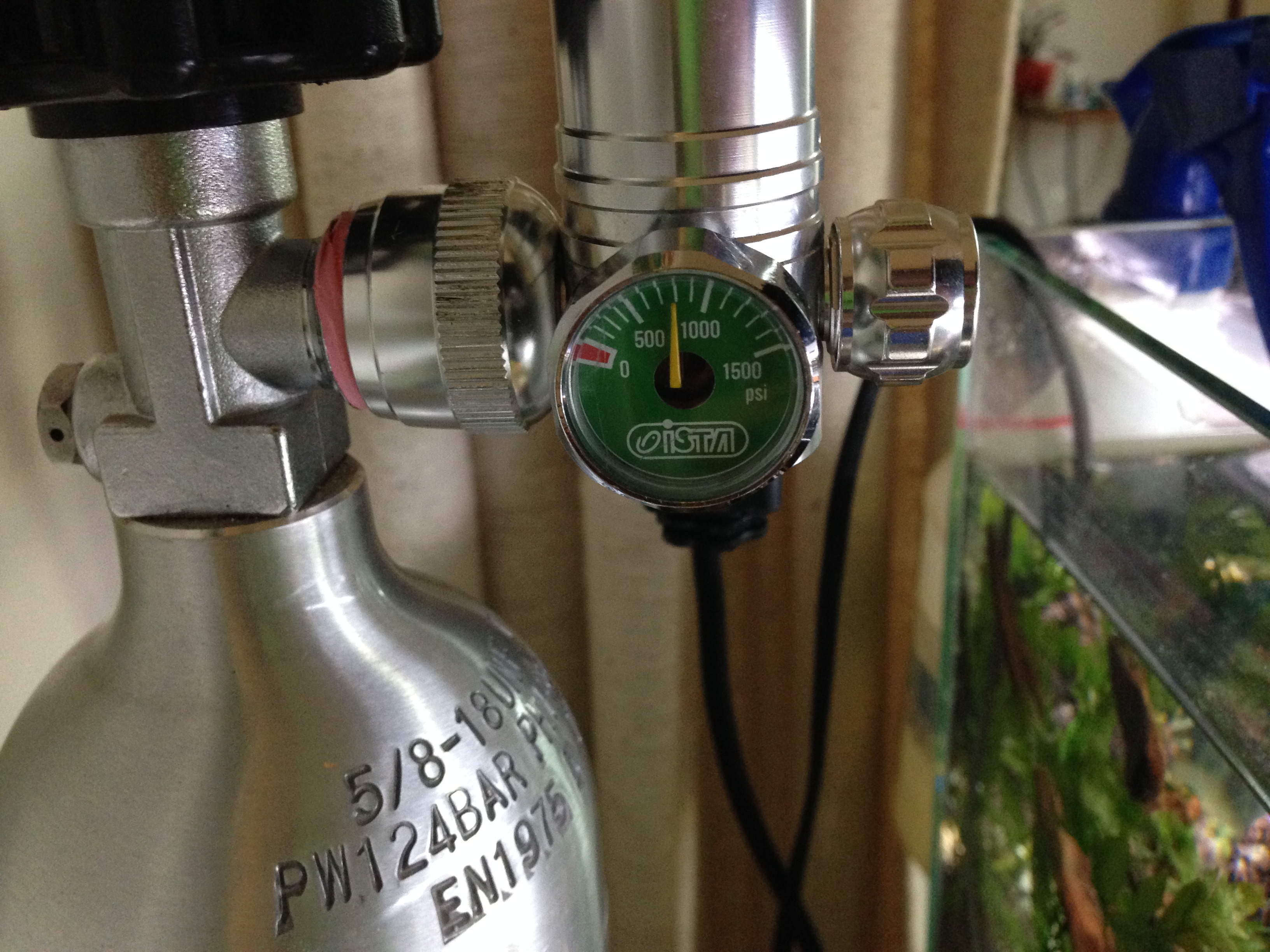
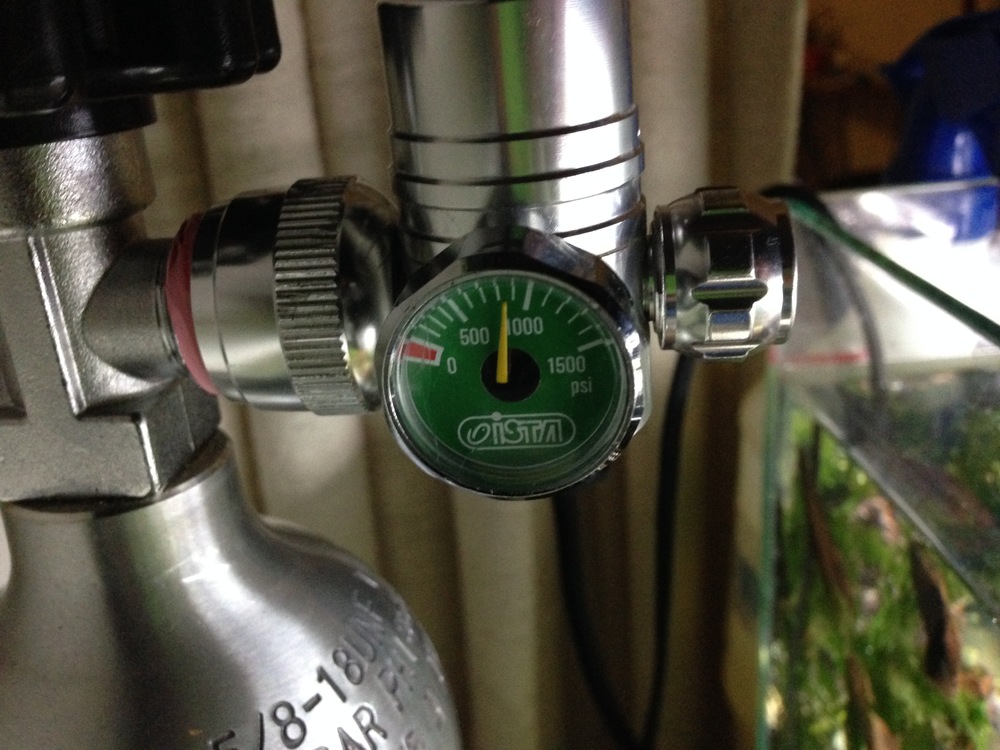
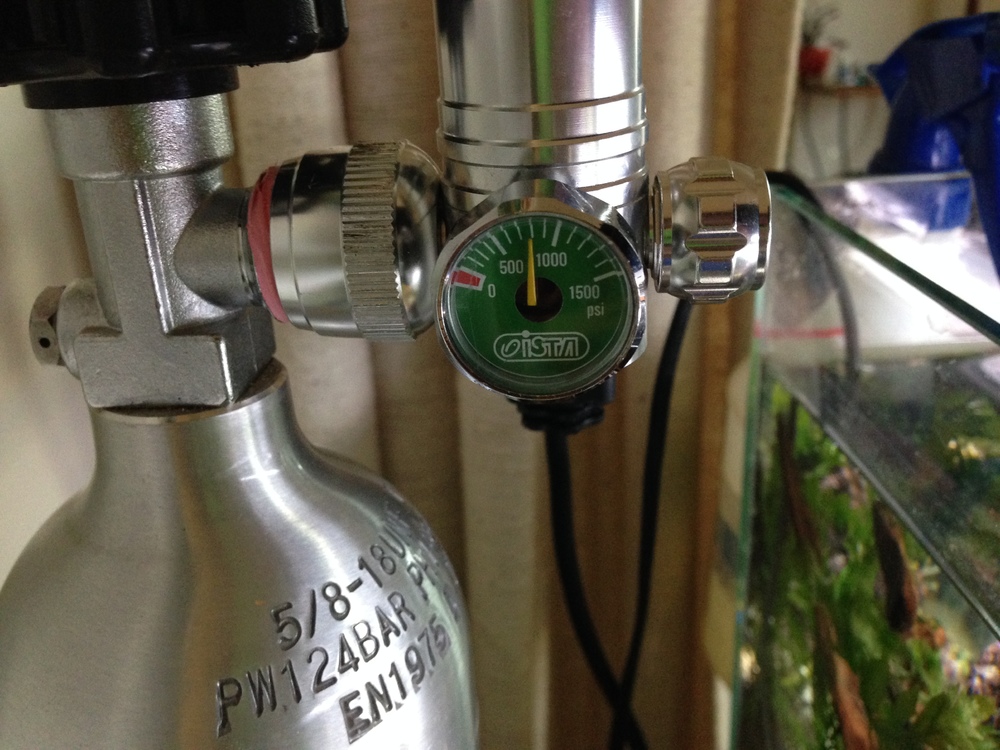
So last night I unplugged the solenoid then shut off the main output valve on my co2 cylinder to once again test if that area would hold pressure overnight and seems to have held up fine since going over the main outlet with gas tape and re tightening the regulator yesterday. As as you can see the output pressure only dropped 50psi overnight from about 850psi down to around 800psi, which is quite normal as co2 like most things contracts in the cold (Hense why we freeze co2 bottles before filling) And it's why our cold here overnight combined with the solenoid not proving heat to the reg being unplugged.- you'll notice on hot days the output pressure rises basically. This morning I opened up the main valve again before plugging in the solenoid to allow co2 flow for the day, and after going over over all the connections once more with soapy water in a spray bottle to check for leaks, I'm satisfied this system is sealed. On a side note I really don't like this style regulator, especially if you have to connect a solenoid, as the gauge and main chamber is offset in an opposite direction to the output flange on the co2 cylinder, (So to get a full tight seal you have to start with the reg on a kinda 45• angle then tighten down to straight position. Would much prefer an "inline" style regulator like the reg on my other smaller cylinder or the V3 regs. Also on this specific regulator the thread that actually leads a connector to the co2 line (out to your aquarium) uses an ungeneric thread size which I have had to work around which has been really annoying not being able to just screw the solenoid straight into the reg, think the standard size is M10 same as the caps that screw co2 line down to bubble counters etc, I don't use inline solenoids, they are a poor design and afterthought at best putting loads of strain on the co2 tubing, needle valves and gauges etc. And you notice with more high end regs the solenoids will be built closer and closer to the actual regulator.
 1 point
 -
1 pointYep. Same steps to remineralise any water that is below the target TDS. You just use less SS of course.1 point
-
1 pointGet minerals now. Once tank is cycled, using RO water, mix GH+ minerals to desired levels, test TDS. From here on forward, as long as your TDS pen is reading accurately, or close enough to accurate, you'll remineralize to the desired TDS to achieve the desired GH. Let this mixture sit in a bucket for about a day to allow it to "age", get room temp, and for the powder to completely dissolve. Be sure to include an air stone. --- as per SS directions, you just mix in water, then dump into the tank, but it doesn't hurt to add an extra step! Perform 100% water change on tank, so that tank will be at desired GH and TDS. TDS may shoot up a little due to any stirring of the substrate and that's okay. Add shrimp. (acclimated, of course!) After that, just remineralize the RO water and perform 10% water changes 1-4 times a month! Make sure to top off the tank with RO water, if there's been any evaporation!1 point
-
1 pointWhat Madmerv said. But I'd like to add a few words. pH pens need some time in the water to really get an accurate reading. If you can, get a some amount of tank water in a container, and leave it in there for at least 5 minutes for the reading to settle. As Madmerv mentioned, all non lab handheld grade testers have a small degree of inaccuracy. Having said that, I would trust the pH pen more than test strips, or API fluid tests. These last two have a much, much greater scope for error than a pH pen. Just make sure you leave the pH pen in the water long enough for it to get an accurate reading. Salty shrimp GH+ will not alter pH. Which is a good thing. If you are starting with RCS, don't get too hung up on it. pH will naturally fall when the tank continues to mature. Let it change naturally. Or add IAL (Indian Almond Leaves), more wood or peat moss. The substrate will also help going forward. Note: Salty Shrimp GH/KH+ (another SS product) will raise pH and KH as well as TDS, but that is not what you are trying to achieve, which is to bring pH down slightly. If you are just trying to bring TDS up, then just add straight into the tank since you have no shrimp in there. Once you have shrimp, add some to your water change to match the 150-180 TDS you are targetting. This is where the TDS meter comes in handy. The SS container will have instructions. But the product comes in powder form, which you need to dissolve. I recommend dissolving the powder in your water change container (or whatever container) with some tank water (or treated change water) BEFORE adding it into the tank. You don't want undissolved powder in the tank as much as possible. It's just so you know exactly what TDS value is being added to the tank. Since any undissolved powder will continue to raise TDS, you might overshoot your target if you just added undissolved powder straight into the tank.1 point
-
1 pointI think a lot of people get caught up in trying to keep their pets (shrimp/fish) in the perfect WP. While trying to keep them in water that is similar to their natural habitat is good and can yield some great results we have to keep in mind that most of the common breeds have been in aquariums for many generations and are therefor more accustomed to living, breeding and being happy in a wide range of water. Although i only keep RCS and Palamonties Australis which are the hardiest of all i can give a very good example of this. The RCS are in an indoor show tank at a constant 21 deg, winter rain water is added and that can bring down all the WP (not temp) to TDS 78, KH >1 GH <2 And a PH that slowly rises between WC to 7.2. In summer the tank only gets tap water and at it's worst it was TDS 750, KH <4 GH <7 and PH 7.8. Shrimp were happy, breeding, swimming and a doing their shrimp thing. The WA glassies and RCS are also in my outside tank and pond. Same thing. Tap water in summer and rain in winter but with the Temp going from extremes of 28 deg to 8 deg. They dont like the 28 deg but still lived and there are a stack of shrimpetes before it got to cold. The harsh reality is if you have 10 shrimp is your tank, 8 die but 2 spawn. 95% of the new shrimp will do really well in your water parameters. They have adjusted to what your water contains. Leave the perfect WP until you start going exotics or are looking for maximum yield in a breeding situation.1 point