

Leaderboard
-

Madmerv
Members2Points219Posts -

Forevermango
Members1Points79Posts -

s1l3nt
Members1Points116Posts -

ineke
HOF Member1Points9026Posts
Popular Content
Showing content with the highest reputation on 05/23/17 in all areas
-
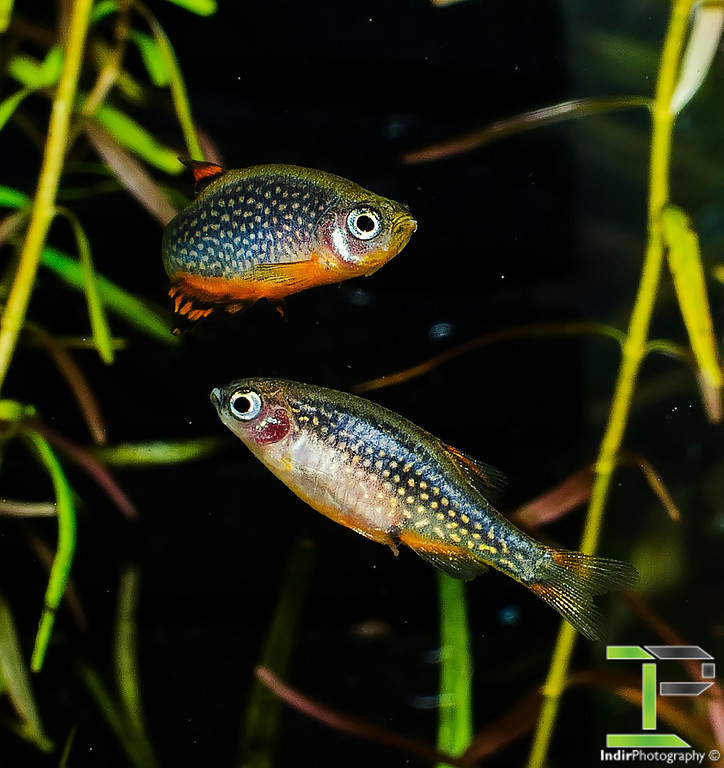 Breeding Celestial Pearl Danios (Also known as Galaxy Rasboras) Firstly I will start by saying that these are a fantastic little fish that show no aggression to any other species nor within their own species. Males will spar with each other sometimes and often display to females, no damage is ever done. They are shrimp friendly, but will take down shrimplets if they get hungry. So they can be added to a mature and established shrimp community tank to ensure maximum shrimp numbers surviving also. These fish prefer a nice planted tank with a dark substrate, this helps reduce skittishness and bring out their colour even better, it also gives refuge for fry that will pop up in the display tank! Feeding Celestial Pearl Danios will need to be fed small foods, due to their small mouth size. Though they are always excited to see live black worms (2-3 of these will make them VERY fat). Mine love grindal worms so they get this often, as well as baby brine shrimp and cyclops regularly. They will readily take dry foods of small size, I have had great success with Sera Vipagran Baby. To keep them in shape for breeding on a regular basis, I feed them twice a day with baby brine shrimp and a higher protein food like grindal worms, black worms, and so on. I find live high protein foods keep them in better shape and increase egg numbers. Sexing CPD Celestial Pearl Danios are fairly easy to sex, especially when they are of mature/breeding age. Females will have a much rounder body shape, when they are younger they will also have a taller body (older/more mature males develop this also, usually 6+ months old). Females also have a prominent black spot in front of the anal fin, the difference becomes more obvious as they mature more. Males are more slender in the body but will have much better colour in the body and fins, they develop a nice blue to purple colour to the body with nice orange fins and often the under belly too (the under belly colour can also be the case in females though, so isn’t a guarantee). In the below photos you will see the younger male has a slender body and orange under belly, as well as better colour than the female. However, as you can see in the older pair, the male has developed the deep body also and the female has a light orange hue to her under belly. The male in the second photo is a prime candidate for breeding as he is quite nicely coloured and has developed good body/fin shape and colour. Young Pair – Male on the bottom right and female on top left: Older/More Mature Pair – Male on top and female on bottom: Breeding Celestial Pearl Danios will start breeding from as young as 3 months old if fed well and have clean water throughout their short childhood. However, I find they are usually all mature by 4 months old. You will need at least one pair for breeding, however I have better experience breeding a trio as this gives females times to recover between breeding sessions as these fish are “constant” (usually daily) spawners. Spawning is induced by males, where they will hover over a specific area they like (moss, spawning mop, etc) and when a female is nearby they will begin to shake their bodies and flare their fins in hopes of attracting the female. They will do their dance and display, but the spawning comes when the male has his head pointed down and shakes, following the female behind closely. These fish will often spawn in a display tank and you will get fry popping up now and then in a well planted and mature tank. However, celestial pearl danios will readily eat their eggs and fry in my experience so this method will result in minimal fry numbers. There is another option which can work well if you have spare tanks, or enough room to rotate breeders. This method is basically using a bare tank with some java moss and keeping a trio in here for a 5 to 7 days, then moving them to another tank while the eggs hatch in the first tank. Then you keep repeating this process until you have enough fry or forever if you have the space… I have not tried this method myself, but have heard of others using this method with success. I personally don’t have the tank space for this method. The final method which has worked the best for me has been a dedicated breeding tank. In this tank all I have is a sponge filter and an acrylic yarn spawning mop (make sure it is 100% acrylic otherwise it will eventually rot in the tank). I keep a trio of my best fish in here, one male and two females. The male I use is the “older” pair from the photos above for his colour and body shape, as well as two nicely coloured and sized females. I call this the “permanent breeding factory”, because I am able to get on average 20 eggs per day with this method. To collect the eggs in the factory, I use a turkey baster purchased on eBay. I stop the sponge filter and after about 5 minutes or so when everything has settled down I slowly lift the spawning mop up and shake the mop, to make this easy I tied a long piece of yarn which comes out of the tank onto the lid for easy lifting without having to drop my arm into the tank. I then use a light on the front half of the tank, placing the light from the side helps in seeing the eggs easier as does a dark base (my tanks have black bottom panels). Using the turkey baster I suck the eggs up and collect them in a plastic cup for later use. With the eggs in the cup I then fill the cup most of the way and use an air stone on a very low bubble rate to keep circulation over the eggs to prevent fungus. Another option is to put the eggs in a fine meshed breeder box or poke some tiny holes into the cup and float it in the tank to keep fresh water circulating over the eggs. Eggs take about 3-4 days to hatch on average, and the fry will now be wrigglers which cannot really swim yet and are not ready to be fed. This wriggler stage will take about 3-5 days before they are free swimming. They will often be holding onto the side of the cup, or laying on the base. This is nothing to worry about. Once fry are free swimming they will be quite small and very thin in body thickness. You will need very small foods to have the best success, such as paramecium, spirulina powder, fry powder foods like sera micron and so on. I find that I get a MUCH better survival and growth rate when the fry are fed live foods so I only use paramecium for feeding them. The fry will need about 10-15 days before they can readily eat baby brine shrimp, I don’t bother with foods larger than paramecium until this stage mainly because micro worms and similar are a pain to keep going and requite too much maintenance. Once the fry are on baby brine shrimp, they will grow much quicker. Around the 5-6 week mark, I start introducing sera vipagran baby or similar small sized foods. I however prefer to give them live foods more than dry foods as I find the fry grow much quicker and are healthier and develop colour earlier. Fry will grow fairly quickly and at the 6 week mark will be around the 15mm mark and should be showing some slight purple/blue to the body and their golden spots should be readily visible. From this point on the fry will slow down their growth as they reach their adult size but colour will come in much quicker. By the 12 week mark the fish should be very close to looking like full grown adults, with the deep orange colour developing quickly after this point. Fish should also be reasonably easy to sex from this point on as the body shape has already developed and the colours are coming through quickly. Now I hope you enjoy the photos of the fry below, which should help you gauge age and so on of your fry! As a comparison, the first two photos are of fish the same age but the first shot is of a fry fed solely dry foods like spirulina powder and similar from hatch while the second photo is a fry fed on live foods from hatching. Young fry (most likely female) at 12 weeks old – Fed solely on dry foods from hatching. Young Female Fry at 12 weeks old – Fed on live foods, with dry food at the later stage in life Most likely a nice young female, but could be a male. Young pair of CPD, approximately 7-8 weeks old. Young female, approximately 7-8 weeks old Thank you for reading along and I hope you find the information useful, or at least enjoyed the article!1 point
 -
1 point
-
How about something like this. From my tank after it was just set up. _MG_3959 by Merv Hall, on Flickr1 point
-
1 pointI have been using the new formula since late last year in my room. Once it's cycled it's great. It does have a very strong smell I must say. I used it in 2 tanks in my lounge room and hubby kept asking what the strong smell was - it didn't matter when I only used it in the shrimp room because the door was kept closed so he didn't notice it! I take my first reading on day 3 now. The new benibachi can take a long time to cycle compared to the old one. This wasn't just 1 tank I have put the new one into 13 tanks - they were all mature tanks , I basically just replaced the substrate and put everything except the shrimp straight back into the tanks. The canisters and sponges were mature and I use about half of my old water. It's not a management issue it's definitely the new formula. I used to love the fact that with the old formula it took no longer than 3 days before I could put the shrimp back in, especially when you consider the number of shrimp I keep/ kept . I could change my whole room in a matter of 2 weeks but now I have to do a couple of tanks at a time . I don't use the bacteria products so much just Dr Tim's Pro biotics and Seachem stability - I didn't even use them before when it only took such a short time but now I like to use these 2 to help it along. I still prefer the benibachi despite the longer cycle. I have used ADA Malaysia, Elos and Fluval Stratum - they all have a long cycle time too.1 point
-
 1 point
 -
1 point
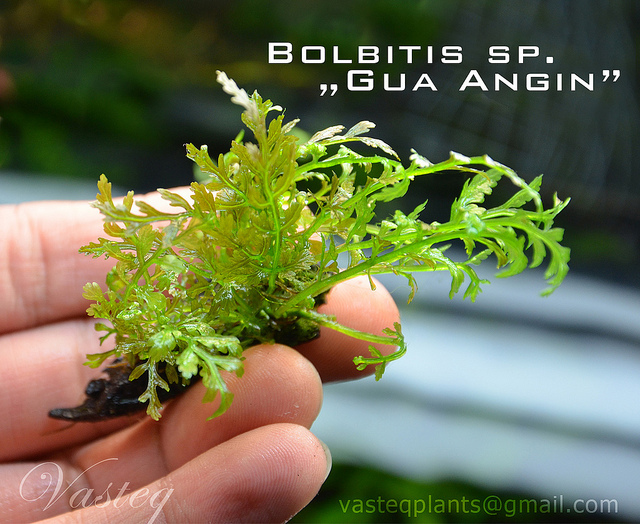 With lots of variety of mosses and ferns out there, here is a compile of Photos from the great Tomasz Wastowski of his current collection. Bolbitis sp. "Gau Angin" Microsorum "Small Leaf" Microsorum "Thunder Leaf" Microsorum "Short Narrow Leaf" Loxogramma sp. Wave Moss Mosses... Bolbitis sp. "Gua Angin", Bolbitis heteroclita "Cuspidata" & Buce. Brownie Jade Loxogramme sp. Amblystegiaceae Manaus "Queen Moss" Homalia sp "Rosa" Hymenophyllaceae sp. "Wayanad" Pteridophyta sp. "Xkiat" Microsorum sp "Trident" Plagiochcila sp. Cameroon Microsorum sp. Mini Windelov Fissidens Grandifrons var. Planiccaulis Microsorum sp. Fork Leaf Bolbitius Heteroclita Difformis Fissidens Adianthoides Fissidens Dubius & Fissidens from Poland Fissidens Dubius Fissidens from Poland Fissidens Geminiflorus "Nagasaki" Fissidens sp. "Himehouogoke" F. Nobilis, F. Zippelianus, F. Adianth, F. Dubius, F. Dubius 2, F. Poland Fissidens Nobilis1 point
 -
 1 pointDean's uses Ec & I use TDS to calculate the purity of our water. There's a mix of information and reference to water quality using Ec & TDS, and I appreciate many hobbyist maybe confused to which "pen" to buy, or if they've already bought a TDS pen, regret the fact as reference is made to Ec .... Please take note of the bold words/sentences .... Total Dissolved Solids (TDS) is the best measurement of the nutrient concentration of a hydroponic solution. To estimate TDS, one can use a meter that measures the Electric Conductivity (EC) of a solution, and convert the number to TDS in parts per million (ppm). Many meters will do this conversion. Total dissolved solids (TDS) is typically expressed in parts per million (ppm). Electrical Conductivity (EC) is expressed in siemens per centimeter (s/cm) or milliseimens per centimeter(ms/cm). For convenience, EC measurements often are converted to TDS units (ppm) by the meter. The meter cannot directly measure TDS as described above, and instead uses a linear conversion factor to calculate it. The meter uses an approximate conversion factor, because the exact composition of the mix is not known. Conversion factors range from .50 to .72, *depending on the meter manufacturer, which approximates a TDS calculation from the meter’s measurement of EC. * All ppm pens actually measure the value based on EC and then convert the EC value to display the ppm value, having different conversion factors between differing manufacturers is why we have this problem communicating nutrient measurements between one another. The issue is that different ppm pen manufacturers use different conversion factors to calculate the ppm they display. All ppm (TDS, Total Dissolved Solids) pens actually measure in EC or CF and run a conversion program to display the reading in ppm's. There are three conversion factors which various manufacturers use for displaying ppm's... USA 1 ms/cm (EC 1.0 or CF 10) = 500 ppm European 1 ms/cm (EC 1.0 or CF 10) = 640 ppm Australian 1 ms/cm (EC 1.0 or CF 10) = 700 ppm For example, Hanna, Milwaukee 1 ms/cm (EC 1.0 or CF 10) = 500 ppm Eutech 1 ms/cm (EC 1.0 or CF 10) = 640 ppm Truncheon 1 ms/cm (EC 1.0 or CF 10) = 700 ppm When reporting your PPM in a thread, please give the conversion factor your meter uses. For example: 550 PPM @0.7 or give the reading in EC, which should be the same meter to meter. SUMMARY Although TDS also measure organics etc.... all TDS pens are manufactured to calculate the Ec, and uses a mathematical formula (factor of 0.5, 0.64 or 0.7) to convert the reading to TDS. So all we need to know is the pen's conversion factor. i.e. I have two pens, the 1st calculates Ec/TDS and uses a conversion factor of 0.5 (125 ppm = 250 ms), the 2nd calculates TDS ONLY and as it's manufactured in Europe, uses a coversion of 0.64 (160 ppm = 250 ms). In conclusion, there's no difference whatsoever if you have a TDS or Ec pen......just need to find the right conversion factor, and apply it.1 point