
Leaderboard
-
Zoidburg
Members3Points403Posts -
NoGi
HOF Member2Points5858Posts -

ineke
HOF Member2Points9026Posts -

Buggins
Members2Points17Posts

Popular Content
Showing content with the highest reputation on 04/21/17 in all areas
-
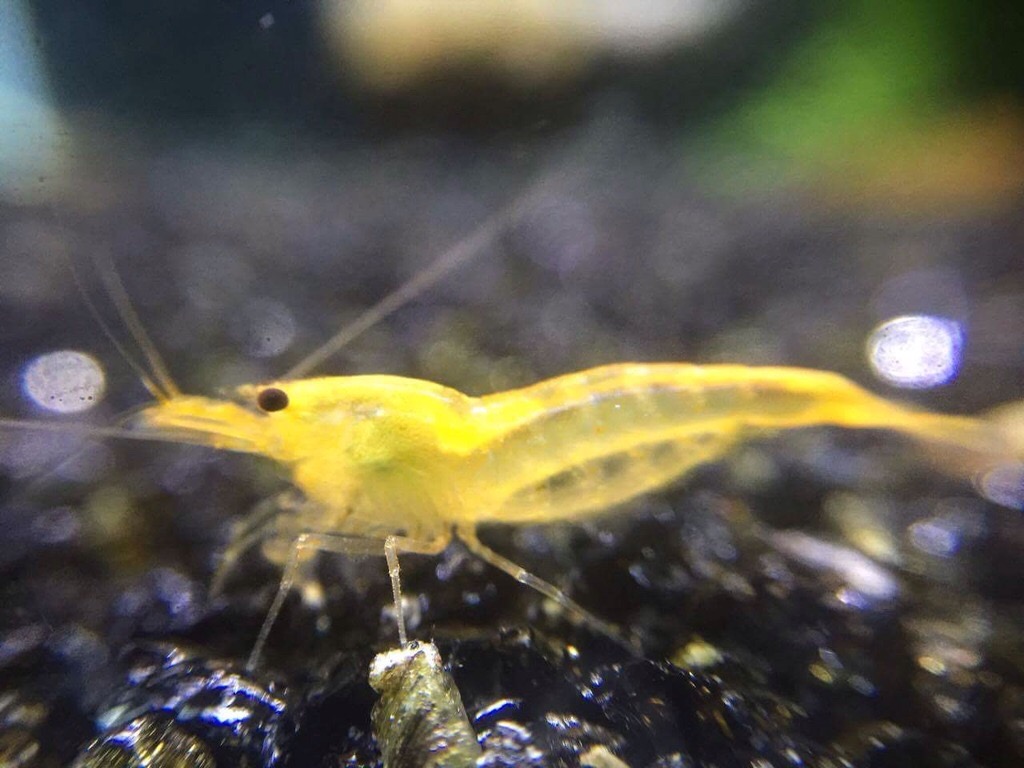
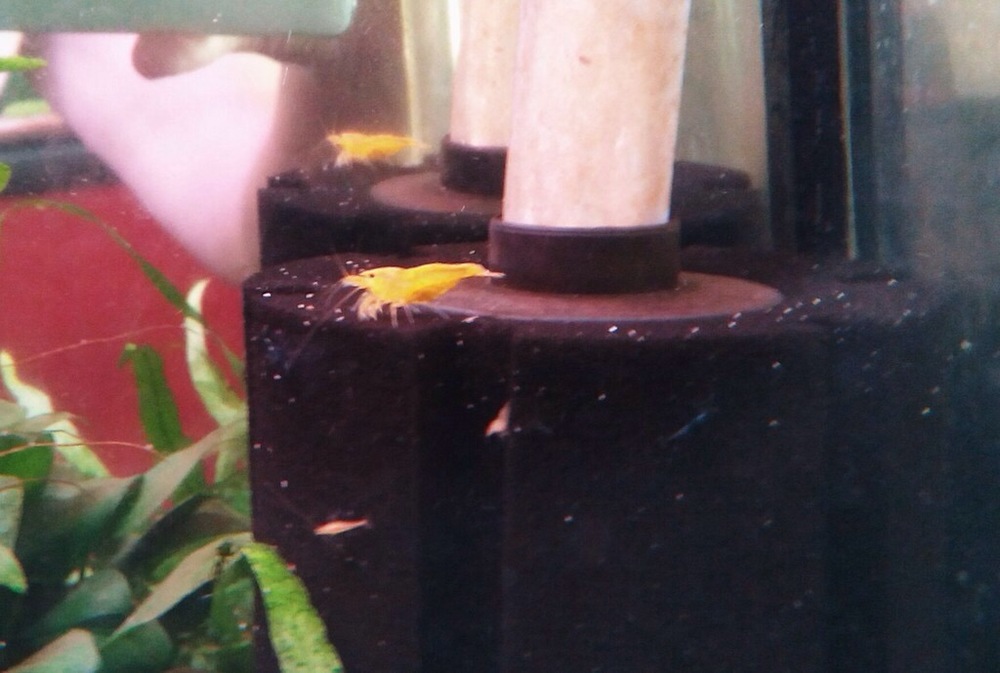
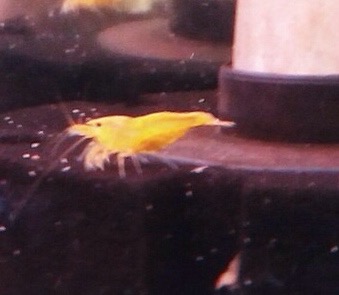
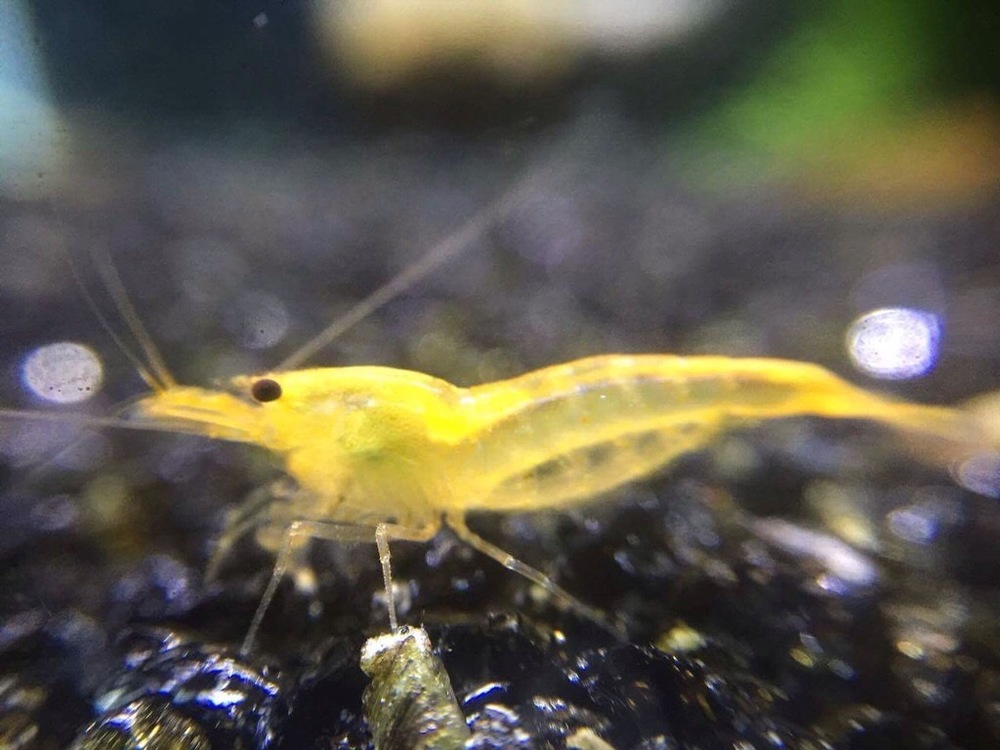
1 pointLast year my tangerine colony started showing a few yellows. I did a search of overseas forums and found them mentioned there too under Caradinas Serrarata Fire Yellow. I decided to try and breed just yellows and started off with a nice trio. I now have a good size colony of yellows and find they breed almost 100% true with only 1 tangerine showing up over several generations. I'm not sure where I will go with these as I still prefer my other shrimp so will probably pass them on to someone else to continue with them. n
 1 point
 -
1 pointIt can take months for baby shrimp to reach full adult coloration, but if they are showing some color now, take it as a good sign! :)1 point
-
The snails section seems a bit light on. Trumpet snails, ramshorn snails, etc. I'm trying to find out more info on Singapore spiral snails. which are apparently from China and called Bellamya heudi guangdungensis. They look pretty and have a variety of patterns. For some reason the ones I have breed but their babies don't survive larger than about 3mm.1 point
-
 Only 2 of the 40 adults I ordered are still alive. Of the 12 babies that hatched from eggs dropped during shipping, 9 of them are doing well and are getting bigger each day. From everything I've been able to find to read, I think the problem with mine was that the shrimp were all fully grown adults of over an inch in length. The babies have done well in the tank, but the adults did not. From what I've read, most people say that the adults have much more problems adjusting to being moved between different water conditions. Since these had been imported by the seller I bought them from, they had all gone through multiple changes in water conditions. After the first ones that died within a few days, all of the others died soon after molting. Every time I'd find a molted shell, I'd find a dead shrimp the next day. Almost everywhere I've read, others who have had this problem have just gotten adult shrimp. Even when moved from bad water conditions to much better conditions, the change is apparently very hard on the adults. Even when acclimated slowly as I did by adding tiny amounts of water at a time over several hours so they have plenty of time for their bodies to adjust osmotically, changes in ph and hardness make if difficult for the adults to molt the next time. I guess in some way it's not that different from how I could go a week with only 2 hours sleep per day at the end of a term when I was in college when I would cramming for finals and trying to finishing papers. Now 40 years later, I'd be dead before a week was over under the same conditions. I found a guy on another forum who was only 50 miles from me who wanted to sell all of his RCS. Last Saturday I drove and got them. They are a mixture of some nice red ones, a few blue ones, and about 50+ that are native brown looking, which are presumably the result of his crossing of the blues and reds. They range from newly hatched to about 1/2 inch in size. I actually like the natural looking brown ones better than low quality reds I seen online. I didn't think that the 8 babies from my initial batch of fire reds were enough to begin breeding with healthy diversity, so I've put them all together and am content with them (hopefully) growing into a healthy colony of brown native looking ones over time. With individuals from at least 3 different lines, they should have enough diversity to breed healthy for some time. They are eating well and are very active. I've not lost any in the past week that I can see. I don't know if it because they are younger, healthier, or what, but my babies and these new small ones are much more active and less shy than my first batch I bought. It may be because the first ones were bred in ponds overseas, while these have always lived in an aquarium and don't find it stressful. When I turn on the tank light in the mornings, the 2 large adults of the originals still skitter away and hide, as all of that group always did when I turned on the light. These little ones instead have already learned in just a few days that when the light comes on in the morning, food will arrive shortly thereafter. I have a large freshwater mussel shell into which I drop their pellets each morning. While I have my morning bagel and coffee, I enjoy watching them swarm to get their "pellets on the half shell."1 point
 -
I'm finally getting time to look at this again. So, who's up for some more ideas?1 point
-
Appears someone got some AMAZING shots of these parasites in shrimp molts... and it's not just in Caridinas. (no surprise there! just, there's at least one or more Neo specific parasites out there that don't bother Caridinas!) It's in this video below.... actually see them about 12 minutes in. (be sure to watch in 1080p!) One person thinks they might be apostome ciliates, also seen in saltwater shrimp. http://www.bioone.org/doi/abs/10.1111/j.1550-7408.2004.tb00598.x?prevSearch=&journalCode=eumi And doing a quick search shows some scary stuff.... and interesting pages! Appears as if copepods can't even be free of these things.... yeeghads! https://www.researchgate.net/publication/294284052_Biology_of_Symbiotic_Apostome_Ciliates_Their_Diversity_and_Importance_in_the_Aquatic_Ecosystems https://www.researchgate.net/publication/228498029_Symbiosis_of_planktonic_copepods_and_mysids_with_epibionts_and_parasites_in_the_North_pacific_diversity_and_interactions And now I feel like molts should never be left in the aquarium...1 point
-
1 pointIt does seem that all Yellow KK are hybrids. I am as sure as I can be that my Yellow Tangerine are not hybrids but as I don't know who bred the original shrimp there is always the possibility that a stray gene may have gotten in the mix . It just seems strange that it has taken such a long time to show up. One of the many shrimp mysteries in our hobby I guess. It is getting harder and harder to know whether a line is in fact pure regardless of the type of shrimp. I have had tanks sit empty for several weeks while recycling after substrate topup. All shrimp were removed, no new plants or moss added and yet after 2-3 weeks tiny shrimp appeared even after horrendous ammonia readings. I can only assume a female dropped her eggs while I was catching the last few shrimp and the eggs hatched despite the water conditions. I've dumped new subtrate into the water, added cold straight RO water into the tanks added salty shrimp directly to the tanks- thinking they were empty of course, and still found baby shrimp surviving in those tanks. This has happened several times over the years so I guess a stray shrimp is always a possibility when moving shrimp around for what ever reason.1 point
-
1 pointI read that someone sold off their collection of shrimp and once all was said and done they averaged out about 2,000 shrimp per ~37 litres... So, in theory, you could have 6,000 shrimp in the tank you have, as long as it's got good filtration and there's plenty of food. Should you allow a colony to grow that large in that size tank? Not necessarily, but it goes to show that you can have *A LOT* of shrimp! Congrats on your shrimplets!1 point
-
 1 pointthe berried female must have been hiding for a while i just spotted 2 shrimplets today so stoked. ill put some photos up when there closer to the edge took a couple but they are blurry way to small to focus on1 point
 -
1 pointI've got some blue velvet cross RCS females that have just dropped healthy babies after being moved to an unheated tank with slightly different water parameters so I wouldn't worry to much. Totally agree with Madmerv. I think your only danger would be overfeeding. They are scavengers so they don't need to be fed every day. But they will always prioritize eating food you've given them over grazing biofilm to stop the food you give them fouling the water. Having plants, mosses and wood for them to graze is a good plan. And if their environment is dirty your probably overfeeding them Sent from my GT-I9505 using Tapatalk1 point
-
 @neo-2FX the issue with moss id is the conditions in which its grown can change its appearance, so you really need to look at it under a micro scope and be able to understand wtf your looking at to determine our moss. but i guess we could get out own version of a moss chard like we do for out grading and id's of shrimp. with a few different pics of the same moss to give a good idea of what they all look like under ideal conditions.1 point
 -
 There's definitely one thing that pisses me off! Moss ID! Not as important as the above mentioned ones but thought I'd put it out there.1 point
 -
 This is gonna take me a very long time to post lol. I agree with John!!! And we should definitely make a sticky about cherry types and names. Personally with the blue rilli name I am in complete agreement with bb. It should just be called a light blue cherry or whoever created it first. i just call it blue rilli cause everyone does....following people jump off the bridge so to speak lol but hey! we should change that right? With the term rilli however I believe the definition is just a shrimp with translucent body areas? While I too think the best rilli is head and tail. I don't see others as a cull but that's in the eye of the beholder. Why not make it simple? Such as adding a specific trait of the rilli you are selling? E.g red rilli shrimp with only red on tail A cull is only perceived as a cull if it does not meet the breeders requirements. For instance, I would one day love to breed a rilli with only tiger patterns. To me it's not a cull... To some yes. Arrrgggghhhhh so many discussions to follow! But I say male everything black and white. As for the Bloody Mary...... Looking from the photoI actually see it as another grade. Translucent red. But it doesn't mean I think it should be its own name. It should just be a translucent red grading cherry. Some peole like the translucent quality, some like it painted! but I sure as hell don't want to buy a cherry that is translucent when I'm looking for painted fire qualities so yes I would at least like to know that it's a translucent red. Hence a grading but not a name. Get it?1 point