
Leaderboard
-

RagingWind92
Members3Points18Posts -

KeenShrimp
Members2Points270Posts -

piterrrrr
Members2Points19Posts -

The Mantis
Members1Points5Posts
Popular Content
Showing content with the highest reputation on 04/17/17 in all areas
-
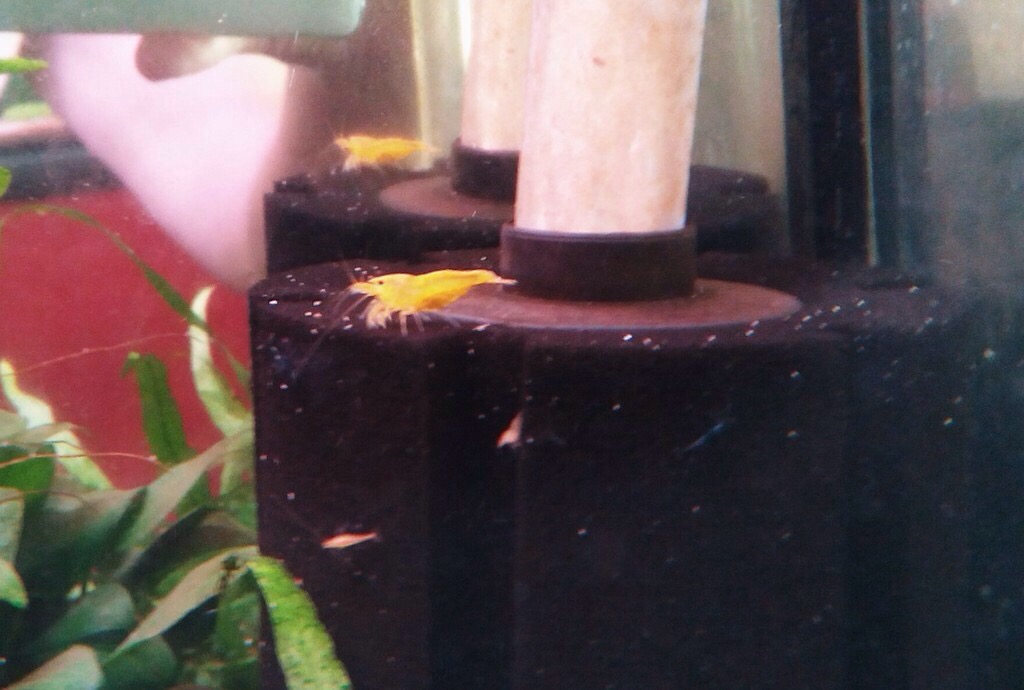
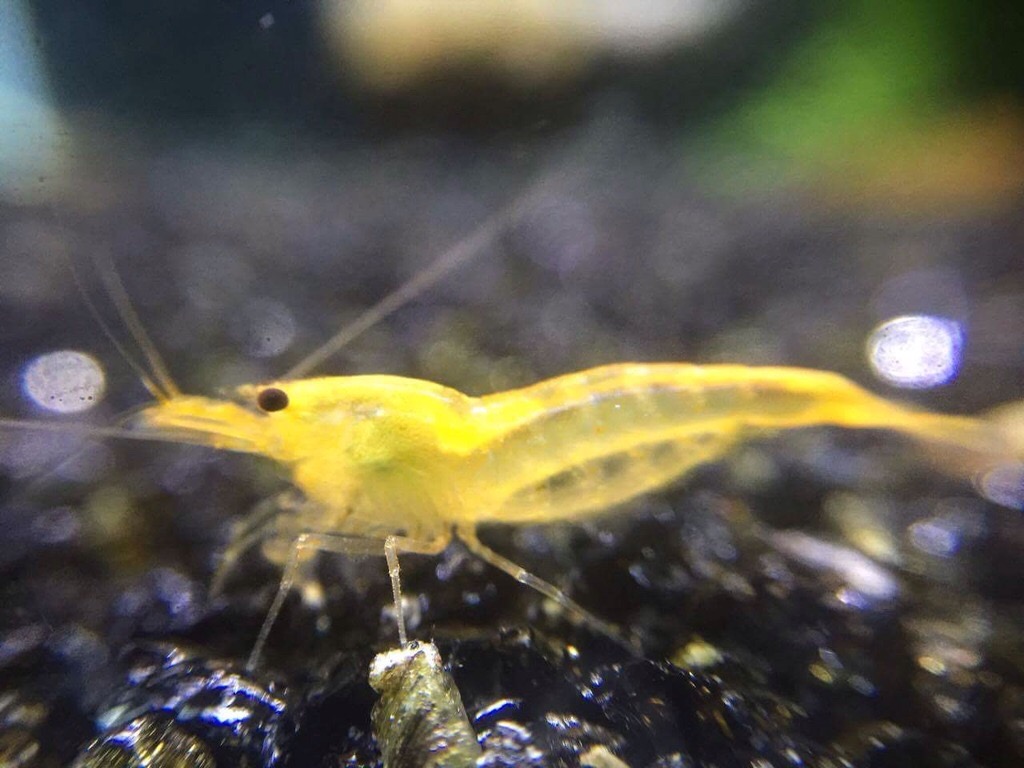
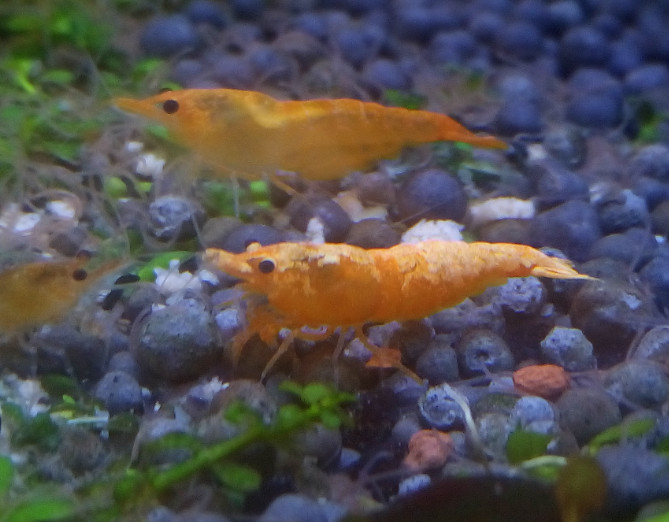
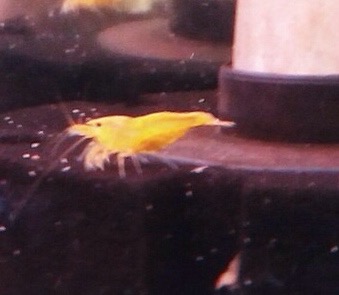
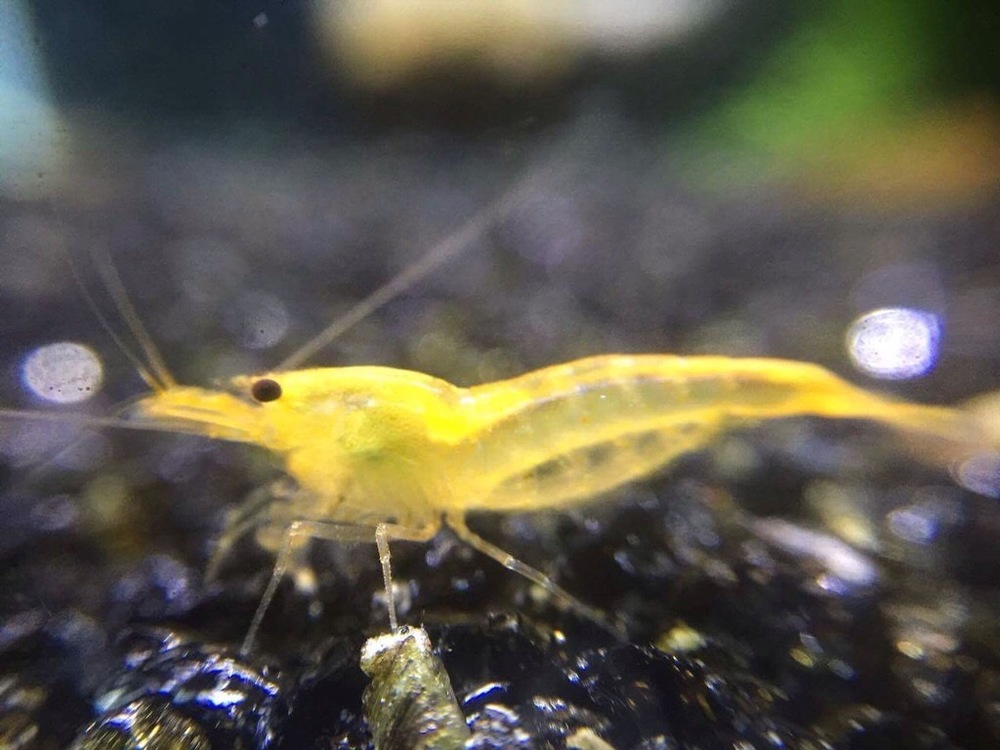
 1 pointLast year my tangerine colony started showing a few yellows. I did a search of overseas forums and found them mentioned there too under Caradinas Serrarata Fire Yellow. I decided to try and breed just yellows and started off with a nice trio. I now have a good size colony of yellows and find they breed almost 100% true with only 1 tangerine showing up over several generations. I'm not sure where I will go with these as I still prefer my other shrimp so will probably pass them on to someone else to continue with them. n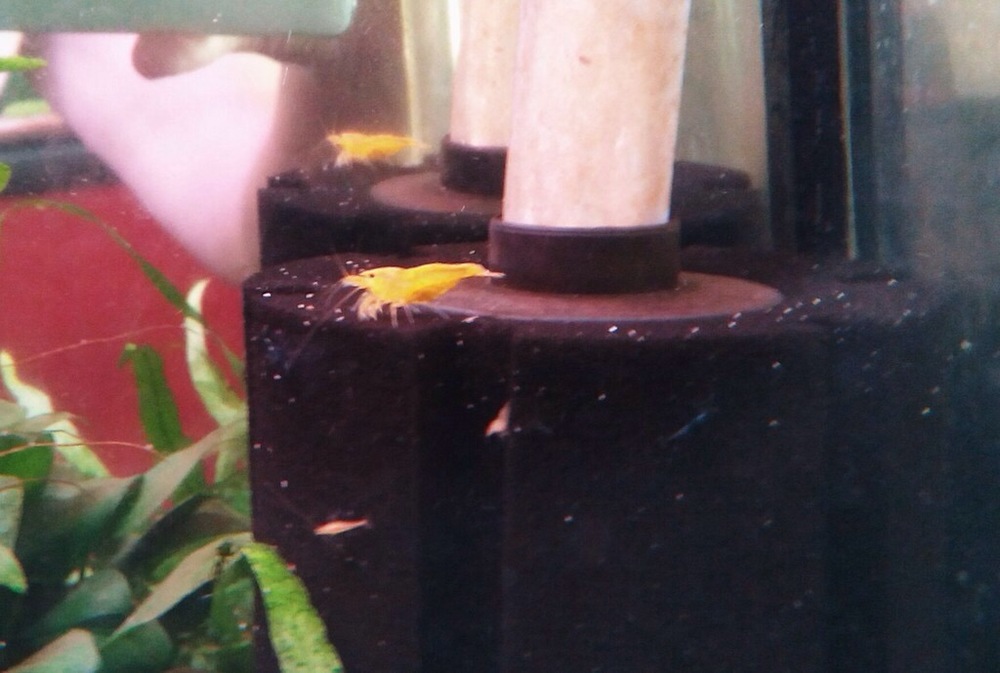
 1 point
 -
 1 point
 -
1 pointHi everybody, even though im pretty new to this hobby i am in love with these little invertebrates. I would like to see all of your lines or any photos of your current stock would suffice. Currently i am at day 3 of cycle, i know i just started but cant wait till it's fully cycled. I would also like to know if there is anybody who have some for sale by the time my tank is ready. Thanks in advance! Attached is photo of my Dennerle 10g shrimp tank day 3 Sent from my SAMSUNG-SM-N910A using Tapatalk1 point
-
1 pointThank you guys very much for the advice, i really appreciate it. I don't know how it survived the delivery and i guess my tank was acting like an egg tumbler with the suface agitation and bubbles it created. Ill try to keep him away from the bad colors neo to prevent WT. if this guy is blue i'll name him optimus prime :) ill keep an update on this little guy! Sent from my SAMSUNG-SM-N910A using Tapatalk1 point
-
1 pointhere's a decent shot from my phone of my BM. Im not really sure if it is but my lfs label them as BMs. The tank lighting sucks, just an old 10g flourescent light bulb. Will get some better pics up once everything is good. Sent from my SAMSUNG-SM-N910A using Tapatalk1 point
-
1 pointJust my two cents on what I have done: I would recommend it be as dry as a bone, plant sap kills shrimp fast. Wood that is heavy/hardwood works great. Preferably something found in or near a river bed that has already been exposed to water for some time, that way you can rule out plant sap. Then after collecting, high pressure wash or hose it off, boil it for as long as your family can stomach having it in the kitchen to kill whatever is living in the wood and then soak it in a tub of water with Seachem Prime for at least 2 weeks to make sure it is 100 recent shrimp safe. I added some tank water to the tub to colonise it with tank microbes. I have done this with a piece of wood collected near the beach. It might be overkill, but I value my shrimp. Second hand on Gumtree is cheap too ?1 point
-
 1 point1 point
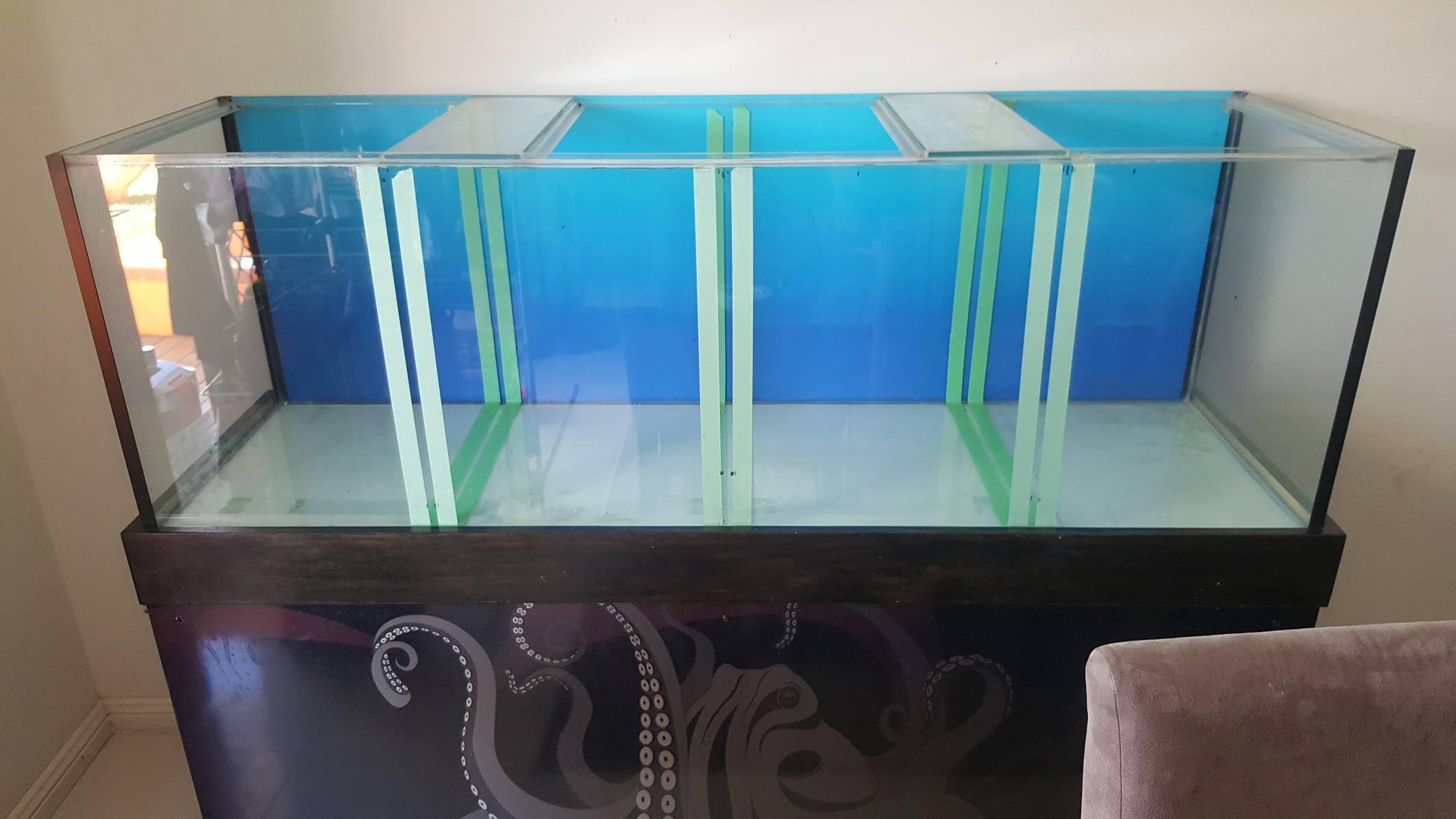
 1 pointIf you're going to keep the sections self-contained, solid glass is the best option. But you kinda have to be fairly sure of your plan since re-doing it somewhere down the line would be a big pain. There is a small disadvantage to self-contained sections - you basically end up with 4 smaller tanks that just happen to be stuck to each other and would have to treat the tanks as such: be more aware of potential water quality issues since you won't have as much leeway as with bigger systems. Many many people keep their shrimp in fairly tiny stand-alone tanks with few issues, so it's not a huge deal if you're keeping an eye on it.1 point
 Who are you referring to? Id like to see purple neos! And also yellow with red?! I kept a tank of cherries, goldback, and orange Sakura for a while and just sold the whole lot to someone on a different forum. They threw mostly reds and oranges as well as some interesting green neos for a few generations, although they didn't stabilize and just ended up breeding out yellows. You'll notice there are a couple brown shrimp in there. Surprised I had only a few as I added in ransoms when I had them (pearls, velvets, red rilis, Orange rilis, etc)1 point
 1 point1 point
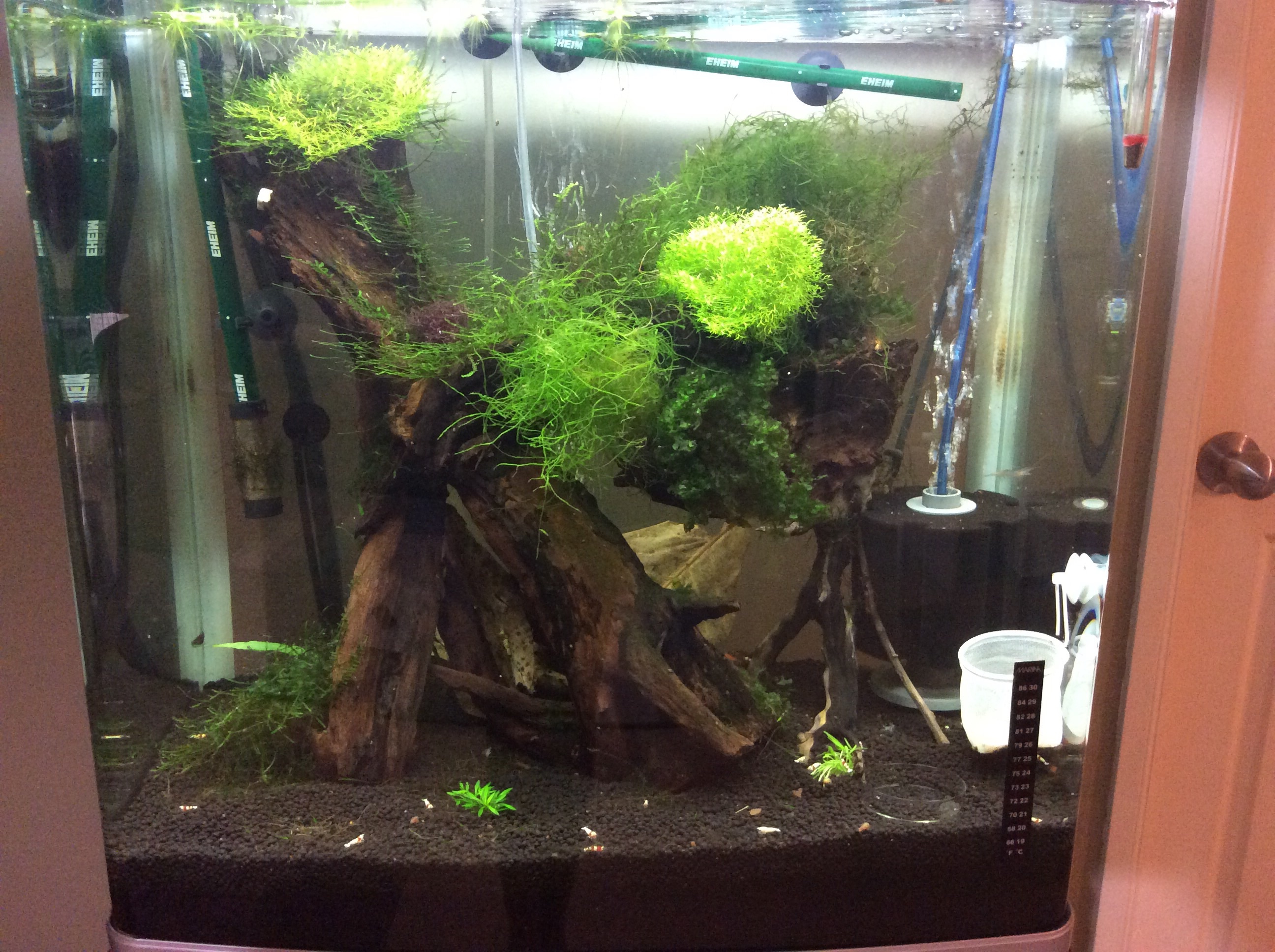
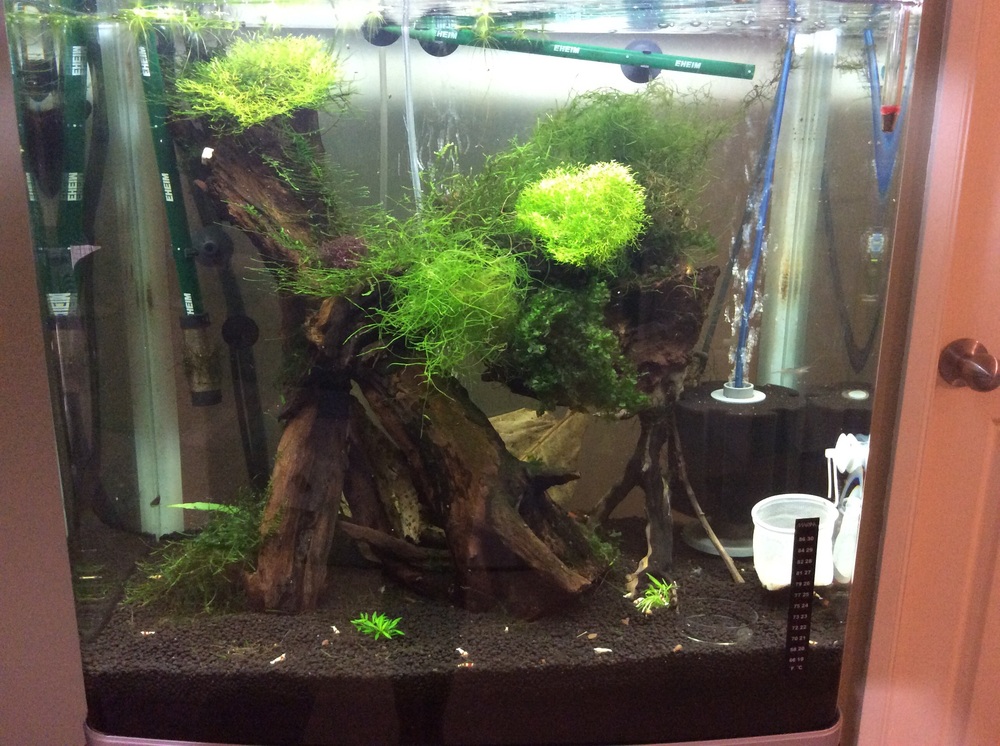
1 pointMy 2 main 2 tanks (240litre and 130litre)- moss needs trimming. Sorry for the algae...I promise there are shrimp in there :)
1 point1 point
1 pointMy 2 main 2 tanks (240litre and 130litre)- moss needs trimming. Sorry for the algae...I promise there are shrimp in there :)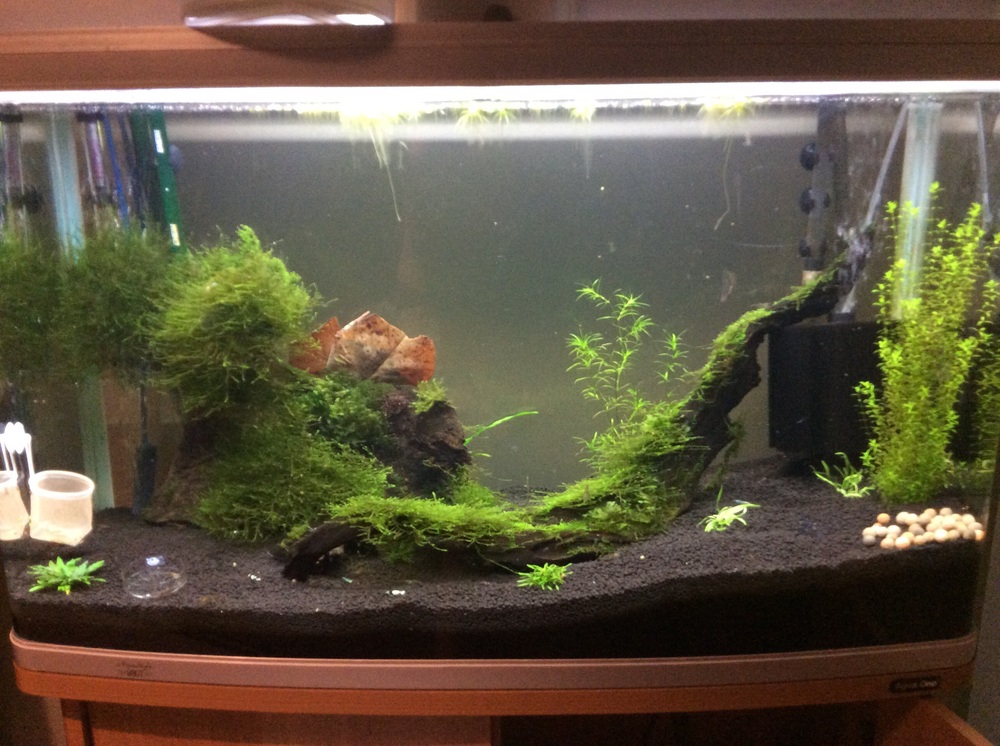
 1 point
1 point
1 point
1 point
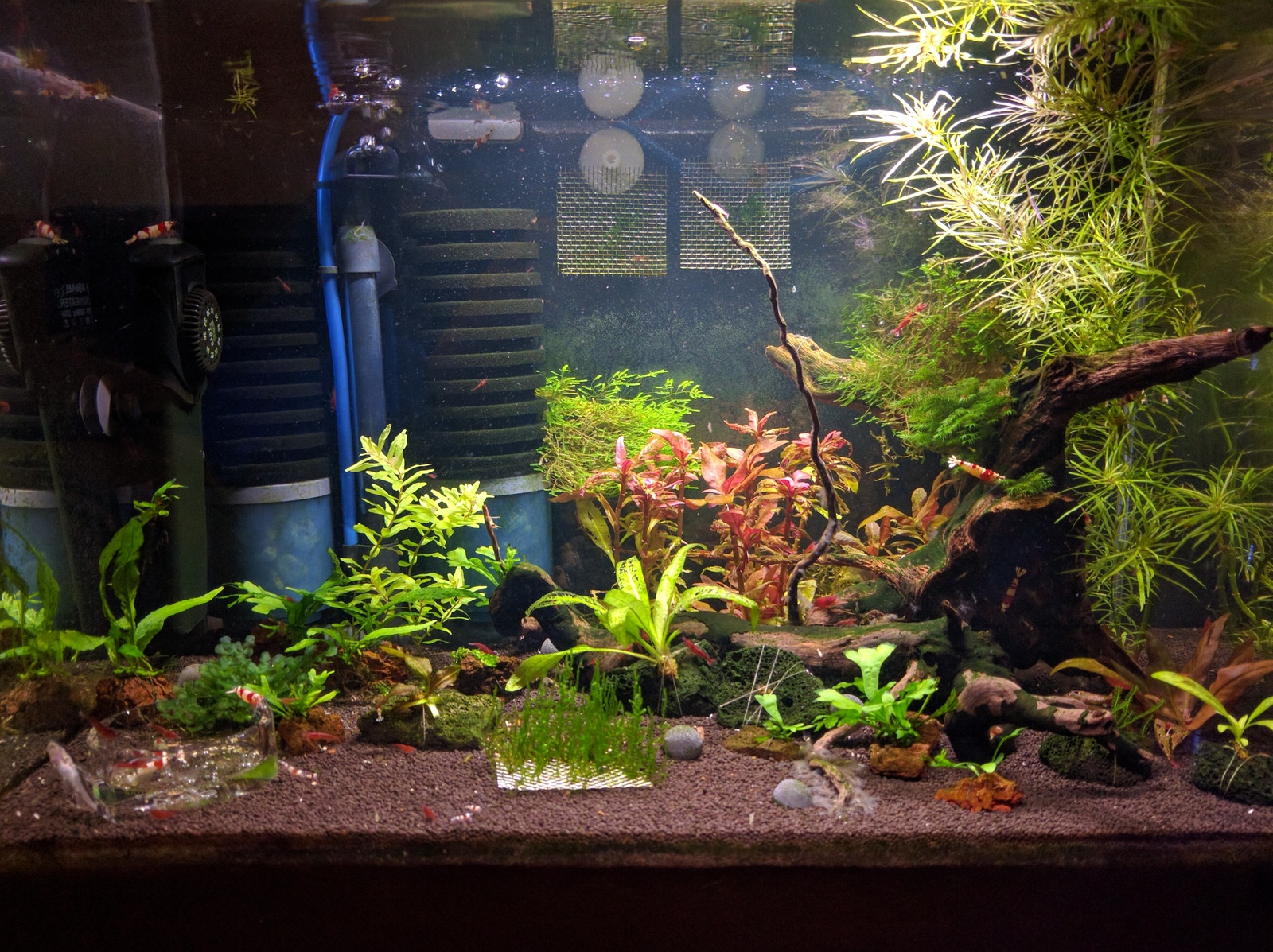
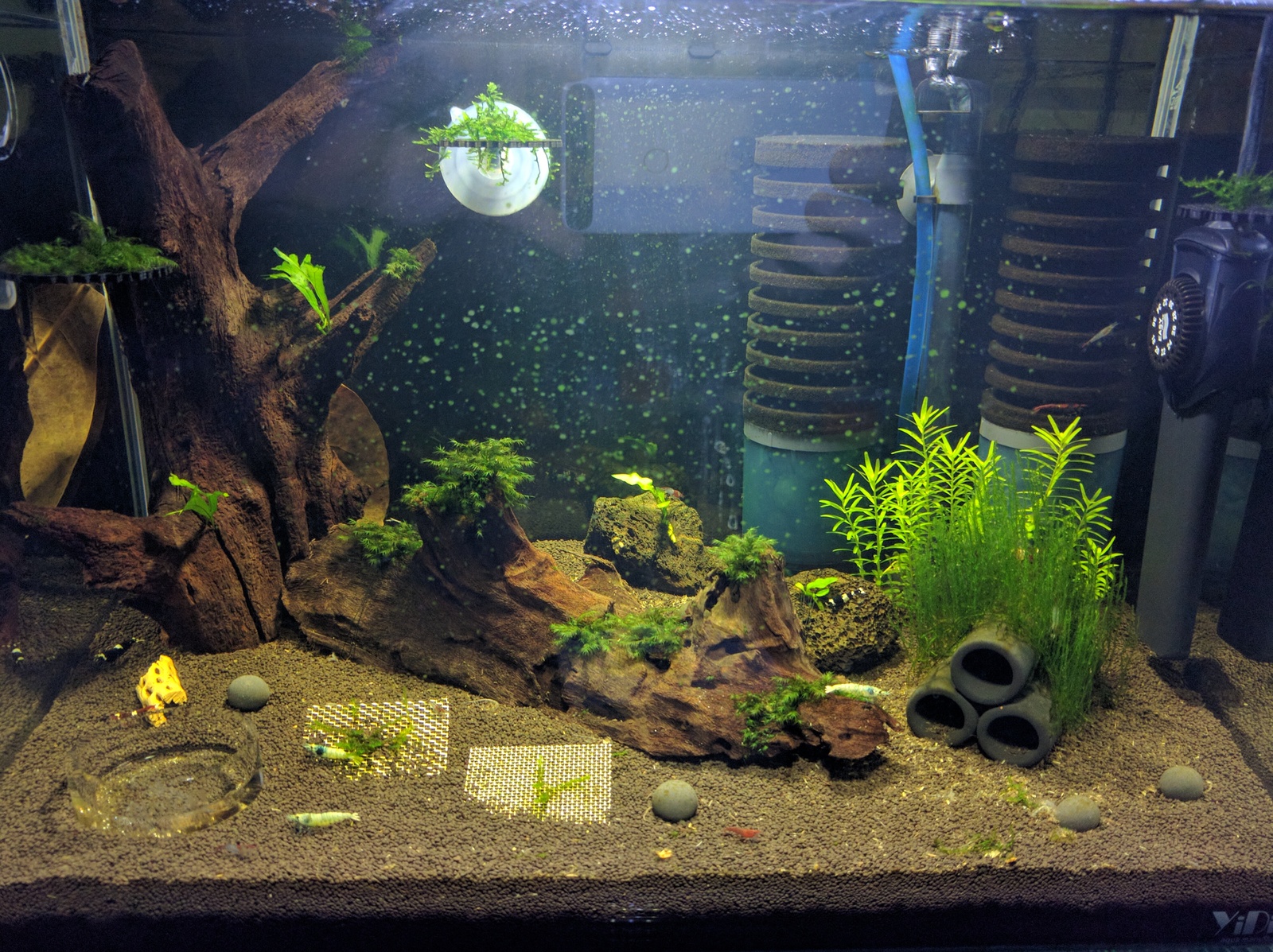
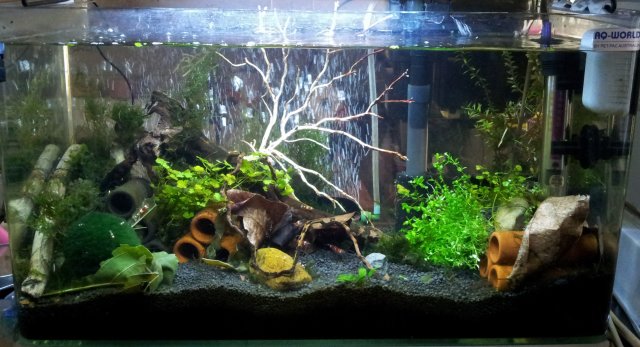
1 point 1 pointGreetings from Istanbul, Turkey. My Taiwan Bee Shrimp tanks are as followed: 1st one is 45 liters, 2nd one is 80 liters.1 point
1 point
1 pointGreetings from Istanbul, Turkey. My Taiwan Bee Shrimp tanks are as followed: 1st one is 45 liters, 2nd one is 80 liters.1 point
1 point 1 point
 1 point
 1 pointThese are some of the more common creatures you may find in your aquarium and a little info about them. A healthy ecosystem contains many life forms and not all creatures found in your aquarium are a problem, in fact many are a sign of a well established and healthy tank/ ecosystem. So before you go starting a chemical war with them, take the time to know what it is you are looking at and if they are actually a problem. Will cause problems for juvenile shrimp in aquariums Damsel fly nymph (Odonata Zygoptera ) Size range 15 - 40mm Damselfly Nymphs are easily recognized by their three long tail-like gills at the end of their slender bodies that grow between 16 and 33 mm. They have great vision, due to their large compound eyes. Damselfly Nymphs have extendable jaws that fold up under their head and legs close behind their head. Damselfly Nymphs are predators that feed mostly on other water insects, but they can also be cannibals. Larger species of Damselfly Nymphs can feed on small fish. They catch their food with a toothed lower lip, called a labium. When a small insect comes near, the nymph will shoot out its lower lip to grab its prey. Dragon fly nymph (Odonata Anisoptera ) Size range 20 - 50mm Dragonfly Nymphs are short and wide growing 18-49 mm long. They have six legs located near the head, wing pads, and internal gills. Dragonfly Nymphs are predators that feed mostly on other water insects, but they can also be cannibals. Larger species of Dragonfly Nymphs can feed on small fish. They catch their food with a toothed lower lip, called a labium. When a small insect comes near, the nymph will shoot out its lower lip to grab its prey. Fresh water bristle worm (Annelida Polychaeta ) Size range 1- 100mm Each Bristle worm has characteristic bristles that are found lining the exterior of their white or pink body. They typically grow between 1 and 100 mm, but have been known to grow up to 150 mm in length. Freshwater Bristle worms can be found in silt substrates and among debris or detritus in ponds, lakes, streams and rivers. They use their two tentacles to capture food or detritus floating by and transport it along cilia to the mouth. May cause problems for juvenile shrimp if in high numbers Planaria or flat worm (scientific name) Size range 0.5 - 15mm Planarians are usually between 3 to 15 mm with a triangular head that contains two eye spots. The colors vary from white, grey, brown, and black. The mouth is located on the underside of the worm halfway down towards its tail. Planarians suck up seed shrimp, clam shrimp, water fleas, and dead animals using a straw like appendage that extends from their stomaches. Planarians can regenerate many of their body parts, including their heads! Hydra (phylum Cnidaria) Size range 0.2 - 15mm Hydra has a tubular body up to 10mm long when extended, secured by a simple adhesive foot called the basal disc. At the free end of the body is a mouth opening surrounded by one to twelve thin, mobile tentacles. Each tentacle, or cnida (plural: cnidae), is clothed with highly specialized stinging cells called cnidocytes. Cnidocytes contain specialized structures called nematocysts, which look like miniature light bulbs with a coiled thread inside. At the narrow outer edge of the cnidocyte is a short trigger hair called a cnidocil. Upon contact with prey, the contents of the nematocyst are explosively discharged, firing a dart-like thread containing neurotoxins into whatever triggered the release which can paralyze the prey, especially if many hundreds of nematocysts are fired.Hydra mainly feed on small aquatic invertebrates such as Daphnia and Cyclops. Not a problem Nematodes (scientific name?) Size range 0.01 - 10mm Nematode species are very difficult to distinguish; over 28,000 have been described, of which over 16,000 are parasitic. The total number of nematode species has been estimated to be about 1 million. Unlike cnidarians and flatworms, nematodes have tubular digestive systems with openings at both ends. Nematodes are slender worms, typically less than 2.5 mm (0.10 in) long. The smallest nematodes are microscopic, while free-living species can reach as much as 5 cm (2.0 in), and some parasitic species are larger still, reaching over a meter in length. The body is often ornamented with ridges, rings, bristles, or other distinctive structures. Tubifex (tubificid annelids) Size range 10 - 50mm Tubifex worms feed on decaying organic matter, detritus, and vegetable matter, which is commonly available in sewage/stormwater drains. Tubifex worms are hermaphroditic: each individual has both male (testes) and female (ovaries) organs in the same animals. These minute reproductive organs are attached to the ventral side of the body wall in the celomic cavity. In mature specimens, the reproductive organs are clearly found on the ventral side of the body. Seed Shrimp (Ostracoda) Size range 0.2 - 30mm The body of an ostracod is encased by two valves, superficially resembling the shell of a clam. A distinction is made between the valve (hard parts) and the body with its appendages (soft parts). In most ostracods, eggs are either laid directly into the water as plankton, or are attached to vegetation or the substratum. However, in some species, the eggs are brooded inside the shell, giving them a greater degree of protection. The eggs hatch into nauplius larvae, which already have a hard shell. Daphnia (Branchiopoda Cladocera) Size range 0.2 - 5mm Daphnia are small, planktonic crustaceans, between 0.2 and 5 mm in length. Daphnia are members of the order Cladocera, and are one of the several small aquatic crustaceans commonly called water fleas because of their saltatory swimming style. They live in various aquatic environments ranging from acidic swamps to freshwater lakes, ponds, streams and rivers. Cyclops, Copepods (Maxillopoda Cyclopoida) Size range 0.5 - 5mm Cyclops or water flea is one of the most common genera of freshwater copepods, comprising over 400 species. Cyclops individuals may range from 0.5 - 5 mm long and are clearly divided into two sections. The broadly oval front section comprises the head and the first five thoracic segments. The hind part is considerably slimmer and is made up of the sixth thoracic segment and the four legless pleonic segments. Two caudal appendages project from the rear. Although they may be difficult to observe, Cyclops has 5 pairs of legs. The long first antennae, 2 in number, are used by the males for gripping the females during mating. Afterwards, the female carries the eggs in two small sacs on her body. The larvae, or nauplii, are free-swimming and unsegmented. Freshwater Limpet (scientific name) Size range 0.5 - 5mm Limpet is a common name for a number of different groups of sea snails and freshwater (aquatic gastropod molluscs). The common name is applied to those snails that have a simple shell which is broadly conical in shape, and either is not spirally coiled, or appears not to be coiled in the adult snail. In other words the shell of all limpets is shaped more or less like that of most true limpets. Rotifers (scientific name) Size range Small. Rotifers have bilateral symmetry and a variety of different shapes. The body of a rotifer is divided into a head, trunk, and foot, and is typically somewhat cylindrical. Rotifers eat particulate organic detritus, dead bacteria, algae, and protozoans. They eat particles up to 10 micrometres in size. Like crustaceans, rotifers contribute to nutrient recycling. For this reason, they are used in fish tanks to help clean the water, to prevent clouds of waste matter. Rotifers affect the species composition of algae in ecosystems through their choice in grazing. Rotifers may be in competition with cladocera and copepods for phytoplanktonic food sources. Rotifers are dioecious and reproduce sexually or parthenogenetically. They are sexually, with the females always being larger than the males. In some species, this is relatively mild, but in others the female may be up to ten times the size of the male. In parthenogenetic species, males may be present only at certain times of the year, or absent altogether. Most information collected from http://en.wikipedia.org/wiki/Main_Page Also a great poster for identifying many of the water creatures1 point
 1 point
 1 pointJust saw this picture.... 3-4g running all these breeders... Now I am thinking about tearing down my 2 foot, and covering it in breeder boxes. Only thing that stops me is the noise of these. There has to be a quieter, and simpler way.1 point
 1 point
 1 point
 1 point
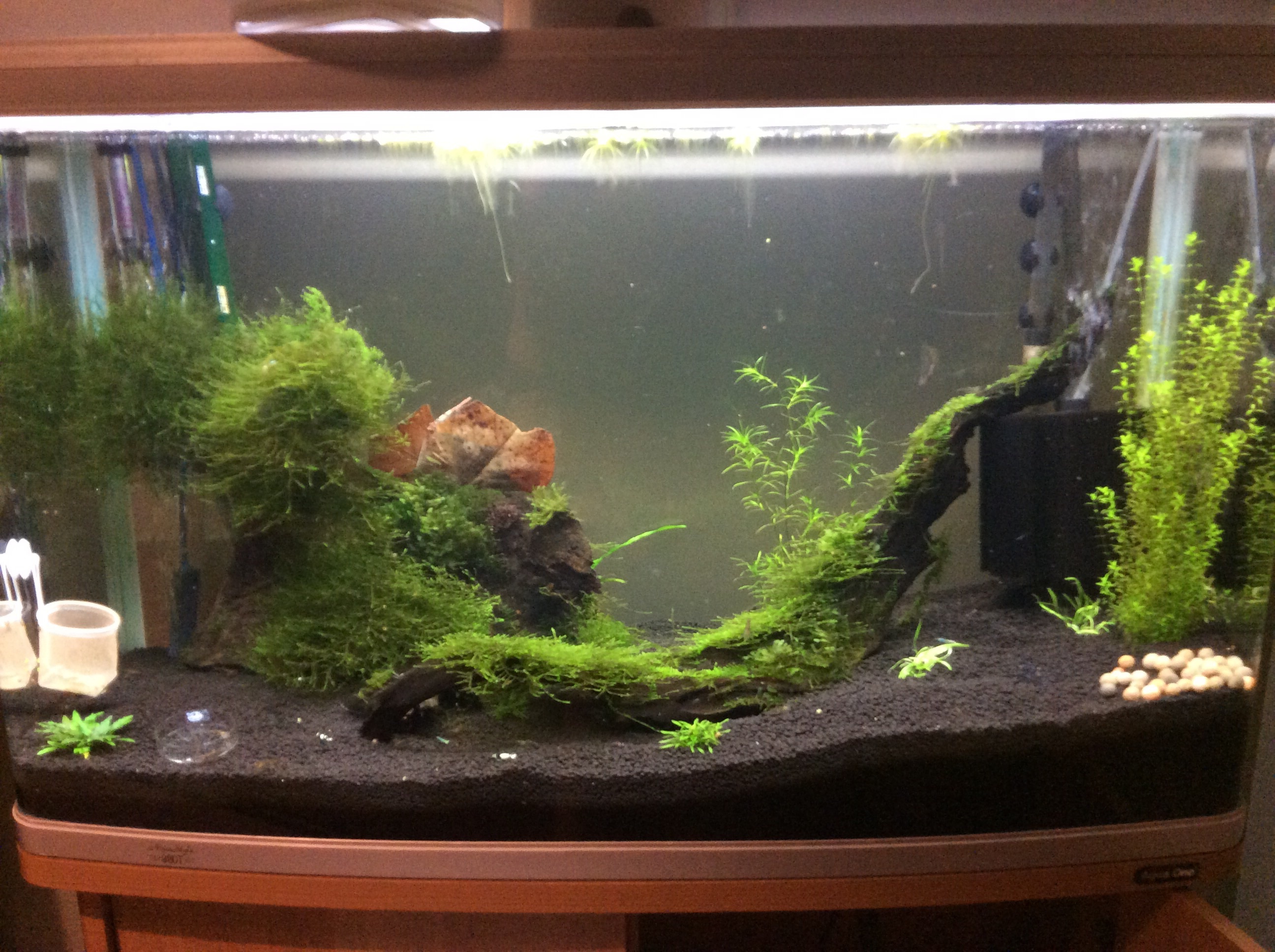
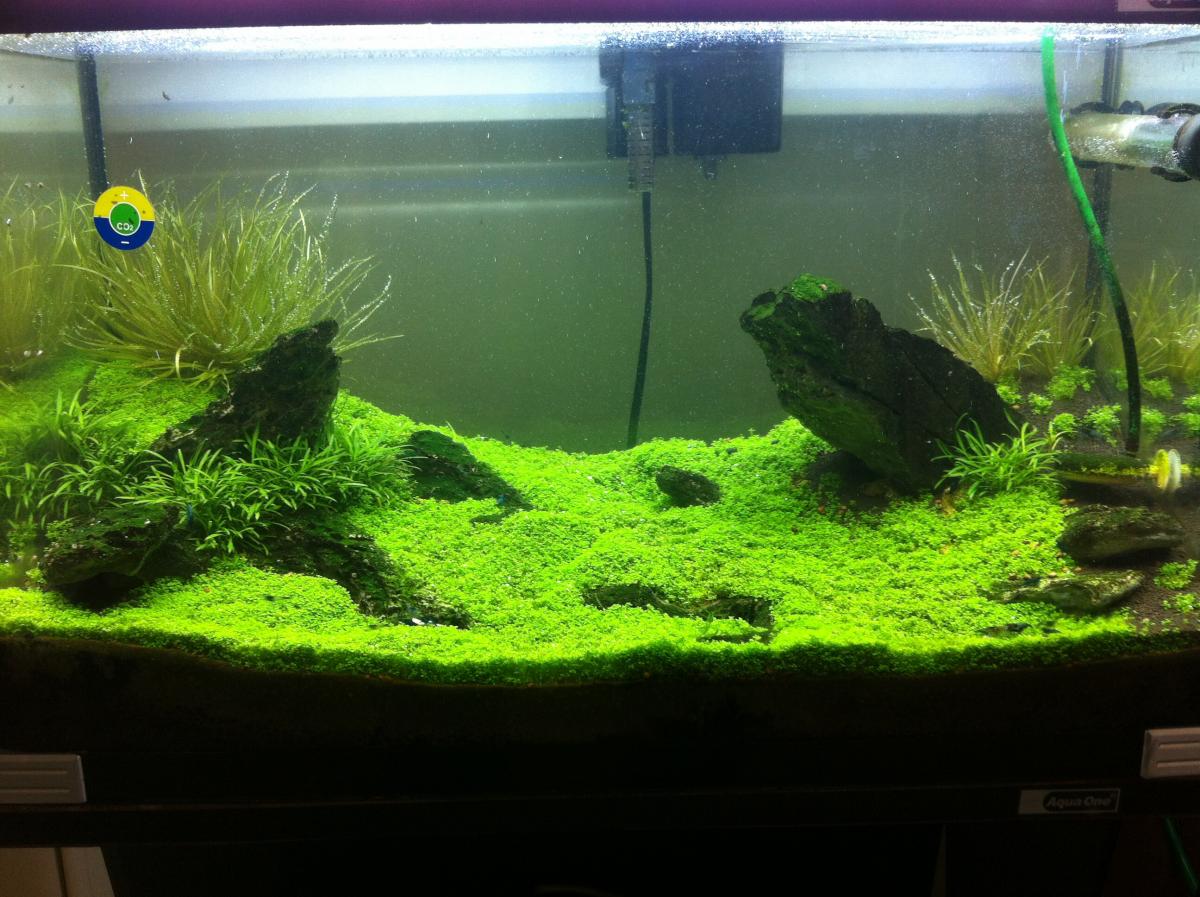
 1 pointGosh, there are so many inspiring tanks here! This is my AquaOne AR980 (215l) at the moment1 point
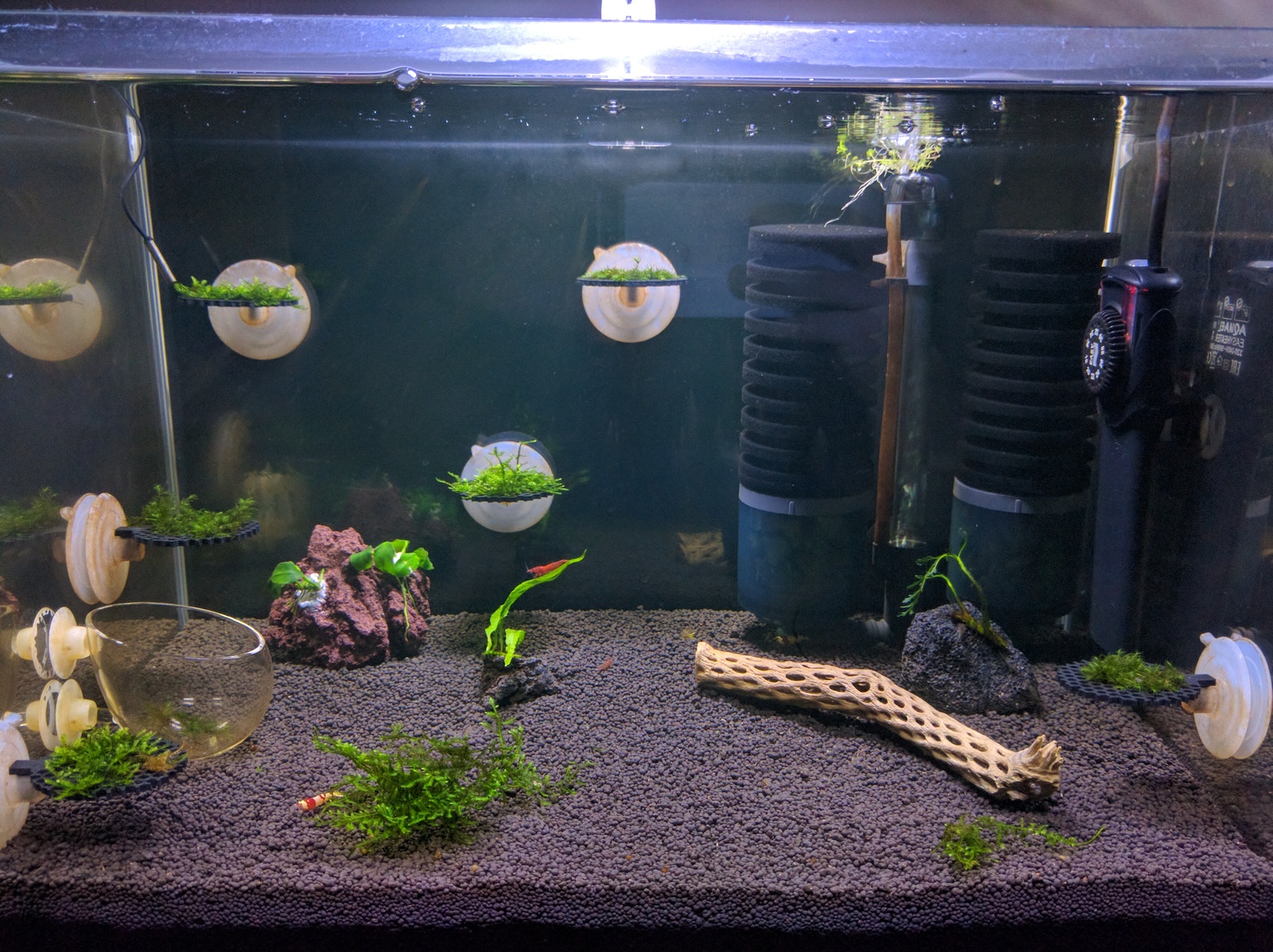
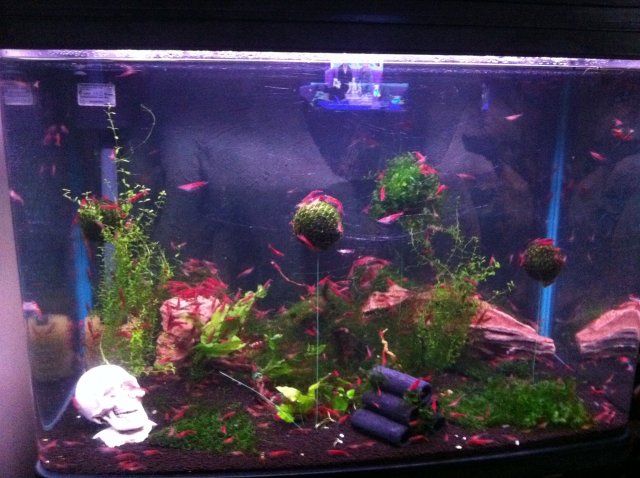
 1 pointyup, i agree ,Neon is relatively weaker and easier to died , i donno why now i got 12 of Cardinal tetras and they living fine and schooling :) This thread is about shrimp tank , so i better back to topic :stupid: It' s my shrimp tank before it close down a month ago1 point
 1 pointThis was my shrimp tank a few months ago, sorry for the poor quality image.1 point
 1 point
 1 point