
Leaderboard
-

gtippitt
Members1Points24Posts -

Zebra
Members1Points294Posts -

newbreed
Members1Points3152Posts
Popular Content
Showing content with the highest reputation on 03/16/17 in all areas
-
Madmerv, Thanks for what you said about all of the stresses during shipping having an ongoing impact of their health. I've been daily checking the water with every test kit that API makes, and everything is perfect as far as I can determine. I was about to pull my hair out because they continue to slowly die. Of the 40 I ordered, I counted 16 today that were out grazing. I've removed 12 dead ones, which leaves 12 others that were hiding or dead somewhere I can't see. The ones that I see all seem to be active and healthy, without any outward signs of infections or parasites. Zoidburg, What you said about the seller's water quality is good as well. Besides him putting too many in too little water for shipping them 2300 miles, when they arrived I counted more than 10 that had problems with their shells. Across their their backs, these had a white crusty looking appearance. I did a lot of reading on this, and from I could determine, this is often caused when the shrimp were living in water that lacked minerals needed to form a good healthy shell. Most things I read said that it was a sign they were about to molt, but the old shell was not turning loose as it should, which could result in some dying during molt. I've found several clean molts, and 2 of the dead shrimp I could tell had died while molting. Their shells were detached from their heads, but the lower half towards the tail was still attached. They looked like a car with its bonnet open. I bought my RCS from an online outfit called "Joe's Aquarium" in San Jose, CA. (https://jtibee.com) I do not recommend him. He guarantees refunds for DOA, but you must contact him within 3 hours of FedEx delivery confirmation. If they all die after 4 hours in your tank, tough luck. I didn't bother contacting him about my 3 DOA, because he says you must send him a photo of the sealed bag showing the dead shrimp before you open the bag. The trick on buyers is that he packs them in such a tiny bit of water and with no air, you cannot see if the shrimp or dead or alive. I could tell that some on the outside of the mass were wiggling a little, but I couldn't see the vast majority well enough to know how many were dead. The fairly shrimp eggs I got are freshwater cousins of brine shrimp. In the wild, they live in temporary seasonal pools of rain water or snow cap melt. They live for a couple months, lay eggs, and then die. Their eggs must be dried out and then rehydrated before they hatch. The woman I bought these from at www.arizonafairyshrimp.com, collected her initial breeding stock from season pools that form in the desert where she lives. When seasonal rains fall, the desiccated eggs from a year before hatch and live their lives before the pool dries up until the next year. The different species vary wildly in size and appearance. Some are small translucent, fuzzy dots, that look just like brine shrimps. One species is a bright red/orange and larger than a Cherry Shrimp. Another is white and grows up to 3 inches long, not including it long tail. Most people raise a batch in a large jar or bowl, and when that generation dies, they start over with a new batch of hatchlings. I want to try something different and see if I can maintain a tank with a colony of multiple generations at different stages of development. My idea is that once they are grown and lay eggs, which fall to the bottom, I will collect a cup of the sand substrate each week and let it dry out. The eggs hatch withing 24 to 48 hours of being rehydrated. Each week I will take my oldest cup of dry sand and eggs from 6 weeks prior, hatch them in a jar beside my tank, and then release the fry into my fairy shrimp tank. Unlike Triops (aka Tadpole Shrimp), which have the same breeding habit, they do not eat their young because they are filter feeders that only eat tiny suspended particles in the water. If my breeding idea works, I'll have a tank with 5 different species where I can see them at all stages of life at any time. They female begins laying eggs after 3 weeks and continues for another 6 weeks. Each will lay hundreds during this time. They are easy to hatch, but the difficulty is getting them from hatchling to semi-grown. They feed on microbes in green water, but they are sensitive to changes in water quality, which is were my challenge will be in configuring a tank where this is possible on a ongoing basis. Even if you aren't interested in ordering any eggs, the pictures and information on her site are fascinating. In the YouTube video of hers at the link below, these look like a Maltese Puppy, which is swimming on it back. https://www.youtube.com/watch?v=6DWWxZzXv1s The light I had on the shrimp tank died, and I post some RCS pics as soon as my new light bar arrives.1 point
-
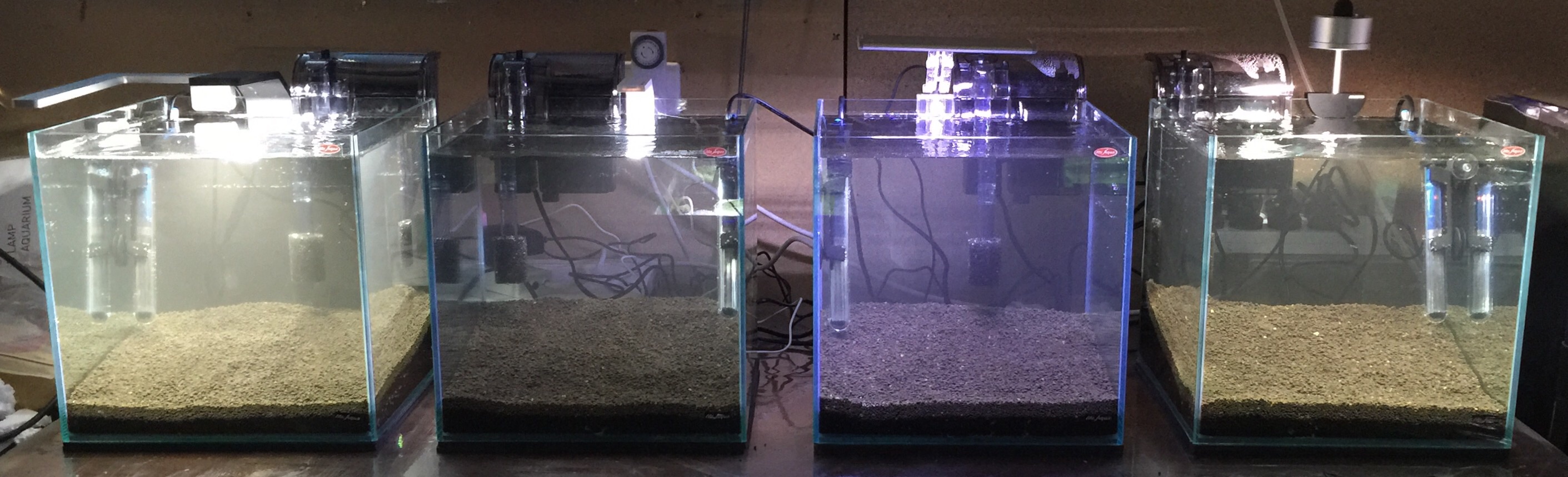
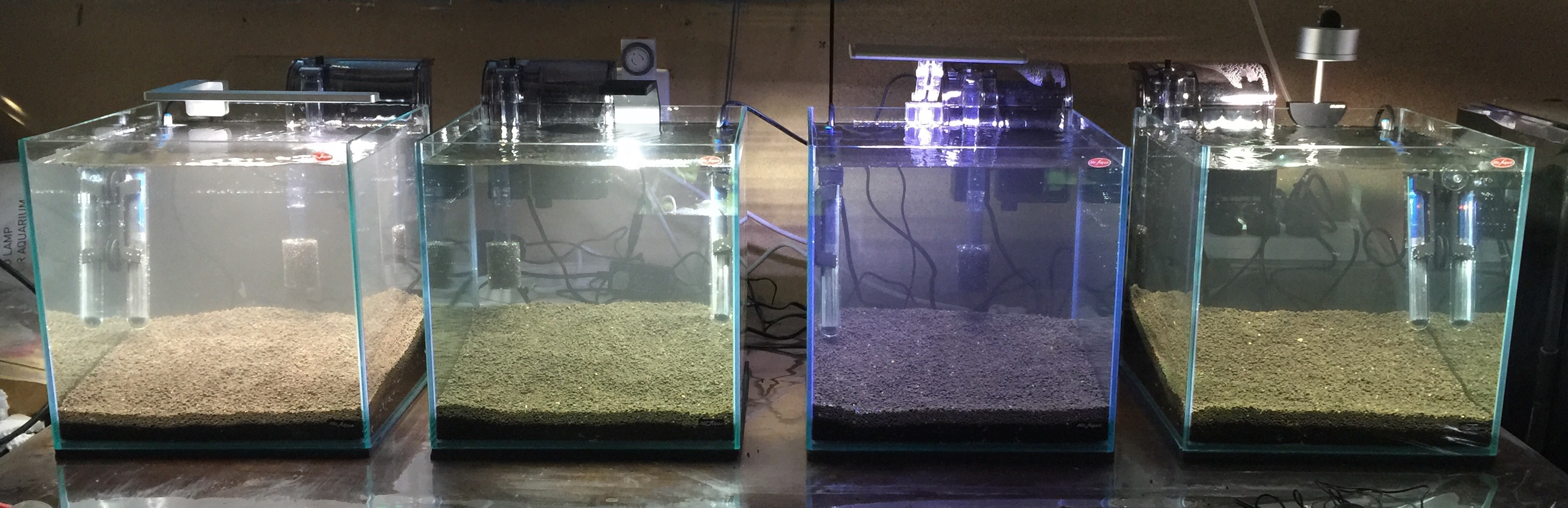
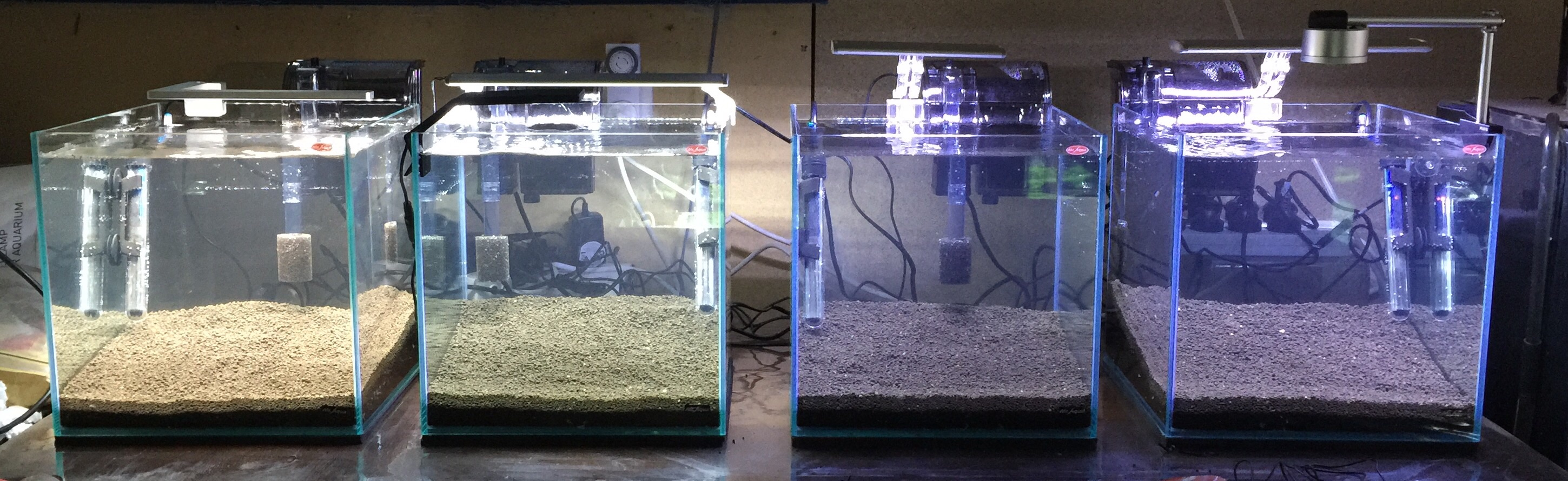
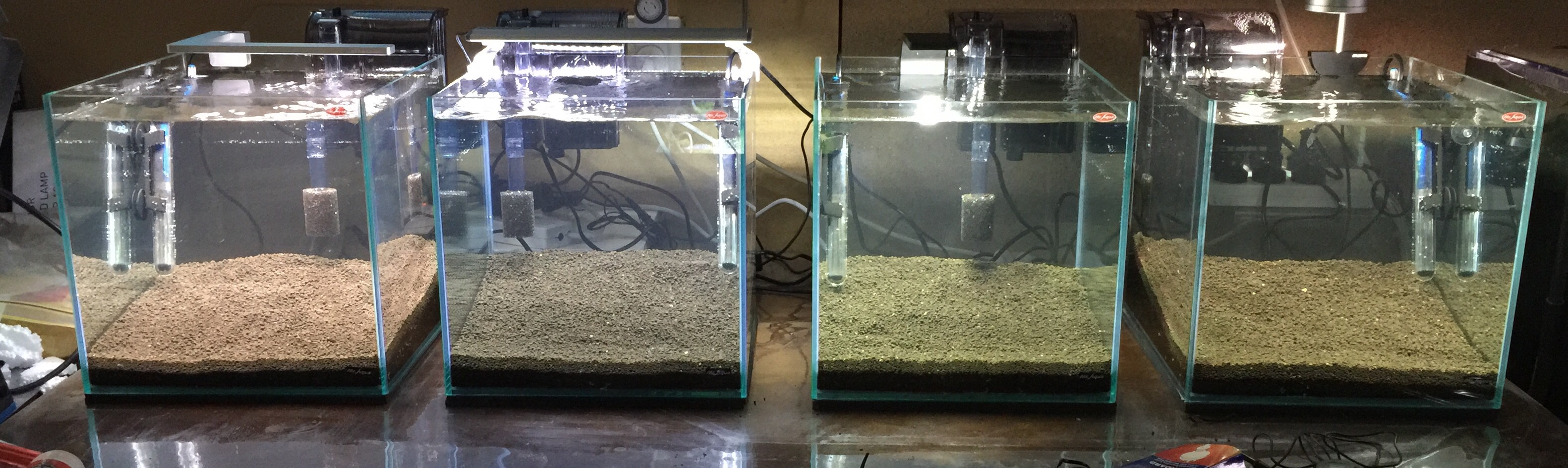
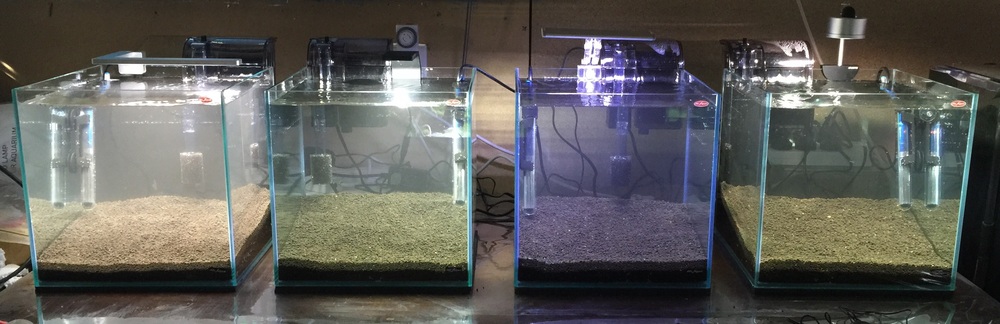
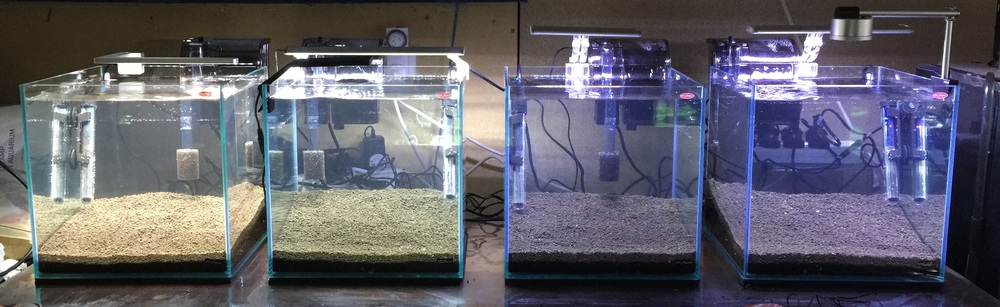
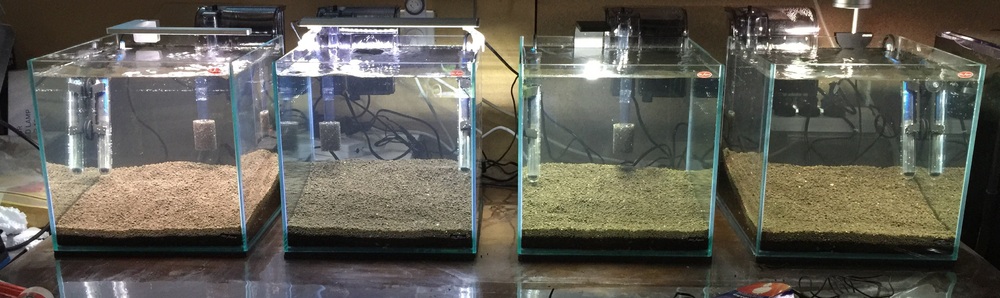
1 pointSo I had the opportunity Friday to setup some new 30cm cubes, which will be used for guppies (maybe shrimp later on!) I then decided it would be great to run a side by side comparison of the lights we sell online. All tanks have same heaters, filters and substrate (shirakura red bee sand). Left to Right: Aqualighter Nano Aqualighter Pico Up Aqua Y series 18cm ATLEDTiS E6 Left to Right: Flexi Mini Aqualighter Nano Up Aqua Y series 18cm ATLEDTiS E6 Left to Right: Flexi Mini Up Aqua ProZ 30cm Up Aqua Y series 18cm Up Aqua Y seties 25cm Left to Right: Flexi Mini Up Aqua ProZ 30cm Aqualighter Nano ATLEDTiS E6 Very surprised by the blue content in the Y series lights, though these still work well wih mosses and low light plants. Really Pleased with the ATLEDTiS E6 as it probably hd the most natural colour. I knew the Flexi minis were bright, and this is the original version, but when directly compared it outshines all. The ProZ has a nice even white colour to it as expected. Not a very scientific study, but amazing to see the side by side comparison. Hope it helps with any future plans for smaller tank setups. Will definitely give me a better base for recommendations in the future. Also have planted some tissue culture plants in each tank, again same plants across all tanks, so will be fun to watch the growth rates of each. As all other factors are the same, light will be the ultimate factor to growth. View full article

 1 point
 -
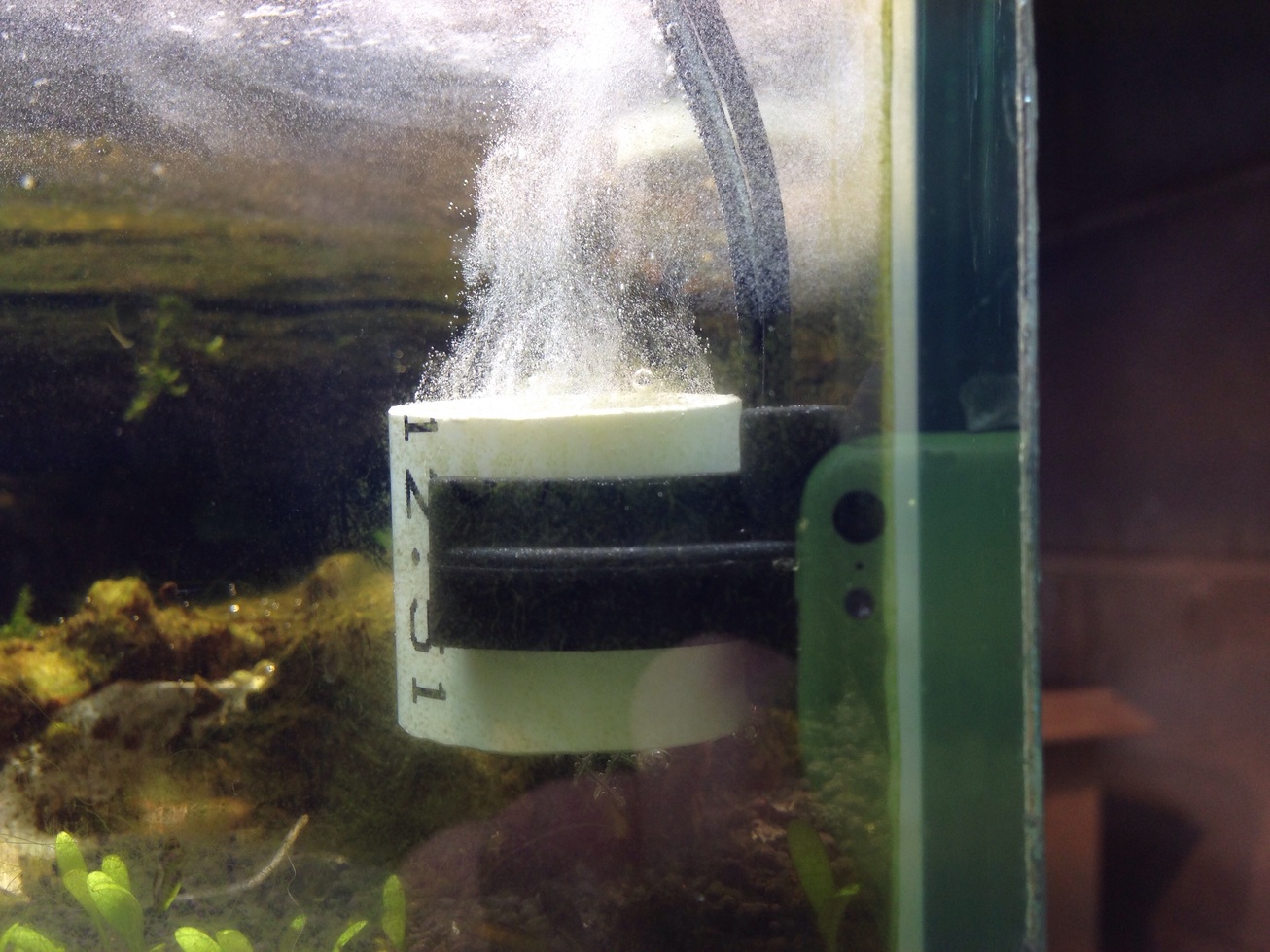
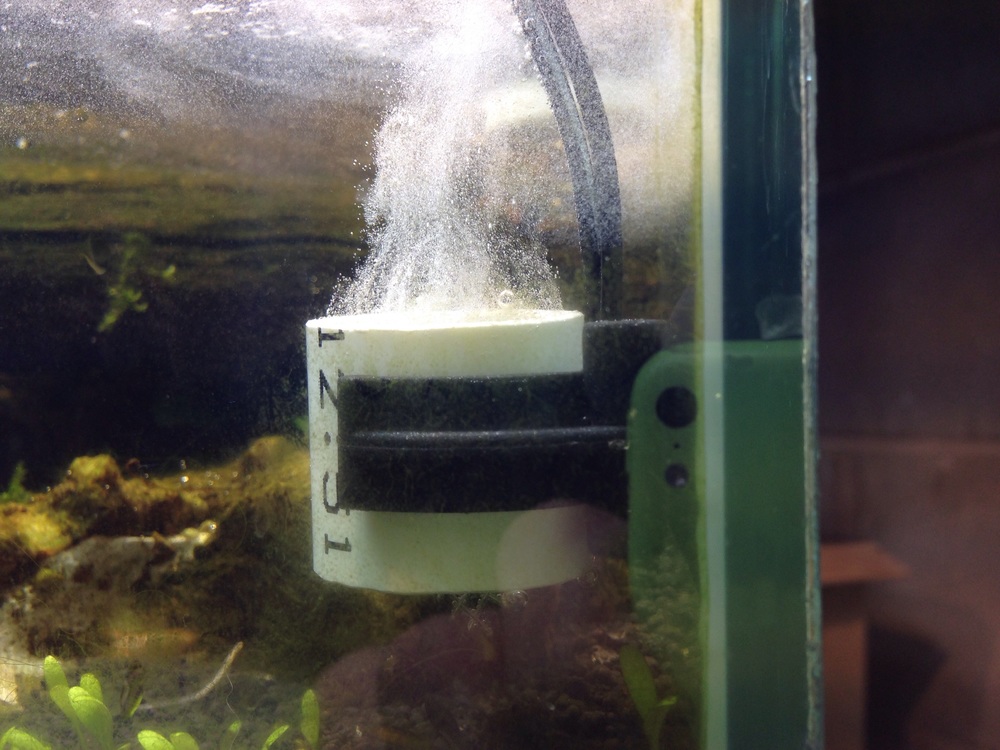
I did a bit of research and figured I have everything I need to make a steriliser, so I ended up making this little beast (just as a very raw prototype) and I'm so impressed with how well it's working. Im gonna make a better one for my zebra tank tomorrow.
 1 point