
Leaderboard
-

jayc
Moderators5Points6248Posts -

Zebra
Members2Points294Posts -
Foxpuppet
Members2Points874Posts -

buck
Members2Points758Posts
Popular Content
Showing content with the highest reputation on 01/17/17 in all areas
-
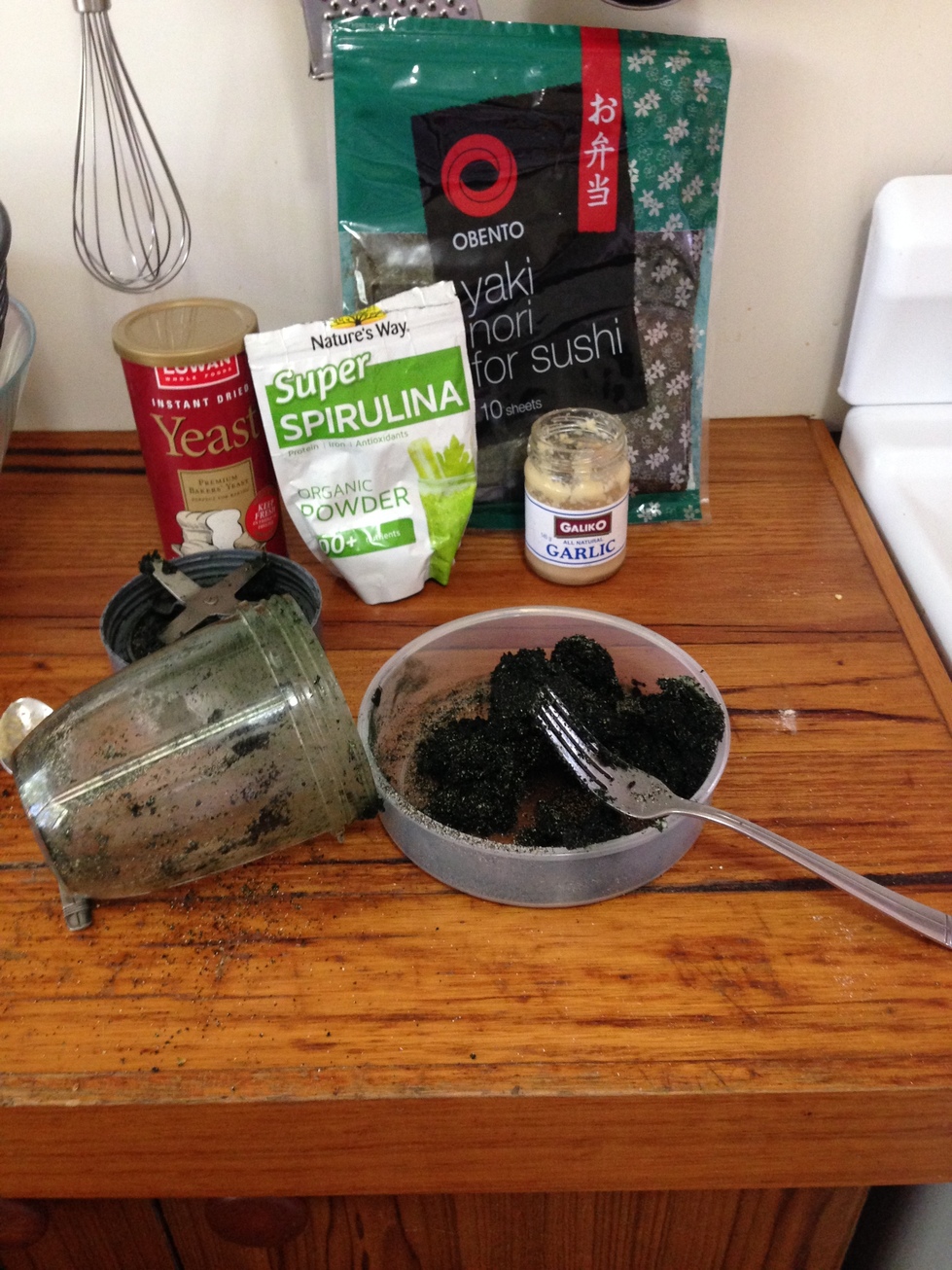
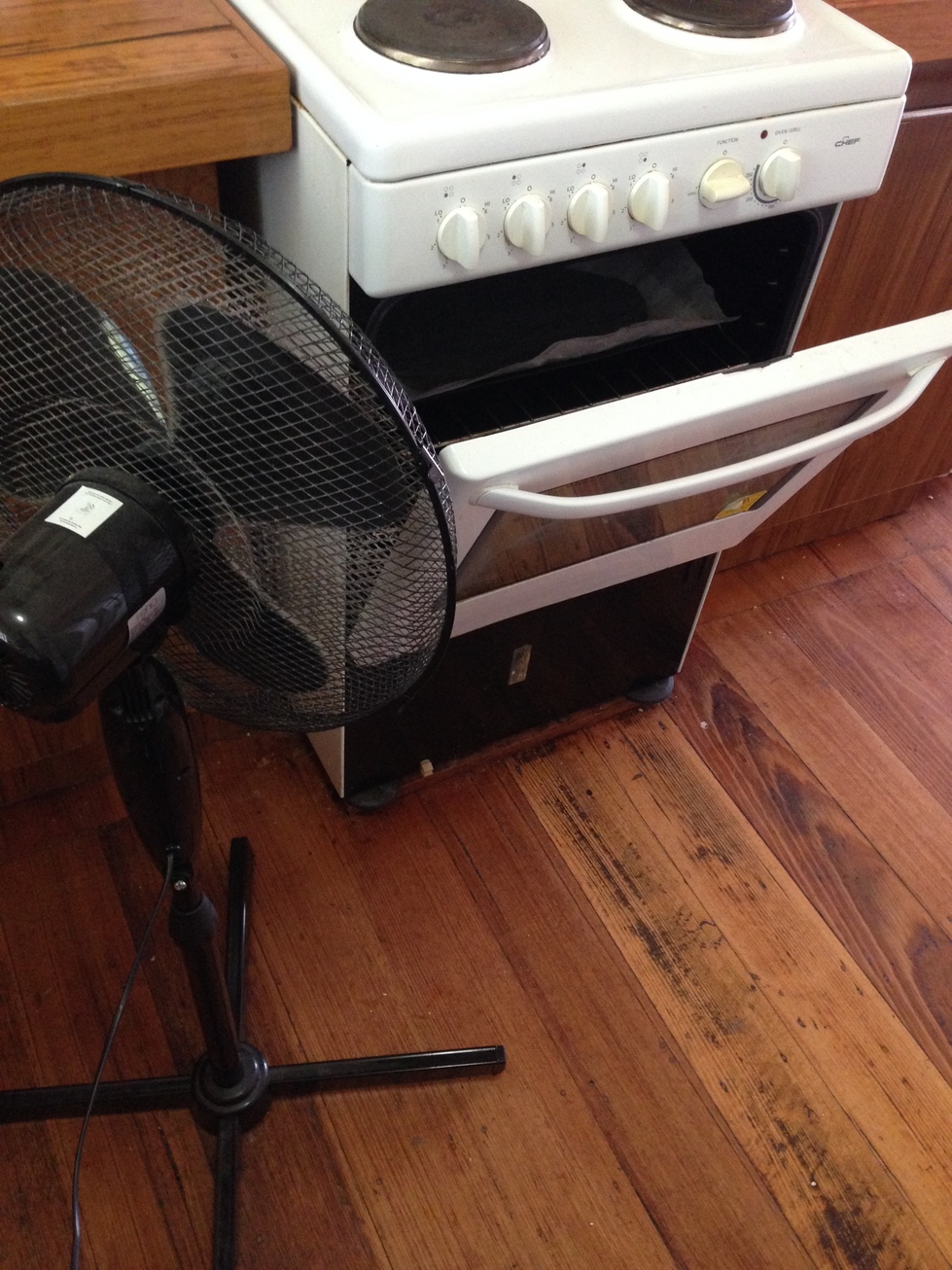
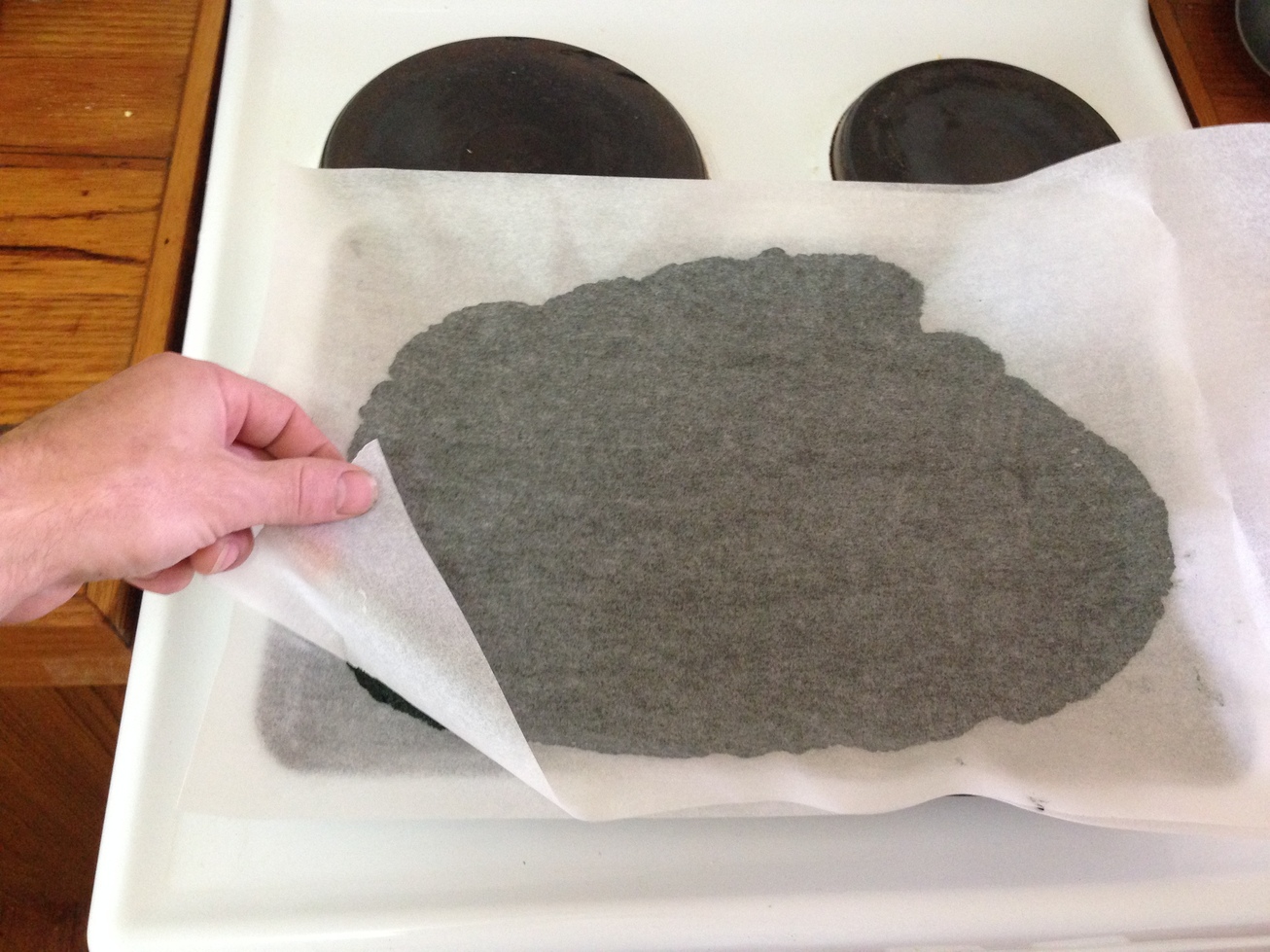
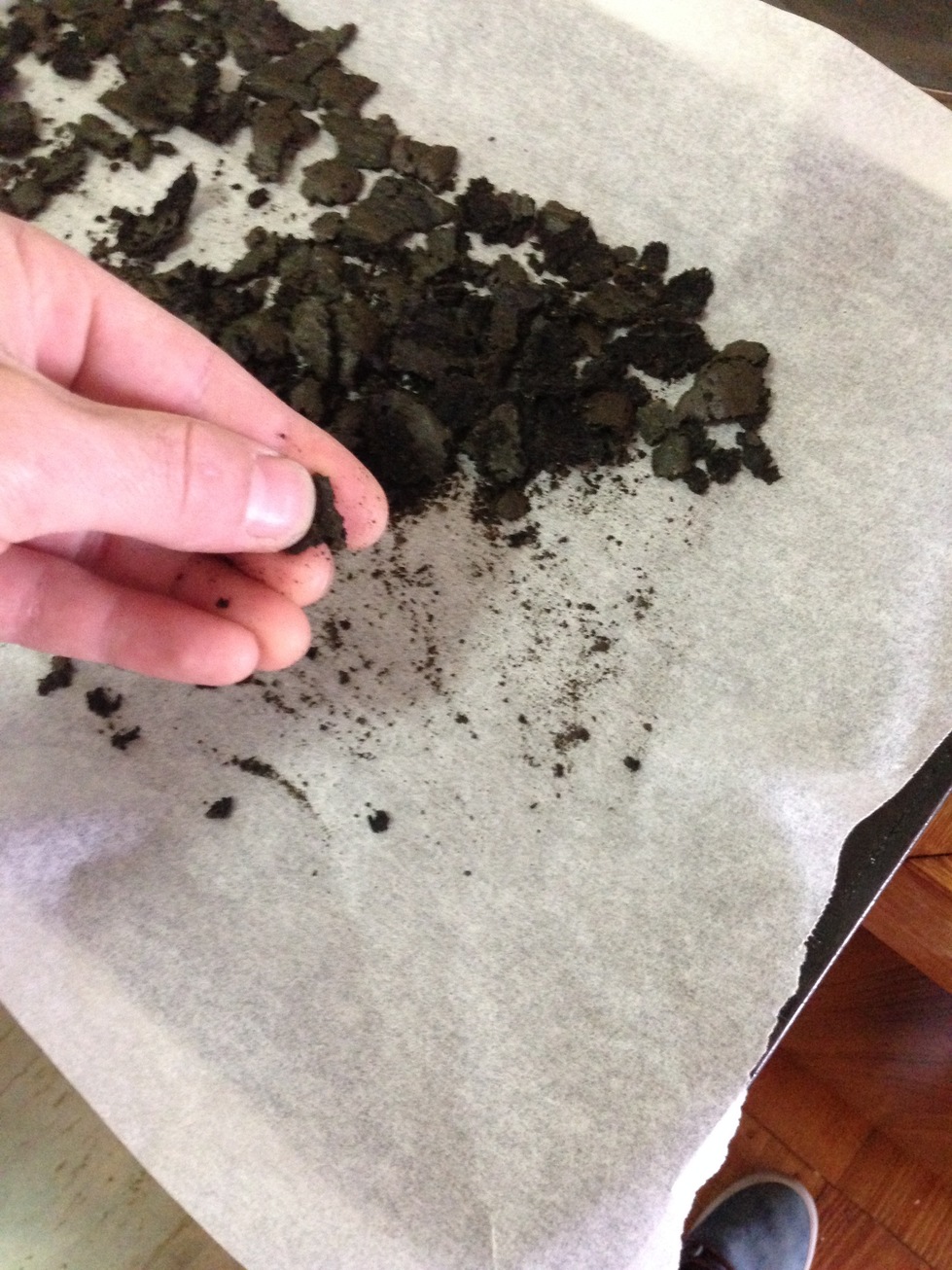
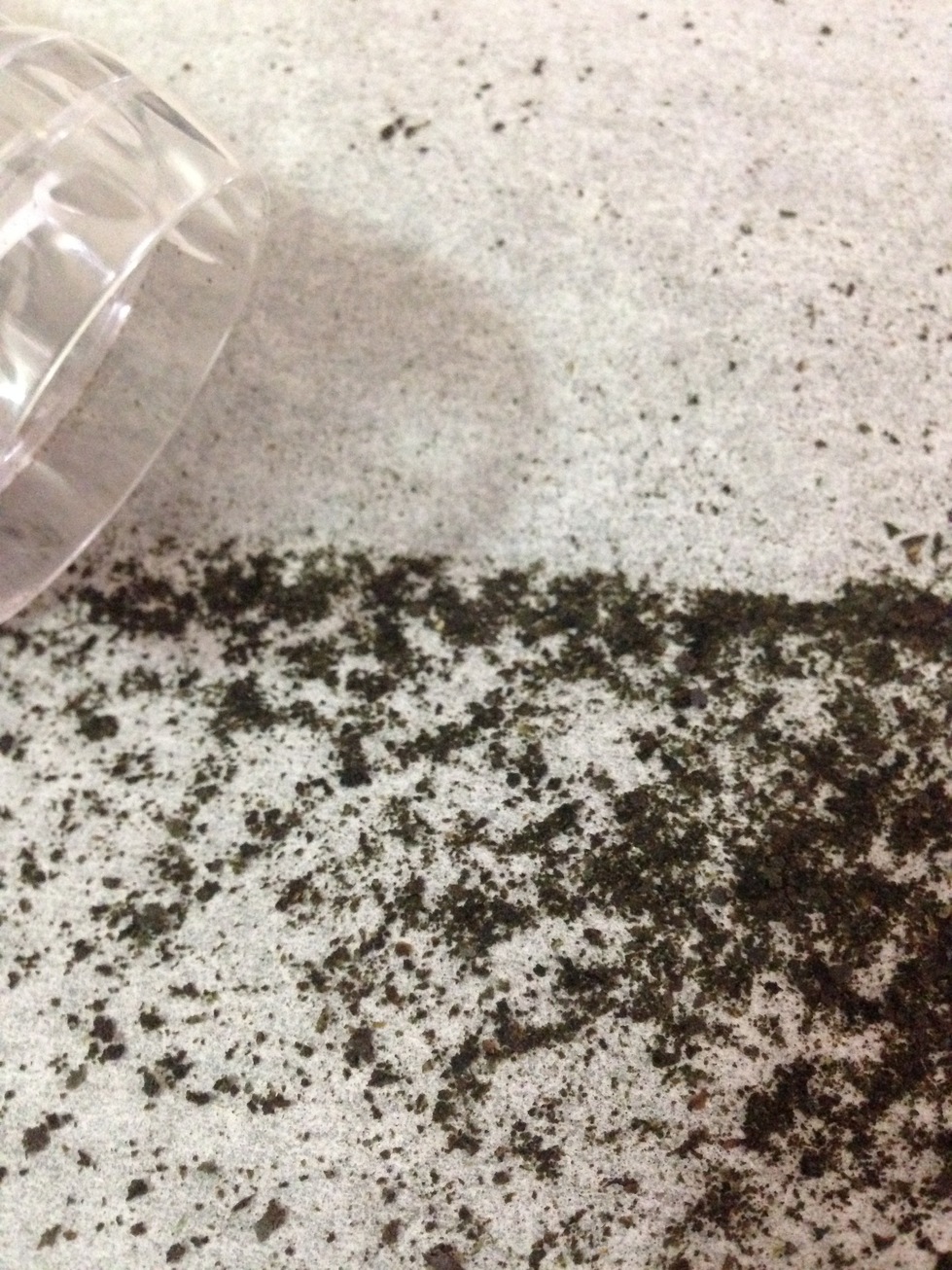
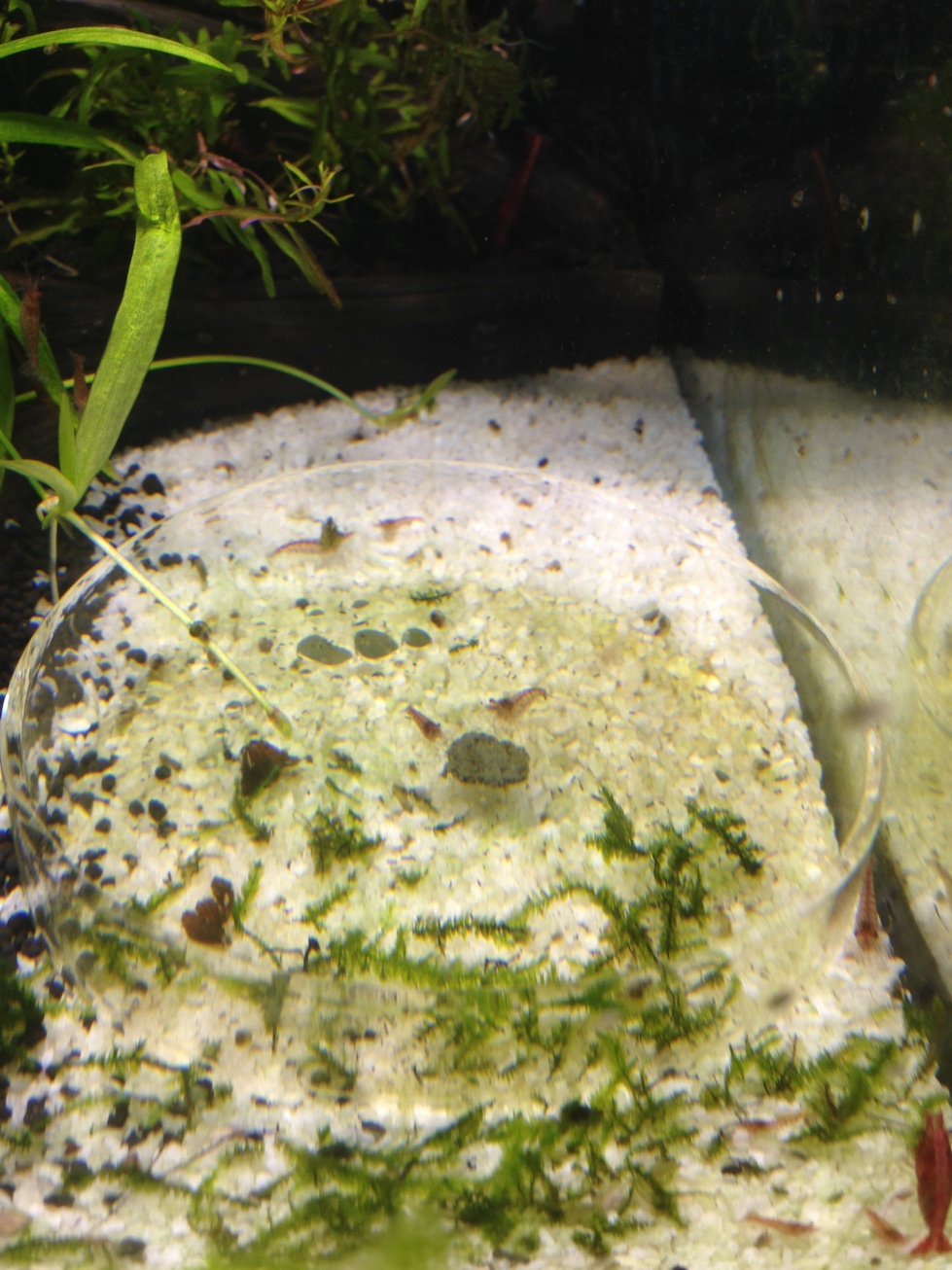
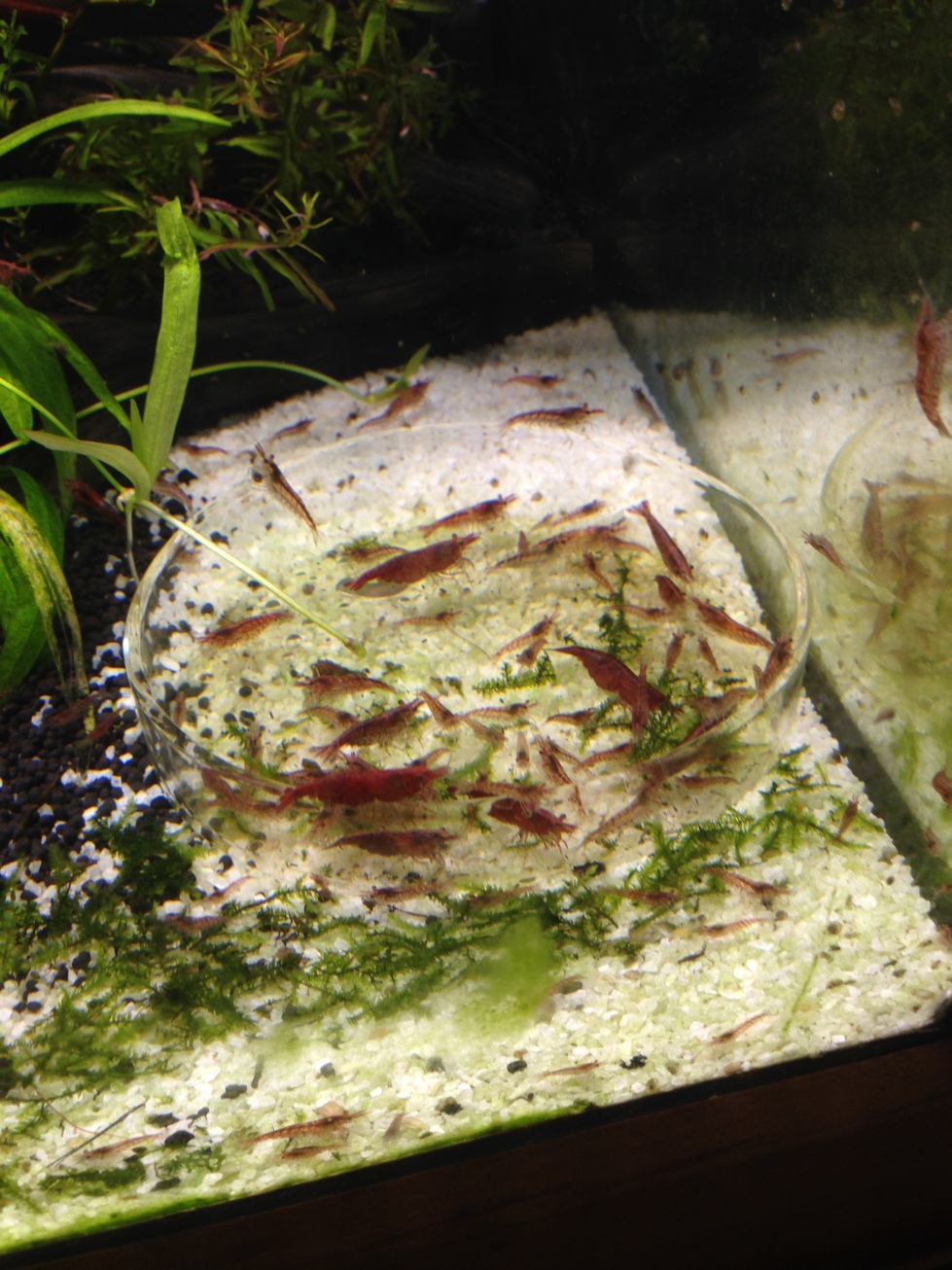
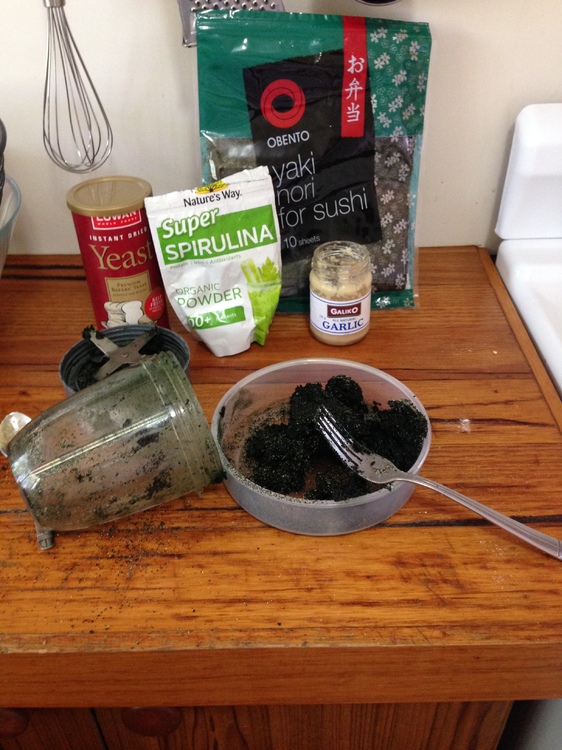
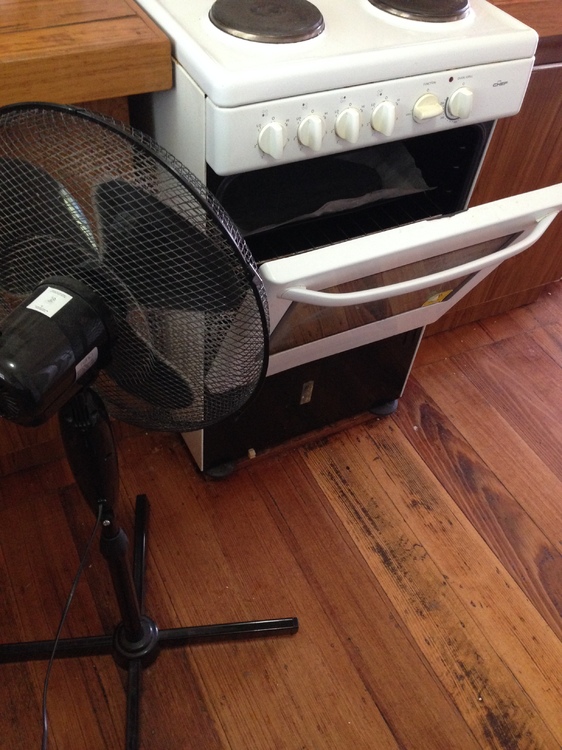
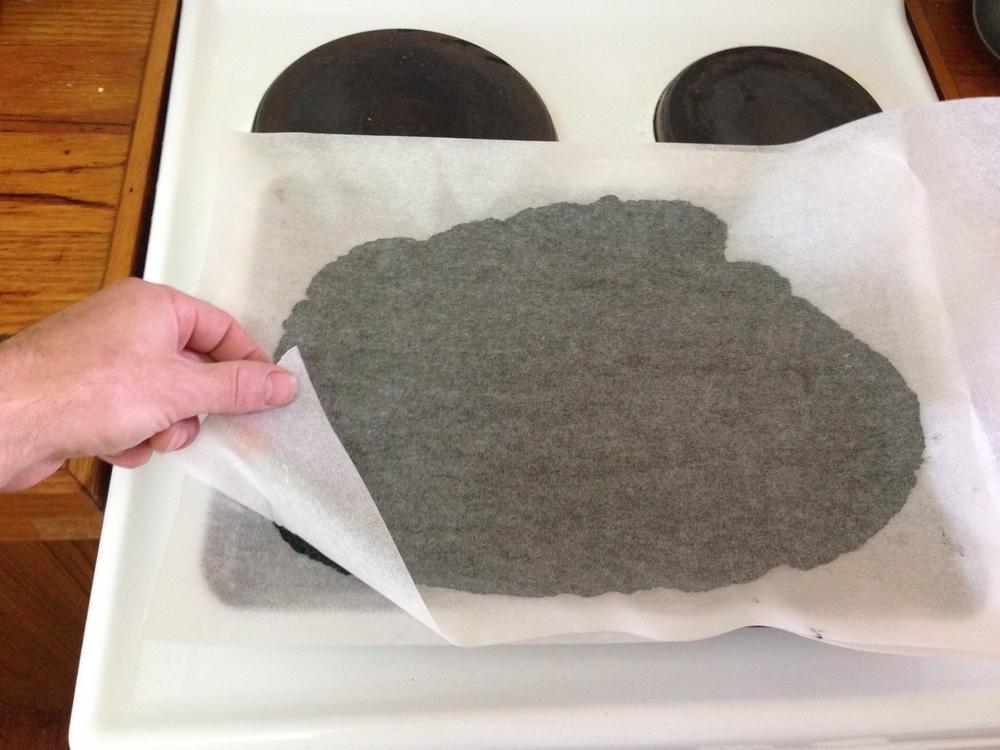
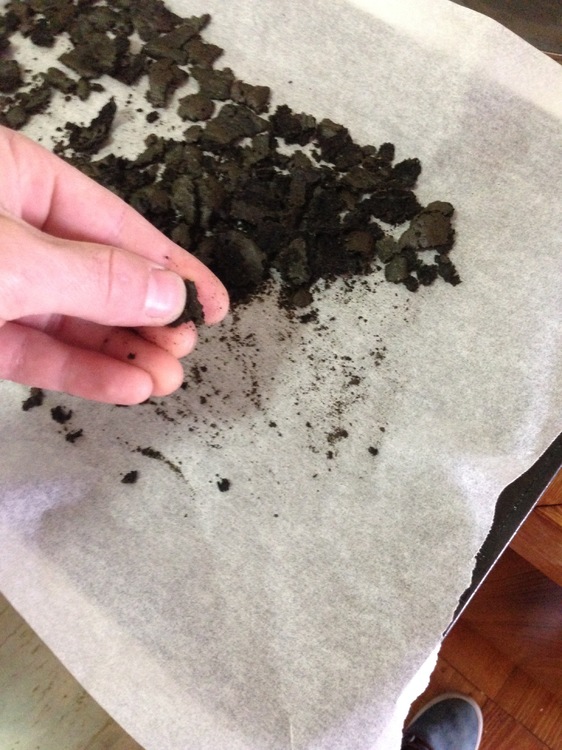
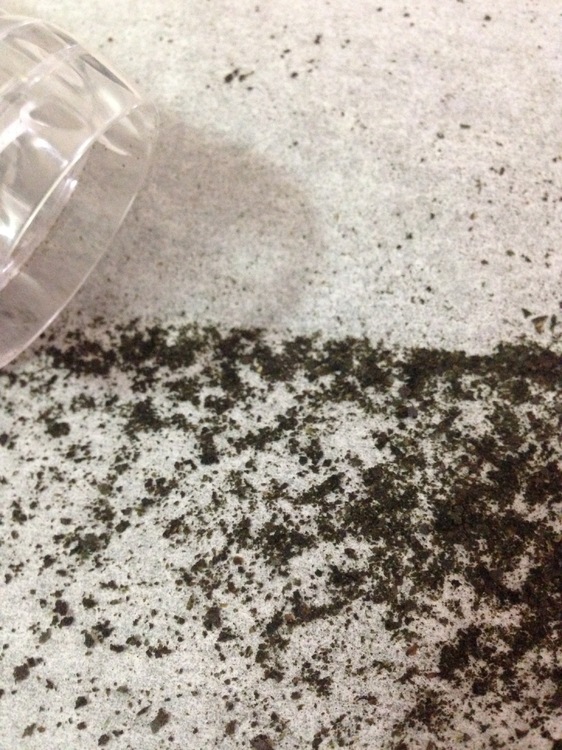
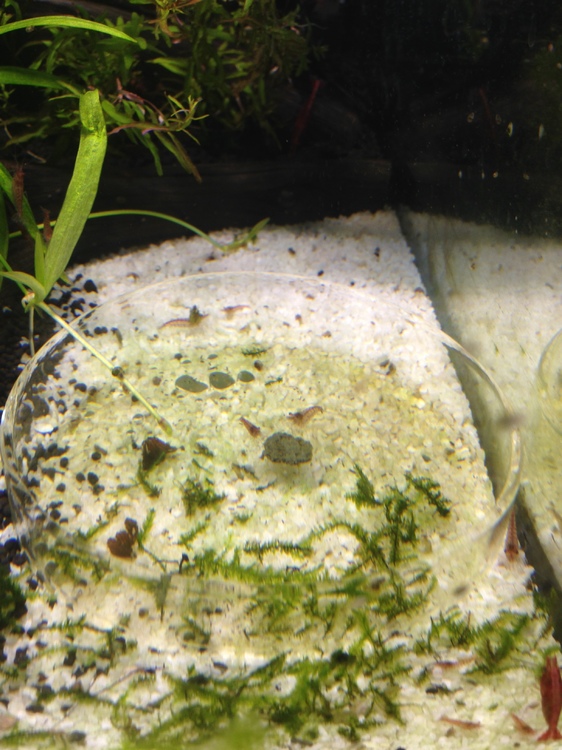
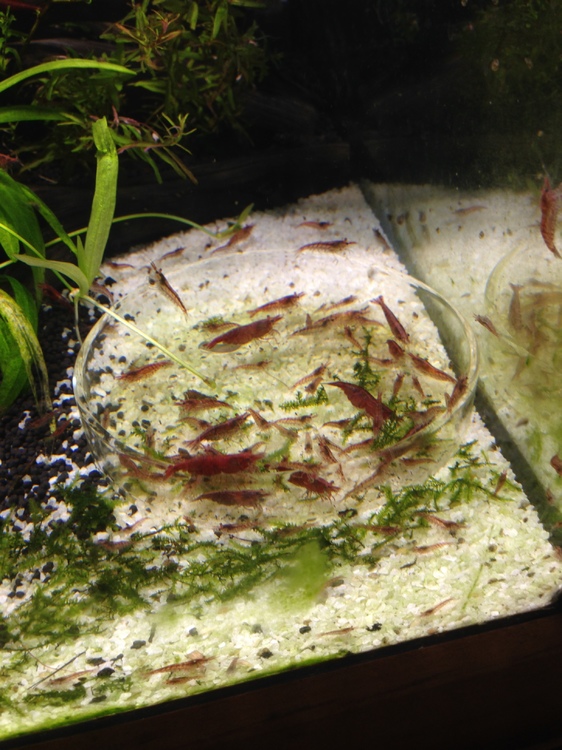
2 pointsHello, so I was going to put this in diy but figured anyone can make food so its not really a diy, the more important aspect I guess I want to share or discuss is the nutrition side of things. Heres my diy shrimp/ fish food, Especially great for getting meds into your beloved critters. I in no way copied instructions on how to do this so I'm taking aaaaalll the creds lol. "Narcasist" What you'll need: (buy organic where possible but doesn't really matter) A blender(or preferably stick blender) Baking paper An oven and fan(preferably a dehydrator if you or nana has one) Garlic (preferably fresh-not minced) Nori Seaweed sheets for sushi Spirulina powder dry yeast(preferably nutritional yeast) Soybean husk(shrimp snow) Boiled sweet potatoe First blend up all your dry ingedients one by one into a course power. Then blend your garlic with a little bit of water, before adding it to your dry ingedients. Mix everything together well and add enough water to reach a "wet toothepaste" consistancy. Keep track of the quantities you've added and write them down for next time. Preheat your oven to about 160c and place a large room fan in front of you oven with the door open just slightly, your oven is now a ghetto dyhydrator lol Spread your mix out on a sheet of baking paper. Place another sheet on top and use a rolling pin to flatten it right out. The thinner you make it the faster and better it dries- this needs to be fully 100 percent "cracker" dry as it is high in protein and will foul very fast if not dried properly- drying temps we use come close to pasteurisation temps so it is actually quite a sterile way to make clean food that won't go bad fast. Once it's dry enough- (You will be able to easily peel away the top sheet of baking paper without much sticking.) Start breaking it up into smaller pieces so it dries more efficiently. When it's fully "cracker dry" and crumbles between your fingers it's done, this takes only 1-2 hours and can be done without having to check it if you use a proper dehydrator. (Great investment if you plant to do this often.) Store in air type bags to reduce moisture and oxygen exposure. First introduction to my RCS: (the tanks a mess right now "shame" 10min later.... gone. Haha they showed massive interest so have all my Bettas. Hope you guys like it.
 2 points
 -
I've just made myself a homemade food for the shrimps that they seem to love. The little buggers have completely swarmed the piece I threw in. Yes it's a bit of a teaser. More to come later. I'll share the ingredients.1 point
-
Really exciting new project.... Just turned over the first sod for commencement of excavations Sent from my iPhone using Tapatalk This is the start of an idea that has been brewing for about 4-5 years. More updates to come as work ramps up.1 point
-
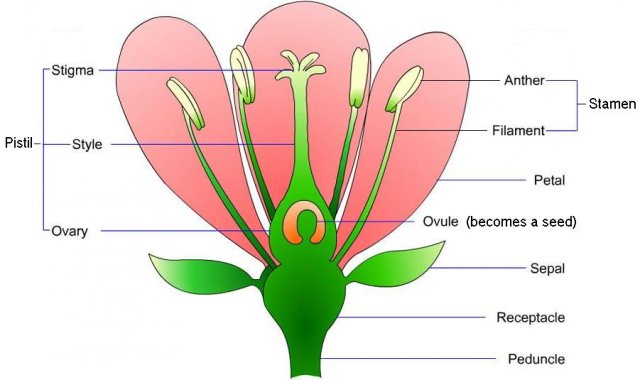
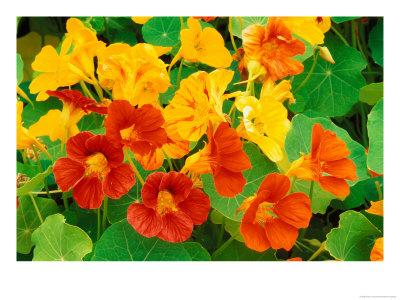
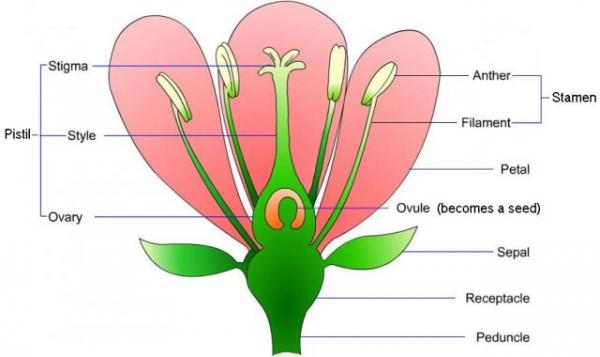
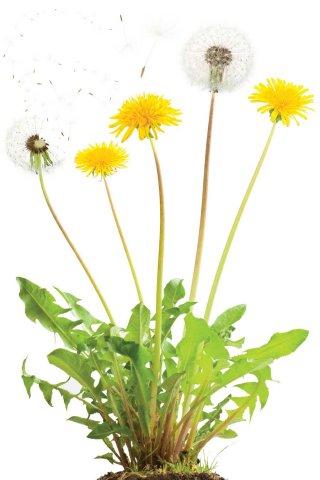
1 pointI have been experimenting. We have been discussed and talked about feeding shrimp leaves and fruits on many occasions. And the results are quite well documented in the use of leaves like Mulberry, Oak, Indian Almond (Kattapa), etc. However, the idea of feeding shrimp flowers is still very new. After all in the wild, things like leaves, twigs, branches AND flowers all drop into rivers where native shrimps will use a food source. In terms of nutritional value, you will find nutrients and minerals in flowers that are lacking in leaves (and vice versa). I'll expand on one of the main benefits of a nutrient found in flowers that aren't present in leaves a bit later. HOWEVER, NOT ALL FLOWERS ARE SAFE FOR EATING. So we will start with those flowers that are known to be edible. Of course that are literally hundreds of varieties of edible flowers. We all know about cauliflower and broccoli, those are some common flowers we eat regularly. My experiment is limited to what I could source close by. The flowers I tested on my shrimp include Rose, Nasturtium, Dandelion, Chrysanthemum and Pansies. Caveat: I KNOW for sure that these flowers in my backyard have not been sprayed with anything else apart from tap water and rain. No pesticides, fertilisers. If in doubt, DON'T use it. You could try other flowers that are easily sourced in your garden. But please note - I have limited my research and experiments to flowers only. Not the leaves of these flowers. As a cautionary warning, some leaves are sappy and oily, and might not be too safe to feed your shrimp. So I take no responsibility with the leaves of these flowers. Although, Ineke has fed Nasturtium leaves to her shrimp which they seem to like and was safe as mentioned in another thread. Preparation: 1) Pick fresh looking flowers with no visible damage. Select flowers that you KNOW have no previous pesticides or fertilisers, and don't grow down stream from sources of water that might be contaminated. 2) Gently wash them (flowers are very delicate and soft) 3) Remove as much of the base of the flower (the stem, receptacle and sepal). Usually only the petals are what we want. 4a) Place into tank fresh. (Recommended) 4b) Or Blanch it for 1-2 minutes in hot boiling water. Remember, flowers are soft, they don't need to be blanched for much longer. 4c) Freezing or Drying. While it's possible to freeze or dry flowers for storage and feeding at a later date, I'm not sure what nutrients will be lost. 5) Ensure any decayed leftovers are removed if left uneaten after a few days. Review of the flowers: I have searched high and low in the scientific literature for quantitative data on the nutrient content of flower petals. There are relatively few references, particularly in English. Most of the literature is focused on evaluating flowers for their sensory characteristics, such as appeal, size, shape, colour, taste, and above all, aroma, which is important for the cosmetic and perfume industry. Available data on a number of edible flowers show that petals also contain an array of vitamins and minerals, particularly vitamins A and C, various B vitamins, folic acid, and minerals including calcium, magnesium, potassium, iron and phosphorus. Apart from the nutritional value of flowers with the abundance of vitamins and minerals, flowers also contain a huge amounts of carotenoids and flavonoids compared to leaves. Specifically, Crytoxanthin, Zeaxanthin and Lutein which is obviously lacking in the leaves. Just look at the pretty colours of flowers. Zeaxanthin and Lutein has been known as a natural source of colour enhancement in fish (and maybe shrimp). These carotenoids are regularly added to fish food from sources like spirulina. Zeaxanthin enhances the Reds and Oranges while Lutein enhances Yellows. Flowers are also high in antioxidants, they are antiseptic, antifungal and anti-inflammatory. This sounds too good to be true. It's like feeding medicine to your shrimps to fight viruses and bacteria. On to the review of specific flowers. Dandelions: Say what?! That's a weed! It sure is, and I have heaps growing in my front garden. Now I have a use for them. Dandelion is a perennial plant with jagged, bright green leaves to 30cm long, a hollow flower stem to 30cm and one terminal yellow daisy. Has been subject of many studies investigating it's ability to even fight cancer! Dandelions, contain numerous flavonoids and carotenoids with antioxidant properties, including four times the beta carotene of broccoli, as well as lutein, cryptoxanthin and zeaxanthin. They are also a rich source of vitamins, including folic acid, riboflavin, pyroxidine, niacin, and vitamins A, B, C and D. Minerals including iron, potassium and zinc. The rich yellow colour of dandelion flowers comes from beta-carotene - Lutein specifically. Side note: the leaves are apparently also really high in Calcium (187mg per 100g), rivalling Mulberry leaves. But I have not tried feeding Dandelion leaves, nor do I know if they are safe. But people eat them. The Chinese, European and Native American have been using the dandelion plant for centuries to treat digestive, kidney and liver ailments. I fed my shrimp a fresh dandelion as one experiment. The first day in the tank, the shrimp investigated it, but didn't seem to be eating. It wasn't till the 3 day that I noticed them actually munching on the flower. The petals probably needed to soften first. The second experiment was with a blanched dandelion. This time the shrimp took to it the same day. And average sized flower was consumed within 3-4 days in my tank. Verdict: Big tick. They loved it. Too early to tell if there is any impact on colouration of the shrimps. Nasturtiums: Nasturtium is a PERENNIAL growing to 0.5 m (1ft 8in) by 1 m (3ft 3in). It is part of the Watercress family. The most common variety is Tropaeolum majus. The peppery flowers are good in salads and pasta dishes. A 2009 study by the Universidad Nacional de Colombia identified the group of phenols or phenolic compounds in the pigments of orange and red flowers of Tropaeolum majus as anthocyanins. Anthocyanins, which are abundant in blueberries and red cabbage, help neutralise the damaging effects of free radicals, thereby helping to protect us from chronic diseases such as cardiovascular disease and cancer. Anthocyanins are anti-inflammatory, antimicrobial, anticancer and antioxidant. Nasturtiums are high in Vitamin C, about 45 milligrams vitamin C per 100 grams, and also contain Vitamin A and flavonoids anti-oxidants like - carotene, lutein and zeaxanthin. They also contain Minerals like Iron, Calcium. Nasturtiums might not pack as much nutritional value as dandelions, but it sounds great to feed shrimp occasionally, to combat diseases due to it's antibiotic, antiseptic, and antifungal properties. I fed Nasturtium flowers to my shrimp in a similar fashion to Dandelions. Fresh and Blanched. The shrimp had very similar reactions. They ate it when the flowers were soft. Verdict: Another big tick. They loved it. Too early to tell if there is any impact on colouration of the shrimps. I do have one shrimp that looks unwell. I'm keeping an eye to it to see if there are any improvements. I won't go into detailed reviews on the Rose, Pansies or Chrysanthemum flowers, as I couldn't find much information on it's nutritional value. But the results are very similar. There are dozens of other edible flowers that could be introduced to your shrimp as long as you take the necessary precautions on where you collect these flowers. Some other possibilities include: Daisies, Sunflowers, Daylilies, Violets, Tulips.
 1 point
 -
That's a first. You WANT to grow algae?!! I think you have come to the right place. There are lots of expert algae growers here ? 3000K or 4000K and leave it on for 16 hours is my secret recipe.1 point
-
 Microscope attachments for smart phones are very cheap these days, although above x65 they are tricky to keep stable. Still makes it very easy to get and share pictures/video. something like this is usually under $5 delivered http://www.ebay.com.au/itm/60X-Zoom-Phone-Camera-Optical-LED-UV-Light-Clip-Magnifier-Microscope-Micro-Lens-/142045088389?var=&hash=item21128c0a85:m:mlUvEehZtUOwknkAMmZxSbw x60 is not really going to help with bacteria...... which is a shame as I would be leaning towards a flexibacter of some type after reading through this thread. https://microbewiki.kenyon.edu/index.php/Flexibacter Many of the larger critters crawling over crustys are beneficial or at the worst commensal. EG the flatworm temnocephalans found on our native crays.1 point
 -
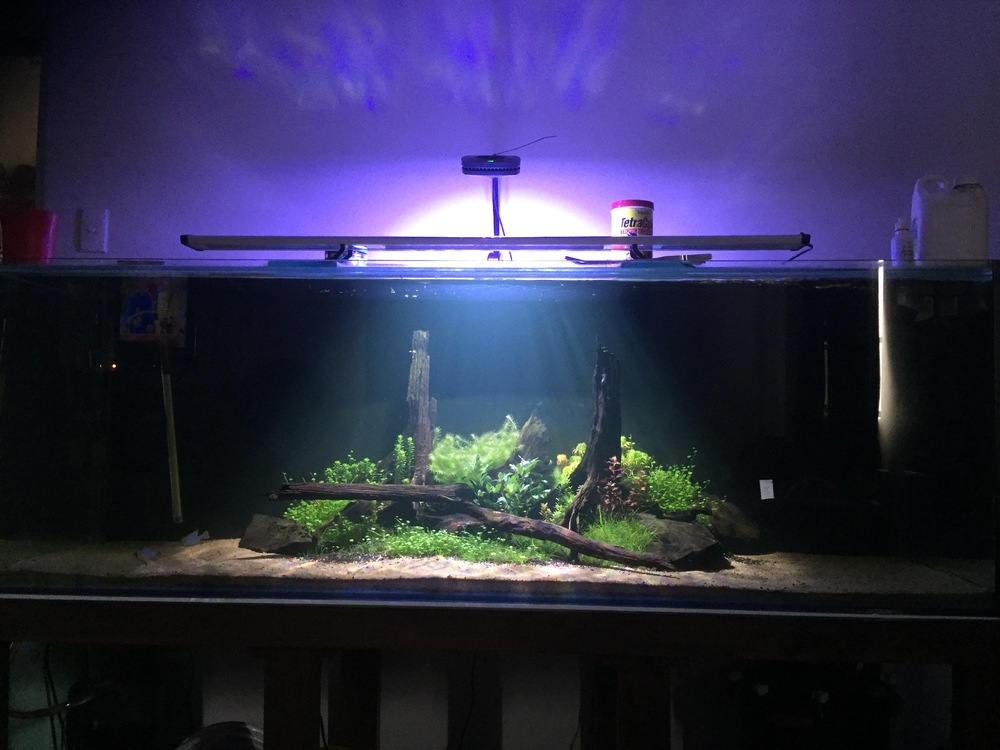
1 pointNew light isn't what i hoped it would be as far as bright goes but ill see how the plants respond. Ill run the other light as well as this and hopefully it makes the difference
 1 point
 -
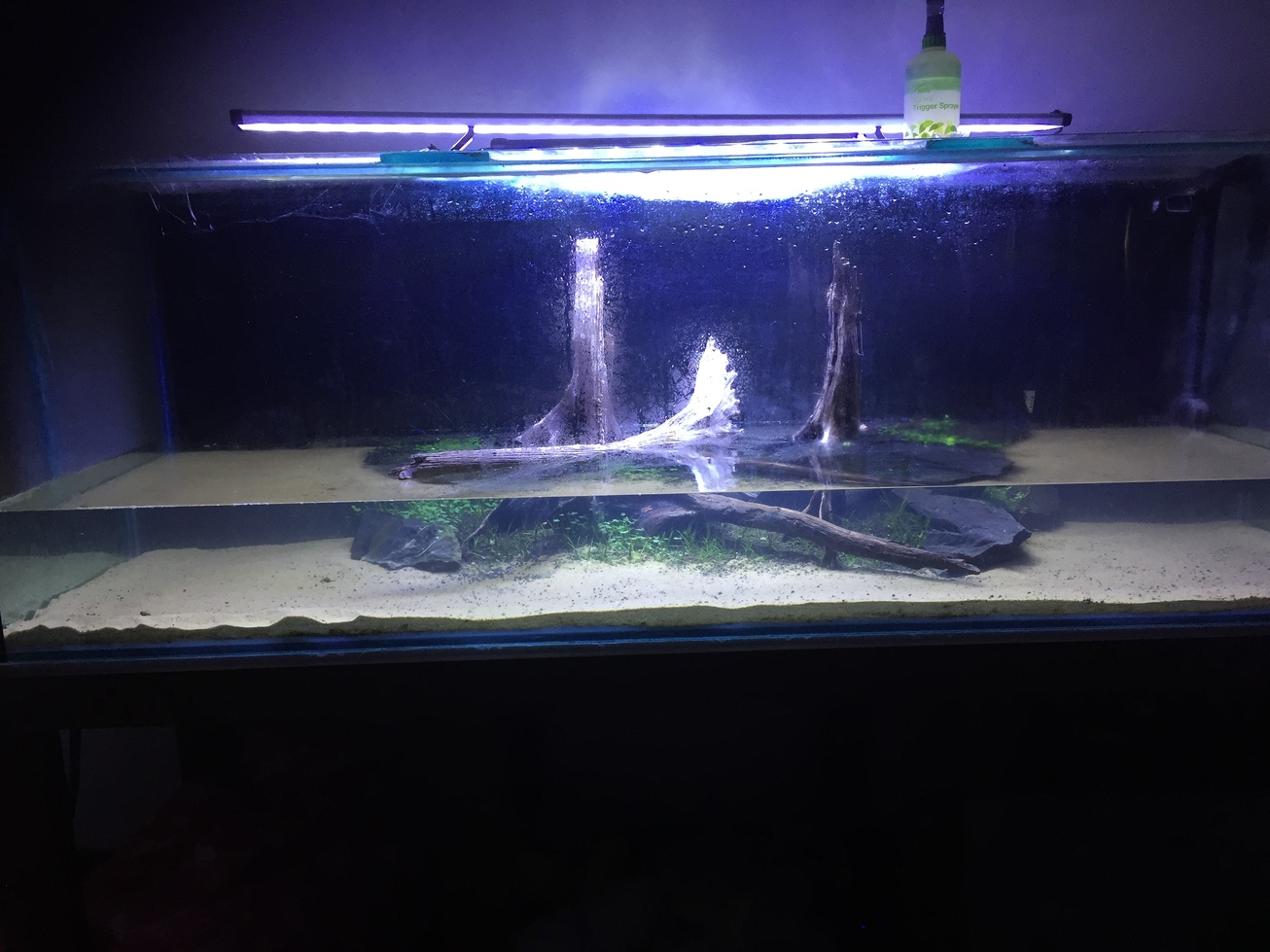
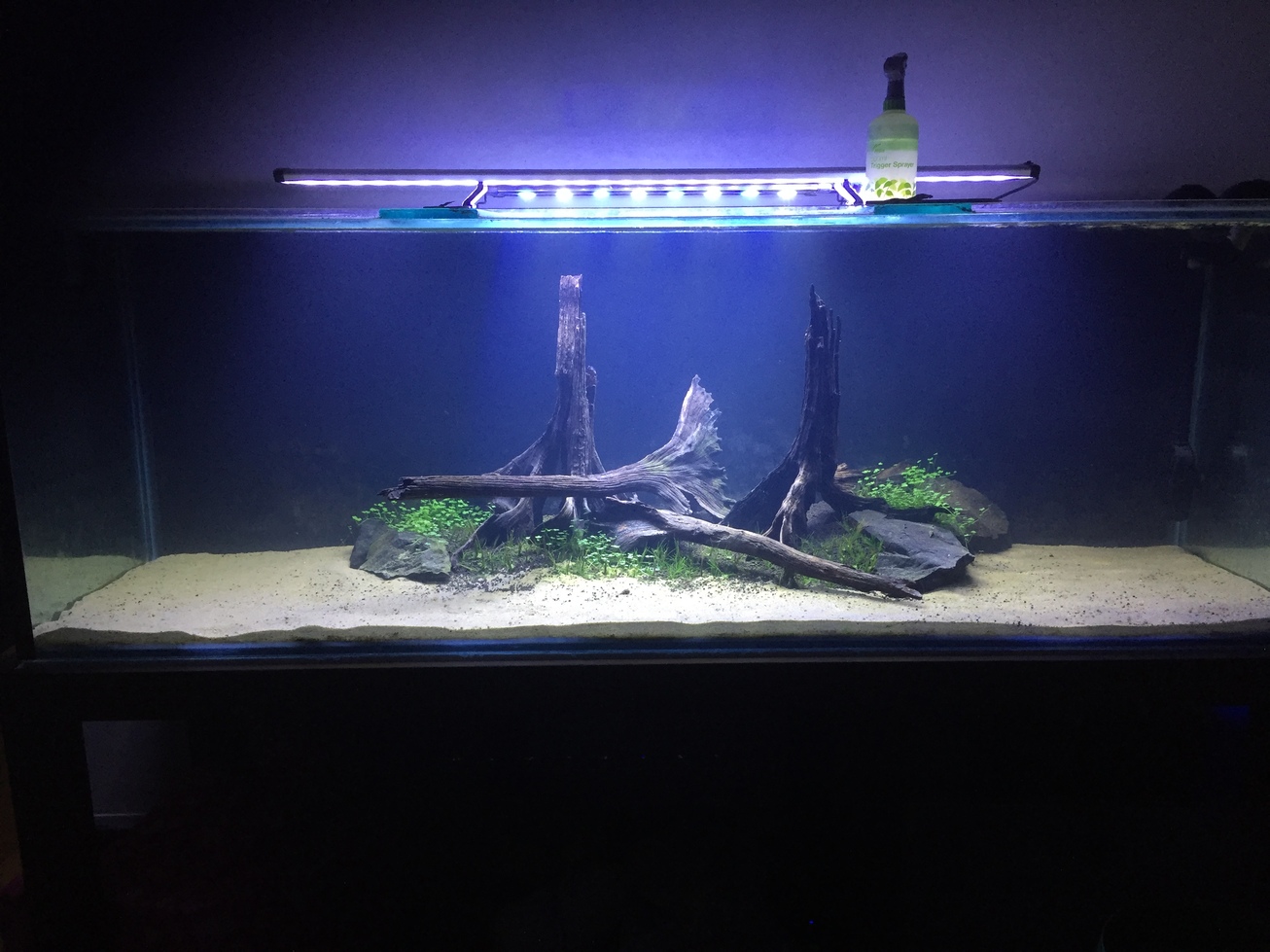
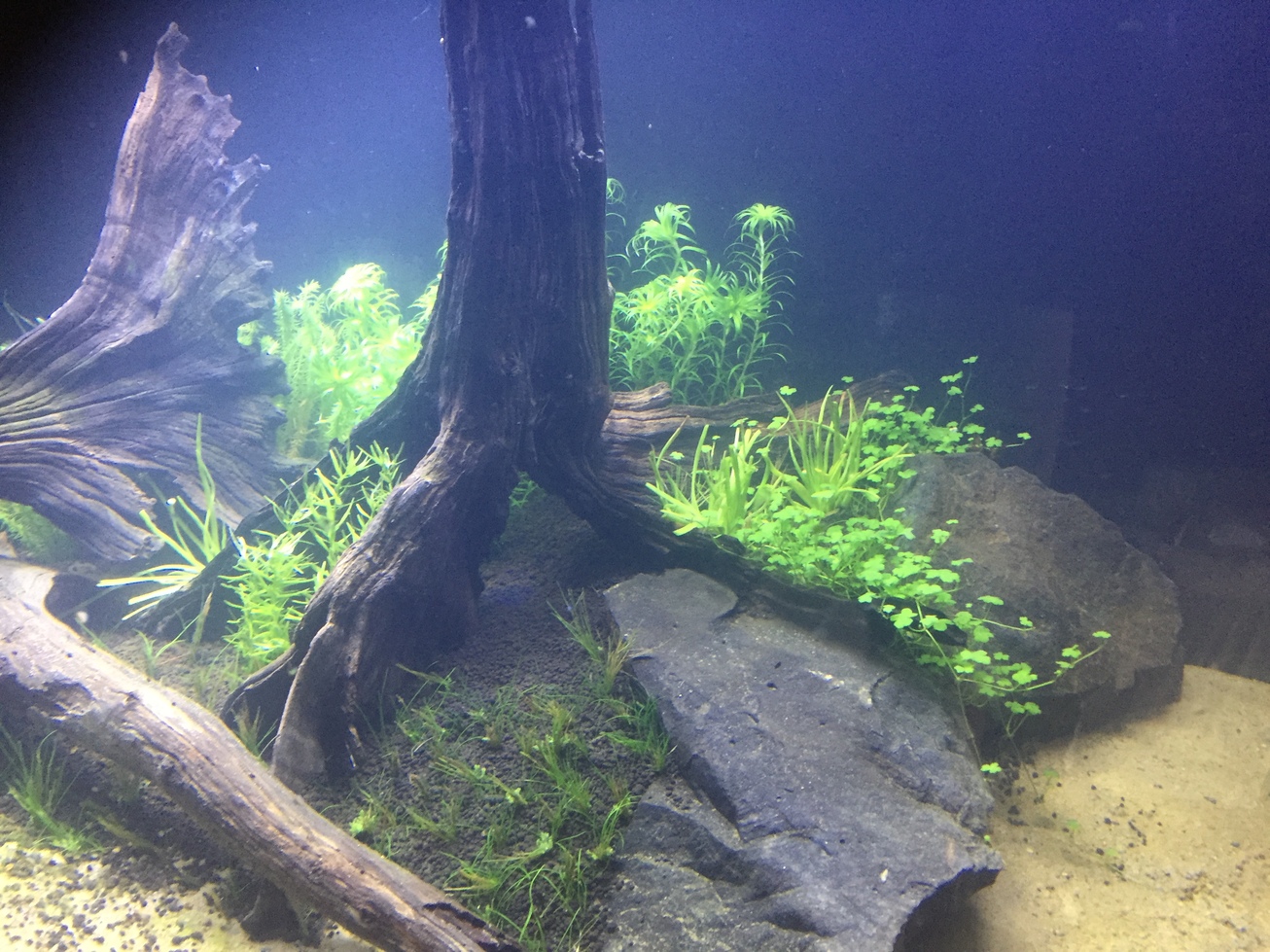
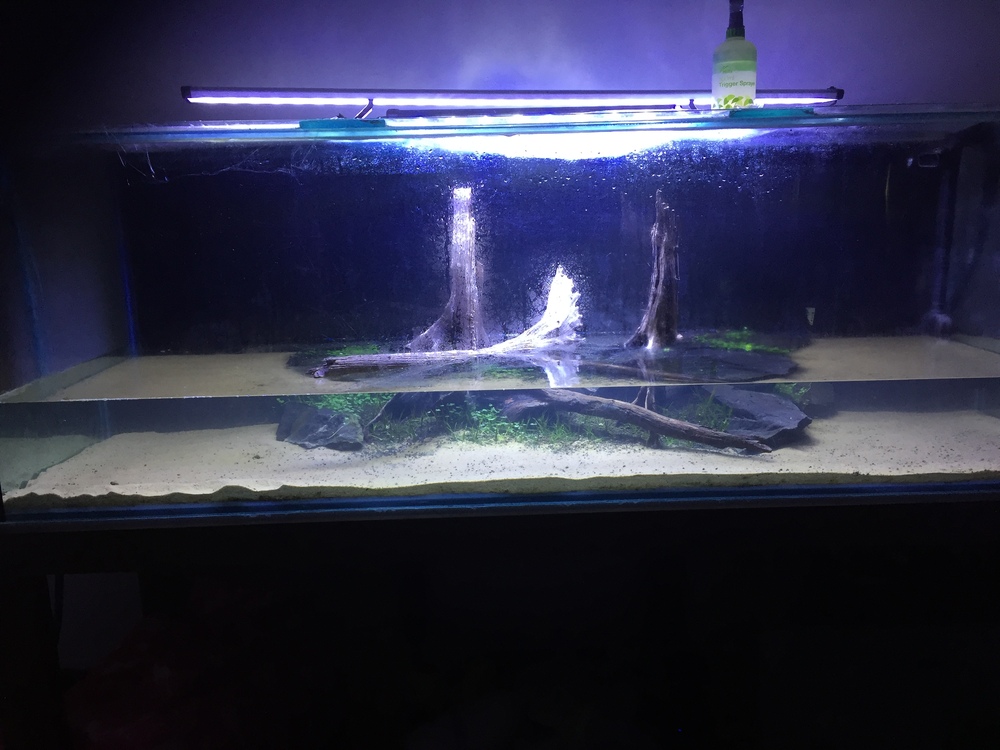
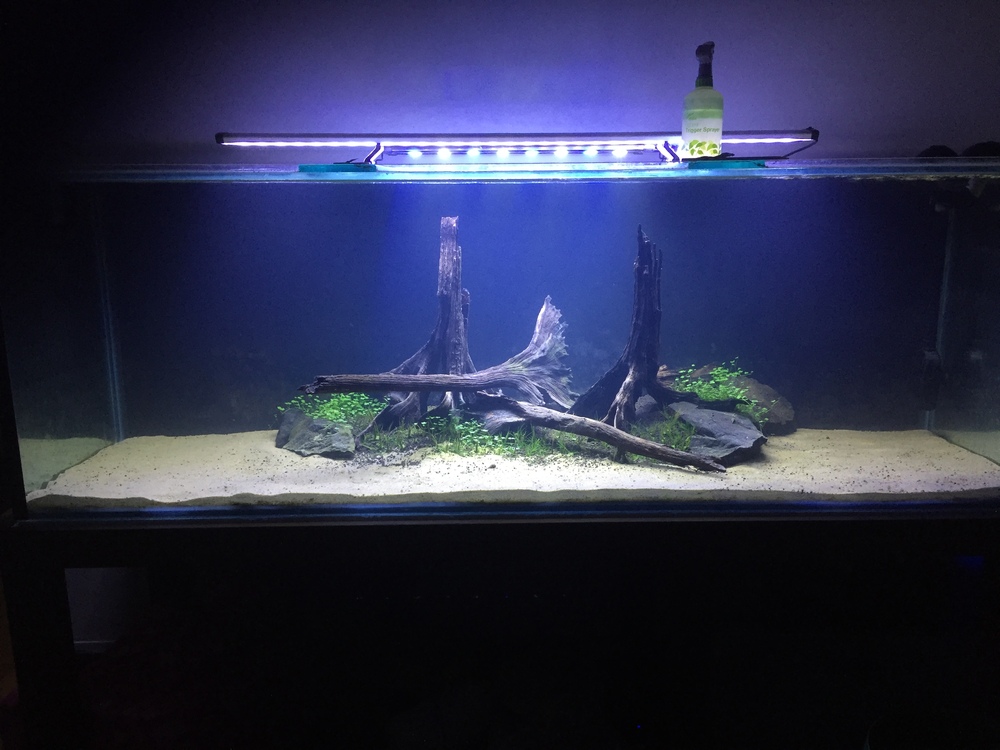
1 pointSo i couldn't help buy bid on an auction for 100 stems and i won. So i loaded the animals in to the ark and so began the flood! new additions to plants are Eriocaulon lividum, Syngonanthus sp 'Belem', Tonina fluviatilis and 2 others i still need to double check but i think Rotala sp "Green" and Mayaca fluviatilis. Im cranking that CO2 to try and get them kicked off, the hair grass is taking its sweet time to carpet and the clover is making heaps ground so i guess it will be my carpet? Shoulda just got 2 pots of it and left the hair grass out haha ?? lol ill keep posting even if they all melt and it goes to poo so stay tuned! In a month or so ill add some live stock when im 100% sure the tanks eco system has established.
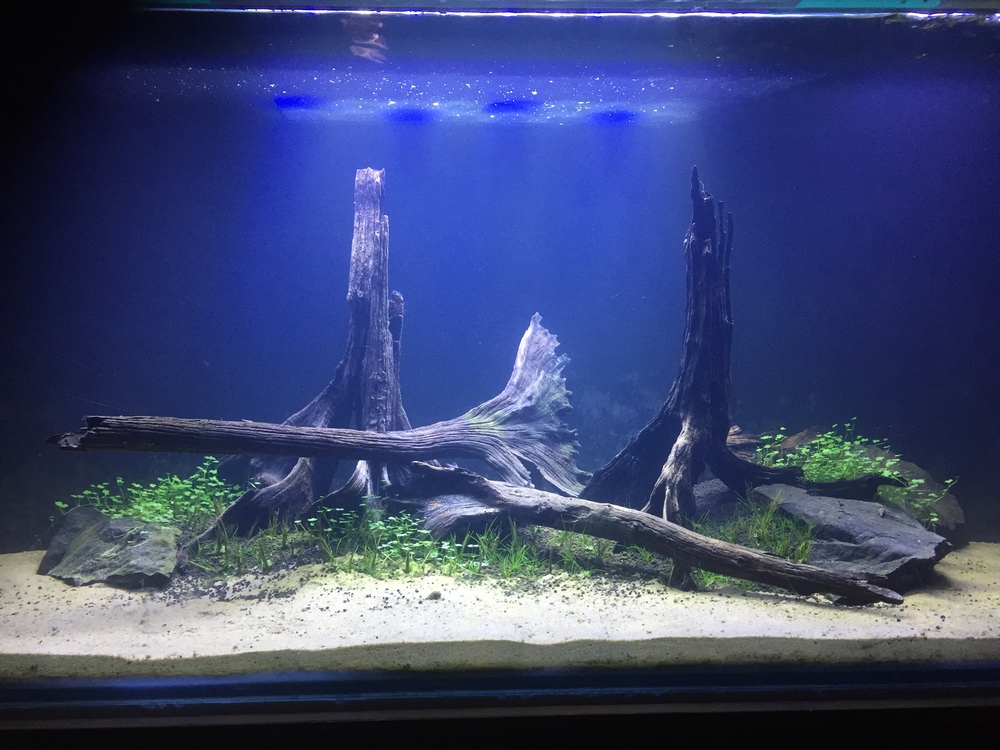
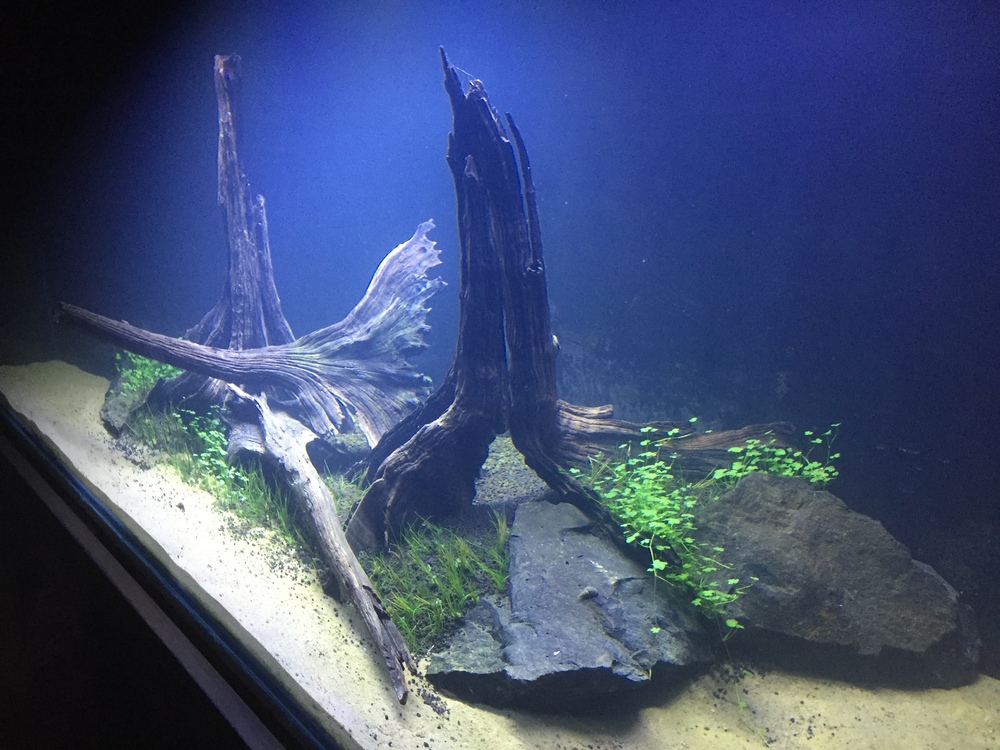
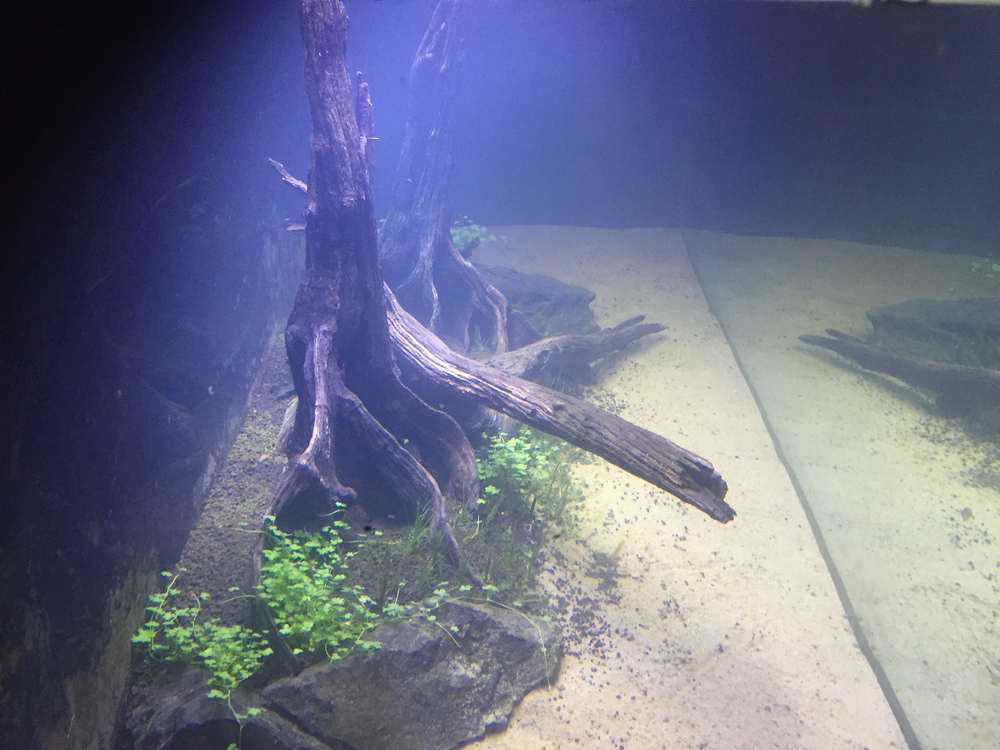
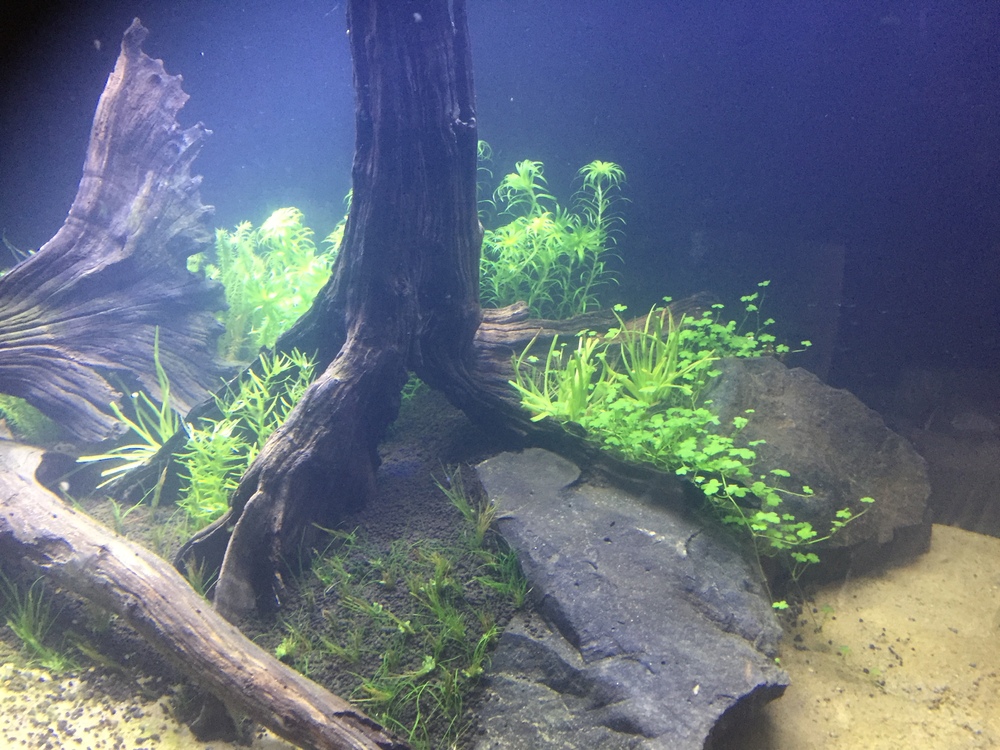
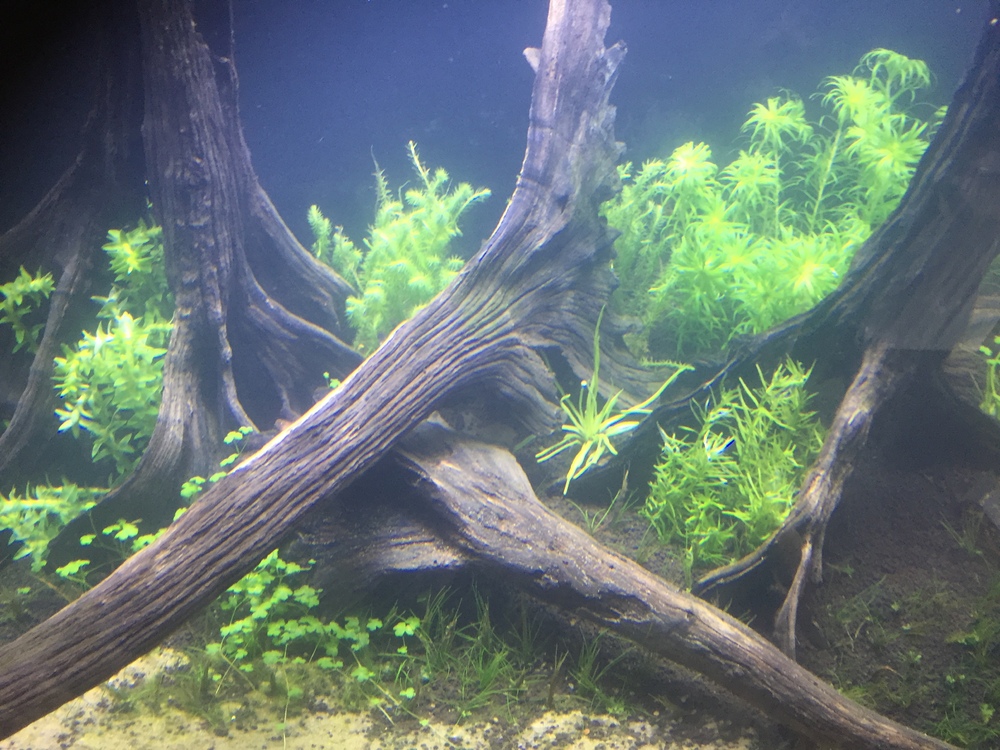
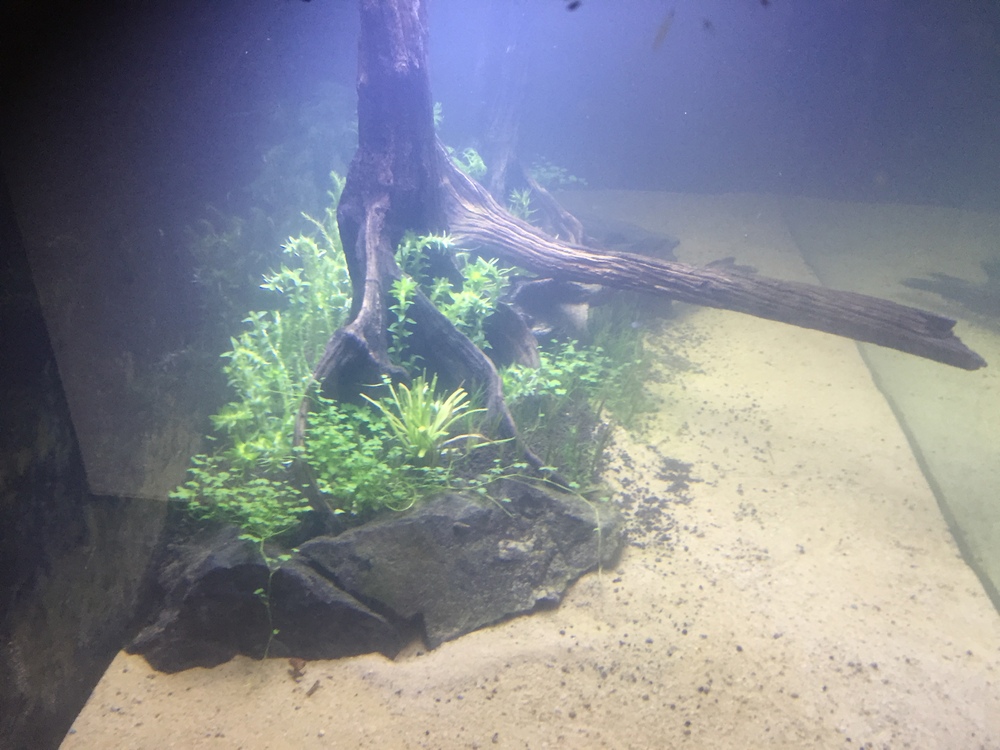
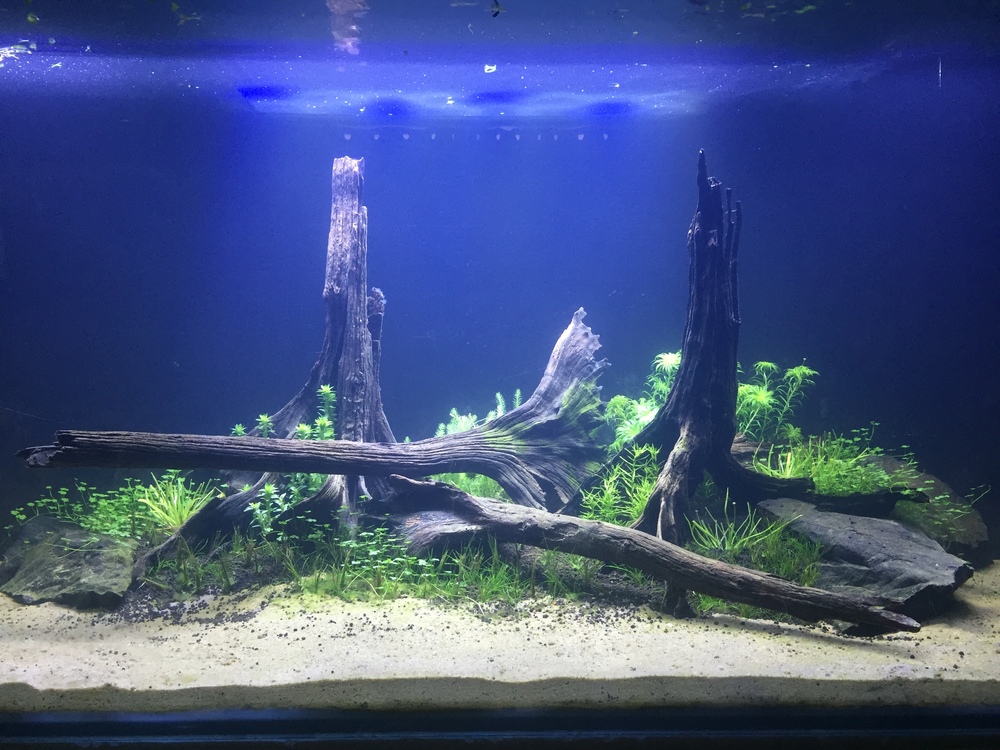 1 point
 -
1 point
-
Ah too bad. Well, as you can see I don't keep secrets. At least not when it comes to the shrimp hobby. I believe in sharing the knowledge. But if anyone came up with an Agar food base for shrimps, you know where you saw it first Hi Tomrum. My initial reaction was 'no' to stevia. Then 2nd reaction was, hmm I don't know enough about stevia and artificial sweeteners use with shrimp/fish to be very sure that it's no good for them. After all, stevia is derived from plants, and it only tastes sweet but has no carbohyrates. There hasn't been enough experience and evidence with Stevia and shrimp for me to comment on. So the answer is, I don't know either. I can't think of any reason why it would not be ok, unlike Sugar. Definitely NO to sugar. You could try it out on culls, if you have a cull tank. But best not to test it out on expensive shrimp.1 point
-
The story behind it... I have long known the benefits of Chlorella for shrimp. So I bought 250gm of Chlorella powder from Squiggle on Dec 3 last year. Up until now I have been trying to figure out the best way of feeding Chlorella powder to the shrimp. If I sprinkled it in the water it would literally turn the tank green like it was algae infested, not a good look and not the best way of feeding. So up till this weekend I have been digging into ways to feeding Chlorella, and I drew on a few inspirations - Fishmosy's biofilm alternative http://shrimpkeepersforum.com/forum/index.php/topic/7770-biofilm-alternative/ And Repashy Gel premixes. If I could get the Chlorella powder in a gel like substance for the shrimp like what fishmosy did with Spirulina, it would be my goal. So the question was what to use to hold the Chlorella powder. Then I drew on the idea of the repashy gel. Jelly was what it looked like to me. But Jelly and gelatin is no good for shrimp. Gelatin is animal based. So the next best option was ... AGAR AGAR !!! The more research I did on agar agar, the more convinced I was that this was the perfect vessel to hold all kinds of Shrimpy foods that we can feed our beloved pets. Agar is a gelling agent extracted from red algae (perfect). It's easy to work with (awesome). It's easy to find and it's cheap (perfect, kaching). It's all organic (you beaut). Ingredients: 1 teaspoon of agar agar powder (2gm). 350ml water. Chlorella powder 3 teaspoons. Bee Pollen 1 teaspoon. You can find agar agar powder in most Asian supermarkets, some health food shops, maybe even coles and woolies. Please buy only agar that has no other additives like sugar, flavouring, or colouring. Method: Add water and agar agar powder into a pot, and bring to a low boil. Stir constantly or the agar with stick to the pot. Keep heat low to med. Heat until all sign of the agar powder is dissolved (approx 5 minutes on low-med heat). Pour into a shallow and flat container (for ease of cutting later) Let it cool for 4-5 minutes. Crush the bee pollen in a mortar & pestle. Then sprinkle in the Chlorella powder and Bee Pollen into the container. The agar would not have set yet. Use a utensil of your choice to stir in the Chlorella powder and Bee Pollen, taking care to smooth out any lumps of Chlorella powder and Bee Pollen. Let it set in the fridge for 30 minutes. Cut a small square of the Chlorella powder and Bee Pollen Agar, and drop in the tank. Sit back and watch the shrimp swarm it. Note: does not pollute the tank either. I have since learnt that you can get a Spirulina, Chlorella, and Wheatgrass supergreen powder mix at health food shops. A small bottle is all that's needed ( I think it was about $16-$18). You could use this and create a really Super green food with Bee Pollen. Otherwise you can shout out to Squiggle for some. He will charge you appropriately. The original plan was to include Astaxanthin, but I could not find powder that was economical enough. But there is SOOOOOO much nutrition in Chlorella powder and Bee Pollen alone that this exercise was worth it. And seeing how much the shrimp are enjoying it ... priceless. If I can get pics, I'll post it tomorrow. Hope you have a go at it yourself. Version 2 will include Astaxanthin as the colour enhancer. So I am still looking for affordable astaxanthin powder. Cheers.1 point