
Leaderboard
-
Jo
Members10Points128Posts -
NoGi
HOF Member3Points5858Posts -

buck
Members3Points758Posts -

Mitch91
Members2Points123Posts
Popular Content
Showing content with the highest reputation on 07/17/16 in all areas
-
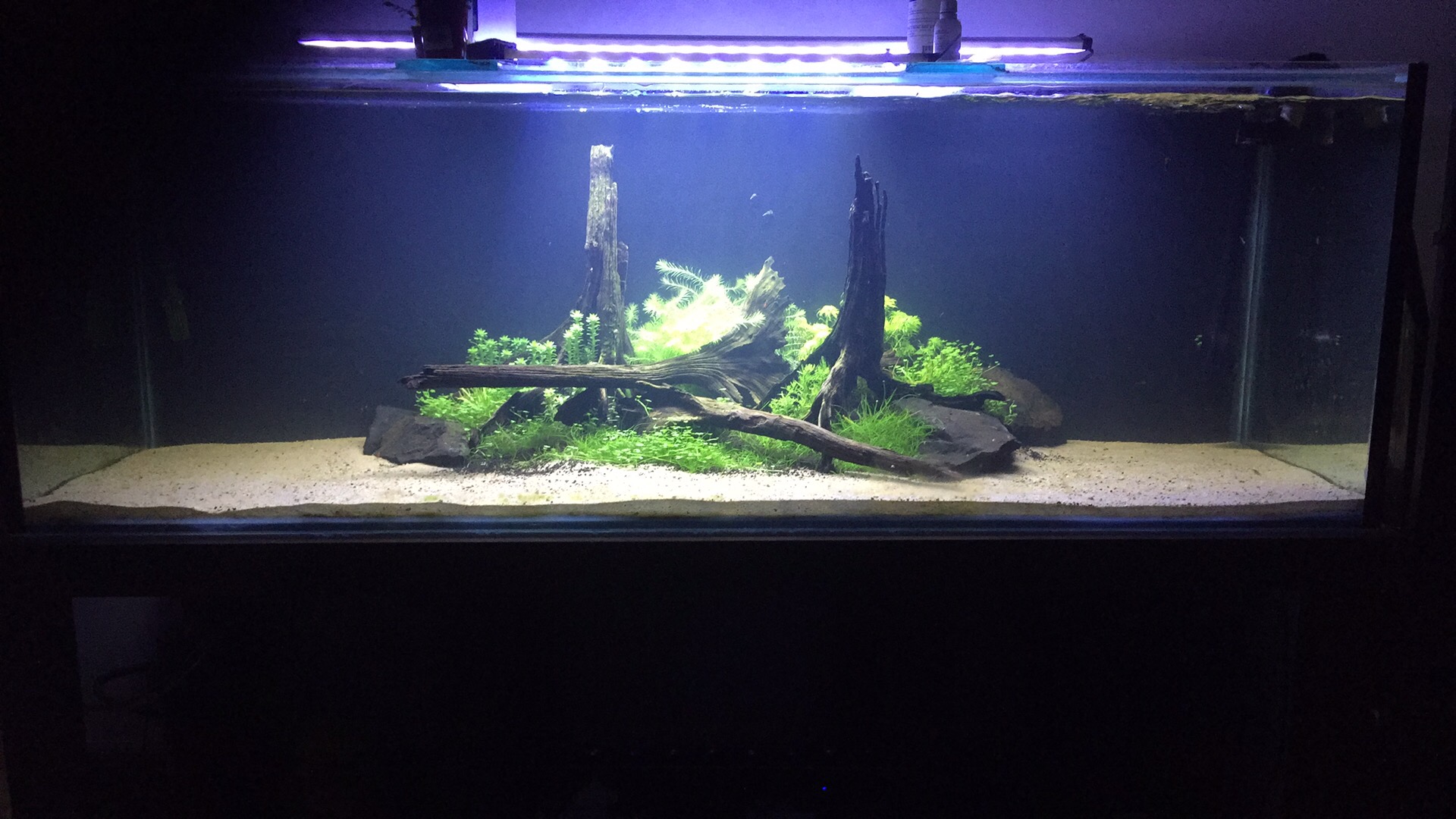
3 pointsI've had a bit of time to clean up and start work on my 6ft tank. I'm going for an amazonianish island scape lay out. A few things are still up for input, I'm not 100% set on the 3rd species of fish and a few plants I'm 50/50 on. Discus and Corydoras are the only locked in fish, the exact species of Cory is still up in the air ill probably just get 10 or so of what ever is easy to get at the time. Ill also be adding a small schooling fish like cardinal tetra's but I'm debating a native/PNG Blue eyes (red neon/ neon blue) or rhads. seeing as the tank is going to be discus focused i think they should do OK with the higher temp. Plant layout will be a dwarf hair grass lawn with some Hydrocotyle Tripatita Japan mini on the edges back left and rights of the island will have Blxya Japonica and further in will have Blxya Aubertii. Thats the only hard and fast Im thinking of placing crypts though out the lawn and some smaller swards around the base of the front of the roots weeping moss and Bucephalandra or Anubias Nana on the log pointing out and fissidens scattered across the other roots to add that aged effect. HARD SCAPE: Mangrove roots Black basalt River sand ADA Amazonia Equipment: FX6 ocean free surfclear surface skimmer 6.5 kg keg king co2 2ft green elements LED 4ft pet worx led will need to get a heater but thats ages away Ideas for FLORA: Eleocharis belem Hydrocotyle tripatita jap mini Blxya japonica Blyxa aubertii Cypt wendtii "brown" Echinodorus tropica Weeping moss Fissidens Bucephalandra sp. or anubias nana FORNA: Discus Corydoras Shrimp culls pics to follow3 points
-
 2 pointsI would just like to give a big thank you to all the organisers and Sponsors for the championship today- without you, there would not be such a great event. I would also like to thank all the judges and the people who entered. Congratulations to all the Ribbon Winners! The turnout was fantastic- it was great meeting you all. Now I can finally put faces to all the SKF handles. See you next year!2 points
 -
 2 pointsTreating Algae is a long and frustrating battle. I hope this easy-to-read-infographic will be able to help you guys to Identify and Provide a right direction to eliminate your-algae-problems. Credit: THEAQUARIUMGUILDE With Infographics like these you can save it somewhere in your computer or pin it with Pinterest or store them on your social media . Then months later if you or any of your fellows have problems with these Algae, just simply sent this to them. This is the reason why i love to collect these Infographics. Hoang2 points
 -
2 pointsOh I'm so glad I just found this topic! I got a Buce as a gift (I think it had blue somewhere in it's name, also perhaps brownie?) and it never did very well at the top of my tank so in the last trim I moved it. I looked in the tank last night and WHOA, it looks like it's about to flower. I'm very excited to see what the flower is going to look like :)2 points
-
2 points
-
1 point1 point
 1 pointFrom a few mins of reading only ... metacercarial cysts (infective stage of trematodes) are quite common in crustaceans. The parasite relies on a fish or waterbird eating the shrimp and then the adult fluke grows within the vertebrate host. Google "Microphallus turgidus" - it seems like a similar species. 1) eggs are shed from the vertebrate host into the water and are picked up (eaten) by snails/flatworms. 2) cercaria hatch out of the snail and infect the shrimp and burrow into the tissue where they form cysts. 3) The shrimp gets eaten and the adult fluke grows in the fish/waterbird... which poops out the eggs. If your DAS are in a shrimp only tank I'd probably leave it... If you have fish in the tank that might eat them you could quarantine the shrimp but its possible the cysts persist for the life of the shrimp (I dont know). If its just one shrimp then I'd feed it to some ants. It wont spread from shrimp to shrimp. ...a closeup with a microscope is really needed to confirm if they are cysts.1 point
1 pointNot eggs - as they are within the tail muscle tissue. I think it therefore has to be a parasite of some kind. Possibly trematodes given the similarity to the photo in this article: http://sercblog.si.edu/?p=4179 ...or could be something else entirely. Read the article - and see if you can spot a behavioural difference! They look to be just under the shell... see if they survive through a moult.1 point
1 pointFrom a few mins of reading only ... metacercarial cysts (infective stage of trematodes) are quite common in crustaceans. The parasite relies on a fish or waterbird eating the shrimp and then the adult fluke grows within the vertebrate host. Google "Microphallus turgidus" - it seems like a similar species. 1) eggs are shed from the vertebrate host into the water and are picked up (eaten) by snails/flatworms. 2) cercaria hatch out of the snail and infect the shrimp and burrow into the tissue where they form cysts. 3) The shrimp gets eaten and the adult fluke grows in the fish/waterbird... which poops out the eggs. If your DAS are in a shrimp only tank I'd probably leave it... If you have fish in the tank that might eat them you could quarantine the shrimp but its possible the cysts persist for the life of the shrimp (I dont know). If its just one shrimp then I'd feed it to some ants. It wont spread from shrimp to shrimp. ...a closeup with a microscope is really needed to confirm if they are cysts.1 point
1 pointNot eggs - as they are within the tail muscle tissue. I think it therefore has to be a parasite of some kind. Possibly trematodes given the similarity to the photo in this article: http://sercblog.si.edu/?p=4179 ...or could be something else entirely. Read the article - and see if you can spot a behavioural difference! They look to be just under the shell... see if they survive through a moult.1 point 1 pointI think your choice of fish are perfect for what your putting together, we wait with bated breath, looking forward to the pics.1 point
1 point
1 pointI think your choice of fish are perfect for what your putting together, we wait with bated breath, looking forward to the pics.1 point
1 point I'll second that! Nice to meet those that I did meet and look forward to chatting more at the club! :) Plus thanks for the bargains :) went a tad over budget but worth!1 point