
Leaderboard
-

Mitch91
Members4Points123Posts -
newbreed
Members2Points3152Posts -
fishmosy
Members2Points4594Posts -
inverted
Members1Points605Posts
Popular Content
Showing content with the highest reputation on 07/07/16 in all areas
-
3 points
-
 With so many dedicated new members, and the mountain of information, I thought I'd summarised my 6 most critical water parameters I frequently test, to ensure my shrimps have the best possible water quality. GH (General Hardness) GH is the measure of Magnesium (Mg+) and Calcium (Ca+) ions in water. Water described as “soft†or “hard†is in reference to GH. GH is measured in dH, and 1 dH is approx.. 17.5mg/L (ppm) 0-4 dH (Very Soft) 4-8 dH (Soft) 8-12dH (Medium hard) 12-18 dH (Fairly Hard) 18-30 dH (Hard) KH (Carbonate Hardness) KH is the measure of carbonates and bicarbonates in water. KH measure the alkalinity (buffering capacity resulting in the resistance of a PH fluctuation). KH is measured in dH, and 1 dH is approx.. 17.5mg/L (ppm). The higher the KH the more stability and resistance PH will fluctuate. pH (Per Hydrogen) pH is the measure of the balance of Hydrogen (H+) and Hydroxide (OH) ions in water. The pH scale goes from 0-14. pH reading of 7.0 is neutral, 0-6.9 is Acidic, and 7.1-14 is alkaline. pH is also a function of KH and CO2 concentration. Nitrates Nitrates are critical to our beloved shrimps, and often utilized to indicate the level of water quality once a tank is cycled. Nitrates between 0-20ppm should be our goal. Nitrate should be tested/checked frequently, as high nitrates can/will lead to shrimp deaths even weeks after the event. TDS/Ec TDS (Total Dissolved Solids)/ Ec (Electrical Conductivity) is essential to ensure overall purity of water. A TDS reading measures contaminants , but also minerals such as calcium, magnesium, and other trace elements and metals. The TDS reading of most natural clean spring water is approx. 100-200 ppm. RO (Reverse Osmosis) water will have approx. 0 TDS, and by adding essential salts/minerals to the required TDS/Ec,, this will ensure our shrimps have the purist of water with the right/essential minerals. http://www.shrimpkeepersforum.com/forum/showthread.php/3078-Dean-s-(Ec)-vs-BlueBolts-(TDS) Temperature Water temperature is a critical factor, and depending on the type of shrimp, a higher/lower range can be tolerated, but does add stress to the shrimps. Ensuring no sudden fluctuation, and maintaining the recommended level will ensure the best survival/breeding zone for our shrimps. There are many breeders using varying WP (i.e. soft water vs hard water, low PH vs high PH...etc)...please do your research and/or ask the forum members of their experience/knowledge, depending on the shrimp species you intend keeping.1 point
 -
1 point
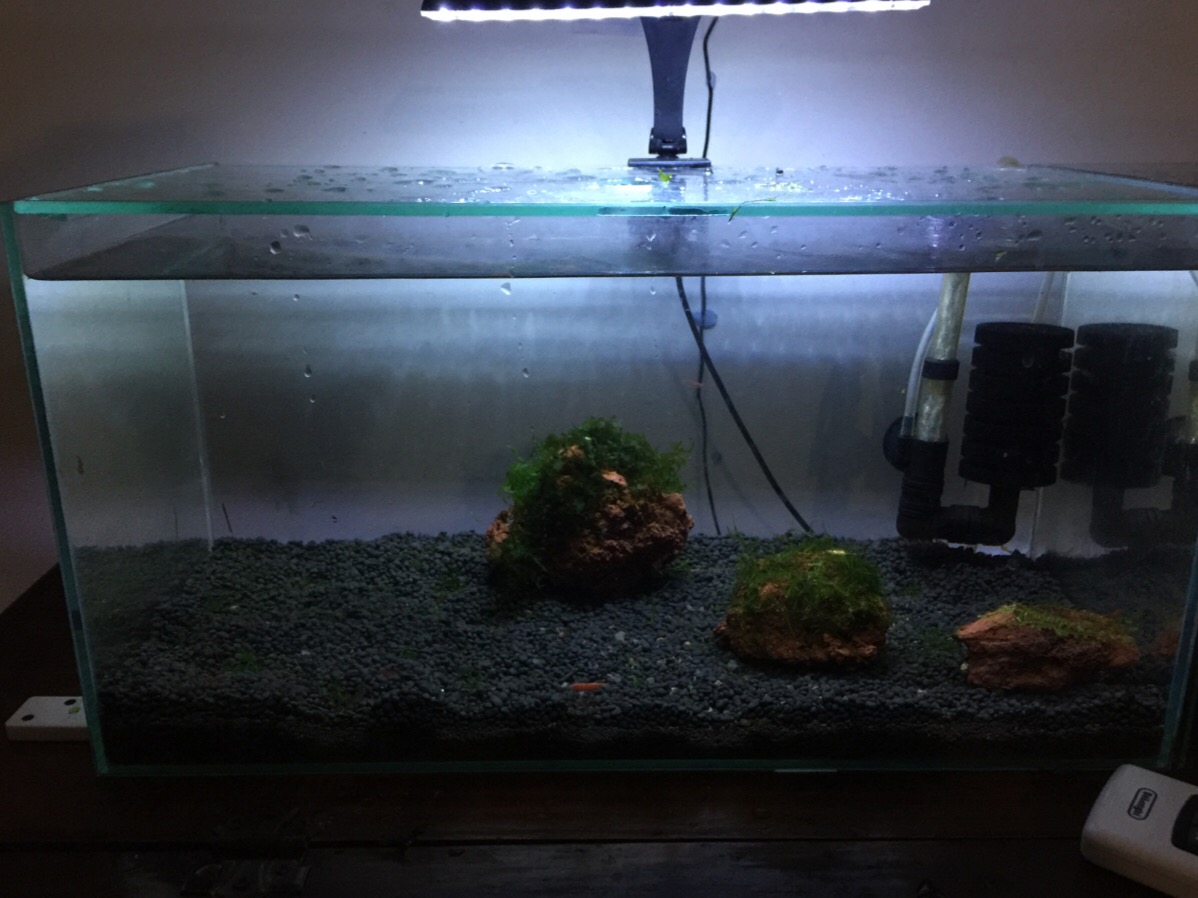
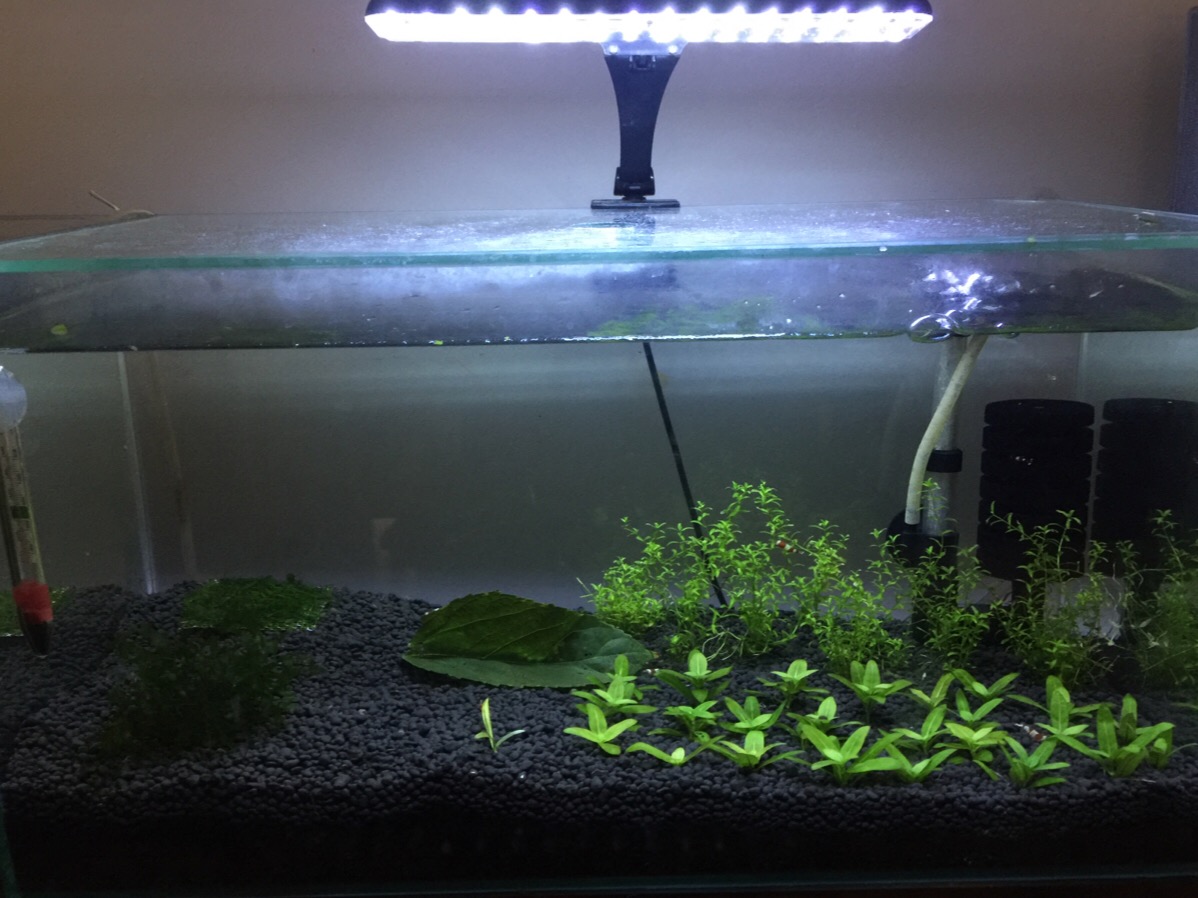
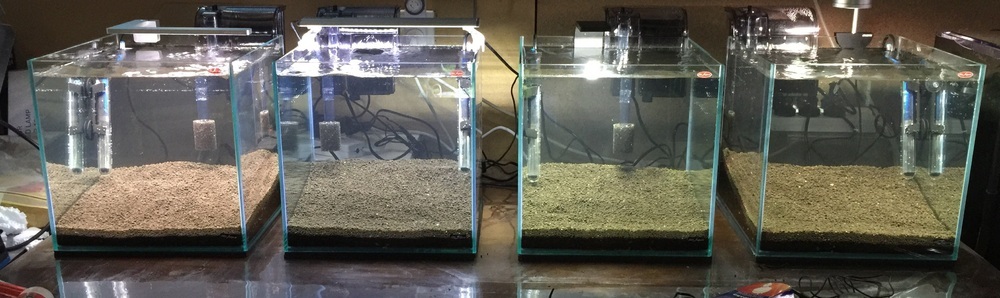 So I had the opportunity Friday to setup some new 30cm cubes, which will be used for guppies (maybe shrimp later on!) I then decided it would be great to run a side by side comparison of the lights we sell online. All tanks have same heaters, filters and substrate (shirakura red bee sand). Left to Right: Aqualighter Nano Aqualighter Pico Up Aqua Y series 18cm ATLEDTiS E6 Left to Right: Flexi Mini Aqualighter Nano Up Aqua Y series 18cm ATLEDTiS E6 Left to Right: Flexi Mini Up Aqua ProZ 30cm Up Aqua Y series 18cm Up Aqua Y seties 25cm Left to Right: Flexi Mini Up Aqua ProZ 30cm Aqualighter Nano ATLEDTiS E6 Very surprised by the blue content in the Y series lights, though these still work well wih mosses and low light plants. Really Pleased with the ATLEDTiS E6 as it probably hd the most natural colour. I knew the Flexi minis were bright, and this is the original version, but when directly compared it outshines all. The ProZ has a nice even white colour to it as expected. Not a very scientific study, but amazing to see the side by side comparison. Hope it helps with any future plans for smaller tank setups. Will definitely give me a better base for recommendations in the future. Also have planted some tissue culture plants in each tank, again same plants across all tanks, so will be fun to watch the growth rates of each. As all other factors are the same, light will be the ultimate factor to growth.1 point
 -
 1 point
 -
 1 pointI wonder if it was able to walk or swim in a straight line with two heads?: 'this way, no we're going that way!'?1 point
 -
1 pointDo any of you knowledgeable people know where I can obtain a supply of squid,krill or fish meal, I have been working on some homemade food and have to date been unable to find any of theses ingredients? Cheers and Thanks in advance Saul1 point
-
 1 point
 -
Sounds like we have a few SKF members attending on Sunday 17th and a few interstaters on their way across/over/down for the event. Look forward to seeing you all there. Will make sure there's photos and hopefully even vids of the event to post. ?1 point
-
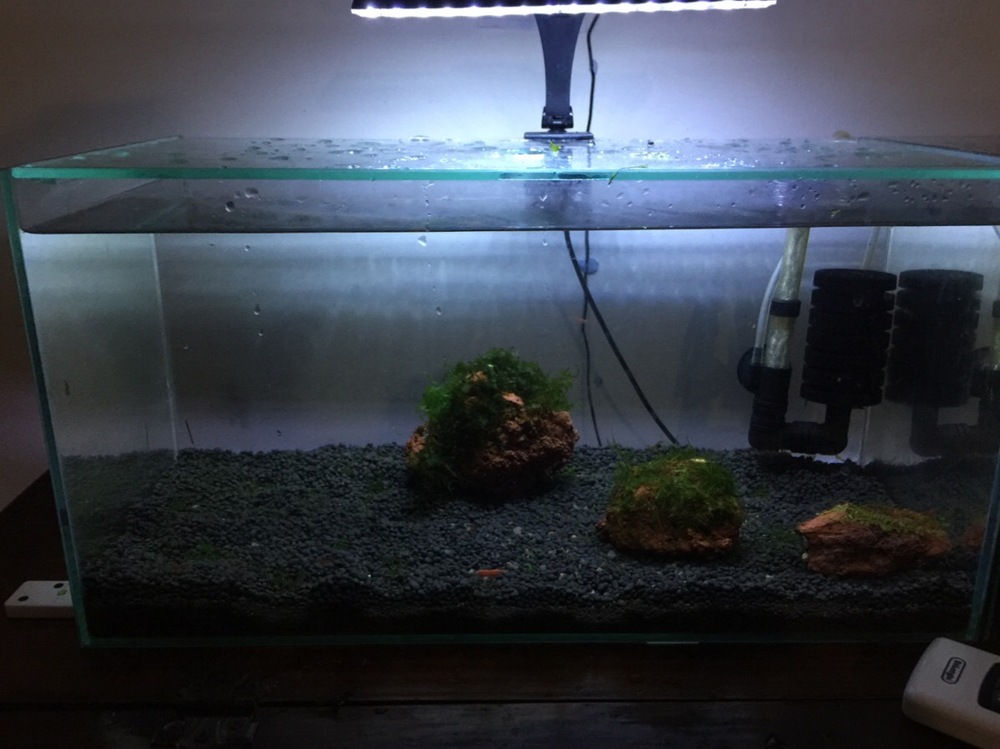
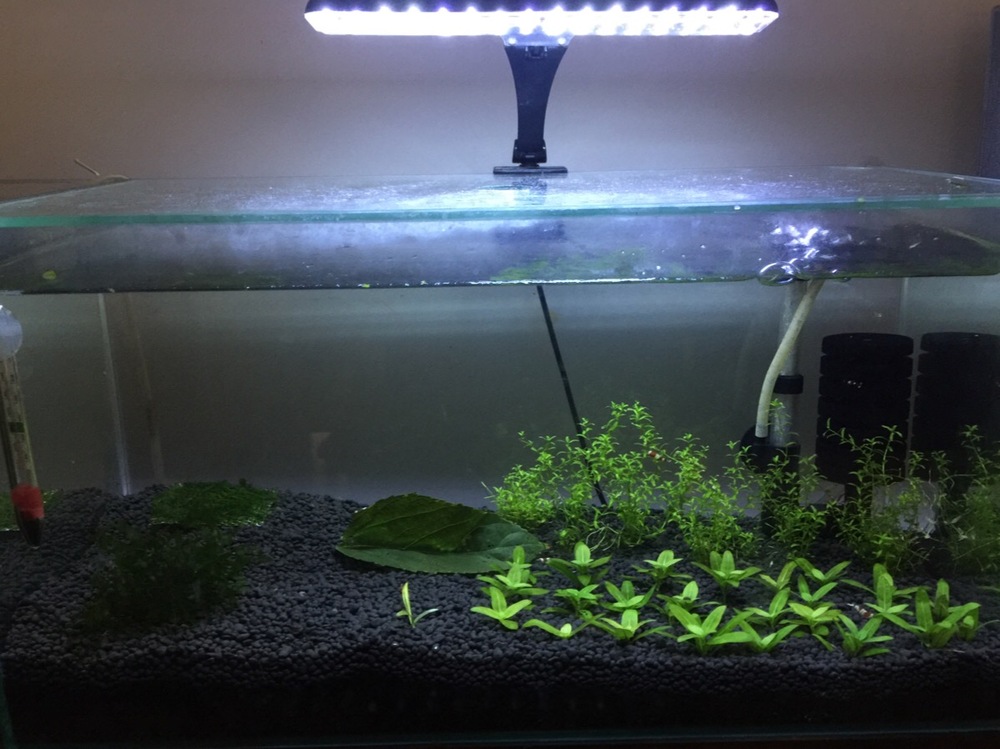
1 pointMy red cherry tank will be adding cholla wood shortly. And my mishlings tank
 1 point
 -
1 pointThanks, it is a skill I continuously work on. As a scientist, even if your results are awesome, if people don't understand the work you do, your results are worthless.1 point
-
1 pointThere are very few stupid questions, yours isn't one of them. In the context of aquarium keeping, Biofilm is a collection of bacteria, diatoms, algae, fungi and other multi-cellular organisms that form a layer on any surface submerged in water (including seawater). Biofilms form because macro-molecules (e.g. Sugars, proteins) attach to surfaces because surfaces (at the molecular level) are polar (i.e. have positive and negatively charged areas). And bacteria are the first to attach to these surfaces to make use of these molecules. The bacteria make the surfaces attractive for settlement of other organisms. Each surface also has a unique biofilm depending on what molecules, bacteria or other organisms attach to it. This is more than the average shrimp keeper needs to know. The important thing shrimp keepers need to know is that shrimp eat this biofilm and it forms an important part of their diet. Hence why we feed our shrimp IAL and similar leaves, because as these leaves break down their surfaces are colonised by micro-organisms which the shrimp eat.1 point