
Leaderboard
-

jayc
Moderators2Points6248Posts -

bort
Members2Points27Posts -

DemonCat
Members2Points203Posts -
neo-2FX
Members1Points723Posts
Popular Content
Showing content with the highest reputation on 06/14/16 in all areas
-
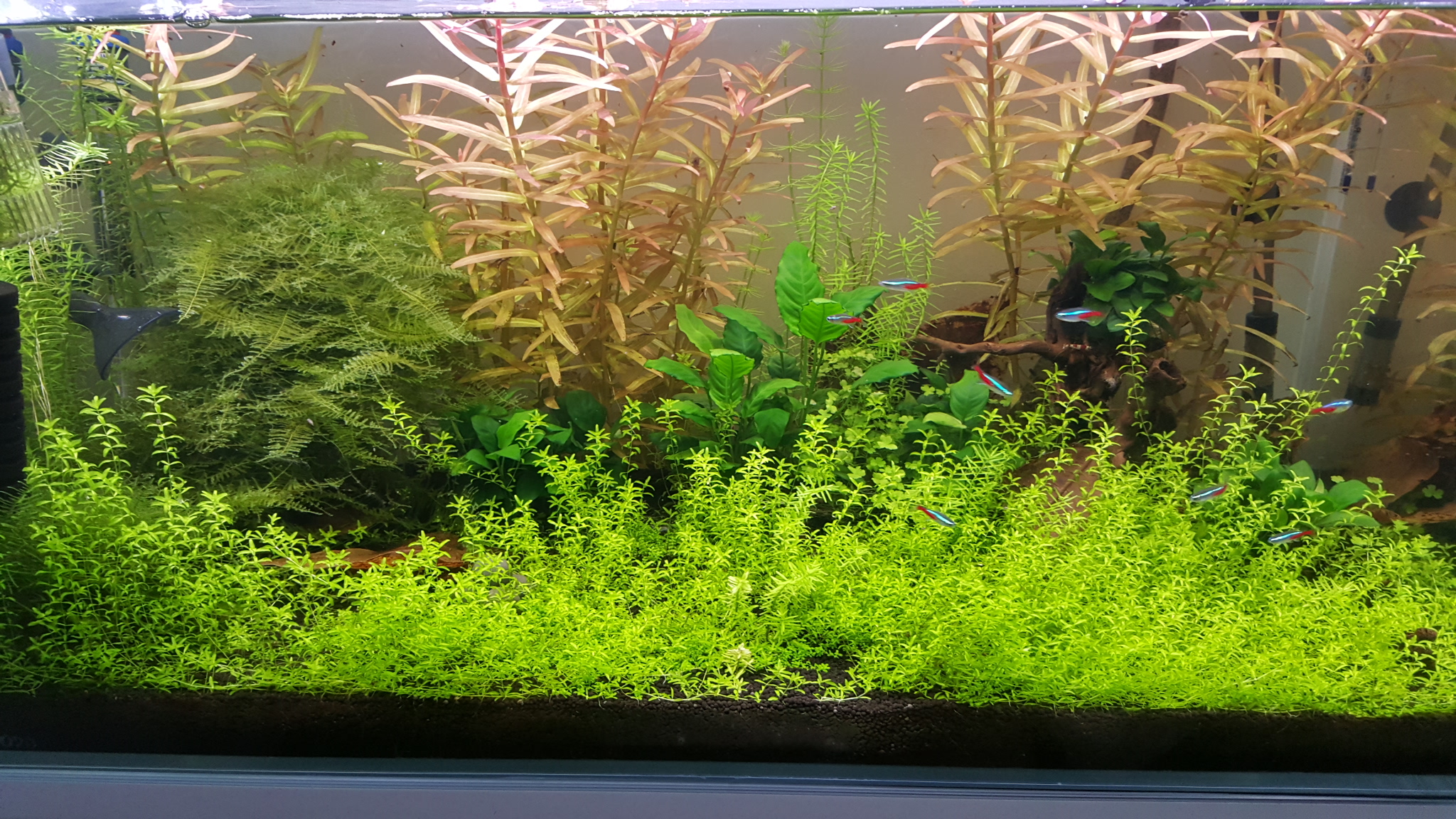
2 pointsUpdate of the tank itself: Here you go - Had the afternoon of work sick so took the opportunity to take some snaps. They are on my mobile phone so excuse the quality:2 points
-
2 points
-
 1 pointHeaded down to the coast for a 5 day holiday not sure what happened in the tank, there must of been some type of shrimp orgee going on. As I came back to 2 berried blue cherrys and 4 berried taitibee's! The taitibee have done nothing for months now all of a sudden 4!1 point
 -
 1 pointGreat looking tank :) Can't wait to set up my big tank. Still at least a month before I get it though :( Are you using co2? I'm thinking yes from the pearling comment. Does it bother the shrimp? Sent from my iPad using Tapatalk1 point
 -
 1 pointYou got a really nice lookin tank. Would love to see some more photos of your inhabitants1 point
 -
1 pointThat's awesome to hear @DemonCat. Good to hear the otto's made it too. They can be frustrating at times. Throw up some photos when you get a chance! I love seeing photos of tanks and would be awesome to see how the plants are progressing on this one ?1 point
-
Since you are doing a fishless cycle, we can adjust water parameters to suit optimum conditions without fear of harming the inhabitants of the tank. You can focus on pH, and to a lesser extent KH (since KH will determine pH). Correct. Keep pH at 7.0 or above. Anything below 6.5 will start slowing down the cycle. Anything below 5.5 will come close to a stall. With that in mind, avoid water changes until your pH get's down to 6.5. At this point, do a water change with dechlorinated treated tap water. I will assume that your tap water is like mine and pH is 7.8+. Tap water is perfect for cycling tanks, as long as it's dechlorinated. There is no need to change water prior to the pH getting lower than 6.5. This is the real reason you want to change water during a cycle. Not to remove ammonia, but to maintain the pH. Changing too much water during a cycle removes the very food needed for the bacteria to grow. Another parameter that often gets forgotten is the temperature. Bacterial propagate much faster at warmer temps. So keep temps at 28deg C - 30deg C. Put a heater in there and set it at 28. Then the next biggest factor is your source of bacteria. If you use a bottle source, then expect longer periods of cycling. Which brands are best is subjective and is a different topic. I have my preferences as do others. However, If you can get a "dirty" filter media off another mature filter or off a friend or even LFS, then your cycling times will drastically improve. "Dirty" filter media is by far the fastest method. Bottled bacteria isn't guaranteed to work, nor does it necessarily have the right bacteria. For every person that says it worked for them, there are equally as many that say it doesn't work. Who knows, maybe they didn't follow this advice I'm giving you. I'll predict your next question - how to keep pH up at 7 or above? Since you are doing a fishless cycle, the easiest way is to use Sodium Bicarbonate or BiCarb soda. Any Coles or Woolies will have this. Don't use baking soda, that might have cream of tartar in it. Coral chips can help too, but it takes longer to see the affect on pH. Coral chips are used for longer term control of pH. Don't just dump it in the tank. You can over correct the pH if you pour the BiCarb powder into the tank. Any undissolved powder will get trapped in the gravel and can keep affecting your pH even after cycling. You'll be wondering why you can't reduce pH later on. Instead, dissolve the powder in a cup of water and add the liquid in slowly until your pH pen reaches 7.x. Let the water mix and circulate, then test pH after, say 10 minutes after adding the bicarb liquid. Once the tank is completely cycled and show no signs of Ammonia or Nitrites, do a BIG water change. 80-90%. Lastly, the duration of the cycle depends on the type of substrate you are using. ADA Amazonia generally has been acknowledge to release a lot of ammonia. So naturally this substrate will take the longest to cycle. But this also means that ADA substrates will be able to buffer and provide nutrients to the plants long after most other substrates. Cal Aqua Labs black earth premium, is my fav substrate, it does everything ADA substrate does but with the added benefit of much lower Ammonia release at cycling and is not as dirty (debris, twigs, etc) as ADA substrate. Then you have a lot of different shrimp specific substrates, that all have their own characteristics. Too many to go into here. There you go. That's everything I can think of right now. Go ahead and sticky this.1 point
-
1 pointcjwuna, have a look at the Shrimp Tank Setup subforum for a view of what substrate people use. But in short there are Cal Aqua Labs Black Earth Premium, ADA Aquasoil, Benibachi Fulvic Grain that is available in Aus which is highly recommended by many shrimpkeepers for Caridina shrimp (CRS, CBS, TB). I like CAL Black Earth Premium, since I find it less dirty (unwanted debris) than ADA or Benibachi. CAL BEP also cycles faster than ADA, and does not release as much ammonia like ADA. When moving plants around, there is less "stuff" kicked up to cloud the water. ADA seems to kick up a huge amount of debris that clouds the water. Benibachi seems to fall in between CAL BEP and ADA in every aspect (My observations only). You can't go wrong choosing one of these 3 substrates. Just make sure you cycle them properly, especially ADA substrates, they will take a lot longer. The lower premium products are Ista, Mr Aqua, Up Aqua etc. These are cheaper and don't buffer for as long as the first 3 mentioned above. As a result they can also be used for Neocaridina shrimp. For Neocaridina shrimp (cherries, rilli, etc), you can use any inert gravel or substrate like pebbles, sand, or what I do sometimes based on availability - I use old spent plant substrate, ie my old ADA or benibachi substrate. I seem to never throw out old substrate. Our sponsor Tech Den also sell Shirakura Bee Sand substrate. It's not a new product, but it's new to Aus. I have not used it, but it seems to be ok from what I have read about it. Very similar to CAL BEP. Good pH control at 6.5, buffers a long time, does not cloud the water at startup. Cycles quickly. SKF sponsor Age of Aquariums also stock a lot of plant/shrimp substrates. They also have Fluval shrimp substrates, which currently would be ranked in the between the premium substrates and inert gravels. Good for Neocaridina or Tiger shrimps. You can also find other substrates like Seachem Flourite, Ecocomplete or Dupla Ground, that are generally inert which is great for Neocaridina shrimp. They might contain some minerals that plants can use but generally do not buffer the water to maintain the pH, KH, GH for Caridina shrimps. But why pay more for such susbtrate when you can get cheaper inert gravels. Hope this helps you choose a substrate.1 point
-
 One of the biggest headaches for planted tank enthusiasts is choosing the right substrate. There is no 'best' substrate as each has advantages and disadvantages. So let's take a look at what is available. NATURAL SAND AND GRAVEL Inert sand and gravel can make a perfectly good starting point for any aquarist. My favourite quartz sand is from the Nepean River. Never use beach sand, always river sand. Fine rooted plants like Hc and Hairgrass will grow easily in sand. Their roots are able to make a tight grip in sand and in nature, they are usually found growing on the fine, silty edges of creeks and pools. When choosing a gravel, go for a grain size around 2-4mm as this will allow roots to grow freely and also allow water to circulate through the root zone. Quartz gravel is a good choice for people wanting to use Undergravel filters as it will not break down over time and clog the filter. Baby fish and shrimp will not get caught in these filters and cleaning with a gravel filter then topping with clean water achieves a water change and filter clean at the same time. Amendments such as Laterite are also suitable to provide food directly to the roots. The addition of Marble Chip will help avoid problems with Vallisneria, Swordplants, Aponogetons and most of the Cryptocorynes. If you are planning to use only Mosses and Ferns, Natural Gravel is possibly the best choice. MANUFACTURED SUBSTRATES These are designed to provide a good media for heavily planted tanks. When you choose a brand of soil, I suggest you stick with the same brand of amendments and fertilizers since these are designed to compliment the substrate. People using these substrates will often spend a lot of time dosing, testing and adjusting their tanks. Good lighting and CO2 injection are necessary to achieve the best results. DIY SUBSTRATES Many people these days like to mix their own substrates. Diana Walstad has written articles and books with her findings on home made mixes. Well worth reading her material if you want to have a go. There is also a trend for some of the better aquarium outlets to provide their own specialty mix. One of these is SMARTSOIL, designed by aquarists to make planted tanks easy. SMARTSOIL will help prevent ammonia spike during set-up and contains a flocculant to avoid cloudy water when disturbing the substrate. I welcome comments and positive input to the comments I have made here. AR View full article1 point