
Leaderboard
-
Foxpuppet
Members3Points874Posts -

Baccus
Members2Points1365Posts -
NoGi
HOF Member2Points5858Posts -
Disciple
Platinum Members1Points2092Posts
Popular Content
Showing content with the highest reputation on 03/31/16 in all areas
-
2 points
-
 1 pointHi there.... I read some interest topic here. I am a plant and shrimp keeper. Im running 12 tanks now. I keep Snowball Crs neocaridina ( yellow, red, orange, blue) Sulawesi dennerli I saw a lot photos. :) My 180lt dutch tank. :) Red cherry , rummynose and bnp. A 10lt with red chery , without filter and heat. Just growing plants. 90lt Sullawesi cardinals 30 lt topaz blue 30 lt crs tank1 30lt crs tank2 30 lt neo Yellows 30lt snowballs 30 lt orange neo And a some videos... Thats all ... :)1 point
 -
 1 pointHi guys, I would just like to weigh in on chiller running costs: I run 2 x JohnLen thermo-electric chillers full time on a 130litre and a 240litre tanks ( my seller told me they use less electricity), and they do. I am running 4 tanks in total. My bill for the last three months has only increased with $86, compared to last year when I did not have tanks or chillers ( Single person household with very stable, predictable power usage, so the comparison is accurate). $86 for 3 months for 2 chillers works out to $14.30 only per month running cost per chiller. The JohnLen chillers are cheaper than regular traditional chillers and I have had no issues at all, very happy with them.1 point
 -
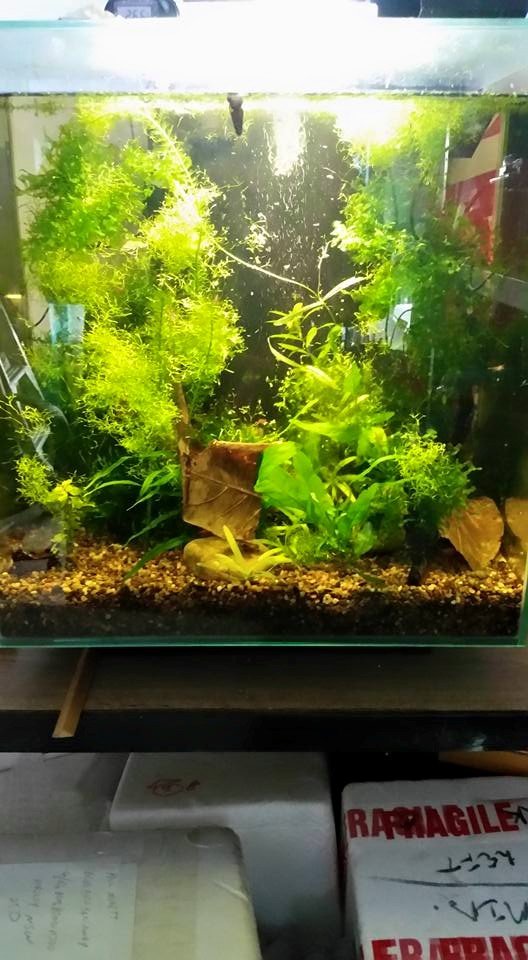
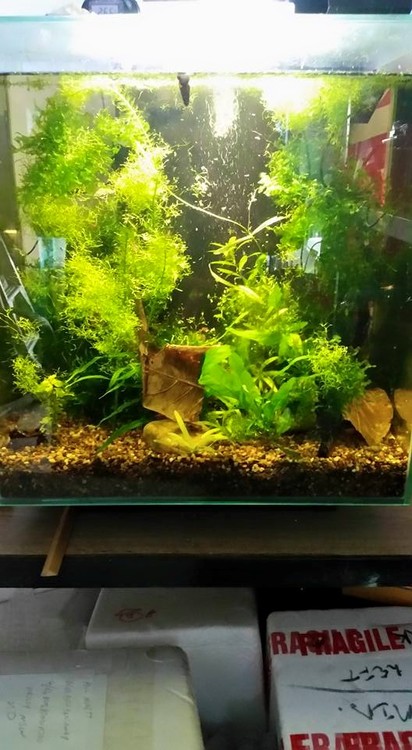
 1 pointHello! I just have the one tank set up and cycling currently, getting back into fish and shrimp keeping after a bit of a break. There's another tank ready to go once this one is sorted. This photo is from just after set-up, the water has cleared beautifully, and the crypts around the sides are recovering after an initial melt. Any input or advice is more than welcome! I'll hopefully be getting some Rili's for this tank.1 point
 -
1 pointWhen it comes time to thin the numbers I think I will be happy to give them away just people pay the postage. At least then they will be getting a little better known.1 point
-
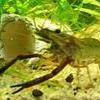 1 pointfirst week has now past all still looking happy no losses I have saw in the jungle they are a very active and interesting shrimp. they display some similarities to there cousins but seem to roam more freely around the tank than other crystals I have kept. they are accepting all foods so far as well as grazing the biofilm and algae around the tank. I am really enjoying keeping them.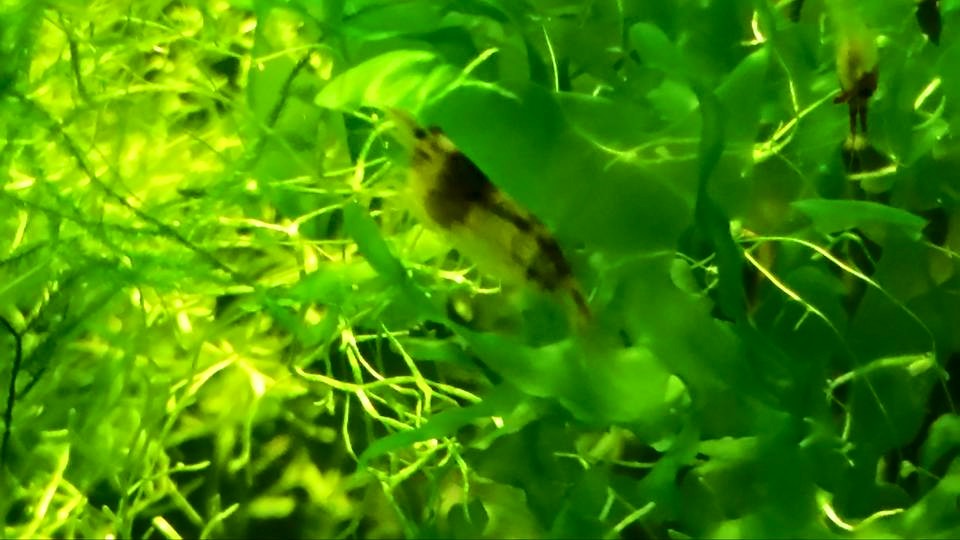
 1 point
 -
I was sure this shrimp was about to moult and sat there for ages waiting.... Waiting..... Waiting..... But nothing ;) Put this hopefully saddled Misch in with the Pandas and BB, will continue to wait1 point
-
1 pointThat's the biggest understatement of the year ? Very nice setup, love to hear your plant exploits here on SKF.1 point
-
1 pointGood work mate, keep us updated. These seem to be the hardest natives to get breeding atm.1 point
-
1 pointCouldn't resist putting up this photo I took last night of this shrimplet patrolling one of the large notopala snails. It really was wondering up and down the length of the snail (I have the blurry pictures to prove it LOL), but this photo was the only one to turn out clearly. In my mind he is saying "Tally Ho"1 point
-
 1 pointHi all, Recently, I did some testing on buce for about 2 month to find out what will be the best method to accelerate the grow. Hence, I would like to share some of my findings (initially I wanted to post on my blog but my blog is under-maintenance). Lighting - Buce prefers much higher lighting than anubias. However, if you keep them at very low light, it will survive and colour up but not growing much. The colouring up includes turning the emerged-grown leaves into submerge colour. But when you turn up the lighting to medium intensity (similar to the intensity for growing Staurogyne Repens) and does not inject CO2, the growth and colouring up stop. Once you inject CO2 the, the growth and colouring accelerated much faster. But it will concentrate on growing new submerge leaves instead of colouring up the old emerged-grown leaves. As such, I conclude the best lighting will be medium-low. If you planning to use stronger intensity, Otocinclus is must. Or else, the buce will be covered by diatom. Another interesting part of lighting is that when the plant receive sufficient lighting, they will grow leaves at the bottom instead of the top. Hence if you plant them into substrate at bright area and when you see them never grow any new leaves, use the twister and lift them up a little. You will see tons of leaves growing below. You may need to do this once in awhile. Before you do this, make sure there are some roots that attached to the substrate. CO2 - Tested from 5ppm to 40ppm and there is no significant differences. The key factor is as long as you inject CO2. Just a tiny bit at 5ppm will be good enough. NO3 - Tested from 5ppm to 25ppm and there is not really significant differences (I increase CO2 and lighting intensity when I increase NO3). However if the NO3 is below 5 and below and when lighting is strong, the leaves will turn yellow and diatom will form. As such, I will recommend maintain the NO3 at 10ppm (provided your pH is above 5.8). PO4 - All my tanks are consistently with 0.75 to 1ppm of PO4. Hence, I can't tell from my experiment whether they will affect buce or not. Trace Fertiliser - They love trace fert. The more you dose, the better the colour and the thicker and rubber the leaves. This makes me suspect the logic for them not growing new leaves fast. I think they have priority on using energy and nutrients to improve existing leaves, instead of growing new leaves like most plants. Best Way to Propagate - Trim them as often as possible. Once they grow to a decent height, they will grow very dense leaves. Once this happens, it is almost impossible to cut at their rhizome. For a new plant you bought, if the rhizome is long, cut them to small multiple leaves. A 2 to 4 leaves new plant grows best initially. If the rhizome has cut and the leaves are little, they will grow many leaves at one time. I did an experiment by taking a long rhizome with 2 leaves and use pen knife and do multiple cuts. End up, I get like 8 leaves growing at the same time (even in non-CO2 injected tank). Planting Area - The roots and rhizome loves substrate. Hence, they grow even much faster if you plant them into rich substrate (this is align with my finding on they love trace nutrients). The rhizome will not rot like Anubias. As such, Buce could be plant almost every where you like, except area that is high up and next to the lighting. Temperature - Tested 26C and 30C and they are doing just fine. Many claims that they melt at high temperature. I think this got to do with nutrients level, which is the same as lighting intensity. Higher temperature will have higher metabolic rate that may have the same effect as high light intensity. If sufficient nutrients (including CO2) are provided and lighting intensity is not too strong, don't worry about the leaves melting. They will grow back later on. Personally, I prefer them to melt away all the emerge-grown leaves and grow out the smaller, rubbery, thick and colour leaves. But there is one annoying thing you need to take note (not much people observed). Buce's young leaves are tender and tasty. Shrimp and Otocinclus love to much them. If you are keeping buce with them, make sure they are well fed. Or else, you will find your buce leaves start to have bit and pieces being bitten off. Hope these information help. ;)1 point