
Leaderboard
-
Disciple
Platinum Members11Points2092Posts -

ineke
HOF Member9Points9026Posts -
NoGi
HOF Member3Points5858Posts -

Forevermango
Members2Points79Posts
Popular Content
Showing content with the highest reputation on 02/24/16 in all areas
-
1 pointNon-aquatic plants to avoid! When you purchase aquarium plants, it's important that you understand that not all plants available for sale are truly aquatic. Vendors have no qualms offering this plants for sale, because they are very easy to obtain, and it is rare that you will see the designation "non-aquatic." While these plants can often survive as long as a year submerged, more often than not, they begin to decompose in as little as a couple of weeks or months, causing an ammonia spike, which can lead to algae, or worse, prove toxic to fish. These plants are not meant to be grown in an aquarium long-term and it is best that you avoid purchasing them for your benefit and the benefit of the non-aquatic plant. They are terrestrial plants and are meant for either indoor or outdoor gardening. They are at their best when they planted and cared for the right way. Japanese Rush (Acorus gramineus) Often sold in pots with rockwool, this plant will survive in the aquarium upto a year, but prefer cooler temperatures. In warm tropical tanks, this plant will turn to mush very quick. Aquatic alternatives such as Lilaeopsis species, Echinodorus tenellus, Sagittaria subulata, Vallisneria species can be used. Caladium (Caladium bicolor) This plant will only survive in the aquarium for upto 6 weeks (best kept with its leaves out of the water). These are usually sold in pots with rock wool. Aquatic alternatives such as Tiger lotuses and Barclaya longifolia can be used. English Parlor Palm (Chamaedorea elegans) This plant can survive long periods in the aquarium, these are usually sold as seedlings about 20cm tall either in pots or in bunches. In terrestrial environments, these can grow upto 2m tall. Aquatic alternative such as Hygrophilia difformis can be used. Aluminum Plant (Pilea cadierei) This plant may last in the aquarium for a few weeks, but will eventually melt away. Aquatic alternatives is the Blue Stricta. Spider Plant (Chlorophytum comosum) Another plant found in the trade as a potted plant. While it may grow very well in terrestrial form, once submerged it will root very quickly. Alternatively you can use larger Sagittaria species. Lucky Bamboo (Dracaena sanderiana) The lucky bamboo is very common these days among aquarists. If the leaves are kept out of the water, it can survive for a very long time. Once completely submerged, the lifespan is roughly 8 weeks. It is usually sold as rooted stalkes. Fittonia verschaffeltii This compact little plant is usually sold in pots, but unfortunately it will only last a couple of weeks in the aquarium before it begins to decay. Alternatively you can used Staurogyne sp. Purple Waffle Plant (Hemigraphis colorata) One of the most commonly seen non-aquatic plant in the trade. It is often sold in cuttings secured with rubberbands or lead weights. It may survive upto a year in the aquarium but would require high lighting and high iron levels. This plant will slowly deteriorate. Alternatively you can use Lobelia cardinalis. Iresine lindenii A beautiful plant, but completely unsuitable for the aquarium. It is often sold as a potted plant in the aquarium trade. Alternatively you can use Alternantera reineckii. Selaginella moss (Selaginella martensii) Unfortunately, this plant only has a 2-week lifespan in the aquarium and is often sold in pots. However, it makes an excellent paludarium plant. Very similar to Selaginella martensii is Selaginella willdenowii (umbrella fern, peacock fern). Aquatic Alternatives - Aquatic mosses, including Frontinalis antipyretica, Taxiphyllum barbieri and other Taxiphyllum species, and Vesicularia dubyana and it's related species. Peace Lily (Spathiphyllum wallisii) There is a lot of debate regarding the Peace Lily, and it is often seen in the trade as a potted aquarium plant. In Peter Hiscock's book, it is listed as a suitable plant for the aquarium, since it is extremely hardy and can remain healthy in the home aquarium for many months or even years. It is slow growing and can grow with minimal effort and in lower light levels. It is not, however, a true aquatic plant. Arrowhead Plant (Syngonium podophyllum) Though suitable for paludariums, the "arrowhead plant" quickly dies if left submerged. It can, however, be kept in situations where its roots are submerged. It is often sold as a potted aquarium plant. Aquatic alternatives - Hygrophila corymbosa, Echinodorus "Ozelot green", Anubia species Mondo grass (Ophiopogon japonica) Mondo Grass is not a true aquatic plant. It will survive for awhile underwater but will not prosper. Best if taken out after a couple of months. Alternatively you can use Hairgrass or Blyxa japonica If you know any other plants I have missed, please post them below :) View full article1 point
-
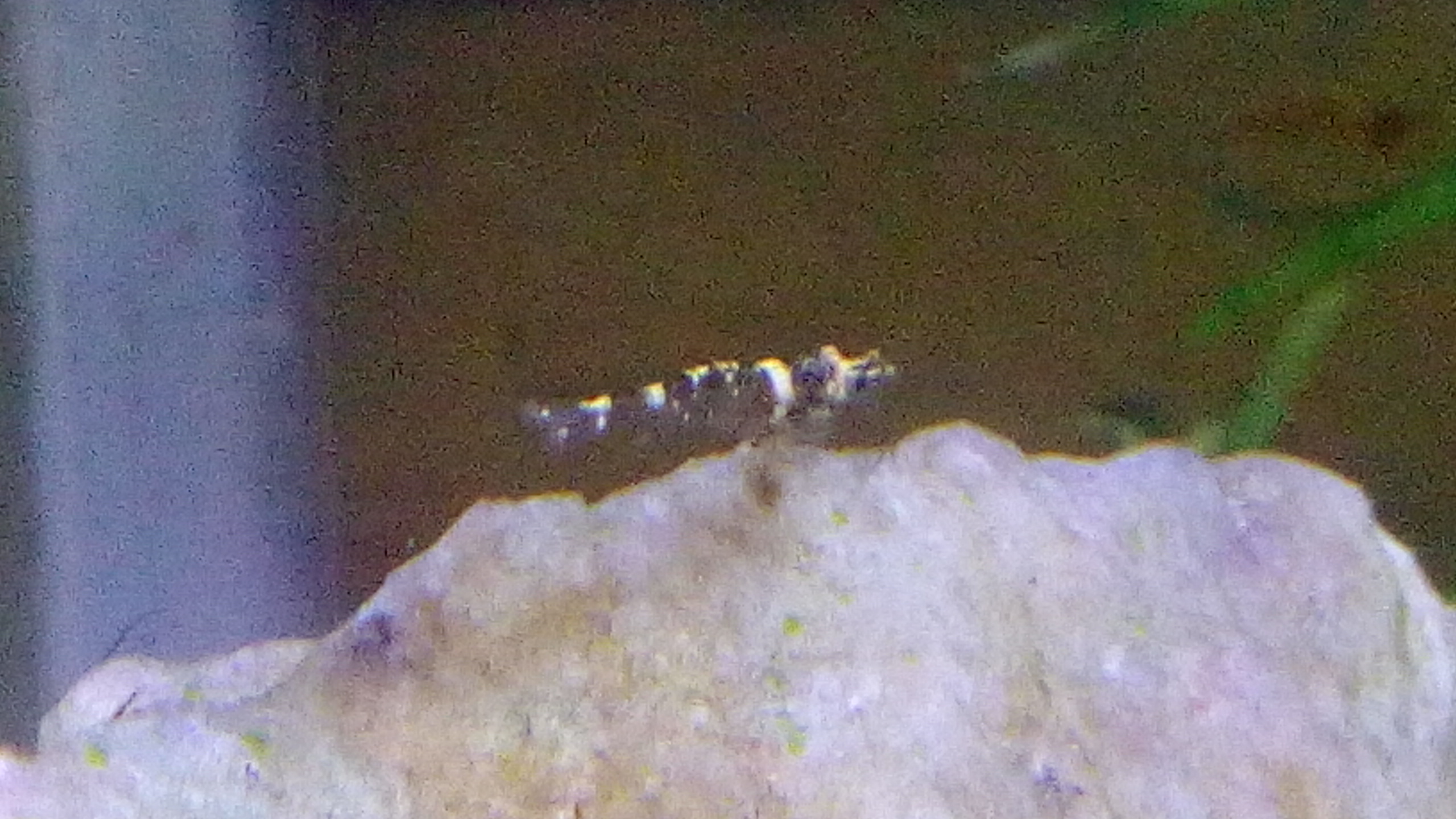
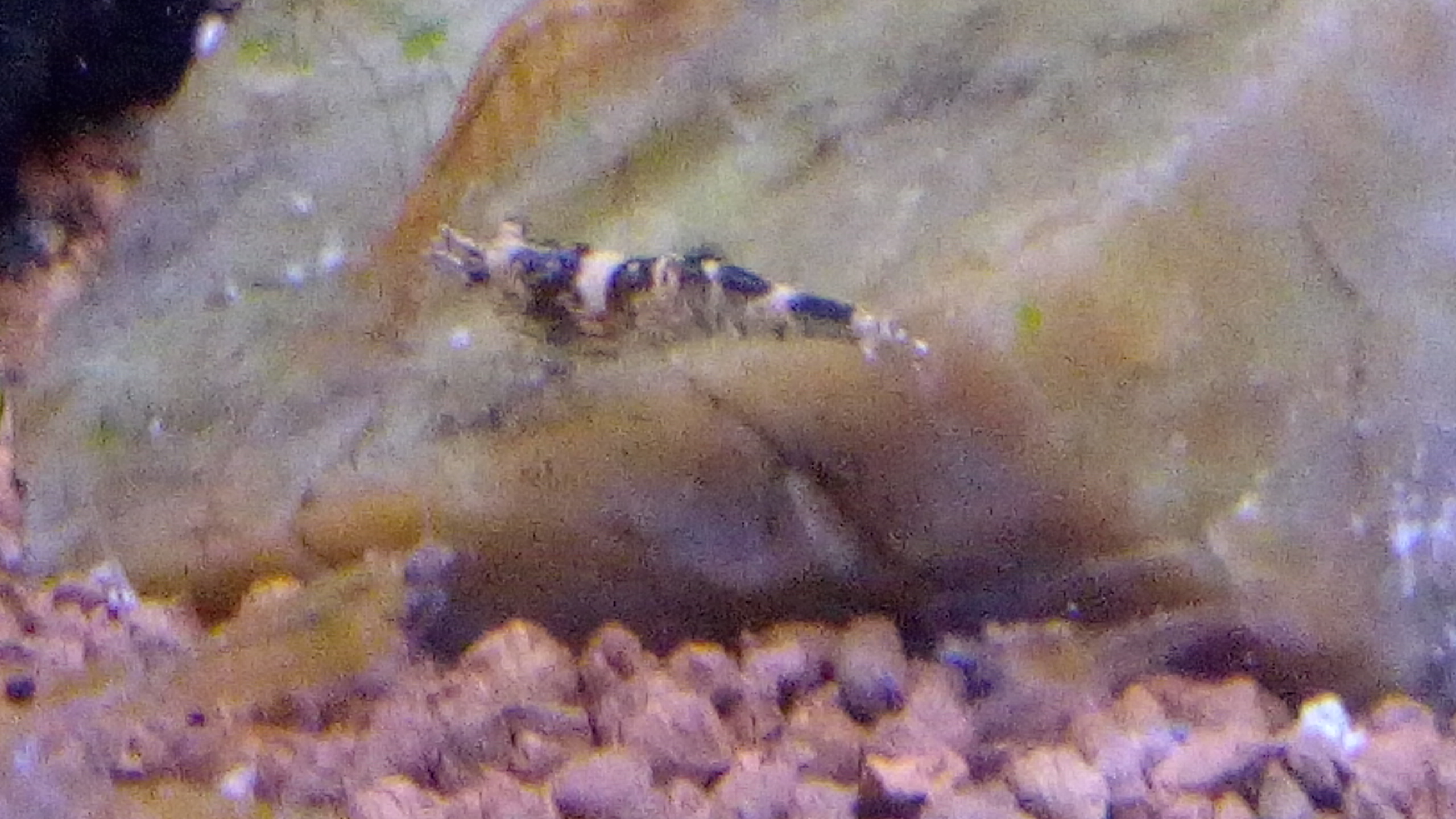
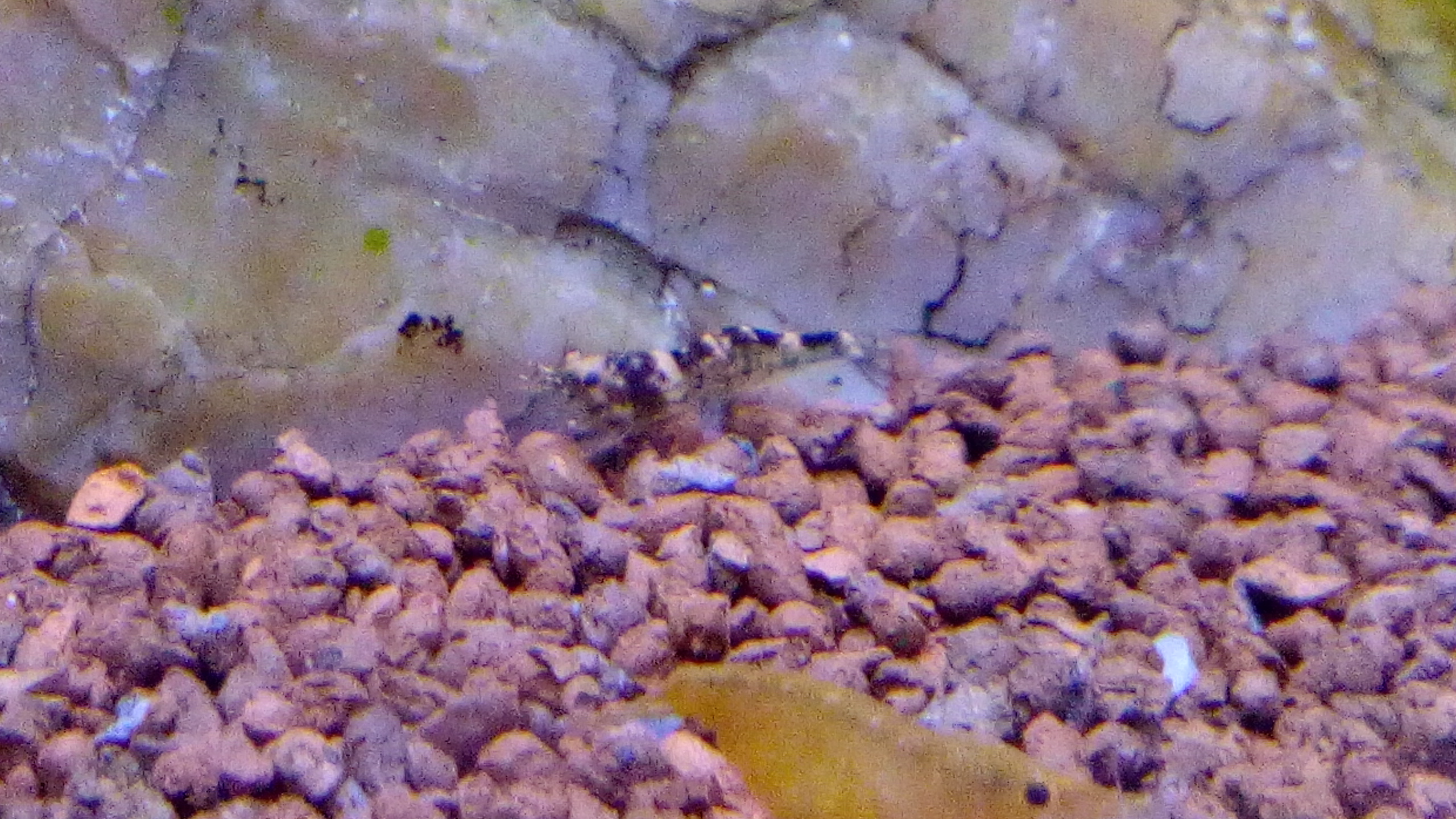
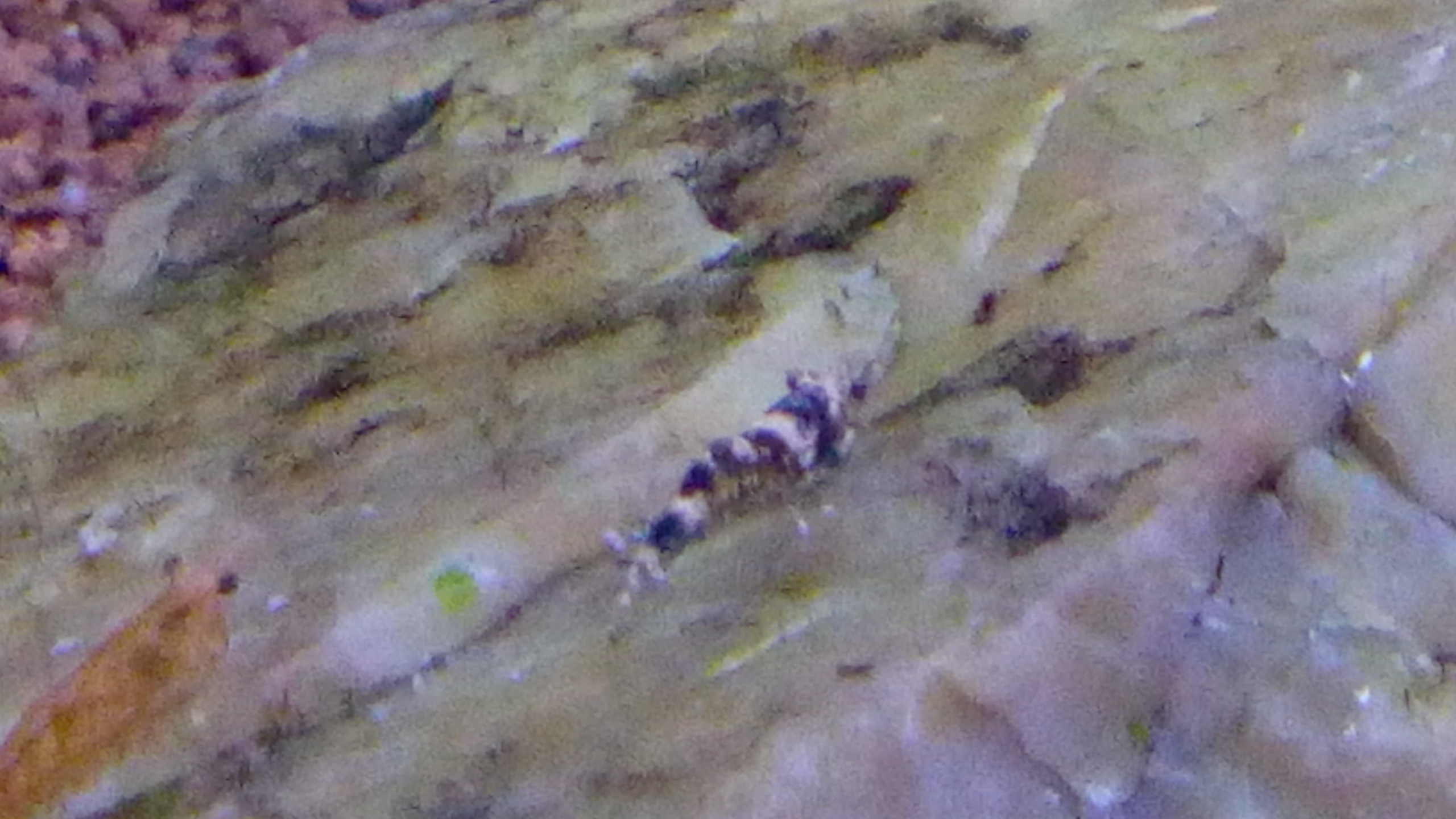
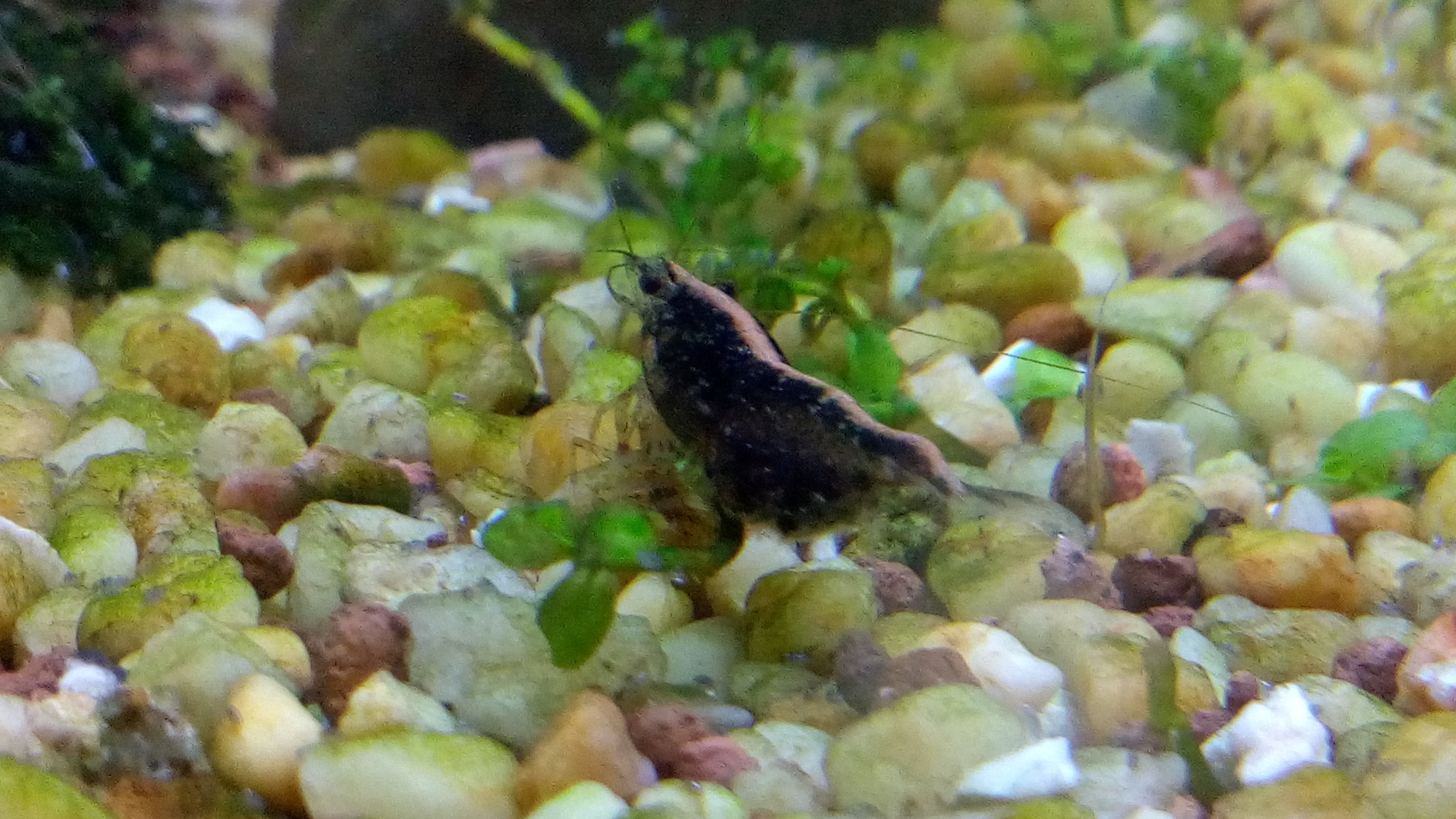
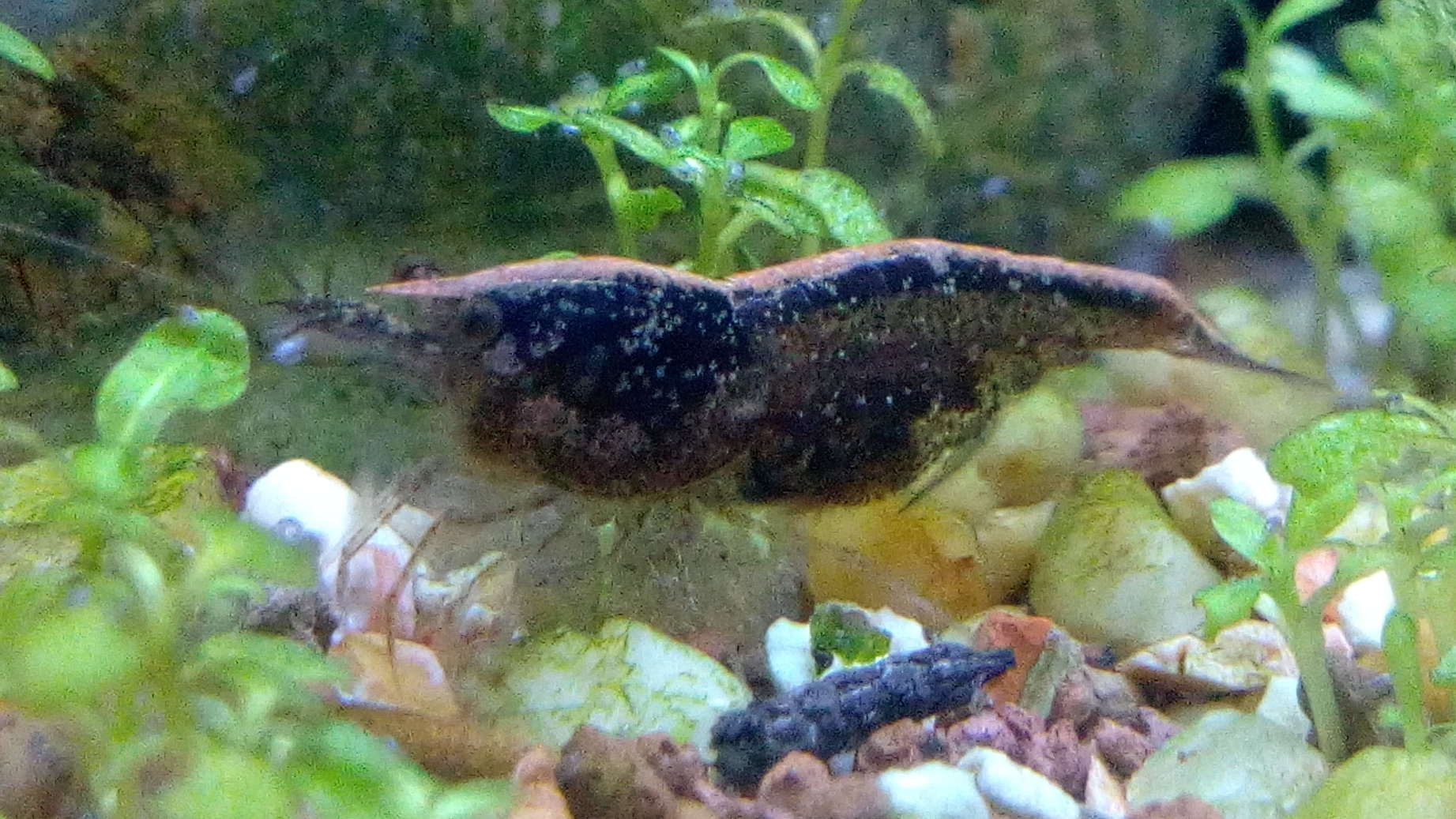
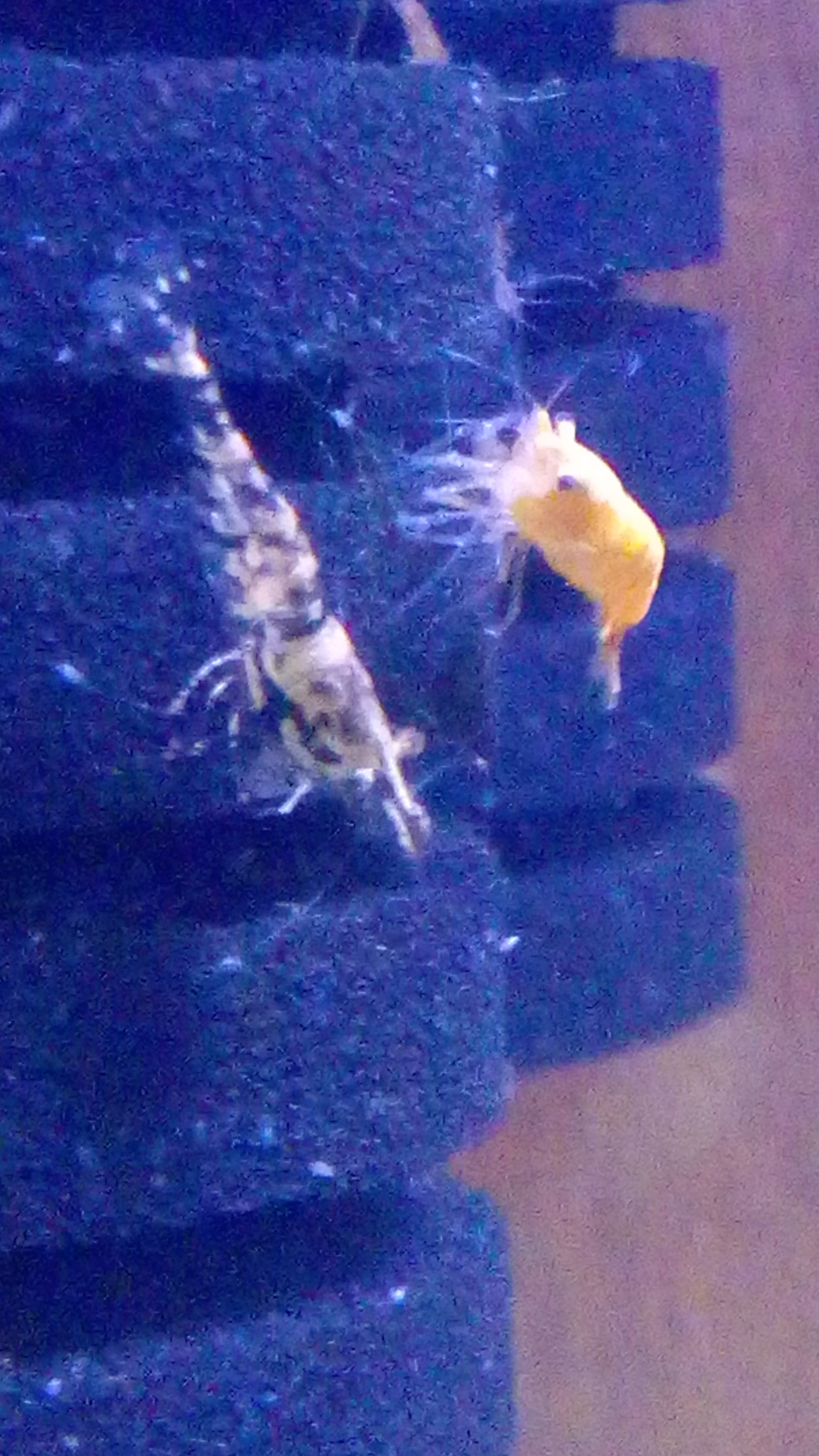
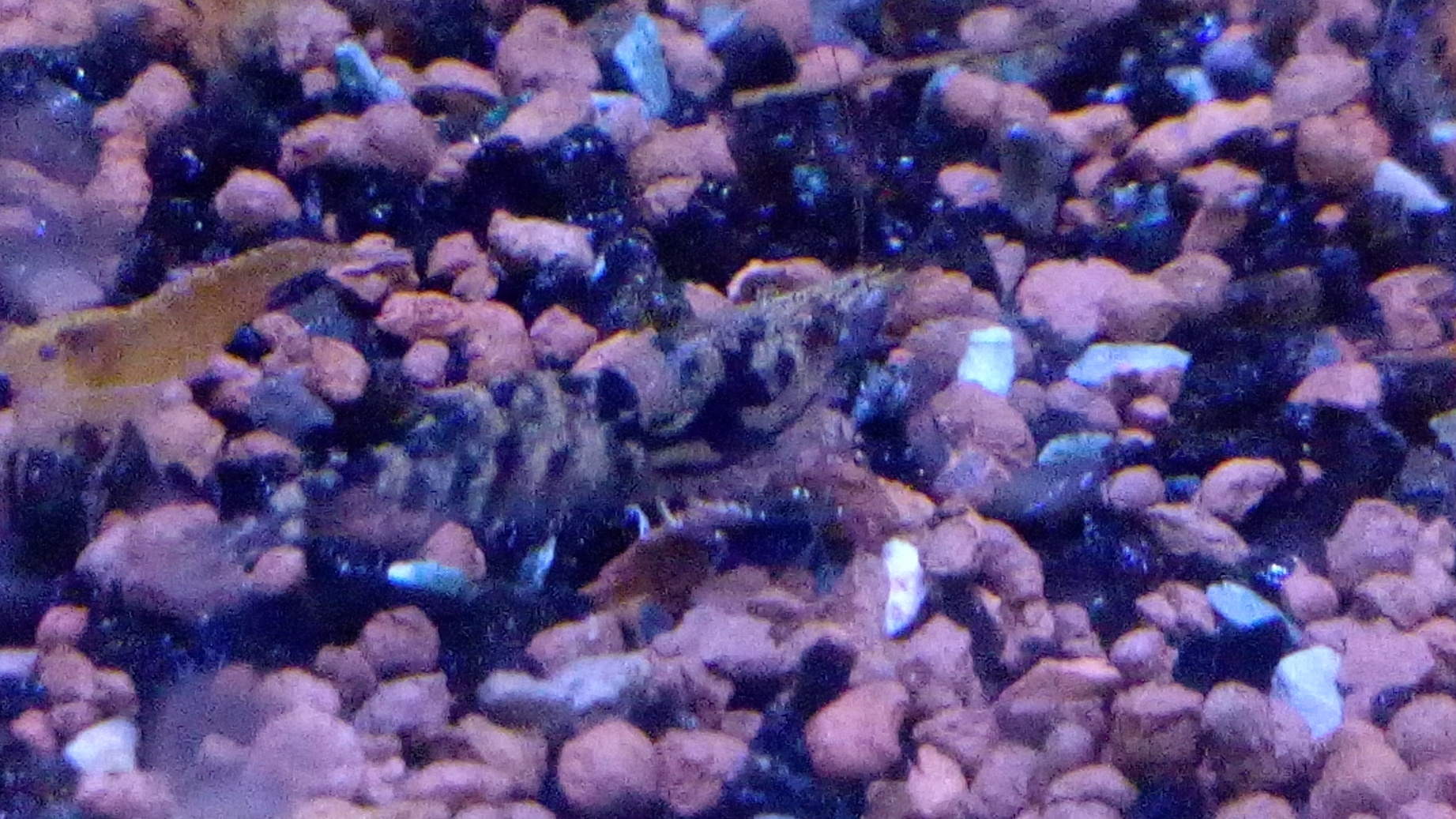
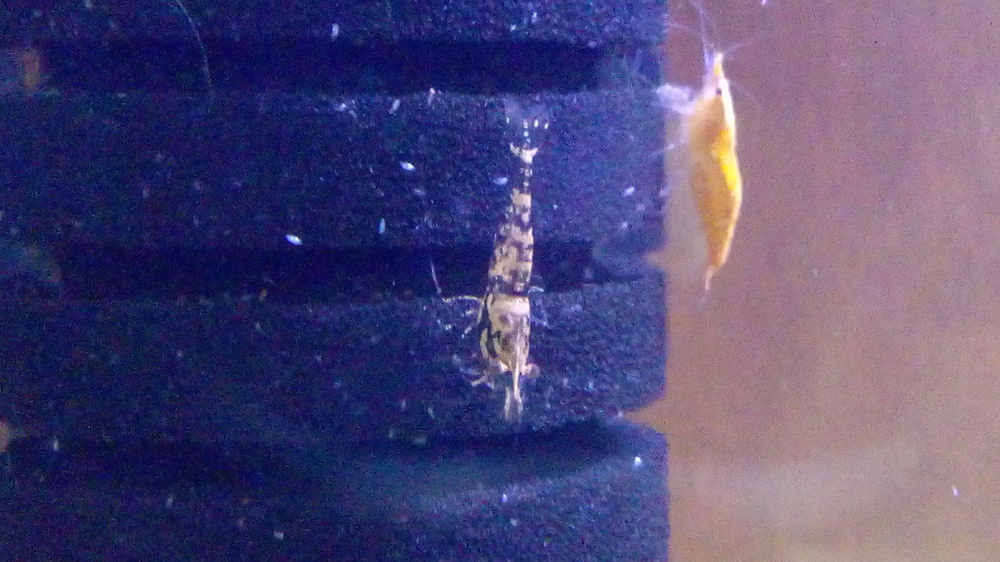
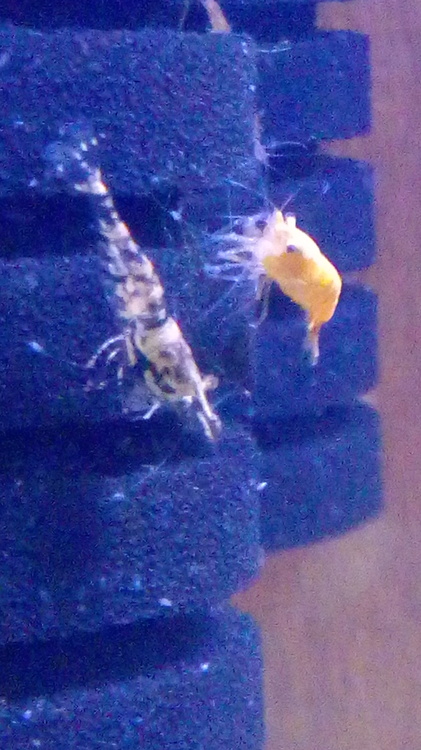
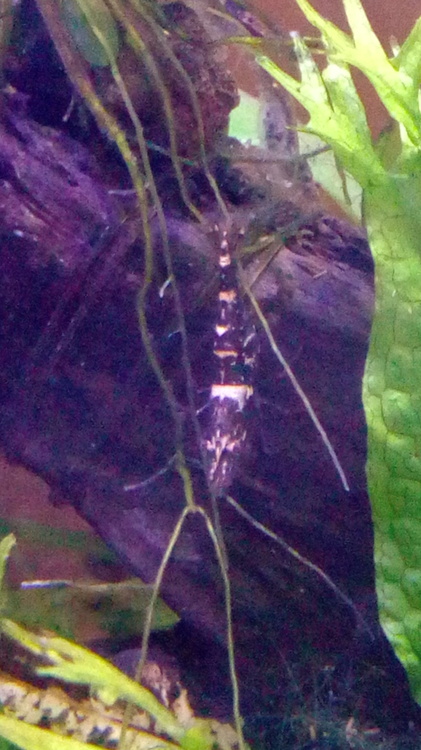
 1 pointJust want to share my local zebra. Those are tiny ones, less than 2 cms long for adults, but they look so pretty. They come from a creek in the south of New Caledonia. The guy who gave them to me knows the secret spot... Sorry for the poor quality of pictures. Enjoy though.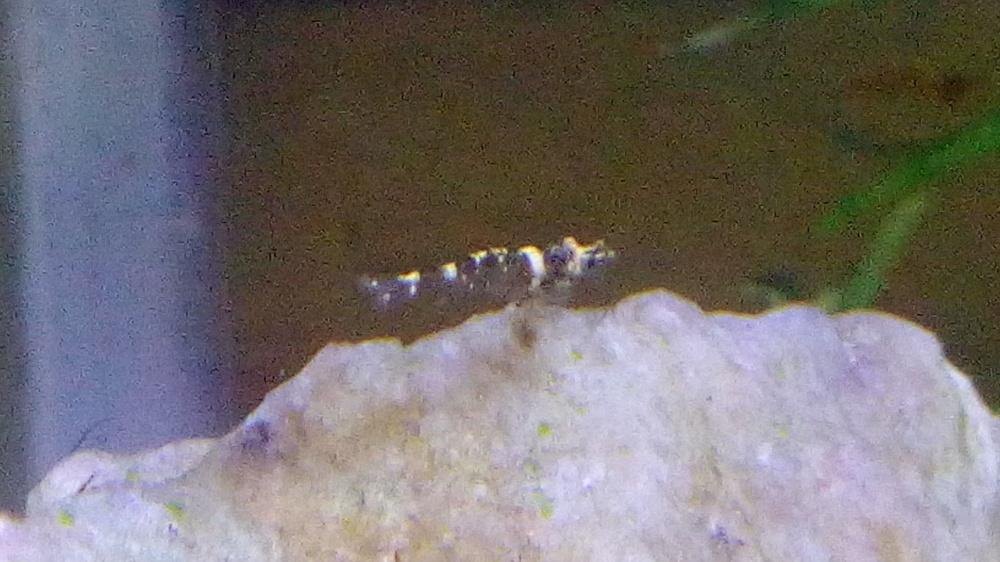
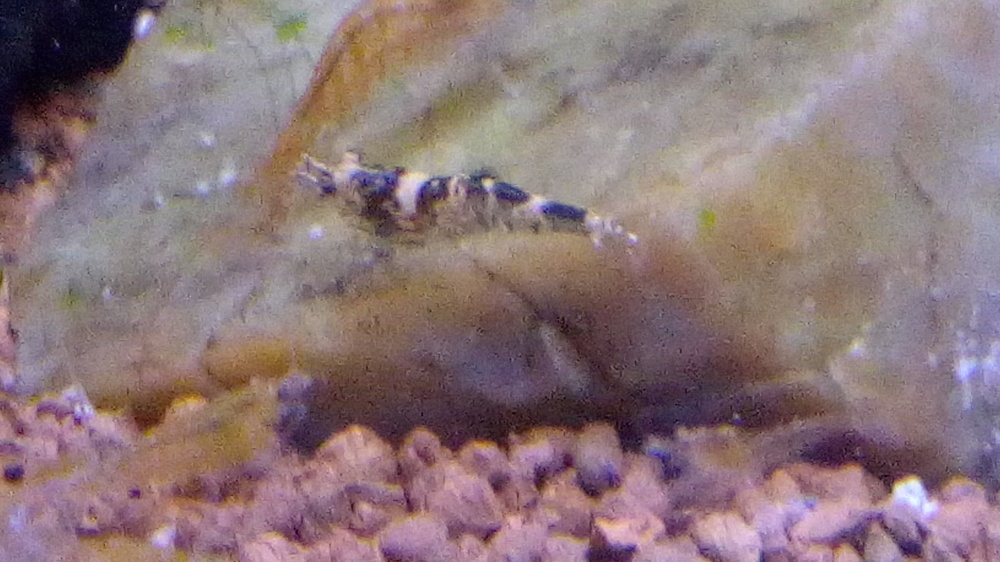
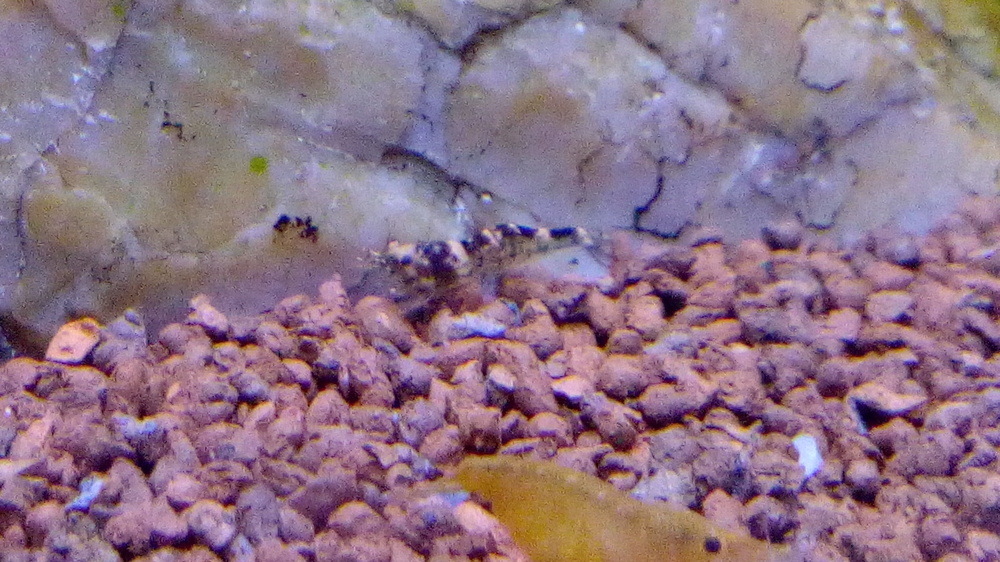
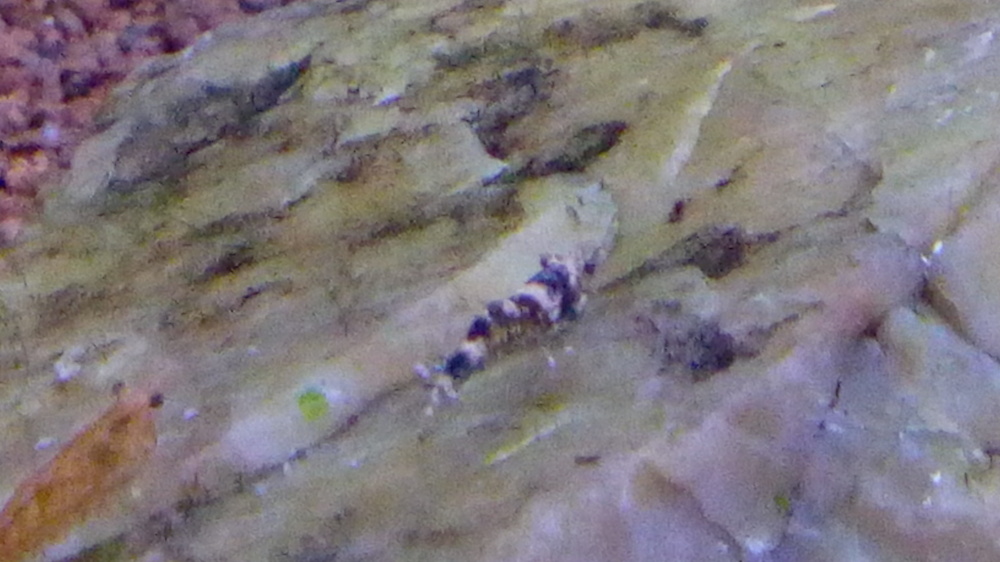 1 point
 -
1 point
-
 1 pointWith CRS additional to the above, - get Indian Almond leaf, - Mineral Balls -Shrimp Cave -Driftwood (can also be used as an alternative for strimp cave) -Plants such as moss. If you're going to use Africana soil, you may not be able to have any cherry shrimp in the tank because the PH will be low. Especially when you're using RO water.1 point
 -
 1 pointHi, Thanks for letting me join. Only very new to shrimpkeeping, have a tank of Tangerine tigers and crs at the moment, but hoping to expand on that later on down the track. Have previously kept discus and african cichlids and L#. Nice to meet you all1 point
 -
1 pointThanks Ron. When you coming ard. You should see some of them. Thanks ineke. Yeah just one more or 30 lol1 point
-
1 pointI would have thought most creeks with flowing water around the place would have some sort of shrimp? Just make sure it's not in a protected forest. There are a couple in the western suburbs opposite Jindalee State School where I used to catch those wild guppies from, I wonder if they have shrimp. It's been 20 years since I've been down at that creek but I might go for a wander at some stage. The creek is fed from the Brisbane river so probably brackish.1 point
-
1 pointGreat work @s1l3nt @Foxpuppet, a good example of when you can give a valued member award via our awards system. Take a look under the +Create menu.1 point
-
 1 pointMy shrimp population still sustaining. I see him snack on small slugs for most of the time. See him killed his buddy once. [emoji28]1 point
 -
 1 pointNo updates. I'm not aware of anyone working on breeding /line breeding this species - although I believe I found a population with direct developing larvae. I need to get more samples to confirm.1 point
 -
 1 pointThought it was time for an update. The original Notopala snails I collected seem to have disappeared, but they could be hiding in the substrate since I don't tend to disturb it. However after our recent minor floods here tonnes of water hyacinth and water cabbage have washed down stream and been left high and dry on the banks of river. I was mowing near the high water line of left over from the flood and water and the sludgy sticky muddy silt and happened to get a large clump of water hyacinth tangled up in the mower shoot. When I went to remove the water hyacinth I happened to see a notopala snail tucked away in the mat of roots. Upon closer inspection the snail was alive so I then had a bit of a hunt around mostly through my smoko break and found 25 more notopalas all trying to hide in the shallow silty mud that wont see water again until another flood. Hubby and I went back that afternoon after work and found even more snails, considering how many snails we found in one small area of river bank I shudder to think how many more have been left high and dry let alone how many others have been washed down through the barrage into the salt water to die. I can only guess it would have to be in the millions. The other thing with finding so many I have managed to get some really large ones which every other time I had gone snail hunting in the water all the large snails where always dead.1 point
 -
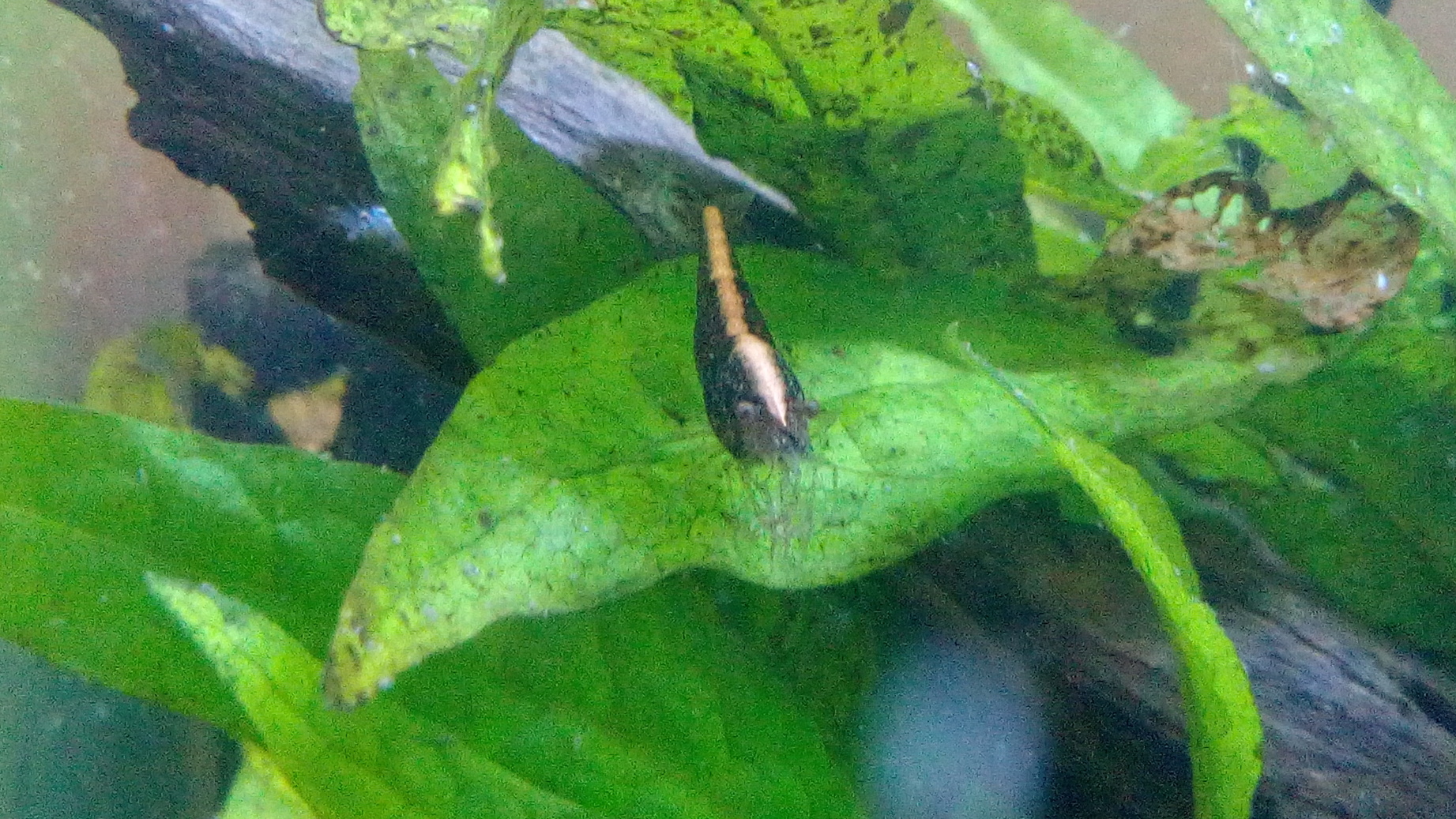
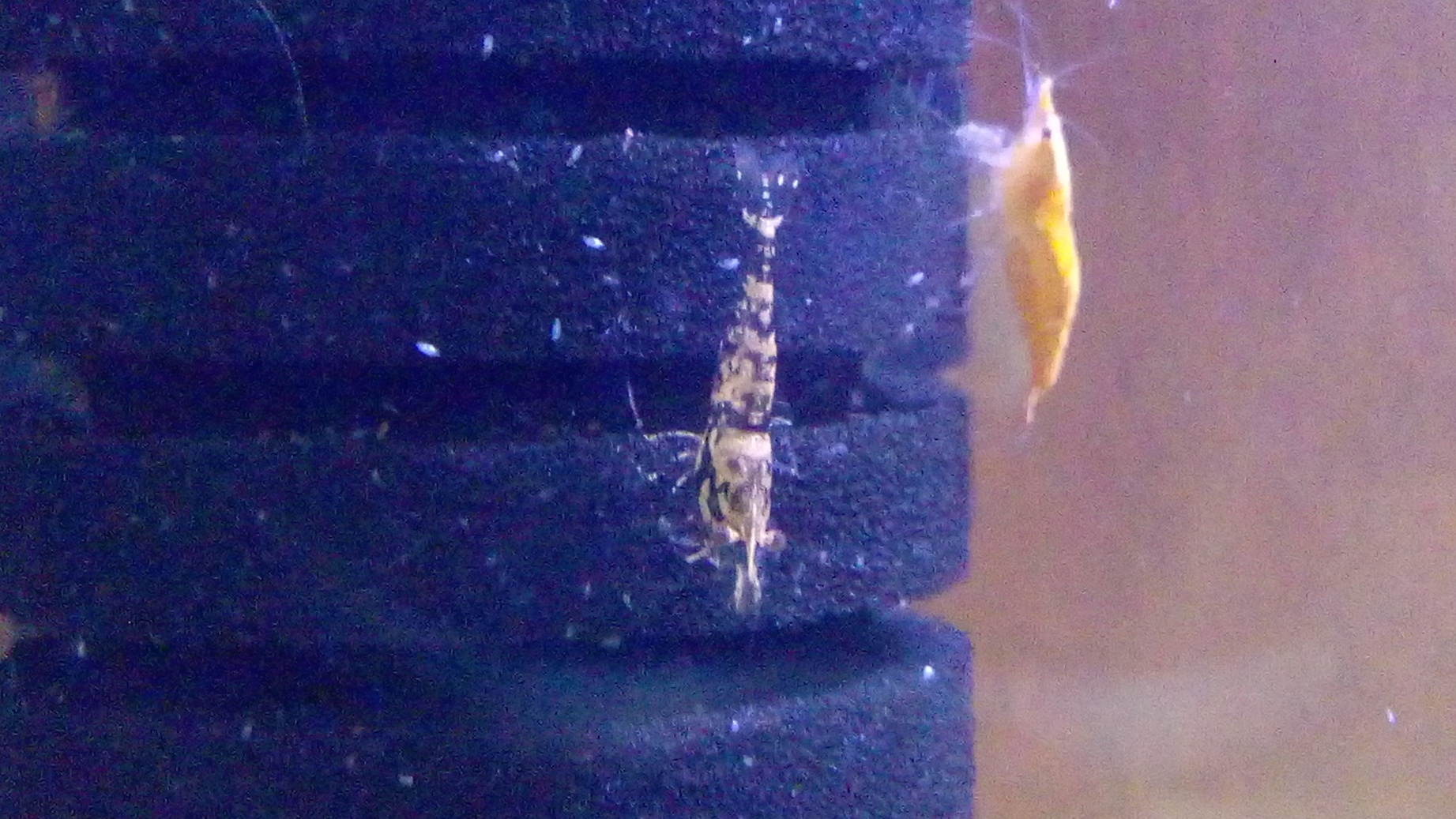
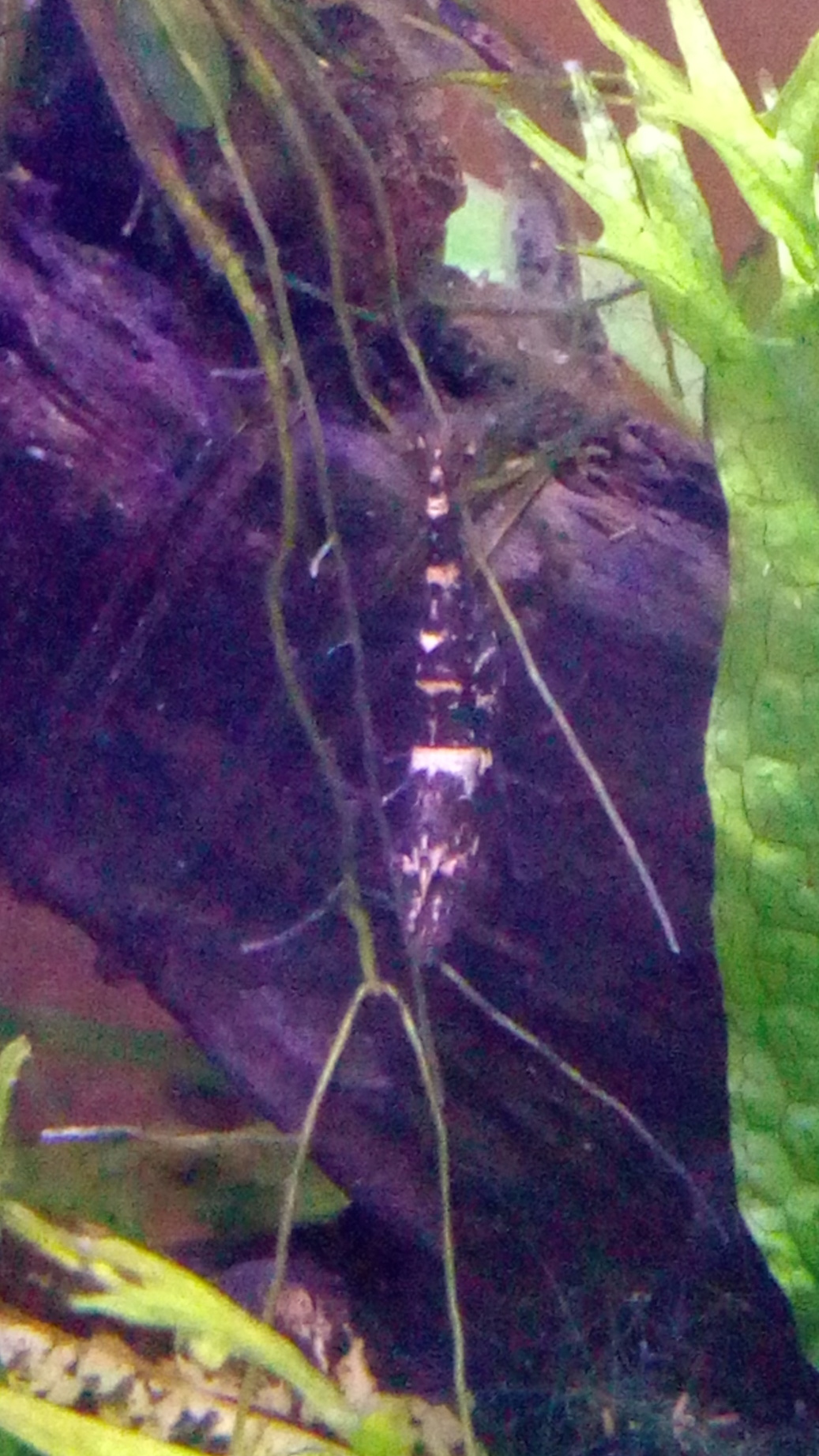
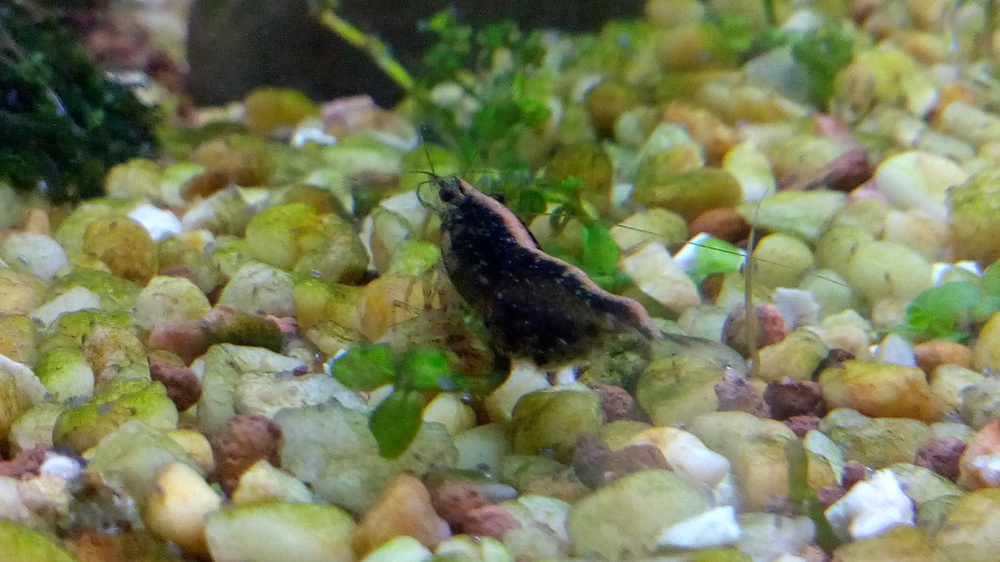
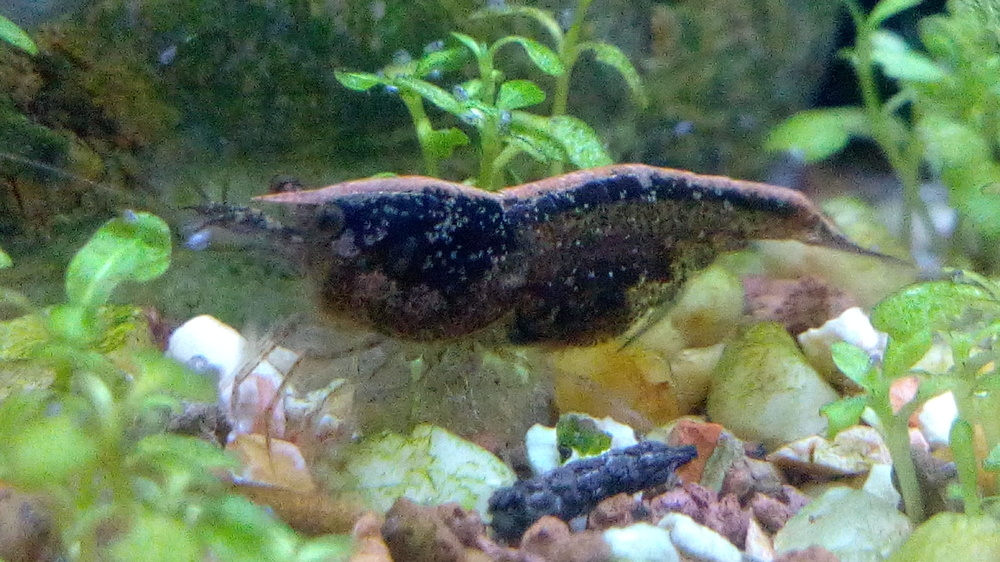
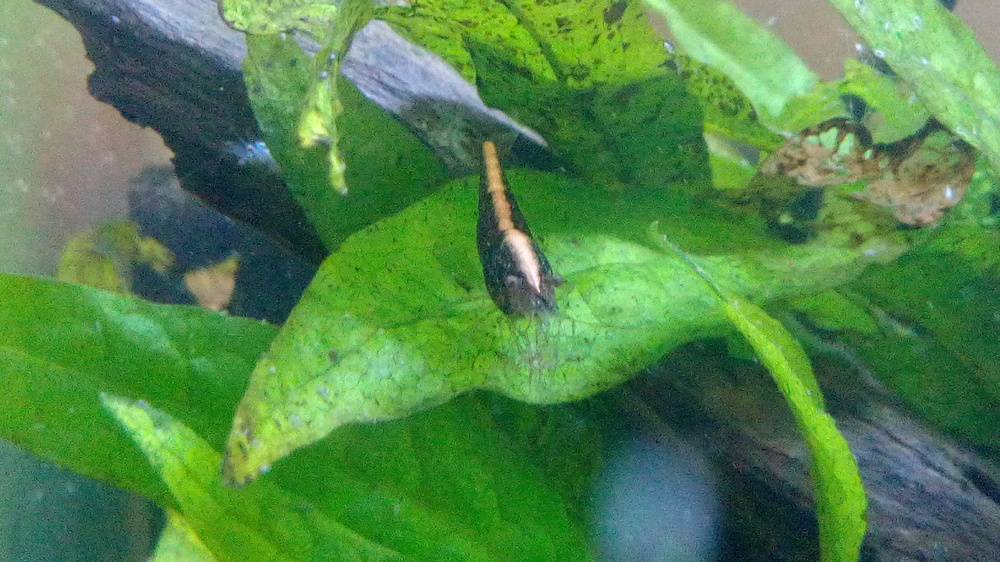
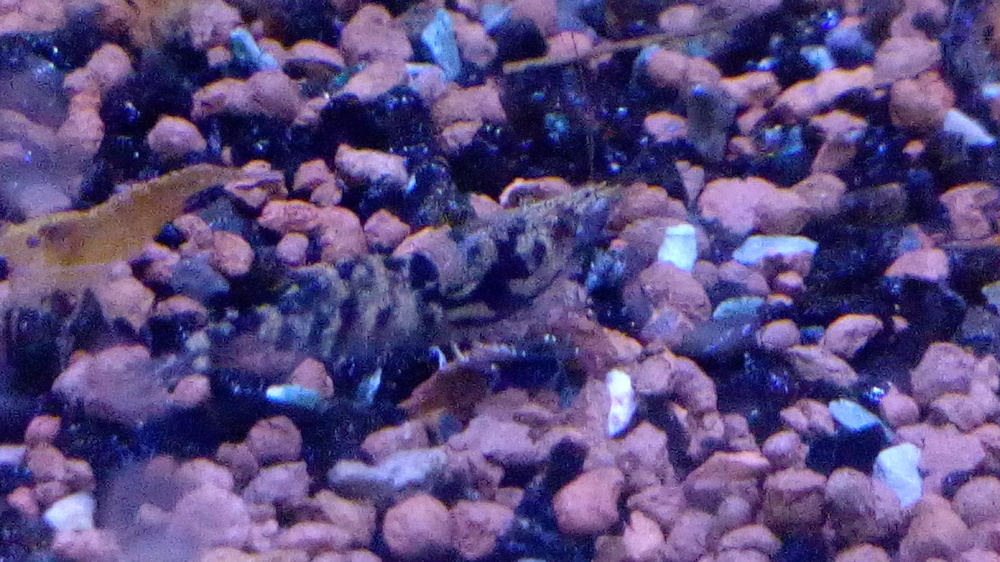
1 pointYai!!! I went deeper in the south this saturday. I seek in an area called "Plaine des lacs" (lakes field) and found these: Chocolate with golden/cream "racing stripe" A kind of "Chameleon" shrimp? Not easy to see, but this one is a solid dark blue Not the "Zebra" I'm searching, but very happy of these "finds". I'm expecting to find the zebra spot, and may be something else? Worth walking under the sun, fighting with some mosquitoes and also some wasps! :)
 1 point