
Leaderboard
-

ineke
HOF Member3Points9026Posts -

larrymull
Members3Points273Posts -
Disciple
Platinum Members2Points2092Posts -

DemonCat
Members1Points203Posts
Popular Content
Showing content with the highest reputation on 01/26/16 in all areas
-
2 points
-
 1 pointAs a noob I've had more setbacks than wins over the last 12 months with my yellow cherries. BUT...after reading about mulberry leaves on here I was amazed by the coincidence of finding a tree on a remote, pristine farm we regularly visit west of Wauchope NSW. After 4 weeks of feeding one big leaf per week to my tank of about 100 shrimp (30/70 adults/babies) there is no doubt that they have greatly improved the condition of my shrimp. The most noticeable things are the nice clean moults when they often died from that, the stronger colors, huge increase in activity and for the first time a bunch of shrimplets surviving and growing out. I don't mean to gush, but it's good when you get something right and I'm hoping this will help other noobs like me. I'm using leaves the size of a small plate. I put them in a pyrex baking dish and poor hot water from the kettle over them, then let them sit till they are sinking. When I drop them in they charge over to it, but tend to not start eating till the second day. Once they start eating it every single shrimp in the tank seems to be on it and they smash a really big leaf in 24-36 hours, stripped right back to the white fibres/veins in the leaf. Quite amazing. I would suggest that this is one of the super foods for cherries at least, don't know about others, and well worth using.1 point
 -
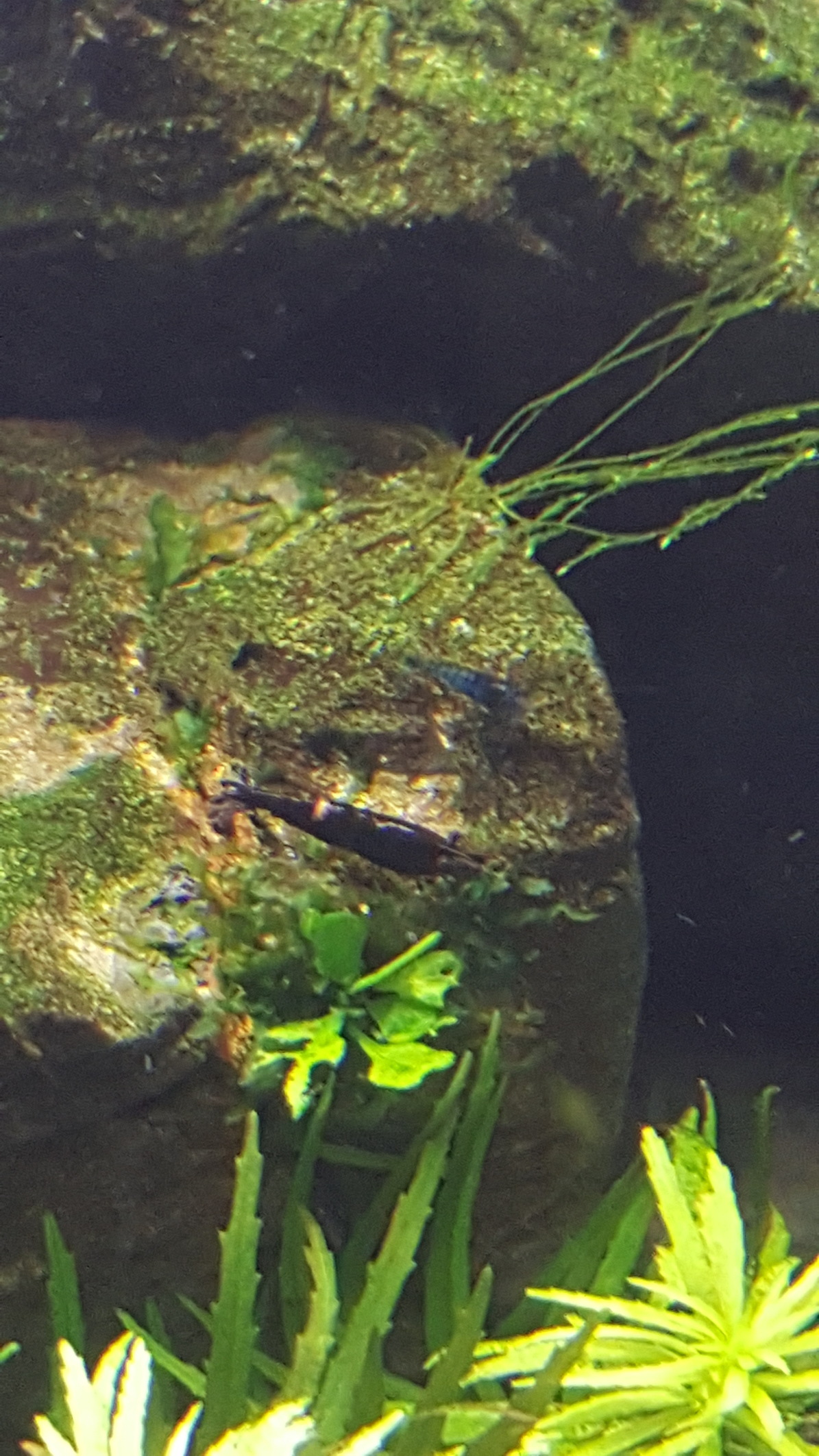
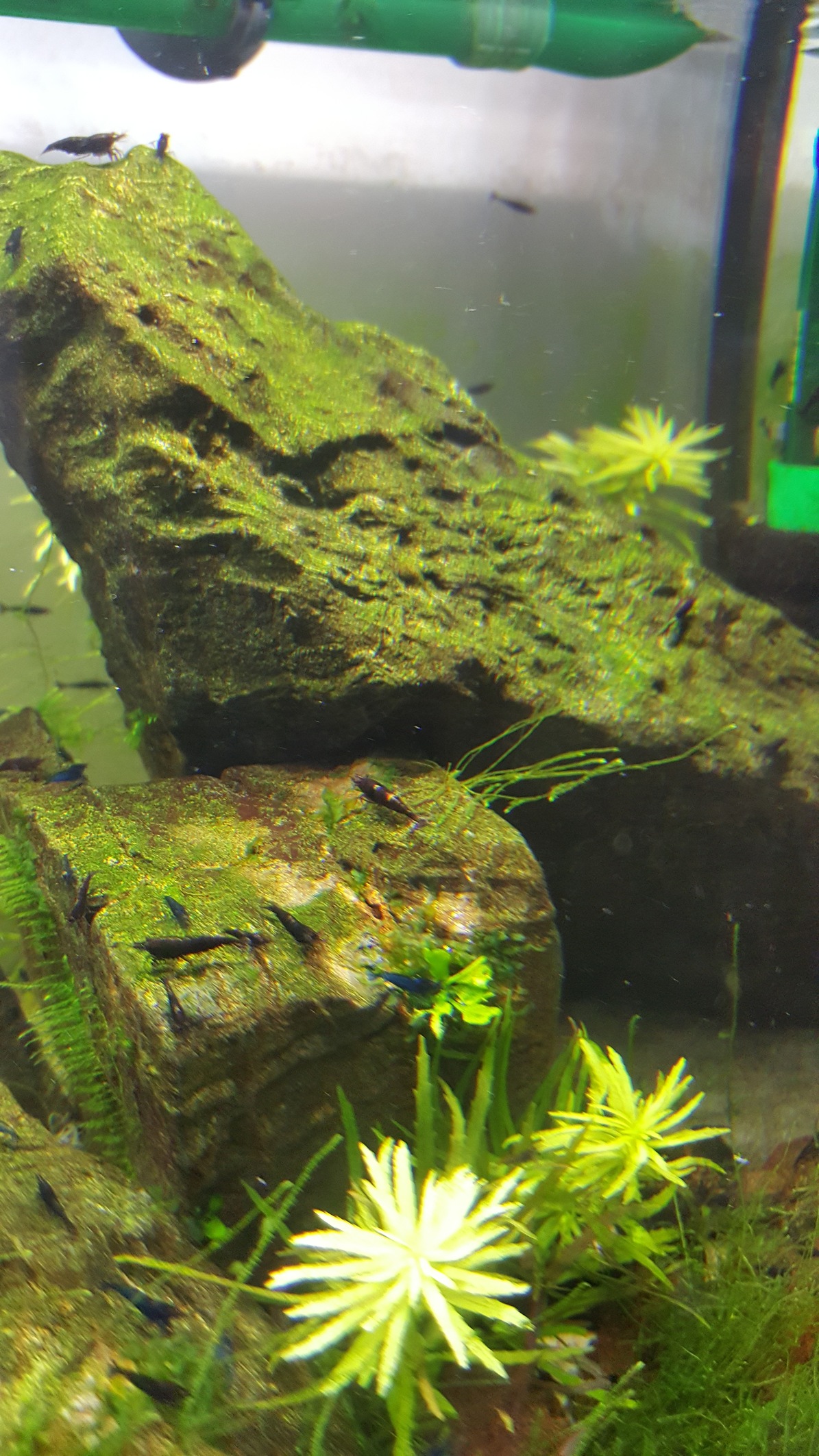
 1 pointNot strictly the best of my reds, but they where mostly crammed around one of the plants in easy focus range for the camera. Some of the girls are really showing amazing clarity in their red. This girl would have to be one of the best blacks I currently have, I know there is at least 5 similar girls in the tank but they are not all that obliging in coming within camera range even with the bribery of food. At least one of the girls I know is berried so I have my fingers crossed she throws some more stunning black babies. I think the glossiness of her shell is what really takes my breath away, that and the undertones of blue like a male jaracini finch in sunlight.1 point
 -
1 pointi have recently had the pleasure of meeting some lovely people both in person and on line who are quite new to shrimp keeping - although some have been keeping shrimp for sometime. I am both disturbed and amazed at the general lack of knowledge of basic shrimp keeping. Things like how to drip acclimatise shrimp. Doing water changes, what temperature to keep shrimp at, what substrates to use . Just the basic minimum knowledge is so lacking and once they realise they can ask me these types of questions I end up spending a lot of time with them answering their questions. I know the information is out there but perhaps it's lost in amongst all the more specific information that is harder to understand. I wonder if there is a time we could set aside here on SKF where we can answer realtime questions. Where people are able to come online and ask these questions while a couple of members are available to answer them. I understand these questions can always be asked but sometimes it can take hours or even days before someone answers. If we set aside a specific day and time that general knowledge questions can be asked and then the answer discussed and explained perhaps this would help the newer members to get answers right when they want them. We can all learn from each other's experience and discuss what works for us and what doesn't. I guess it would be like chat but on the open forum for anyone to join in. As I mentioned once people realise they can ask me basic questions I get bombarded with them. I don't mind and like to share what works for me but there must still be lots of new comers who just can't get their questions answered in an easy way to understand. Simple things like our abbreviations still confuse them and we are all guilty of talking a mile a minute using the abbreviations which just confuses the new comers more. Anyway food for thought going back to basics for very beginners may be useful - that's the sort of information a lot of people are looking for1 point
-
 1 point
 -
1 pointIs that the dwarf Rasbora? Fair point. From what I understand they need lower light, with lower water flow - like the Chili/Mosquito Rasbora (Boraras brigittae). Both of these are on a wish list if I get a bigger tank :)1 point
-
 1 pointpH Pens MUST be stored wet with the storage solution. Never let it dry out. That is why you are calibrating so often. Here are some guidelines taken from Hanna Instruments: Guidelines for pH Electrode Maintenance and Use The life of a pH electrode is not infinite. A number of factors can affect the life span of a pH electrode. The higher the temperature that the electrode is used at, the more extreme the pH, how often the bulb dries out and needs to be rehydrated, how roughly it is used; all these factors and more will shorten the life span of a pH electrode. An electrode that is well maintained and cared for can last many years, one that is not well maintained will last anywhere from just a couple of months to 1-2 years. Following the guidelines outlines below will help to get the most from a pH electrode. 1. Hydration of the glass bulb A very thin layer of water forms on the pH glass sensor. This layer is known as the hydrated layer. A pH electrode is an electrochemical sensor that generates a voltage that is read by a voltmeter. A probe that has a hydrated layer will generate a different voltage in a pH buffer than one that doesn’t. So calibrating a dry electrode will cause inaccurate readings when taking measurements as the hydration layer is formed. A dry probe needs to be hydrated before calibration. The hydrated layer takes 3-4 hours to form when a probe is placed into storage solution. 2. Hydration of the junction Every combination pH electrode has a junction. A junction is a barrier between the internal reference wire and the sample that is measured. The reference cell has a salt solution that leaks through the junction as part of the electrical circuit. If a probe is dry the salt will precipitate in the junction causing to be clogged. The pH readings will be erratic. A dry probe needs to have the junction hydrated to work properly. 3. Fill Solution Level for Refillable pH Electrodes pH electrodes that are refillable need to have their electrolyte (salt) level checked. The probe should be filled when the level falls below ½” from the fill hole opening. Having enough fill solution ensures that, for a single junction electrode, the reference wire is in solution. A proper level also allows for adequate head pressure to force electrolyte through the junction. 4. Remove/Loosen Reference Fill Cap When in Use In order to create head pressure the fill cap must be loosened or removed from the top of the electrode. Removing/loosening the reference fill cap allows for air to enter into the reference cell. The solution within the probe will want to flow through the junction resulting in increased stability when taking a reading. Note: Single junction and double junction electrodes use different fill solutions. An explanation of the difference can be found here (hyperlink to single junction versus double junction page). 5. Calibration Buffers Fresh calibration solution should be used when calibrating a pH electrode. All pH measurements are based on the pH calibration solution as a reference point. The pH calibration buffer is a water-based solution that will change over time. This is especially true with pH 10.01 buffer that will actually decrease in pH as atmospheric carbon dioxide enters the solution. Bottles of buffer should be replaced after they have been opened for 6 months. Never pour calibration buffer back into the bottle. 6. Calibration of the pH Electrode The pH electrode should be rinsed in purified water (RO, DI, or distilled) before placing in any pH calibration buffer. This will reduce the chance of contaminating the buffer. A best practice would be to use two beakers/containers for each calibration buffer. The process would be to rinse the pH electrode with purified water then rinse the probe in one of the beakers with the buffer then place the probe in the second beaker with buffer. This procedure would be repeated for multiple calibration points. For two point calibration the pH buffers used should bracket the expected pH reading. For example I expect a pH 5 reading then the pH electrode should be calibrated in pH 7 and pH 4 buffers. 7. Cleaning a pH Electrode The pH electrode should be cleaned periodically. A coating will form on the glass bulb that will cause errors in measurements and drifting/erratic readings. A typical cleaning procedure is to place the electrode in a cleaning solution for 15 minutes. After that the probe is rinsed with purified water and then placed in storage solution for at least 2-3 hours before using. It is important to note that there are many different types of cleaning solutions available based on the application. Solutions include ones for proteins, inorganics, food and wine stains to name just a few. 8. Storage of the pH electrode The pH electrode bulb and junction needs to be kept hydrated. With benchtop meters a small amount of storage solution is placed in a beaker. With the probe lowered into the beaker the junction should be covered. For portable meters a small amount of storage solution is placed in the protective cap and the cap placed on the probe. NEVER STORE THE pH ELECTRODE IN PURIFIED WATER Storing the pH electrode in purified water (RO, DI, or distilled) will shorten the life of your pH electrode. The reference cell has a high salt solution. Placing the probe in purified water will cause the salt to diffuse out and the water to go in. Storage solution is not only formulated to maintain the reference salt concentration but also has chemicals to keep bacteria and fungus from growing. If storage solution is not available then use pH 4 buffer. 9. Tips Salt crystals around the fill cap of a refillable pH electrode or by the protective cap placed over the bulb are normal to see. Just rinse with water to remove the salt build up. Any air bubbles in the pH bulb or by the junction need to be removed. Gently shake the pH electrode like a spirit filled thermometer to displace the air bubble. Never wipe the pH electrode with a cloth or any other type of material. Any static formed will harm the electrode. Do not expose to high temperatures (>150 oF/65 oC) unless the probe is designed for it. Always rinse the probe with purified water to clean of contaminants before, during and after use. Calibrate frequently. Some guidelines to follow: Periodic user (1-2 times per month) – calibrate the day of use Weekly user (1-2 times per week) – calibrate the day of use Daily user (1-2 times per day) – calibrate the day of use Daily user (>2 times per day) – calibrate every 4-6 hours1 point
 -
 1 pointI think the frogbit will cover a lot of the light. I had cardinals but in the end ended up with some Maculata. IMO the smaller fish look better and have more character :)1 point
 -
 1 pointLooks like i'll have to take a few leaves from the gigantic tree at my parents property. Its probably 15-20m tall, so it could probably spare a few leaves without any worry haha.1 point
 -
1 pointIf your tank is well established the biofilm in the tank will feed the shrimp quite well. Adding crack and biozyme also very good. A feed of frozen blood worms once a week helps for protein. A baby specific powdered food also helps give essential ammino acids etc to growing shrimplets- added to water and squirted into the moss will ensure the babies will get some. But don't forget all the fresh vegies and fruit that the shrimp will eat. preferably grow your own spinach and kale but otherwise try to make sure you source the vegies from insecticide free growers. Shrimp love cucumber, watermelon,brocoli -there is a huge list on a sticky thread at the top of the page1 point
-
1 point@ineke so you can actually pick the leaves from the tree and feed the shrimp them? I thought they had to be the leaves that had fallen from the tree and died?1 point
-
1 pointMulberry leaves are a firm favourite of all my shrimp , they will leave everything for mulberry leaves. I always have a leaf in every tank, I replace them as soon as there are only veins left. I prepar them several ways- 1) fresh from the tree boiled for 2 minutes then cooled with cold water ( blanched) then fed straight away - this is the preferred method by the shrimp, 2) do the above then roll and fold the leaves and freeze them - they can then be taken out and put straight into the tank as needed - they defrost almost instantly- 3) put the fresh leaves in a pillow case and hang them on the clothes line for several days until perfectly dry - the clothes line is the perfect place to dry them as it gets sun and allows the breeze to fully dry the leaves so no mould grows on them, the dried leaves can be placed straight into the tank or refreshed in a bowl of water until they sink . I doubt you can over feed on mulberry leaves . I have been doing this for sometime and my shrimplet survival rate has improved impressively. A plate of mulberry leaves ready for the freezer! Did you know it's very easy to propagate a mulberry tree? Just cut a thin branch into small sticks , place into potting mix and keep well watered. I have about 6 small bushes that keep my 12 tanks supplied with leaves1 point