
Leaderboard
-

Mihai Kovacs
Members2Points14Posts -
jc12
Members1Points385Posts -

buck
Members1Points758Posts -

newbreed
Members1Points3152Posts
Popular Content
Showing content with the highest reputation on 01/03/16 in all areas
-
2 pointsHi , My name is Mihai Kovacs , live in Arad , Romania . I love very much shrimps and aquascaping and I try to combine this hobby . I have 1 year experience of ADA ( I worked at ADA Showroom in Europe ) . My first experience with shrimps was in 2012 , which ended beacuse i moved to Budapest , Hungary . Now I'm back in Romania and will present my shrimp project . Shrimp tanks : - 45x30x30 - 40 litres - Lighting - T5 osram 6500 Kelvin 80w - 1449 cm - Substrate-JBL Pro Scapers shrimp soil beige - Mineral - Salty Shrimp GH+ , Bacter AE , Minorekuton powder - Dennerse 190 Osmose adult photo sharing free upload pictures screen shot pc greenshot imagur2 points
-
We are blessed with a beautiful climate here in Australia, arguably mild summer and winter seasons compared to other continents around the world. However, we experience the infrequent heat waves and harsh summer days which inevitably require hobbyists who keep heat sensitive shrimps to explore cooling options for their tanks, perhaps more so for those living in the warmer regions. Shrimps require a consistent environment to flourish and temperature is one of such parameters that can be easily controlled with a chiller. I will endeavour to outline easy-to-follow steps on how to select a chiller for your tank. As the target audience of this article is for the general hobbyists, I will not delve into physics, thermal dynamics or explain how a heat exchanger works. Step 1: Determine the total water volume to be cooled This is simply a measurement of your total water volume to be cooled. Please remember to include the water volume of the sump if your system runs on one. Most tanks are rectangular or cubic shape so a simple Length x Width x Height measurement will suffice. Example: For a 4’ x 18” x 18” tank, 120cm (L) x 45cm (W) x 45cm (H) = 243,000 cm3 = 243,000 ml = 243L Step 2: Select a chiller based on total water volume to be cooled Chillers are usually rated to cool a specific volume of water to a set temperature below ambient air temperature. Simply select a chiller that is rated to cool the water volume calculated in Step 1. The general rule of thumb is to consider a chiller that is one size larger than what you require in order to be energy efficient. A chiller works a lot harder if it kicks in frequently. Selecting a larger chiller that kicks in less often can save you money in the long run. Example: With reference to the example in Step 1, (a) Hailea HC-100A is rated for 50L to 220L*. (b) Hailea HC-130A is rated for 50L to 300L*. (c) Hailea HC-150A is rated for 50L to 400L*. Based on the above specifications, the HC-100A would not be adequate for our purpose. While the HC-130A is rated appropriately and adequate to cool 243L, I would select the HC-150A following the general rule of thumb to go one size larger. The efficiency of a chiller is affected by a number of factors ranging from ambient conditions, physical location of the chiller, flow rate, whether the air filter has been kept clean, etc. It is also dependent on the cooling requirements to your specific environment. If you live in a very warm region and you would like to cool your tank 15 or 20 degrees Celsius lower than your ambient air temperature, you might have to consider a chiller that is two sizes larger. Step 3: Select the appropriate flow rate to drive the selected chiller The appropriate flow rate to drive the selected chiller is an important consideration. If the flow rate is too slow, the water within the chiller gets cooled too quickly and the thermostat switches the chiller off. Warm water then enters the chiller triggering it to kick in again within a short period of time. This is not energy efficient and frequent kicking in of the compressor would result in more wear and tear. If the flow rate is too fast, the water flows through the chiller too quickly to be cooled effectively. The chiller takes a longer time to cool the water in the tank, which is also not very energy efficient. Example: With reference to Step 1 and Step 2, the Hailea HC-150A has a recommended flow rate of 250lph to 1,200lph*. We need to consider a few things before we can decide the appropriate flow rate for the Hailea HC-150A. This depends on how you would like to drive the chiller. Below are 3 typical scenarios on how most hobbyists would drive their chillers. Canister filter A canister filter’s flow rate is usually rated without any filtration media (i.e. an empty canister) or without taking into account any inline equipment (e.g. inline heater, UV, pre-filter, CO2 diffuser, etc.). If you plan to have other equipment connected inline to your canister filter, I would recommend getting a canister filter that is rated on the higher side of the chiller’s recommended flow rate. Also, as the canister filter gets cycled and matures, dirty filtration media, hoses and pipes would also reduce the flow rate. In this instance, I would recommend getting a canister filter rated at 800 lph to 1,200 lph. Sump If you are planning to drive your chiller from a sump pump, you could potentially select a sump pump that is higher in flow than what is recommended for the chiller. The flow rate through the chiller can be easily adjusted by teeing off from the sump pump and controlled using a valve. This also allows you to ‘future proof’ your design if you should add more equipment in future (e.g. fluid reactors, UV, etc.). In this instance, I would recommend getting a sump pump of 1,200 lph to 2,000 lph, factoring in other considerations like pressure head, hose/pipe diameter, etc. Dedicated pump If you should elect to drive the selected chiller with a dedicated pump, with no intention of connecting any other inline equipment, I would recommend selecting a flow rate that is slightly above the mid-range of the chiller’s recommended flow rate. In this case, I would select a dedicated pump of around 800 lph. A dirty impellor would have a slower flow rate so it is recommended to clean your pump impellor periodically. A few tips: - Locate the chiller in a cool location away from direct sun. - Do not enclose the chiller in a confined space (e.g. in the aquarium cabinet) without proper ventilating devices (e.g. exhaust fans, etc). - Clean the air filter of the chiller (if applicable). - Connect your chiller as the last piece of equipment before the water is returned back to the tank. You would want filtered clean water to be passing through the chiller as it is easier to clean canister filters, sump pumps or dedicated pumps than it is to flush out a dirty chiller. *Specifications are taken from Hailea website (http://www.hailea.com/e-hailea/index.htm) as at 21 December 2015.1 point
-
 The other day I was fortunate enough to finally hear of and collect some Pacific Blue Eyes out in the wild. The surprising thing was these Pacific Blue Eyes where in land locked semi-tidal pool that was pure salt water at the time (surrounded by mud flats and salt pans), but gets town street runoff with the edges of the water supporting salt couch and mangroves. There was also lots of rubbish floating about in the water, namely balls and thongs. There where also other fish in the pond/ pool that you would normally expect to see in the sea or at least in the mouth of estuaries. While collecting the Blue Eyes, (which my niece was especially good at) I also found some nerite snails, as well as lots of mud welks. I collected 3 nerites with the hope of being able to convert them to fresh water, but left the mud welks well alone. Upon arriving home and gradually over several hours changing the dirty polluted over to clean dechlorinated fresh water, I was able to see the Pacific Blue Eyes all had patches of body fungus and tatty tails the nerites too where literally totally covered in algae growth. So began a treatment for the Pacific Blue Eyes of Multicure and the nerites went through the same treatment process. After three days (and only 2 deaths of Blue eyes that where already very iffy) everyone looked nice and healthy and even the nerites didn't seem bothered by being in either fresh water or the treatment. A selection of Blue Eye females and two males went into a tank already housing 2 male Pacific Blue Eyes and one poor female Pacific Blue Eye, the nerites also went into the tank which houses 2 orange spot brislenoses, 1 lonely female whiptail and cherry shrimp. It did also have 3 rainbow fish but they where finally big enough to mix it with the other bigger rainbow fish in one of my 4ft tanks. The remainder of the Pacific Blue Eyes went down to my pond which I had always intended to stock with Blue Eyes. Everyone seems happy and the nerites still have not shown an inclination to wonder out of the open topped tank they now find themselves in. In fact as soon as I put the nerites into the tank with the cherry shrimp, the shrimp came out and mobbed the nerites madly eating all the algae on their shells. A now almost cleaned shell And finished product of the shrimps efforts This one is carrying some looks like old eggs under its shell, just visible in its reflection. All three nerites have the same banded patterns on their shells, would I be right in thinking that they are "tiger nerites" ? And are they likely to do well in the fresh or am I better off leaving them brackish?1 point
 -
 1 point
 -
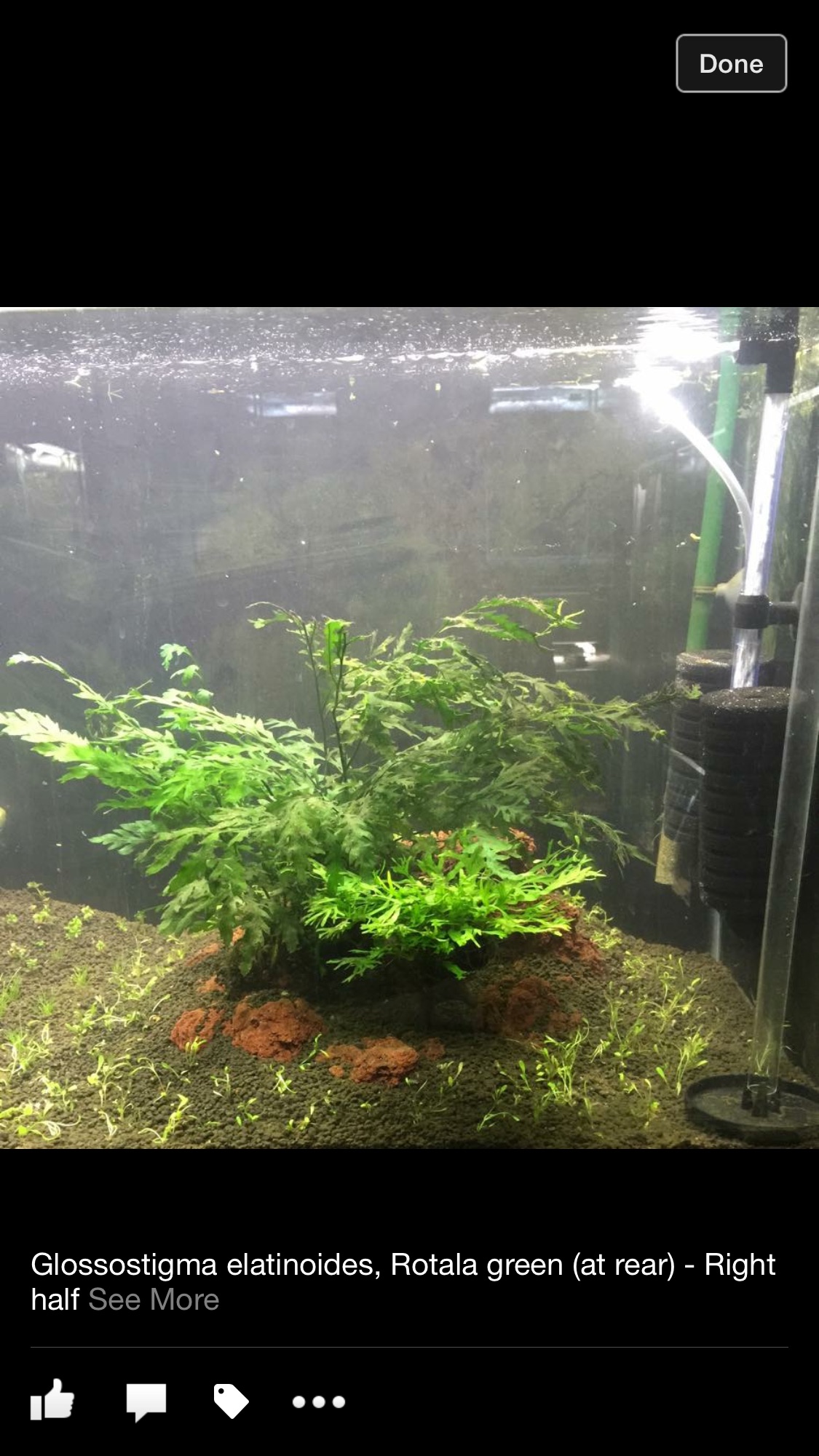
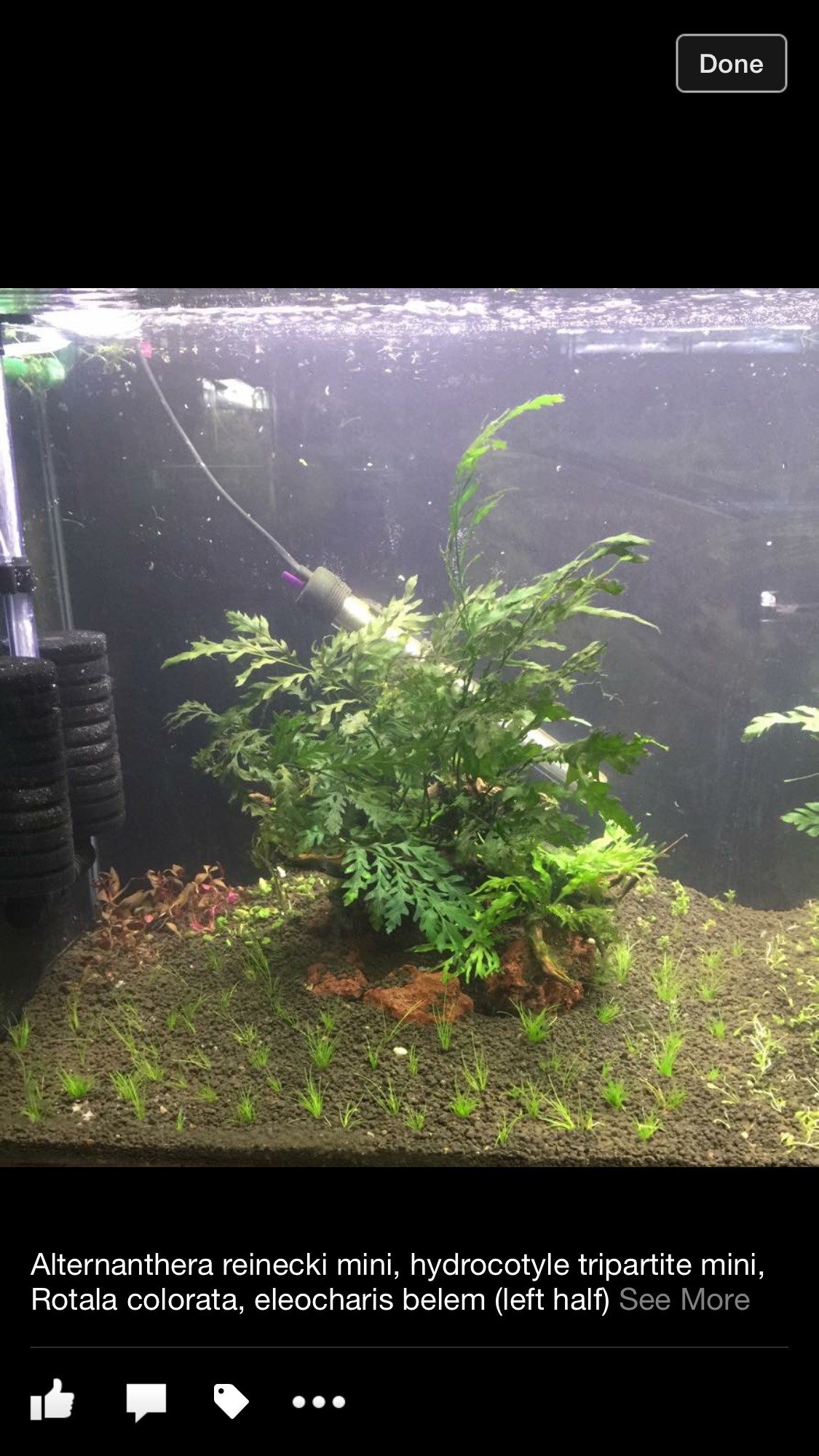
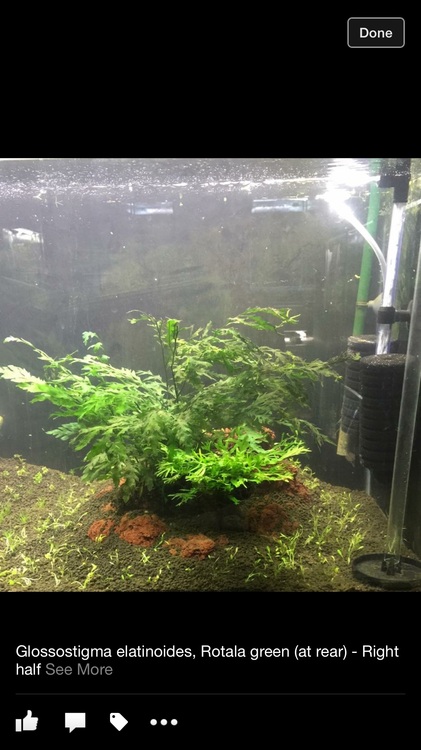
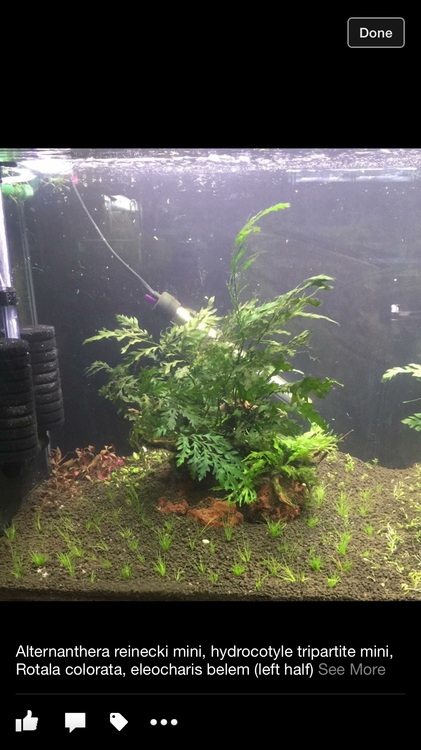
1 pointI have had this bolbitis for a couple of years. Give it time, it will grow lush! thats my plant list. I used tissue culture plants, so no melting and all have taken pretty well.
 1 point
 -
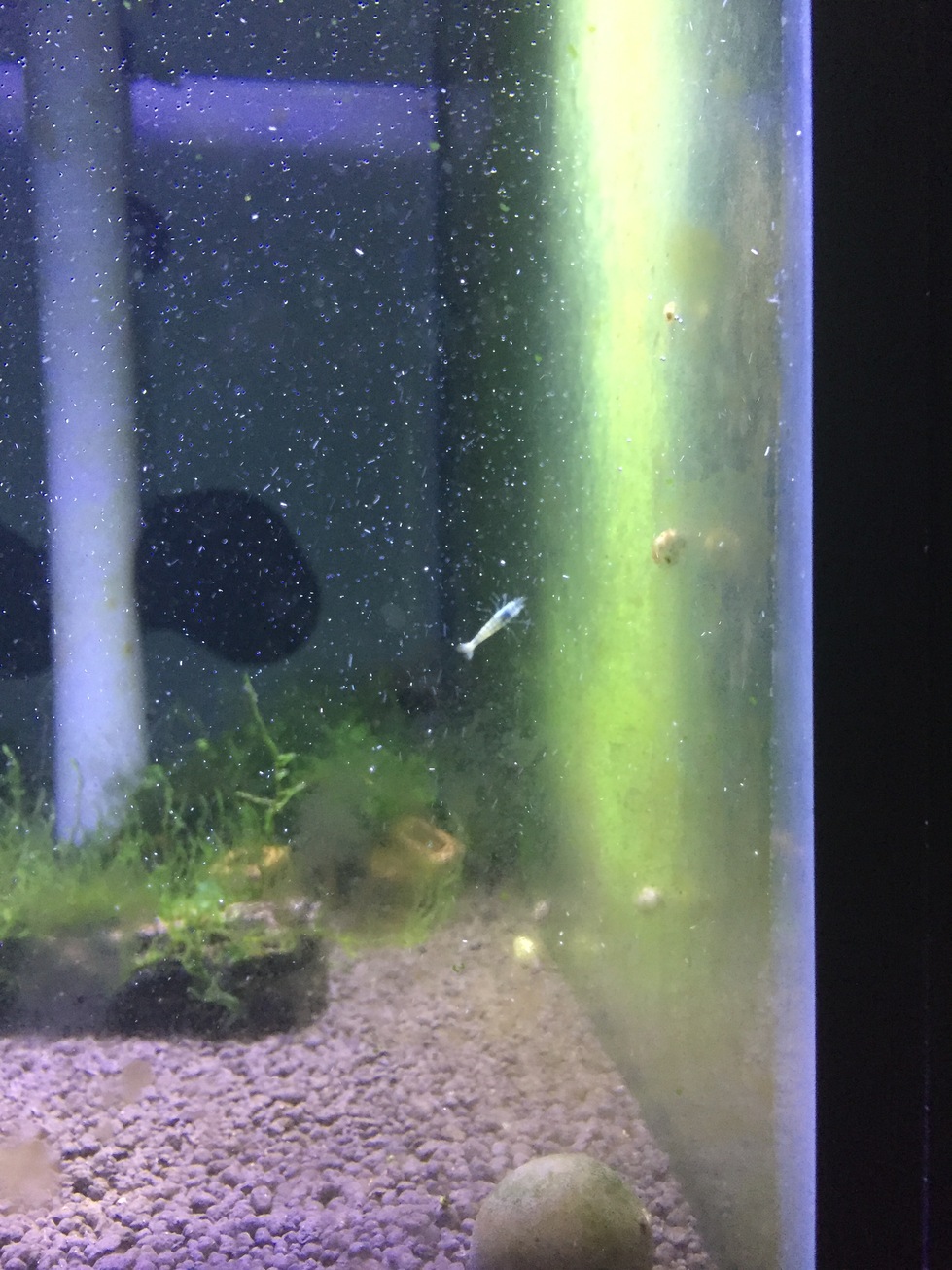
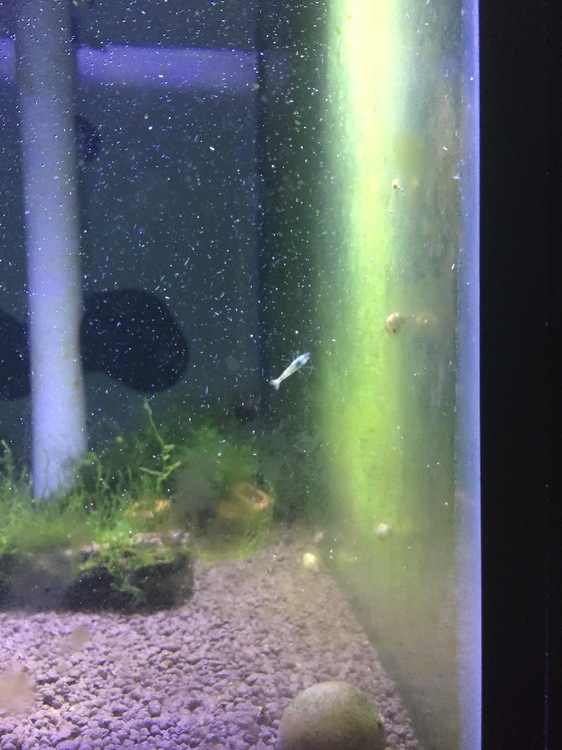
1 pointFinaly got a chance to take some pics of the first blue bolt I've produced! The girls afe berried again so hopefully i start getting the same survival rates as the crs
 1 point