

Leaderboard
-
NoGi
HOF Member3Points5858Posts -
fishmosy
Members2Points4594Posts -
jc12
Members1Points385Posts -

Baccus
Members1Points1365Posts
Popular Content
Showing content with the highest reputation on 12/03/15 in all areas
-
2 pointsI had bought 10 of these originally but only 2 have survived. These are great for turning my iron sand over as they bury down during the brighter hours of the day. Anyone know what they like to eat?2 points
-
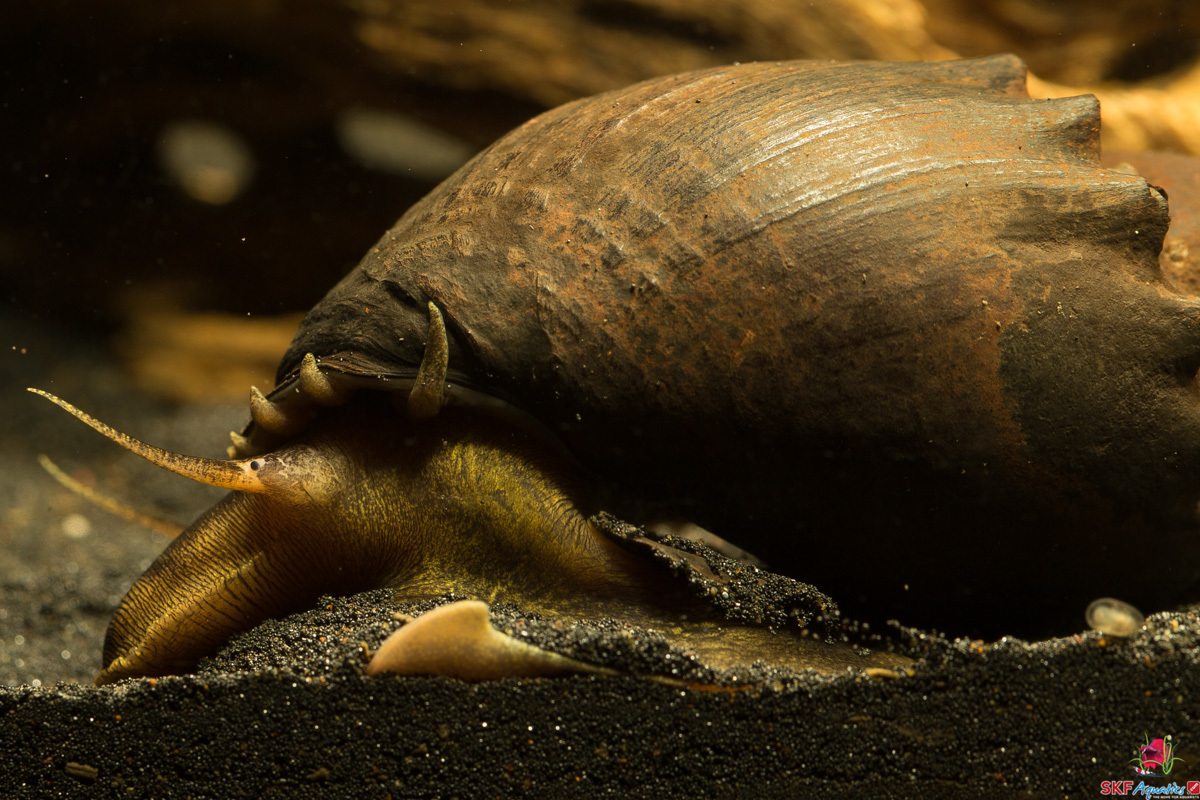 Spiny Marsh Snail The Spiny Marsh Snail is an Australian native that is rarely found in the trade. This is a shame as it has an interesting shell shape and is well suited to aquarium life, providing a few simple conditions are met. The Spiny Marsh Snail was first described by Linneaus in 1758 as Helix amarula, with a subsequent remaining of the genus to Melania in 1822, and finally to Thiara in around 1943. It is found from the east coast of Africa, through Madagascar, north to the Philippines, through the Solomon and other Pacific Islands, and along the north-eastern coast of Australia (See Schutt & Glaubrecht, 1999 for a global distribution map). Given this widespread distribution, it is surprising that its distribution in Australia is limited. It is found from the Bloomfield River (south of Cooktown) to approximately 100km south of Cairns. Thus it is limited to around 6 major tributaries. The Spiny Marsh Snail is found in the lower freshwater sections of rivers, generally just above the tidal range. It is probably tolerant to low levels of salt as it would be exposed to brackish conditions in drought years, and therefore may be suitable for brackish aquaria. This requires further investigation. In its natural habitat, the Spiny Marsh Snail is found amongst rocks and pebbles, but also sandy areas, which is where I found them in the Johnstone River. In aquaria, they regularly bury themselves, especially when exposed to bright light. However in low light, or if the tank is densely planted or shaded, they are happy to move on top of the substrate and even climb the walls. This makes them useful for removing dead spots in substrates, but may mean they could dislodge plants in heavily planted aquaria, but I have not kept them under these conditions – something to watch for. I have noticed they are particularly active at night and may graze algae from the glass during this time. I've seen no indication that it eats plants, and indeed plants are generally absent from its natural habitat, other than Vallisneria or Aponogetons. They happily eat prepared foods (shrimp/fish food) as well as some greens (cucumber/zucchini). However, they seem to spend most of their time grazing. The Spiny Marsh Snail grows to a maximum size of approximately 50mm, perhaps slightly larger. From what I've seen, they are fairly slow growing and long lived. This makes them excellent candidates for aquaria, because unlike other pest snails, it makes it easier to control their numbers. Indeed breeding in aquaria is unlikely because it is thought the Spiny Marsh Snail releases planktonic larvae that move into the brackish/salty areas of rivers before migrating back up the river to settle. However, the true breeding habits of this snail are still unknown and present a challenge for aquarists. Nevertheless, these characteristics make it unlikely that the Spiny Marsh Snail would ever be a pest in aquaria. One condition that seems to be an absolute must for this snail is that pH needs to be 6.5 or above. In acidic conditions (pH < 6.0), the shell dissolves and the snails refuse to come out of their shells. If your snails are not active, check your pH. That said, this doesn't mean that they require lots of dissolved minerals (e.g. calcium carbonate). The TDS of the Johnson River where I found these was only 28 ppm at the time, so Spiny Marsh Snails may be the perfect tankmates for Neocaridina shrimp (cherries) and Australian native shrimp, but less so for Caridina (crystals, bees, etc.). So if you are after a snail that is good looking, hardy, a good algae eater, turns over the substrate, easy to feed, won't bloom into a pest population, is native and presents a breeding challenge, I highly encourage you to track down some Spiny Marsh Snails. Why not try a biotope tank with Vallisneria or Aponogetons and Caridina gracilirostris? Some additional material worth reading. Field trip to Johnson River, Queensland Australia with habitat description and pictures. http://www.naturkund...brecht_1999.pdf Atlas of Living Australia – shows the collection points of Thiara amarula in Australia. http://bie.ala.org.a...e-f394430ec676#1 point
 -
 1 pointIve used Iron sand in my tanks for like 6 months or so now. It is an inert sand so you shouldn't have any problems with TDS, ph, hardness etc. I didn't, nor has anyone I know who uses it. So you should be all good for it :) It does suck to clean though... Had a black hand for a while there :D haha. Just be careful in the deeper spots as it does compact a little, however I never had issues (up to 3 inch depth in my tanks). It is a great sand as its heavier than other sand like play sand for example, this means you can plant and scape and so on without running a muck of floating sand in your tank. Be careful with your algae cleaner if its one of the magnet ones, the iron sand will attach to the magnet as some people have found out the hard way.. Personally, I've always used razor blades to clean my glass.1 point
 -
Well done to the winners. Deserving shots. Thanks also to @ageofaquariums1 point
-
Bob, might be the best one to answer, but I suspect that they feed on micro organisms and algaes hidden in mud that they live in. I suspect for many of our natives the mulm that most people religiously remove is what our natives need and thrive on.1 point
-
Thank you very much for the compliments and greatly appreciate @ageofaquariums for sponsoring the generous prizes and SKF for hosting the competition. :)1 point
-
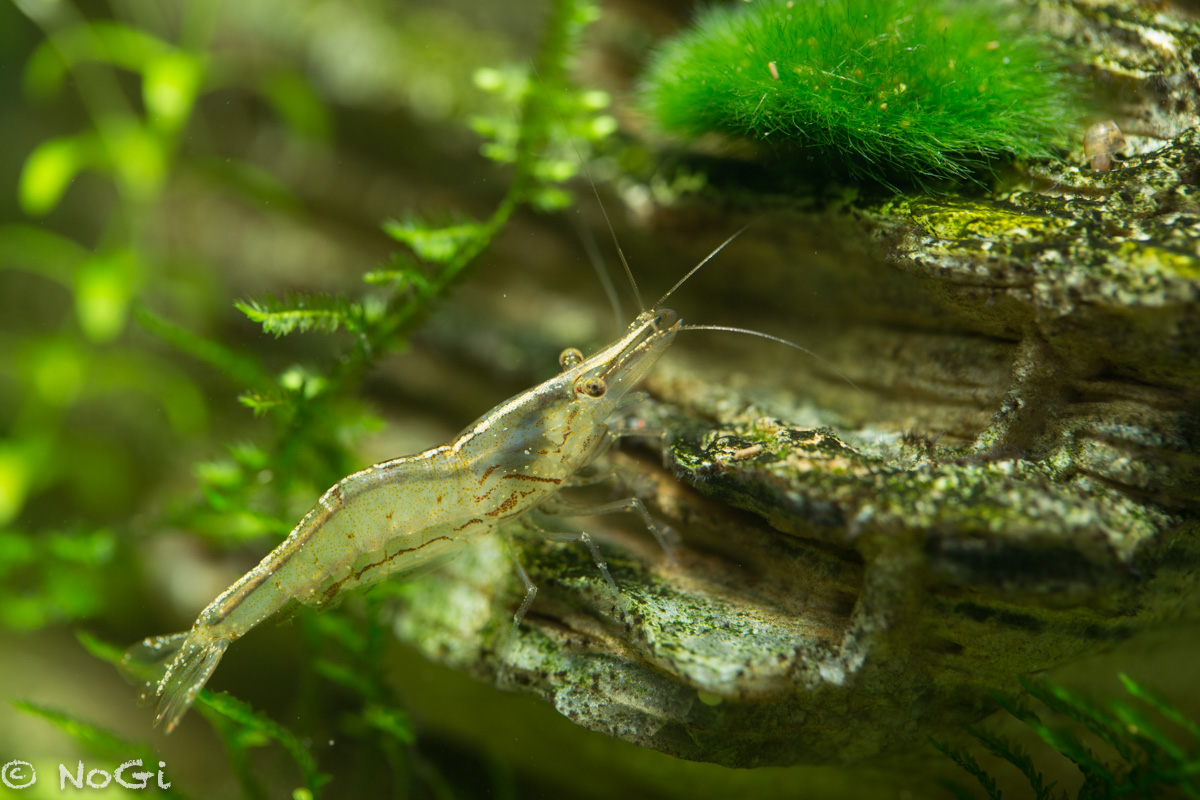
 Ok Guys and Gals, So we have sat down and had our little discussion about who we think is best, so here it is 1st place JC12, we must complement you on the quality of the photo as well truly great pic 2nd place Unagi42, who doesn't have some hair algae in the shrimp tank, great shot 3rd place perplex, a perfectly timed shot give yourself a pat on the back To claim your prize please give me a bell at the shop. We would like to thank all the entrants for there pics and look forward to holding an other comp in the not too distant future. Cheers Josh1 point
 -
1 pointFor those of you that use the Gallery, you will see that I now also include your username in the watermark. SKF subscription members have the added ability to customise this text in their profile settings: At the moment you do lose the copyright logo if you change this but the next release will sort this out. Any enhancement requests are welcomed in this thread. Current enhancement requests include: Include copyright symbol for custom text Unlink copyright from logo so that it can be placed on LHS of image When putting in enhancement requests just remember it's a set and forget style setting so whilst you can ask for being able to say change text colour, you couldn't do it on a per image basis.
 1 point
 -
 1 pointHi all, I have setup a new 10gal tank for bee shrimp I have added almost a full 9L bag, to around 8 cm thick substrate. With the addition of old sea mud and bacter 100 as first layer, filled with 3cm aquasoil and some more bacter 100 and filled to desired level with aquasoil. Our tap water has a Ph of 8 and KH of 4 I have done 3 90% w/c in the last 3 days using tap water and adding prime for chloramines. The tanks p/m is at 0 KH and 7 PH. isn't the PH supposed to be less? The tank is running on a canister of 400L/h and airstone for oxygen for the filter bacteria at 24 Celcius. I have also setup a small tub as a experiment with tap water and aqua soil, around half/half and the PH of this is at 6.2/6.4 I will run the cycle for 4 weeks and change over to SS GH+ and RO/DI water So the question I have, is the PH staying at 7 due to the tap water PH of 8? And, when completing the cycle and changing to RO with PH 7, will it drop lower then to say PH 6.5 or whatever? any advise or recomedation would be great Picture of the tank1 point
 -
 1 pointI think it's because your tank has not completed cycling yet. When the tank gets close to cycling, your pH will drop. Once those bacteria starts breaking down nitrogenous waste, you will see pH drop. <edit> quick chemistry lesson pH = measure of the relative amount of free hydrogen (H) and hydroxyl ions in the water. Ammonia = NH3 When cycling starts in a tank, bacteria convert NH3 to Nitirite. Nitrite = NO2. See how the hydrogen H has been reduced? NH3 vs NO2? Now that the tank water has less Hydrogen H overall, pH drops ! Shrimples! pH 7 is perfect for cycling a tank. (well except of pH8 or higher). 24degC is too cold for cycling a tank fast. You have no shrimp in the tank yet, so turn the heat up to 27 or 28. After cycling, turn the heat back down before adding shrimp. Stop all those water changes this early in the cycle. You only need to do water changes when the pH looks like it is getting too low (say 6.0 - 6.4). At low pH the bacteria goes dormant and the cycle stalls (or slows). A water change at this time should get things going again. Keep monitoring pH. Repeat if it drops again, until Ammonia & nitrite are zero. Just be careful after cycling. With 8cm of substrate, your pH is going to drop VERY low!1 point
 -
 This is zoomed in This is the Full picutre1 point