
Leaderboard
-

ineke
HOF Member5Points9026Posts -
fishmosy
Members4Points4594Posts -
revolutionhope
Members4Points1179Posts -

jayc
Moderators3Points6248Posts
Popular Content
Showing content with the highest reputation on 10/29/15 in all areas
-
 2 pointsIt's a test. The plates are about 2mm from each other, so only shrimplets can feed on the biofilm that grows on them.2 points
 -
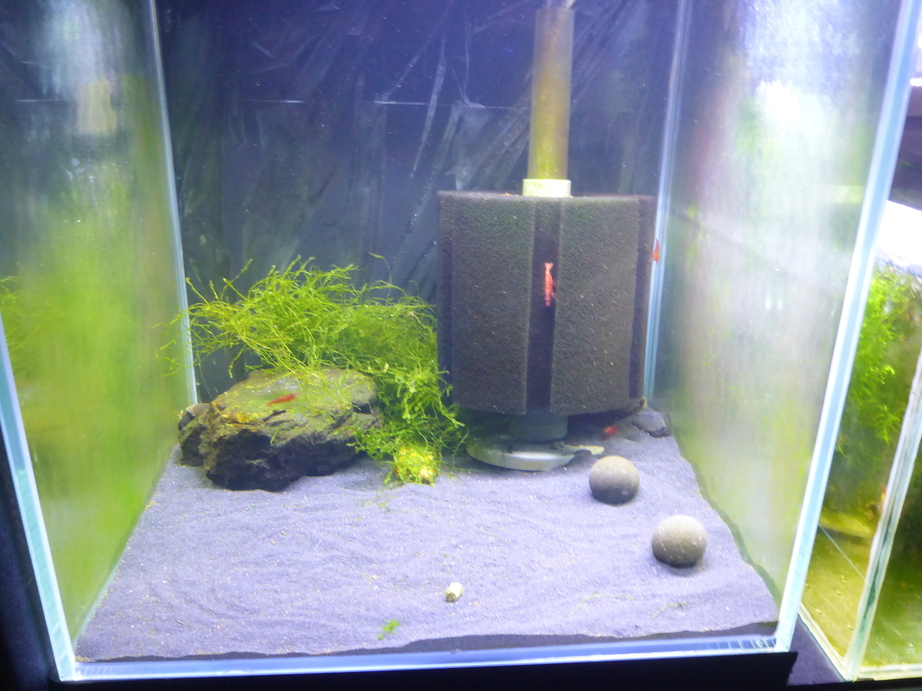
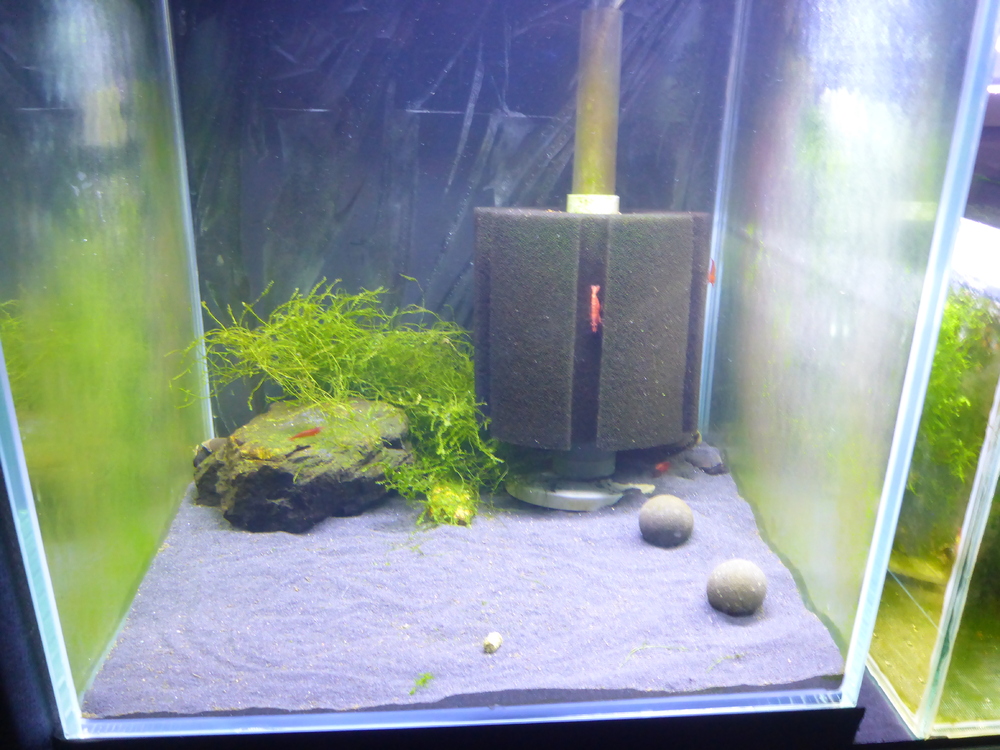
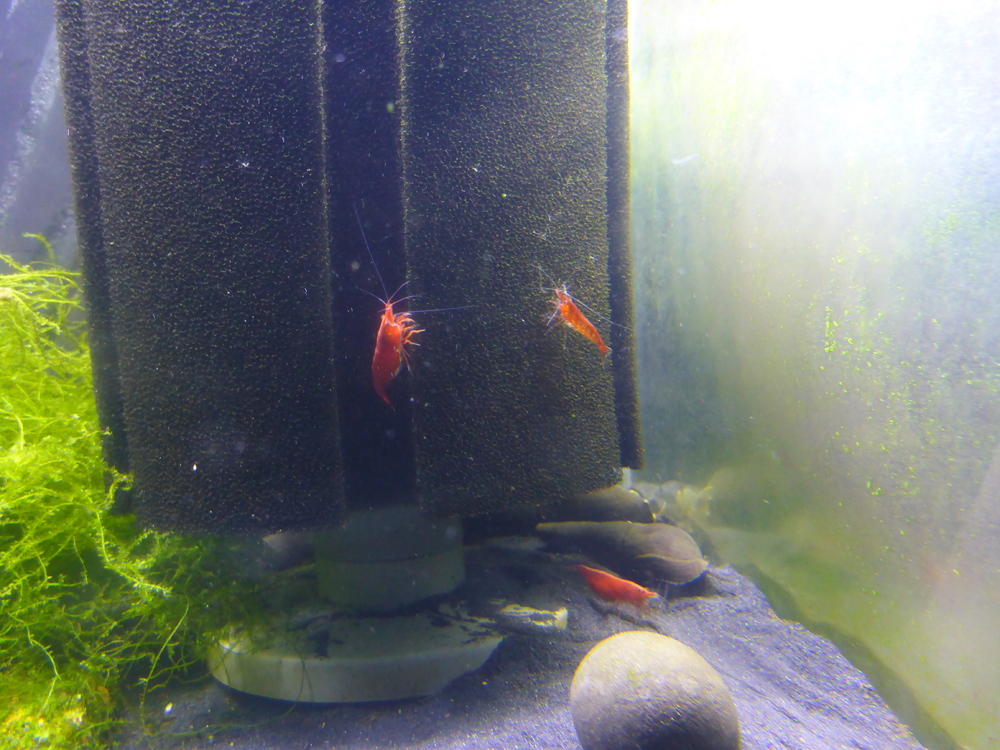
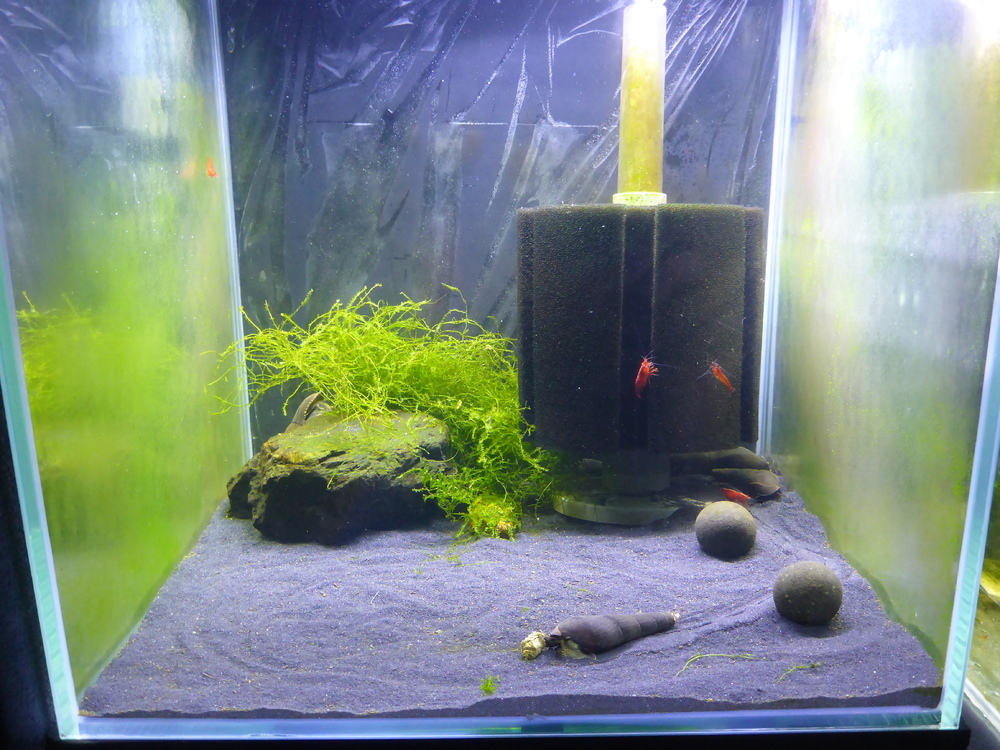
2 pointsJust an update for this tank. of the original three females, I'm down to two. Lost one when I overfed the tank - trying to feed the snails zucchini which promptly disintegrated. A quick water change saved the rest. The two remaining females are both currently berried and are due to drop any day now. I've swapped out the original male for two other males, and added another young female, that have come from my choc colony. I'm much happier with the coverage of the colour of the two new males, which even have good colour on their legs, unlike the original male. I'm hoping that one of them fathered the eggs of the two females, but can't remember exactly when I swapped the males over. There was originally another 'male' in the tank, but as it got older I realized it was just a lower quality female (it developed a saddle). luckily I noticed and removed it quick-smart Also added some Boss Aquaria balls to help with maintaining dissolved minerals. I found that TDS was dropping between water changes and the inert substrate doesn't help. This is probably due to grow of the snails as they have substantial new growth on the edge of their shells. I'm happy with the substrate so far. the snails keep it well turned over and the crap tends to sit on the top and can be siphoned off. About the only issue is that I would like it to be more black rather than a grey. The tank also has a nice coverage of algae so I'm hoping the shrimplets will do well.
 2 points
 -
2 pointsim running a 2217 in a 4foot tank. i think ill have to use my awesome (not) handyman skills and use my dusty drill and implement the jayc/heavy/etc/perplexing option :-) ps tank was meant to be zeb tank but seeing as that didn't eventuate i thought well im noob i still have some issues with rough n tumble neos... so imy may as well keep the more sensitive bees in a big tank.. it looks very sparse in terma of aqua scapr but there is literally NO problems spotting heavyd's bright bright shrimp! im proud of my acclimatisation efforts they settled in superbly :-) im so stoked with them thanks doron!2 points
-
 1 pointWith such a great number of hobbyist joining the forum, thought I'd start a thread on some basic shrimp maintenance/breeding advise and techniques I'm guided with..... Water Parameters (WP) is critical, so depending on the shrimp type, do some research and ensure your tanks (WP) are within the recommended range. There are extreme cases (i.e. PH at 5 or 7.5 where CRS are successfully kept/bred, but on avg. these WP are theoretically a good starting point.... Caridina (CRS, CBS, SW/GB, TB*, Tiger**..) PH - 6.4 KH - 0-2 GH - 4-6 TDS - 100-200 Temp - 21-23 *TB (KK, WR & BB) - Some breeders prefer a slightly lower PH (5.6 - 6.2) for Taiwan Bee **Tigers - Some breeders prefer a slightly higher PH (7-7.4), KH - 2-8 and GH - 6-10 for Tigers Neocaridina (All colour variants of Cherry Shrimp) PH - 6.4 KH - 0-2 GH - 4-6 TDS - 100-200 Temp - 21-23 There's several thread on the forum with regards to soil type/recommendations, filters, chillers etc, so I'll just focus on the "day to day" maintenance and breeding habits I practice religiously... * Weekly water change (WC) is beneficial to even the best filtered system. I only do a 5-10% weekly WC per week, just to "freshen" the water. Add minerals like salty shrimp, mineral powder etc... On each WC. * The quality and consistency of Tap water varies. Reverse Osmosis (RO) water is recommended, to avoid any imbalances/pitfalls that can occur. Control what goes into your tank, to ensure minimal unexpected deaths. * Ensure a varied diet of commercial and fresh food to your shrimps, including. Powdered food to feed your shrimplets.. I daily feed all my shrimp, and depending on stock levels and shrimplets, two feelings per days are done. * Do water top ups caused by evaporation. I use straight RO water to top up all my tanks. * filter maintenance is done every 6-8 weeks for all my nano tanks, and 8-12 weeks for my breeding racks. This ensure the filters/bacteria is running efficiently. Ensure the filters are only rinsed off with the tanks water...do not over clean, and or use tap water, as this will kill the beneficial bacteria. * On a established system, ensure your nitrates are kept below 20ppm. Low nitrates do promote breeding ! Other notable mentions.. *Shrimp consume their exoskeleton that they shed during molting. This is a a rich source of essential minerals for the shrimp, so do leave them there for their consumption. *Iodine supplement is not necessary as freshwater crustaceans obtain iodine from their food. *Metals like zinc, lead, and elemental copper, are toxic for shrimps and will kill them. *Majority of fish feed on shrimps. Although through clever aquascaping, a co-existance can prevail, But it really depends on the seriousness you take your shrimps/hobby, i.e selective breeding program's, exotic shrimps ... *Hiding spots/shelters are important especially in periods of molting. Shelters can be bought or created via aquascaping. *Avoid chemical, and short term solutions...i.e. PH Up/Down.....I personally don't use ferts, and anything chemical.... *During our summer periods, have a Plan B even if you are running chillers. Have some RO ice blocks in the fridge for emergencies.. *Observe your shrimps, and develop an eye to notice any changes in their behaviour. This may highlight some potential issues before it becomes real issues. *Shrimps require oxygen rich waters. Ensure ample aeration, surface agitation etc... *PATIENCE IS KEY Mother Nature, whether purely natural or influenced by us do throw all of us a "curve ball"... So don't be discourage, get advise and share the grief with this forum, as your experience will help others.... No doubt, there's '000's of other advise, so please do add it onto this thread.......1 point
 -

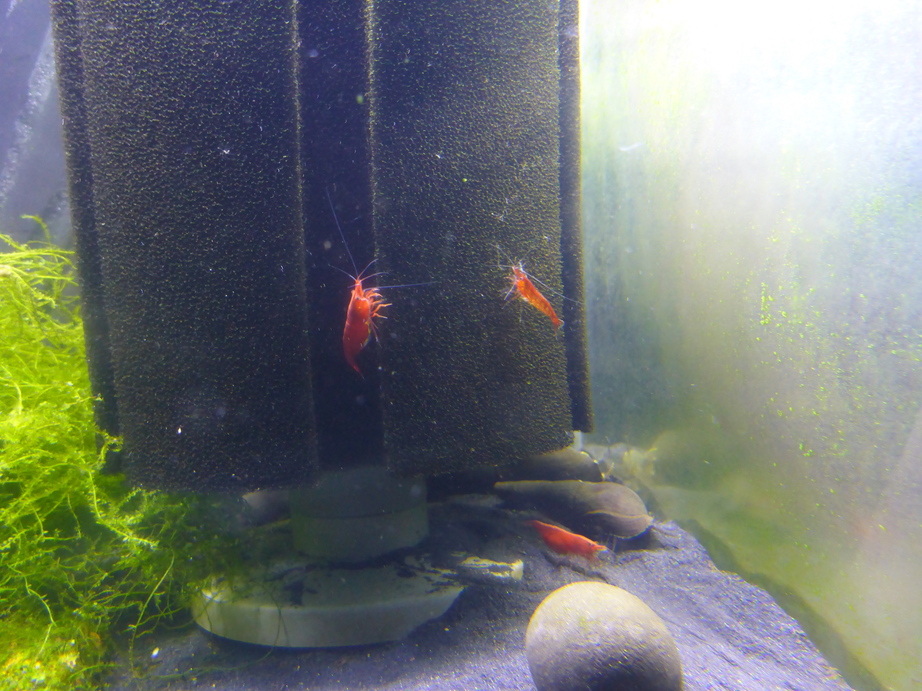
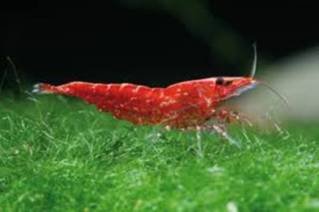 Scientific name: Neocaridina davidi Origin: Taiwan Max size: 2.5 cm Lifespan: 1-2 years PH: 6.5 - 8.0 Temperature: 18 - 28°C, Recommended 23°C Description Cherry Shrimps are peaceful shrimp which are easy to care for if they have clean and stable water conditions. They are good tank cleaners and will eat algae off your tanks which make them very useful! Cherry Shrimps should be kept alone or with small fishes that are non-predatorial as big fishes would eat them, For Example Neons. They also should not be kept with other variants of cherry shrimp or else they will interbreed, and their offsprings will not be of good quality. However, they can live with other species of shrimp, like the Crystal Red Shrimp, as they are of different species, and there will not breed together. Food and Diet Cherry Shrimps will need a balanced diet containing of protein and minerals. They should be fed vegetables, either raw or blanched in boiling water for a few seconds, high-protein and calcium foods, and special shrimp foods which are designed for shrimps. They will also eat algae as a source of food. Cherry shrimps, like all other shrimps should not be fed foods which contain high in copper, as copper can kill shrimps. Hikari Shrimp Cuisine: Shrimps eating banana: Sexing Sexing of the cherry shrimp may not be determined until they are nearly old enough to breed. Females are bigger, will have a darker colour, a wider abdomen and will grow a saddle behind her head when she is ready to breed. Males are mainly smaller and less colourful and of course will not grow a saddle. Female: Male: Breeding Breeding cherry shrimp is very easy. As long as the water parameters are stable, and there are both males and females which are ready to breed in the tank. Once the female grows a saddle, the female will release hormones into the tank which will attract males. A male will eventually mate with her and she will have eggs to carry, (also known as being berried). After 3+ weeks, baby shrimp, also known as shrimplets, will appear in the tank as tiny replicas of their parents. A sponge will be needed to cover the intake of the filter so that baby shrimp will not get sucked in, this also provides a good source of bacteria for shrimps to eat. Berried Shrimp: Sponge over filter: Dangers and Extra Notes Can be killed by copper, like any other shrimp. Juveniles may/will be killed by Pest and Parasites if not treated (A thread can be found in the SKF Library by Dean) Can be killed by overdose, such as an overdose of “no-planaria†Which is used to kill Planaria. Juveniles can be killed by the filter suction. It is important to acclimatise shrimps properly, when shrimps are moving from one tank to another You should always have some moss for your shrimps, as it provides food You should change/top up about 10-20% of the water fortnightly. Filter maintenance should be done around twice a year Shrimp love live plants, also they will look nice in your tank If keeping two species in the same tank, make sure BOTH species satisfy the conditions. Have a few places for the shrimps to hide Variants There are many colourations of the cherry shrimp which are kept in Australia. (For Pictures please refer to the SKF library Cherry Shrimp ID by Nogi) Var. Red Var. Sunkist Var. Pumpkin Var. Chocolate(Delight) Var. Black Var. Yellow Var. Blue1 point
 -
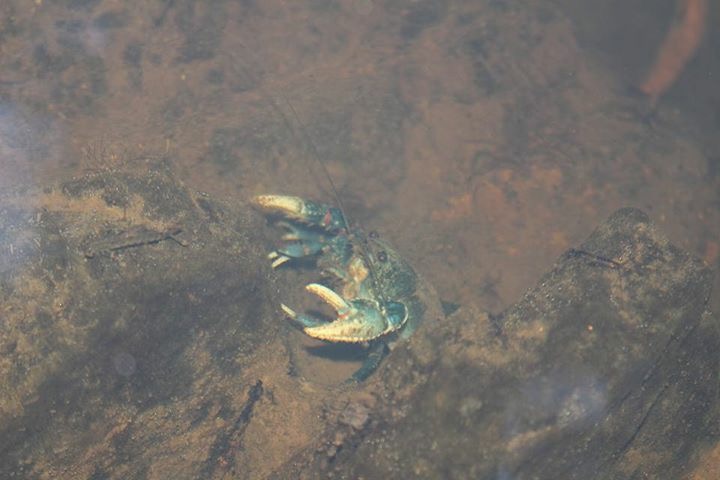
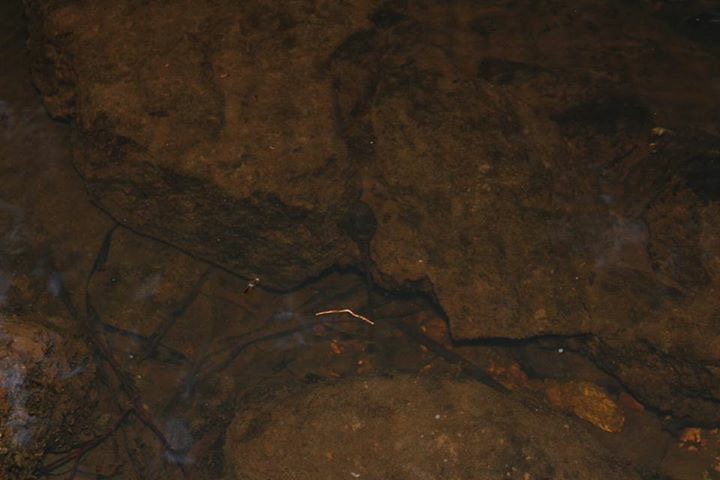
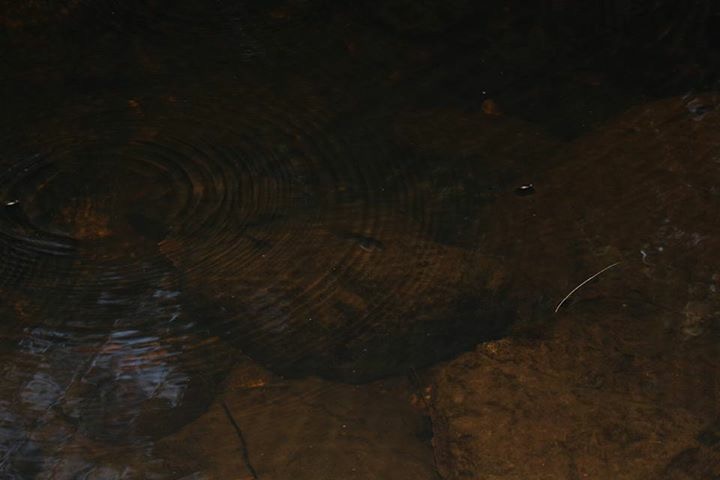
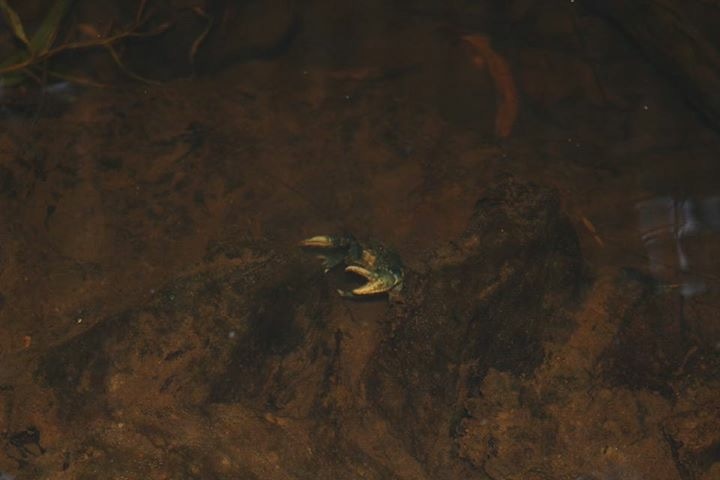
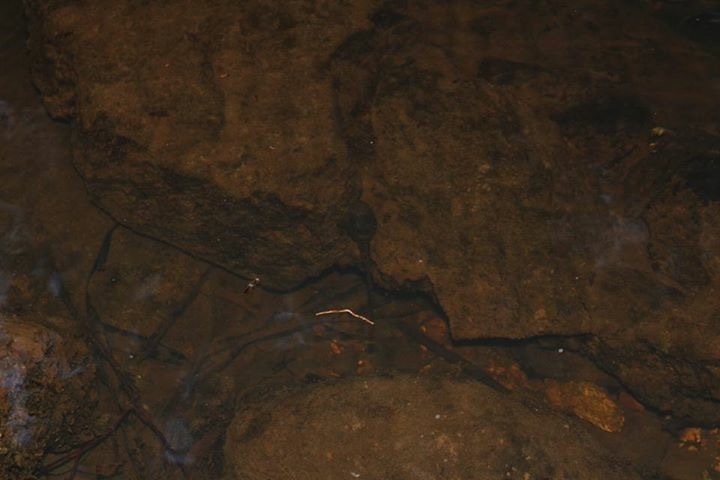
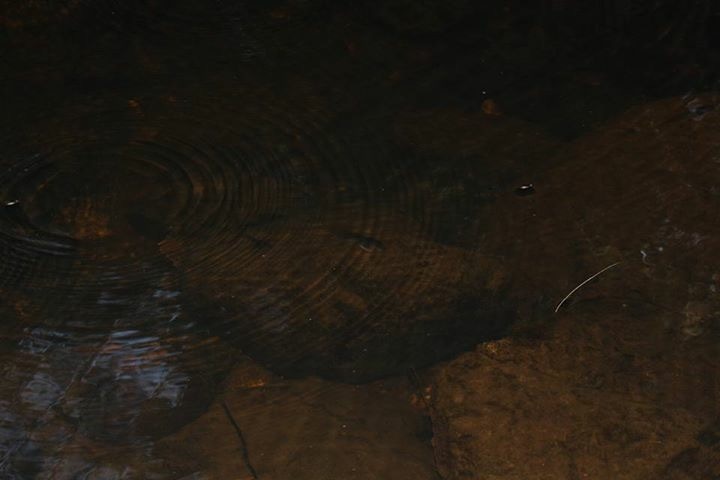
 1 pointa little while ago the family and i went for a walk around some trails in springbrook national park and i couldn't help but have a look in the creeks. I was trying to take pics of the big tadpoles when something caught my eye, the battery was about to die on the camera... And then i noticed something else! it was a spiny cray! I couldn't get good pics because of where he was and me not wanting to get wet but next time i go ill be more prepared! I found anouther on soon after this one too! It was amazing to see such a beautiful native crustacean in its natural habitat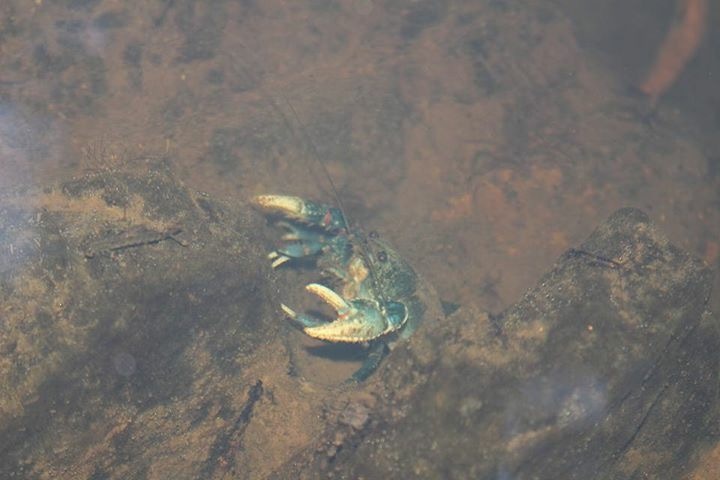
 1 point
 -
 1 pointWe have 4 Goldfish out in a large container outside, natural light, bare bottom, have Vallisneria nana planted into plastic pots with a layer of newspaper on the bottom, some aquarium gravel, then substrate, then another layer of aquarium gravel, then the Vall planted in, the newspapers helps prevent the substrate leaking/escaping from the bottom, also have some Hair Grass in there planted in the same manner as well as some Lilaeopsis novaezelandiae and Hydrocotyle tripartita to see how it grows in there, so far so good, Goldfish only took interest in the Blyxa Japonica, nothing else, also have a little Amazon Frogbit floating on the surface, also have a couple White Cloud Minnows in there as well, no photos, all going well, do a large water change about once a month also.1 point
 -
1 point
-
1 pointi just remembered some time ago tried this technique of pointing spraybar back against glass once before and one time it resulted in a very entertaining situation. A female moulted - I guess near the filter intake and the pheromones must have been coming strongest from the spraybar because all the males in the tank were swimming up against the spraybar flow.. they'd get most of the way up the wall then get violently flung back to the bottom.. it was very very funny. but maybe not so great for the shrimps! im sure k took a video I'll try to dig it up and post it if it is easy to do :-)1 point
-
1 pointI have bolbitis and Java fern too and use a lot of subwassertang - because I have it and it grows really well. I believe having lots of plants/ moss is the best and first choice for providing food and hiding places for babies and freshly moulted girls. The clean look bare tanks are nice but breeding tanks need lots of moss/ plants in my opinion. when drying the mulberry leaves it is best to leave them for about a week as any moisture left will cause mould to grow on the leaves. It does take a day or two for the dry leaves to sink in the tank but you can soak them first for a day or so if that worries you - they do sink eventually.1 point
-
1 pointI'm of a similar mindset to the posts already made. My tanks are generally lightly stocked so I feed commercial pellet type foods every second day, always keep leaves (prefer mulberry, but use IAL too) in the tank and feed occasionally with bloodworm when I want to see some more berried females (although I never feed high protein foods to my zebras as it seems to upset their tank). The best survival of shrimplets that I get is in a 'cull tank' that is 90% filled with moss, but no substrate. I introduced ramshorns snails to this tank and they laid eggs, but the resulting juveniles were not able to outcompete the shrimp for food. I think the massive surface area that moss provides is crucial for the survival of shrimplets and I plan on increasing the amount of moss in most of my tanks. As an aside, I don't think that plants like java fern and bolbitis are as effective as moss for providing grazing surfaces for shrimp - which I think comes down to their comparatively lower surface area. I have tanks with large clumps of java fern and bolbitis that don't seem to have the high survival rates of my cull tank.1 point
-
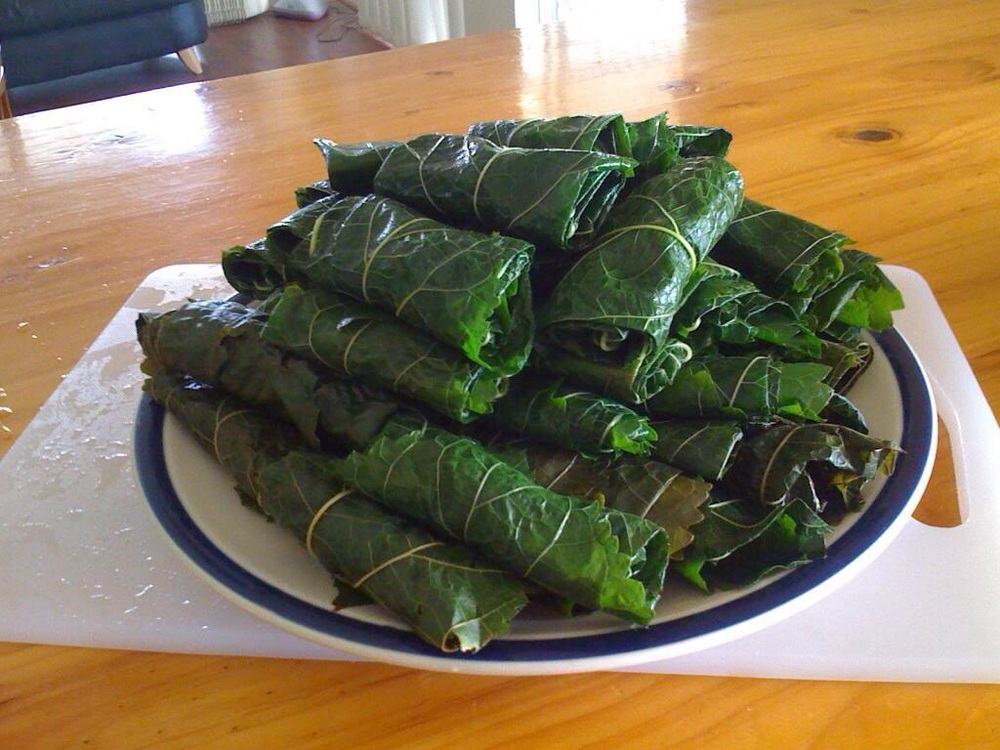
1 pointYou can dry them - I put them in a pillow case and hang them out in the sun so the air can also blow through them stopping mould. I also will Blanche and then freeze them . To give to the shrimp the dried leaves go straight into the tank, same with the frozen. You can put fresh leaves into the tank but they take a bit longer to break down. with regards to the babies I sell and give them away , I did use to keep them all but I'm running out of room now. I didn't always have such high survival rates but after 3-4 years of shrimp keeping I have improved in my shrimp keeping abilities and am now having to keep only the patterns that interest me. Mulberry leaves blanched and rolled ready to freeze
 1 point
 -
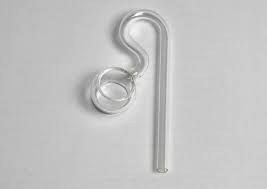
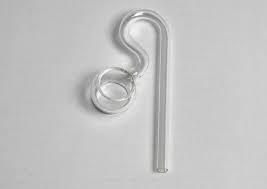
1 pointLOL Water comes out the pipe, travels in a circle around the ... um ... round bit, until it looses momentum and flows gentle out the sides. Ingenious design.1 point
-
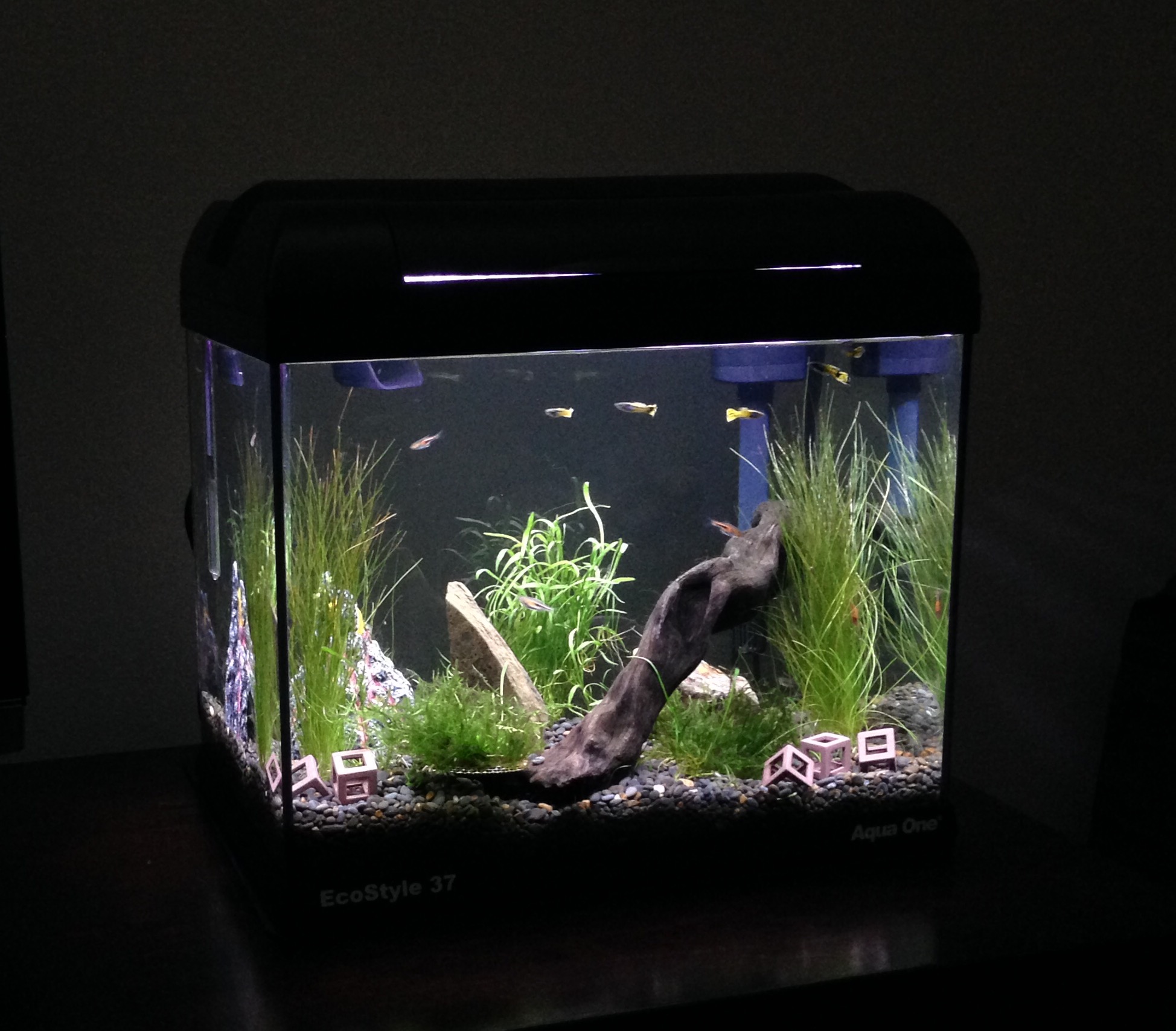
 Hey Ron, I'm from Melbourne, where are you based? I've kept a few different kinds of fish including tropical, natives, yabbies, cichlids, oscars, freshwater eels and now shrimp. I haven't kept a tank for over 8 years and got inspired by smaller setups. Shrimp weren't available here, pumps are smaller and quieter and LED's are far superior. Here is a shot of my current tiny 23 litre and some of its occupants. I have two berry females and am very excited but aware that they might not bee live young as it their first time.
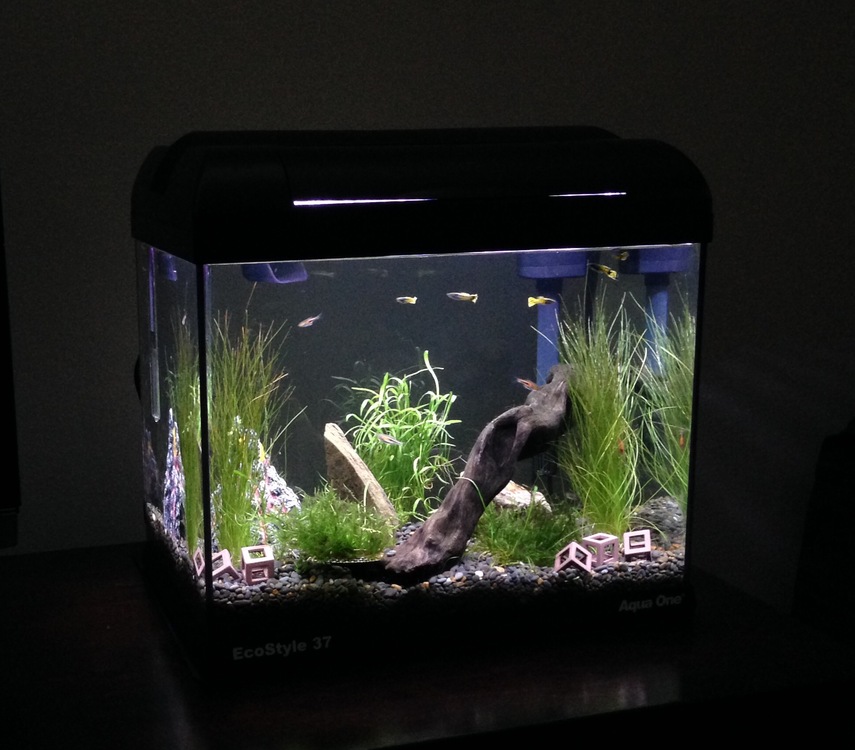 1 point
 -
1 pointI try not to disturb my substrate just siphon from slightly above. Keeping shrimp like any other animal is quite subjective - what works for one doesn't always work for another. I have gone from very heavy feeding to much lighter feeding but it works for me. However I have been on holidays for up to 2 months and only had someone come once a week to drop in a few leaves and a small amount of food. My shrimp thrived and multiplied during that period which shows an established tank should be able to support a reasonable size colony of shrimp without a lot of extra food. During that time no water changes were done just topups with straight RO water. Recently I have used maternity tanks for my berried girls, taking them out as the babies were released and just leaving babies in the tank - I am astounded by the number of babies that have resulted from 12 shrimp. So far I have removed about 150 and still have at least that many in the tank. This has shown me that the babies thrive when there is a good amount of food available to them without adults chasing them off. It also was good for the females as they weren't harassed by the males . As my shrimp are mostly related I can put them in to one tank and not worry about individual parents - I only keep my pure lines together . i can give you a couple of mulberry cuttings Will.1 point
-
1 pointI'll up some pictures of shrimp soon i hope but for my legions of followers - heres a quick update LOL :-) No deaths since the 26th October catastrophe 3 days ago hurrah!! when i look now there are at leaat a few out and about having a munch on the go so im optimistic now for sure. they still seem very light shy though. might run a less powerful light perhaps. currently using a 80w philips CFL on the 2 1/2 foot tank (which in Old school method of gauging light intensity equates to somewhere over 3w of the old fluro style per gallon) love n peace will1 point
-
1 pointAlternatively, if you have cash to burn, get an ADA lily pipe spin.
 1 point
 -
1 pointfood safety has been an issue with a few members losing a large number of shrimp from contaminated foods even though they thought the " washed" salad products would be safe. It's very easy to just grow your own lettuce, spinach, silver beet and kale. I have a large pot outside that I just throw different seeds into and cut fresh leaves as I want them that way I know I don't have fertiliser issues. I also have several small mulberry trees - these are so easy to propagate - just cut a few fine branches from your large source mulberry tree and cut them to short lengths and put into a pot with good potting mix. Keep well watered and you will then have your own little trees. They can take a few months to strike but most of them start growing leaves fairly quickly. Cucumbers are good the shrimp love them, I haven't heard anyone have problems with frozen veg either . I just pop them in a bit of water and microwave for a couple of minutes. I leave them in overnight and take out any left overs the next morning. A lot of melons are taken eagerly too and as you can cut the skin off they are safe. The other great love is bananas - they do need to be removed within 24 hours as they go slimey but the shrimp love them. Nasturtiums are another easily grown leaf that my shrimp love including the flower. So there are a lot of foods that you can grow and then have absolute surety of shrimp safe snacks. The fact that some of us feed daily especially when babies are in the tank does go against what is often told but you soon get to know how much to feed and good tank maintainance plays a big role in the success. Siphon out solid leftovers except leaves, keep an eye on how readily they accept new food - no interest probably means there is enough in the tank so have a food free day. At least 1 food free day a week is a good idea anyway. The longer you keep shrimp the more of an idea you get as to how much you need to feed. Keep an eye on your nitrates - if they build up then probably cut back on the food. When I first started my nitrates were constantly around 20 which though acceptable is still very high, now my tanks sit around 5 or less . I always do a 10-15 % water change weekly plus siphon old food daily and top up with a bit of RO water. This works for me and I have a very large shrimp population spread over 12 tanks.1 point
-
1 point
-
 1 point
 -
 1 pointI have riffles, Parataya, DAS and macro brachium have chameleon's coming soon I want to get zebs and a few others the natives are undervalued and should be given greater appreciation1 point
 -
 1 pointim pretty underpopulated too! i got ~200gal of empty tanks waiting for water! ill fill em all with your culls :p1 point
 -
1 pointWhen I have babies in the tank I mix powdered food with water in a syringe and squirt it into the moss so the babies get enough food. I have seen adults flick babies away from food . If your biofilm in the tank is depleted you will need to feed a bit more. An easy way to make extra is to put some moss in a jar by the window and leave it for a few days then pop it back into the tank - the shrimp will go straight to it. If your aquarium is well established and you don't clean the back and side glass plus leave the lights on for a reasonable time then you should have a good biofilm growth in the tank. I also always have an IAL in the tank as they take a long time to break down and the shrimp will graze on them . I have a large population of shrimp and feed alternate days with commercial or home made foods , I feed powdered food daily when shrimplets are growing and always have a leaf of some kind - besides the IAL - in the tank. I also offer veggies that have been blanched a couple of times a week and feed blood worms at least once a week. All my tanks have a good amount of moss for them to graze on. Some days when I put pellets etc in the tank the shrimp completely ignore them so I siphon them out the next morning. I leave snow in the tank between water changes but siphon it out water change day and put fresh snow back in . I have great shrimplet survival rates with this regime.1 point
-
 1 pointThe news just keeps getting better for me.... Went back out to the tank to have another look at the 2 babies I spotted earlier and low and behold I found another 2 making a grand total in view 4 along with one adult that looks to be Bolt. ( Bolt is a dark shelled notopala who often rockets about the tank) And this little fella getting payback on a Ramshorn snail. I wonder how many more babies are sulking about in the tank, I almost never see the 7 adults, if I do the most I can usually find at any given time is 5. Looks like from now on I am going to have to be extra vigilant when removing plants in case any little snails are hiding on them along with any spotted blue eye eggs.1 point
 -
 1 pointHello people I'm new to the shrimp game and I'm very intrigued with crystal shrimp, I have just set up a new tank and running it it in so to speak, I'm giving it 2 weeks to settle down before I add crystal shrimp, my kh is fine but my Gh is through the roof, any advice on these water pillows that's softens the water, my concern is they produce sodium which I believe it's bad for shrimp. Also I've got c02 to start the plant life and when established do I need to run c02 through the tank everyday Any advice would be awesome ??1 point
 -
1 pointSelective breeding is subjective. PRL (Pure Red Line) / PBL (Pure Black Line) are the accepted pinnacle of CRS/CBS, but hobbyist may focus on patterns/body colouration, instead of coloured legs etc.....depending on the level/experience. I initially started out just wanting to have CRS's, then keeping them alive, then breeding them, then successfully growing shrimplets.... which leads to patterns/grades, then quality/depth of colour, then coloured legs etc.... Selective breeding via culling, individual tank for selected pairs etc, are all depended on space, $ and permission (!). Many are doing this via breeding boxes etc.. just need to ensure water quality, 02 level etc are ample. There's a wide view of ideal WP for Neocaridina Heteropoda...PH - 7-7.5, Kh - 2, GH - 6-10, TDS - 200+ & Temp 22-25 seem to be the accepted level, but my cherries are at 6.4-7, KH - 1, GH 5, TDS 200 & Temp 23, as they do share the tank with my Caridina. I just collect them, and don't really focus too much on breeding % for the cherries, so not too focus on giving them the perfect environment....priorities are in mt TB & Tiger's :-). Like some fishes, I do believe they can eventually adapt to softer water, but that's just my opinion. I do add calcium, and generally use CaSO4....but this is dependant upon you GH level, soil type and shrimp #'s....1 point