

Leaderboard
-

Dave
Premium Members4Points20Posts -

OzShrimp
Members1Points4102Posts -
NoGi
HOF Member1Points5858Posts -

buck
Members1Points758Posts
Popular Content
Showing content with the highest reputation on 12/03/14 in all areas
-
 1 pointIn this topic I will post the quality characteristics of Pure Red Line shrimp, how I believe they should be. Most of them are commonly accepted and some of them are personal preferences. I will show you examples of colored legs, white and red density, body, tail, antenna's and more. We'll kick of with the obvious: pure white. The white of a PRL should be pure white. Very bright, but also soft like silk. This has less to do with the thickness. It should not have any yellow or pink tint. For example: Yellow tint: Pink tint: And finally the pure white as I like it: I admit that lightning is a little to bright on this picture, but believe me this is one piece with nice clear white in real life. And another picture of this piece: Next time I will show you examples of leg coloration! Any questions or requests for the next post, feel free to ask.1 point
 -
1 point12 Days of Shrimpmas Starts Saturday 13th December 2014, ends Wednesday 24th December 2014. And a HUGE thanks to our sponsors Age of Aquariums, BossAquaria and The Tech Den for putting up the prizes
 1 point
 -
 1 pointI'm totally new to shrimp keeping and have some shrimp currently being mailed to me. I've heard they are particularly susceptible to new tank syndrome and I was wondering if someone could shed a little light on this for me. If I take an existing cycled aquarium, add new substrate and plants, and then some of the old water back in.... would this still be too "new" for them? I guess I'm trying to find out what the general problem is. Is it typically poor cycling or lack of biofilm for them to eat? How many things can be "new" in a tank and still have them thrive, provided the water parameters are correct? I want to make sure I have an appropriate environment for them when they arrive! Thanks for your input!1 point
 -
 1 pointWelcome Charis! Prior to having the external breeder box I acclimatised just as you have said. Shrimp in original water in a container/bucket, then using airline (with flow valve ideally) you drip about a drop per second for first hour, then can increase from then on. Once I had more tank water than original water I moved them in. I used to only take a couple of hours for neos (cherries) and four-five for Crystals and TB (Caridina). Best to take the extra time if you are unsure of the original tank's water parameters. With the external breeder it is easier as you can leave it attached and let them adjust over a 24 hour period, to ensure they have adjusted well prior to adding to tank. Hope others can offer up advice too!! Enjoy!!1 point
 -
1 pointThe cycling process is the same with ammonia going to nitrites and then nitrates. If you have established bacteria colony in your filters then that is a good head start. Now depending on the substrate that you add to the tank and how well established your bacteria is you may very well experience ammonia spikes which can be harmful to your shrimp. The problem when you get new shrimp is ensuring that they are acclimated properly and slowly. If you just float your bag in your tank for 15 minutes and release them like many people would a simple fish then you can pretty much guarantee your shrimp will die. This is because they are sensitive and there is likely to be a difference in tank perimeters between that of the seller and your own. The other thing which affects this process is the fact that the shrimp will be stressed. To better increase the chances of survival people use different acclimating techniques. The most basic one is putting the shrimp in a bucket or container in the water they are sent in then put some air hose in your tank and on the opposite end tie a loose not allowing you to control the rate in which your tank water drips into the container. You will want to start off with something like 1 drop per second. Using this method i would recommend letting it drip at that rate for atleast 30-45 minutes before increasing the drip rate slightly. An easier way i like to use is to utilise an external satellite breeder box. If you have one of these make sure its empty and pour the bag water into it with yoru shrimp. Adjust the flow into the bag to be towards the lower end. Then over the space of a couple of hours increase the flow into the box before it is running on full. Wait 12-24 hrs to ensure your tank water has fully gone through a couple of times and then i just scoop them out and pop them straight in the tank, Hope that helps, now some questions. How big is the tank you are using? What sort of soil are you using? What sort of filtration are you running and has it been used previously with other tank occupants ? If not who did you previously cycle your tank and how long for ? If your able to post your tank perimeters to that can help us assess your tanks current standing. Ammona, nitrite, nitrate, ph, and tds, gh, kh if you have the means to check them :) Also what sort of shrimp are you buying? :)1 point
-
 1 pointI'll get pics of mine up soon. One thing I have noticed is that some of the names of buces being sold have been twisted alot lately. I think it happens through simple mistakes but also laziness. I've seen a few sold (not on SKF) without a name because they had forgotten it. No doubt the buyer will want to have a name, so they will probably pick a name that looks close or worse make one up. In my opinion, thats pretty slack. Its not too hard to write down the name of the plant when you get it. In fact I will show you the system I use in addition to recording the names so that I can always ID my buce. I've also seen instances where two names are used to describe one thing. For example, velvet tricolour. Velvet is one type, tricolour is another. Because buces are so awesome, I would hate to see people being put off buying them because they have a repu tation for being mis-ID'd, which is what I see happening if this kind of thing continuing. My point is, I want to be able to buy a velvet, and know I'm getting a velvet. Rant over.1 point
 -
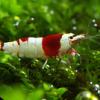 Hello, to make it a little clearer. The beeshrimp has not been scientifically described and thus got the temporary name Caridina cf. cantonensis, which means "looks like a cantonensis, but it is not." After several years of microscopic and genetic studies Werner Klotz and Thomas von Rintelen have their scientific work now completed and given to the beeshrimp its own name. The new name is "Caridina logemanni", in reference to two German brothers with the last name Logemann, who are very active in the German shrimp Scene. In addition Werner Klotz and Thomas von Rintelen have also described the tiger shrimp, which now has the name "Caridina mariae". Greetings from Germany Lars1 point
 -
 1 point
 -
 1 pointVery nice Jamie...having some great success now with the rack. Very cool!1 point
 -
1 point