

Leaderboard
-

Squiggle
Members5Points10433Posts -

smicko
Members3Points849Posts -
fishmosy
Members3Points4594Posts -

The Tech Den
Members2Points241Posts
Popular Content
Showing content with the highest reputation on 08/14/14 in all areas
-
 2 pointsWell done Squiggs, I recently sold some fire reds, and 4/10 turned out below par....buyer brought it to my intention, and we're sorting it all out. Cherries can be difficult too, so as mentioned on my 1st post, best to communicate and give the seller the opportunity to rectify, as I'm sure most of us on SKF will.....2 points
 -
2 pointsMate if you're weren't happy with what you got I will replace them & I don't care if you've fed them to your fish, just PM me your address & I'll drop them off when I have some free time, distance is no object. I'm uncomfortable knowing you're not satisfied with the shrimp you bought off me.2 points
-
1 point
-
 1 pointAfter a while my cherry doesnt breed and keep dying. make new setup and ta da.... looking foward for cherry babies in a month^^ now pretty excited having separate tank for fire red, blue velvet. yellow's, black, and green still not stable.1 point
 -
 1 point
 -
 1 pointHey Squiggs, Just want to say a big thanks for Shrimp and products yesterday, Thanks for spending the time , it was much appreciated. Shrimp have settled in OK but by the time I acclimatised them to my PM's and got them changed to the tank temp it was 11.30PM so all up about seven hours. I will try and get some pics to show all but I am pretty much Computer illiterate and seem to have all sorts of problems trying to upload pics. Many Thanks again. Gary1 point
 -
 1 point
 -
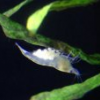
1 pointGorgeous colour, very very nice, can't wait to see her offspring!1 point
-
1 point
-
 1 point
 -
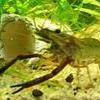
1 pointHey Pete, I have a feeling these are the Sunkist that I sold you &, as I have already said in the PM to you when you asked me about them, I will gladly replace any that you are unhappy with. Also, my WP are below, if yours are not close to these then that could be causing the lack of colour. Can you post up your WP? pH - 7.4 GH - 7dGH KH - 3dKH Nitrates - <5ppm Ammonia - 0ppm Nitrite - 0ppm Temp - 23°1 point
-
Hey mate, when you select the pic in Photobucket you need to copy the "IMG code" on the right side of the screen & paste it directly into your post, you need to do this for each pic & vwalah! Or, you can right click the settings icon in the top right corner of each pic when viewing them in your library, then select "get links" & copy the "IMG code", then paste the code into your post, simples!1 point
-
1 pointSo it looks like when I last cleaned photobucket i moved the endler pics, good excuse to take some more. I will see how many i photograph tomorrow. Cheers mick1 point
-
1 pointOK thanks Mick, by the way, are they a peaceful fish and how big do they grow, what are the prime water parameters? you have started something now you know Helpppppppppppp. I think i need to give myself a good uppercut before this gets out of hand and i start setting up more tanks. Well i dont smoke , dont drink, dont gamble, dont even have sex anymore, so i need something to keep me occupied i guess, what the hell, may as well be more tanks.1 point
-
1 pointSome more pics from my latest field trip. Loving the colours and textures of the leaf habitats that these guys live in. Really must do a biotope tank one day soon.1 point
-
 Subwassertang Common Name: Subwassertang Common Synonyms: Süßwassertang, Susswassertang, Süsswassertang Scientific Name: Lomariopsis sp. (cf. lineata) Author: N/A Erroneous Names: Round Pellia (due to its initial misidentification as Pellia endiviifolia) Scientific Classification Kingdom: Plantae Division: Moniliformopses Class: Polypodiopsida Order: Polypodiales Family: Lomariopsidaceae Genus: Lomariopsis Species: Undetermined Origin: Varied (Can be found in Australia) Temp: 15 - 30C PH: 5.0 - 9.0 KH: Soft - Hard Lighting: Low - High CO2: Not Required Growth Rate: Fast Difficulty: Very Easy Propagation: Fragmentation Description Subwassertang is the gametophyte form of a species of Lomariopsis. The name means "freshwater seaweed" in German and it’s appearance resembles seaweed, although like many mosses and liverworts it’s appearance differs under various conditions. Identification It can be distinguished from Pellia (Monosolénium ténerum) by its lack of midrib (central vein) and oil bodies (small light points in the tissue), and its texture. Subwassertang has a more crunchy cellophane type feel to it and is very thin, whereas Pellia has more of a soft smooth feel and is thicker. Growth Subwassertang grows best when attached to hardscape elements such as driftwood and rocks. Over time it will attach itself to the hardscape, but will initially need to be tied with thread, or attached with superglue. Free floating pieces have a tendency to attach to whatever they become lodged in, including substrate. Over time Subwassertang will grow outwards into a rounded cloud or pillow shape. Propagation Propagation is achieved by cutting or simply tearing a small portion from an existing plant and then reattaching it in another location. Morphology “The thallus of the alleged aquatic gametophyte of Lomariopsis is ribbon-shaped, profusely branched, and onecell thick throughout, without a midrib or multicellular cushion. Rhizoids are colorless, mostly borne as marginal clusters. It grows indeterminately with active meristematic cells at the rounded apex (Fig. 1c). There are no gemmae, although small lateral branches sometimes detach from the thallus and develop as new individuals. Archegonia and three-celled antheridia are sparsely formed. These characters were also observed in the gametophytes of Lomariopsis spectabilis found in Taiwan (Fig. 1d), although they do not exactly match the strap-shaped Lomariopsis gametophytes described and illustrated by Atkinson (1973). No associated sporophyte of the Sußwassertang under study has ever been observed.â€[1] Sources [1-5] 1.Li F-W, Tan B, Buchbender V, Moran R, Rouhan G, Wang C-N, Quandt D: Identifying a mysterious aquatic fern gametophyte. Plant Syst Evol 2009, 281(1-4):77-86. 2.Nayar BK, Kaur S: Gametophytes of homosporous ferns. Bot Rev 1971, 37(3):295-396. 3.Rouhan G, Garrison Hanks J, McClelland D, Moran R: Preliminary phylogenetic analysis of the fern genus Lomariopsis (Lomariopsidaceae). Brittonia 2007, 59(2):115-128. 4.It's Not What You Think [http://coo.fieldofscience.com/2009/07/its-not-what-you-think.html] 5.Reski R: Development, genetics and molecular biology of mosses. Botanica Acta 1998, 111(1):1-15.1 point