Skip to content
View in the app

A better way to browse. Learn more.

Shrimp Keepers Forum

A full-screen app on your home screen with push notifications, badges and more.

To install this app on iOS and iPadOS
  1. Tap the Share icon in Safari
  2. Scroll the menu and tap Add to Home Screen.
  3. Tap Add in the top-right corner.
To install this app on Android
  1. Tap the 3-dot menu (⋮) in the top-right corner of the browser.
  2. Tap Add to Home screen or Install app.
  3. Confirm by tapping Install.

My latest aquisitions

Featured Replies

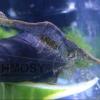
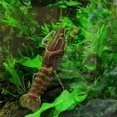
Some pics of my latest aquisitions. I suspect they are Paratya australiensis. They have an overall pale blue body with a golden head covered in black spots. The photos really don't do them justice. Interestingly some of them do not have a rostrum. Not sure if this is a genetic defect, environmental or physical damage. They were found above a waterfall so I suspect the larvae will hatch out as mini adults.
They have gone into a tank with my riffles (Australatya striolata).

DSC_0237_-_Copy.thumb.JPG.1da8e971a000b1DSC_0248_-_Copy.thumb.JPG.4dc05c4d23423e


DSC_0189_-_Copy.thumb.JPG.3a5d9d1bc3ef87


Interesting, could the missing rostrum be due to getting broken in the net when catching them? I wonder if after a moult the ones missing rostrums will have grown new ones.

  • Author

I don't think so. They were missing them as soon as I caught them, and the net's mesh was too fine for their rostrum to be caught in. 

Might just be a defect in a population that is cut off from other populations. 

It could be a genetic defect or it could be that there is actually two species (a sub species) are living in the same population. I wonder if you could separate the rostrum ones from the lacking rostrum ones and see if the next generation of either shrimp show either rostrums or no rostrums in their respective tanks. If either trait shows up in the opposite tank then I am guessing you have a recessive defective gene.

  • Author

Pretty certain they are all the same species. The rest of the body looks exactly the same. I'll just keep an eye on them for the moment. Don't really want to spare another tank for them. Too many projects as it is. 

Paratya rostrum is very prone to breaking. If you have a microscope you'll see that broken ones have a clean cut with sharp edges. Deformed ones are less jagged.

  • Author

These look rounded, like a stump, rather than a clean break. 

Mmm interesting. Can you send me any specimens to have a look?

Any dead ones or the moulted exoskeleton I mean. Can be preserved in alcohol or metho.

  • Author

No problem. Can do. 

Thanks!

Create an account or sign in to comment

Similar Content

Account

Navigation

Search

Search

Configure browser push notifications

Chrome (Android)
  1. Tap the lock icon next to the address bar.
  2. Tap Permissions → Notifications.
  3. Adjust your preference.
Chrome (Desktop)
  1. Click the padlock icon in the address bar.
  2. Select Site settings.
  3. Find Notifications and adjust your preference.