
Leaderboard
-

jayc
Moderators10Points6248Posts -

sdlTBfanUK
Moderators3Points2346Posts -

WaldoDude
Members2Points50Posts -

wtusa1783
Members1Points39Posts
Popular Content
Showing content with the highest reputation on 08/01/20 in Posts
-
2 pointsNo offence taken. All valid opinions welcomed. Waldodude, you can always try with your tap water until you are really determined to get an RO unit. As Simon said, your tap water is good enough for Cherry shrimps. And a few water changes without any Seiryu rocks should start reducing pH a bit. It's the cheapest option. However, as I said, that RO unit you found is very cheap!2 points
-
2 pointsFlourish has a bit of everything. Yes, potash is potassium. Potassium Sulphate = Potash. You can use that, but note ... it's $14 for a 250ml. As an alternative, you can go to bunnings and pick up a 2.5kg bag of sulphate of potash for the same price. https://www.bunnings.com.au/richgro-2-5kg-granular-sulphate-of-potash_p2985054 If your plants are yellowing and dying, that is one sign of potassium deficiency. Yes, will work perfectly. That is a great price, I must say. An equivalent unit elsewhere is $200. Grab extra 1x NSF certified 50GPD reverse osmosis membrane and 1x in line mixed resin deionising post membrane DI filter, if you can. Really easy to use. - Connect one end of the supplied white hose to "Inlet" of the unit and the tap adapter. - Connect one end of the supplied white hose to "Produce" of the unit and put a clean collection bucket under it to collect RO water. - Connect one end of the supplied white hose to "Waste" of the unit to another bucket or straight into a drain. You can use the waste water for watering plants. Don't drink it however. - turn your tap on full and flip the black lever on the tap adapter to send water through the RO/DI unit. - then it's just a matter of waiting for the "Produce" bucket to fill up.2 points
-
Have you tested the parameters of the water? There isn't much we can help with without those basic figures? Usually tap water works with neocaridina shrimp but your water may be too hard! If there were DOA then the others may also be sick or weakened so some may die soon after they are put in to the tank. When you get a shrimp deivery you should drip acclimate them over as many hours as possible. Were they delayed in transit do you think which caused the doa? Simon1 point
-
1 point$17.70 from somewhere in Doncaster. https://www.ebay.com.au/itm/Premium-Digital-PH-Meter-TDS-Tester-Aquarium-Pool-SPA-Water-Quality-Monitor/183545057092?_trkparms=ispr%3D1&hash=item2abc234f44:g:jCQAAOSwmUBb84nm&amdata=enc%3AAQAFAAACYBaobrjLl8XobRIiIML1V4Imu%2Fn%2BzU5L90Z278x5ickkQx4eKMLcQ60WhxX7q%2FYuceAZ9JJgYX96VopkOnpOvxtk5Xz4XpY4%2FCjMA%2FuznauEkarUDiXqUelzOVkqtgJiZfjGlFiJa%2FXDwfVDmx9XERDAZiCzxufDGAW%2FSSs%2BaCJJGCOJbvirdptFP%2F2A27xllGJqy1VtFqa6EezJF35T2meFPAxYu9bidEGbNR4ExkoPjrrQk%2BDFIjrNB9GyAVpFST%2F38vbUF8%2BCNFL4PGWS0L2htaiENPiOEaKv9%2FAMJz8TsORyeXtG%2F6O%2FlUNMO7gD69cyPZ%2FPJ2XCPeHg9X2adQXx5dlnIMvJylTWmaXDLwik%2B3ZC0glP%2FVxbIMGO5bXHVHNWzkXQ8sRA%2B5fT95NLzi7AC3Iov4b%2BJIoHTIcOYQvwurMoMUhxZPAGs8Zmn4MlIufnuecS0gMjlNR%2FNzvtf2Bw46ZikHOM%2Bk8SpKmLio9%2BmBtqQeSyfB9scdVm4RTmP%2FA8WcsnhSwnJtXdLeMMhhYxwrIIaS1fjXzQ7oTEQdJLWS18v%2F1Pc7oi1n45BBX0inCimAV8393nNxjgMoUzsj8Ms4trllWRuZ%2Bs%2BwlqxacIGOoSXEczjdtn6vFewA04GEzPUMmI26V%2FzCCoZngFyiZMyJQj152hBwkSmoPQW%2Ft2425mSzEJAp3ozmBzpBhjaB0Mhx6haa1Qja5dG8mCbYFOnVXKyrGL204PvIWCSdN6kZrrf8otHUzUOIKHw%2FrUfNFzd1FidZjub57NyRtc%2BIvIxer%2BQhFNNNWXSKtB%2BC5T|cksum%3A183545057092d2e3c02090fb4bf2906955691eb13696|ampid%3APL_CLK|clp%3A2045573&frcectupt=true1 point
-
The tank is cycled. It’s been set up for a month now and I’ve been dosing some bacter ae every day to create biofilm. I tested for ammonia and nitrites and they were 0 before adding the shrimp. Nitrates were 10. I only had snails in the tank before the shrimp so that’s why there isn’t a bunch of gunk. I thought Neocaridina shrimp needed harder water? I had 5 D.O.A. so maybe it still is having affects from that.1 point
-
1 pointhttps://www.ebay.com.au/itm/383203322241 Here you go @Crabby didn't realise there was a timer but you have 44 minutes! I decided to go with it cause it was the cheapest I found and figured I could use it for my new 15 gallon! Thank you for the tips but yes I am going to try removing the stones and see how my tap water goes first, whilst I wait for my ro unit and get used to using it for my 15 gallon.1 point
-
 1 pointuhhhhh could you pretty please with a cherry shrimp on top send me a link to where you got that? I've been looking for a bundle that cheap for months! In regards to your problem, I'm sorry to hear about your shrimp. I agree that the pH is too high, but that is probably not the main problem here. You may need to do some detective work, as nothing major besides pH is popping out for me.1 point
 -
1 pointHi Welcome to SKFA. Who were you asking? An OEBT is a tiger shrimp. So CRS x OEBT is a Tibee.1 point
-
1 pointI think our posts crossed? You will want GH/KH+ with cherry shrimp and RO water. This obviously is the safest route to go as RO water will be void of everything and then you add back the GH/KH+ which is mixed at the perfect balance for the shrimp so there won't be any fluctuations as you may get with tap water. You can start bringing the PH down by using tap water whilst you wait for the RO unit and I would then just start doing 20% weekly water changes using the new RO remineralised water from that point in a regular routine which will gradually bring everything into line over time, rather than doing a massive/complete change, and this means you don't need to remove the fish/shrimps. Look forward to hearing how it all goes! Simon1 point
-
1 pointJayC has you well covered here. Bear in mind of course that you may still lose more shrimps when messing with the water parameters so don't panic if this happens. I don't think it too likely that the fish killed the shrimp, but probably just snacked on them once they died. I expect the fish may eat babies though if they can see/catch them. I keep my red cherry with tetras and they have been fine for 5+ years in tap water with the same PH as yours (and still using the same soil substrate). Once you remove the rock, do a major water change and add some Indian almond leaves all as JayC recommends you are well on your way! I would carry on using your tap water as you have been and not get tied into the expensive and extra work of RO water though, but stop adding chemicals, ferts etc, I add NOTHING and am weekly trimming plants or throwing them out in my tetra/cherry shrimp tank which uses just tap water (dechlorinated). When changing water always drip in the new water (if shrimp are in the tank) if you can somehow, usually you can just leave it to 'do its thing' for hours so it isn't too much hassle once you have worked out to rig it up. Without the rocks curse, mathematically, if you remove 50% of PH 8 water and put in the same amount of PH 7.4 tap water, the PH will be 7.7 on that first change and reduce slower each time you do another change until it gets to the 7.4 of your source water, but of course that depends on the accurancy of the kit as most jump (mine in .5) so it could be anywhere between and that is assuming the test is accurate as well to start with, so the PH pen as recommended by JayC is the best route. The TDS also recommended is great because it is cheap and the easiest test you can do as it doesn't use drops etc, you just put it in the water and your done, it will end up being the one you use most. IF you do decide to use RO water obviously you will need to start adding minerals to that water otherwise your other parameters will crash. I would stick with your tap water (sorry JayC) as its parameters are perfect for the shrimps (probably near enough for the fish as wel,l if you haven't lost any fish thus far), it is the cheapest, easiest source and the transition will be slower, gentler and more natural all round. Just always bear in mind any messing with the water parameters is likely to result in more deaths during this (and maybe even shortly after) period. Simon1 point
-
That's not normal. If proper acclimation process to introduce new shrimp to new water parameters are followed, you should have zero deaths. Is the tank completely cycled? Or is this a new tank? (it looks very new. There is no gunk in the substrate). Do a test for Ammonia. Unfortunately, that is the opposite environment for shrimps. They need soft to neutral water for proper moulting. Hard water will cause their carapace (shell) to grow hard. And that is more difficult to moult.1 point
-
1 pointYes, Seiryu is notorious for raising pH. ADA Amazonia can last a few years. So take the stones out for now. The Seiryu is fighting against the ADA substrate with the pH, exhausting the buffering capabilities. But more importantly, it is causing pH fluctuations. Up, down, up, down. And that is not good for water parameter stability. Don't throw the stones away, as you might be able to use them in a CPD only tank. Fish don't mind. You can add them back in slowly if you find pH falling below 7.0 in the future. Good idea. Are you sure you need that much Iron? Iron as a nutrient isn't required all that much in an aquarium. Yes, red plants need more iron than green plants but make sure you are not overdosing iron. If anything, the Macro nutrients will be lacking in a closed system like an aquarium. Hence the name - Macro. It's needed in macro amounts. The plants need more of the big 3 nutrients. NPK - Nitrogen, Phosphorus and Potassium. N & P can be found in a tank - fish waste nitrogen, food breaking down, foods added, etc. But potassium once used is not found in the tank unless you specifically add some. So if anything, you tank will most likely be depleted of Potassium (K). But be careful Potassium can alter pH and KH dramatically, so never add too much in one go. Split up a weekly dose of fertilisers into smaller daily doses when shrimp are in the tank. As a first plan of action, yes, move them. The water might be the problem, but we need to get the issue of the fish out of the equation. Second part of the action plan is to start taking steps to reduce the pH. Remove stones, water change with RO, Distilled or rain water. Collecting rain water with buckets the next time it rains might be a cheap option. Hopefully this will help while you wait for another tank to be setup. As an added bonus, your CPDs will thank you for the reduced pH as well. No. Don't move them into another healthy tank with other livestock. You never know if it's something that might get transferred to that tank.1 point
-
1 pointThanks for the thorough response Jayc. Found another dead this morning, half eaten. I should have around 8 out of original 13 shrimp remaining + however many babies I’ve seen here and there. A TDS and a PH meter is on the way (got a bundle for <$20). I find it hard to distinguish the API PH test but will try again while I wait for the meters to arrive. On another note, my tap water is a 7.4/7.6. I have Seiryu Stone in my tank which I think buffers the PH up? It also uses ADA Amazonia soil which would bring it down, but it’s been over a year and I’m assuming the substrate is close to depleted (I’ve noticed recently some of my plants are dying at the stems). something I forgot to mention is that I dose Flourish, Iron (for red plants) After each water change and Nitrate (maybe every 3 weeks, when I find nitrates gone back down to 0. it brings it upto to <5). im going to stop all doses for a while and see if it helps. as for moving the shrimp, I only have a 15 gallon in the midst of being setup. Could I move my shrimp into the hang-on breeder box with the cpd fry? But considering the shrimplets have been dying in there too I think the water is an issue which the box would not solve. I also have a 7 gallon with neon tetras and Darwin algae shrimp. Could move em in there?1 point
-
1 pointThese parameters look ok with the exception of pH. pH is a bit too high, both for cherries and CPDs. I keep my cherries and CPDs closer to 7.0 pH. That is one thing you could try rectifying. Remove any rock decorations and add more driftwood and Indian Almond Leaves. Unless it was not an accurate pH or KH measurement. Your KH doesn't seem too high compared to the high pH reading. Retest pH maybe? How mature is this tank? The TDS of a tank is always useful for fish and shrimp keepers. TDS meters are so cheap now it's no longer a barrier to NOT have one. Do a search for it on ebay. Under $10 for a TDS meter. Or under $20 for both TDS and pH meter. Having the CPDs in the same tank is confusing the whole issue. Are they the cause or not, plus the fact that they are eating and mangling up the shrimp is throwing us off an accurate diagnosis. If you have another tank and if possible, separate the CPD from the shrimp as soon as possible. Even if you can set up a small hospital tank with the right parameters (lower pH), for the shrimp would be helpful to test if the shrimp do better without the CPDs. The white strip across the back (we call it the racing strip), and pale or white underbelly is normal in cherry shrimps and does not necessarily mean something is wrong. However, your initial suspicion of moulting issues is not unfounded. That is one of the most common causes of shrimp death and an indication of incorrect water parameters. Which means the water is too hard, and needs to be softened with RO water, distilled water or rain water. I would drop this down to 10% maybe 20%max. That TDS meter will certainly help you determine if a water change is absolutely necessary. When TDS reading goes above the baseline of your tank, than a water change is needed. That could be daily, weekly, even fortnightly. But that's where a TDS meter comes in handy to determine the frequency. Use it with the pH meter to make sure ph doesn't crash.1 point
-
1 pointWhat are your other parameters? A healthy environment for a particular species of fish isn't down to just having no ammonia, nitrite, and low nitrates. You have to get temps, pH, GH and to a lesser extent KH at a suitable range as well.1 point
-
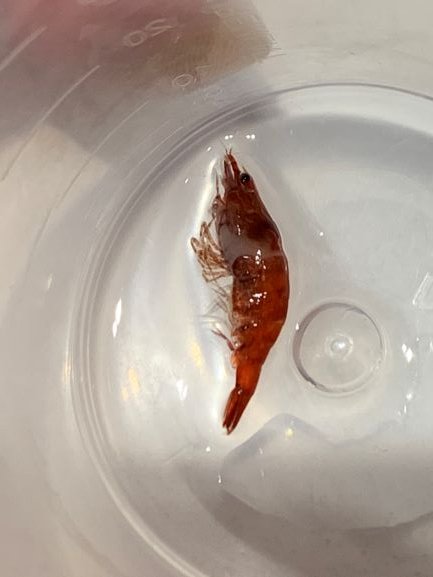
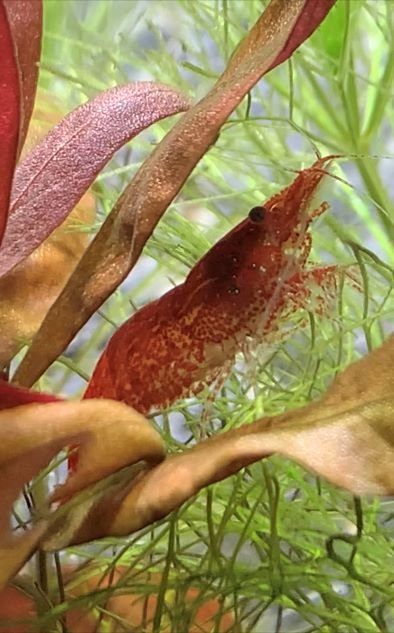
0 pointsHello, I've had 3 cherry shrimp die in the last 2 weeks and can't seem to pin point the issue. For context I had 13 cherry shrimp in a planted 10 gallon with 7 Celestial Pearl Danios. I found the first dead shrimp one afternoon, half eaten by the CPDs. Now about 4-5 months back I had witnessed my CPDs attack and kill a small male cherry shrimp. So my initial thoughts were that the CPDs had done it again, which is odd in itself as they have been fine together for many months. So a week later I found another dead cherry but this time it seemed to have died within the last hour of me spotting it and it hadn't been touched by the CPDs (it was at night, so the CPDs were sleeping). This got me thinking that perhaps, the first Shrimp had died due to something else and then picked off by the CPDs. About 5 days later to today, I found the 3rd dead shrimp again already half eaten by the CPDs, this one was a large adult female. Now on top of all this, I have also had 5 of 6 shrimplets in a hang-on breeder box die. The shrimplets were the first to go and which I think makes sense if it was something to do with the tank environment as they would've been more sensitive. I initially thought I wasn't feeding the shrimplets enough or that it was because I wasn't rinsing the baby brine shrimp I was feeding to the CPD fry. Now that the adults are dying too, i dont think it is a coincidence nor do I think its my CPDs that are the issue. My speculation is that they are having a molting issues. Now the dead shrimp I found whole had a white line across its back and a cloudy white underbelly, which I took to indicate a molting issue. The shrimplets seem to be having a molting issues too, although the 1 remaining shrimplet molted successfully, and many of the adults did too judging by the many molts scattered about the tank. However, I tested my GH and KH and got 6 and 4 respectively, which I believe is fine from what I've googled. Also I figured if there was an issue with a lack of calcium/minerals could it mean that those that successfully molted could still suffer from a weaker exoskeleton and thus be more vulnerable to the CPDs? Another possibility I thought was muscular necrosis, as the half eaten shrimp I found today had a cloudy white underbelly too and from memory the others all did (not 100% sure) but I had always thought that was just something that happens when a shrimp dies. I'll attach photos to see what you all think. I've also considered that perhaps i'm not feeding them enough/well but my previous attempts at feeding them blanched veggies have been unfruitful, they dont swarm the veggies or really touch it (i've tried sweet potato, zucchini, carrots and broccoli). They dont go crazy for the shrimp algae wafers or the hikari shrimp pellets either but I chuck it in the tank once a week just in case but I assume there's enough algae/biofilm for them. I'm thinking of getting a mineral/calcium supplement for the water but not sure if thats a good idea if my gh/kh is already fine. CPDs are all fine and healthy. Anyways here are my parameters: Ammonia - 0 Nitrite - 0 Nitrate - 0 PH - 8.0 GH - 6 KH - 4 TDS - don't know. I've seen mentions of TDS but not quite sure how important it is with cherry shrimp. Do you think I should get a TDS meter? Temp - 26C Water change - 25% once a week with dechlorinated tap water. Would love to hear some of your thoughts. Cheers! Pictures Top Left: latest death with white underside (fuzziness?) visible. Top Right: Second death with the white line across the back visible as well as a white potruding underbelly. Bottom Left: Just a picture of an alive shrimp in the tank, to see if anyone can see anything wrong. Are those brownish discoloration an issue? Bottom Right: Another live shrimp can also see a white underbelly which I thought was normal?


 0 points
 -
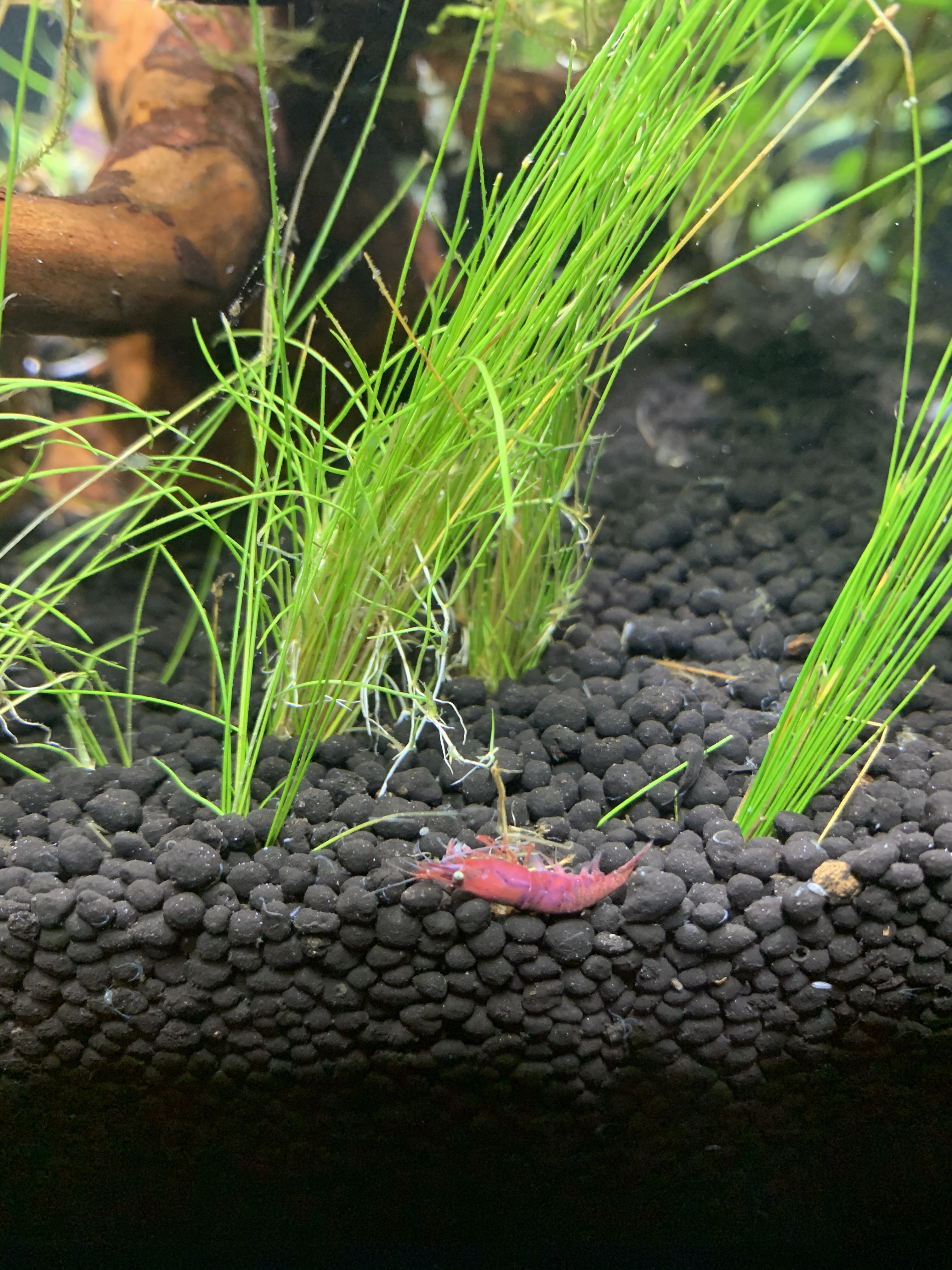
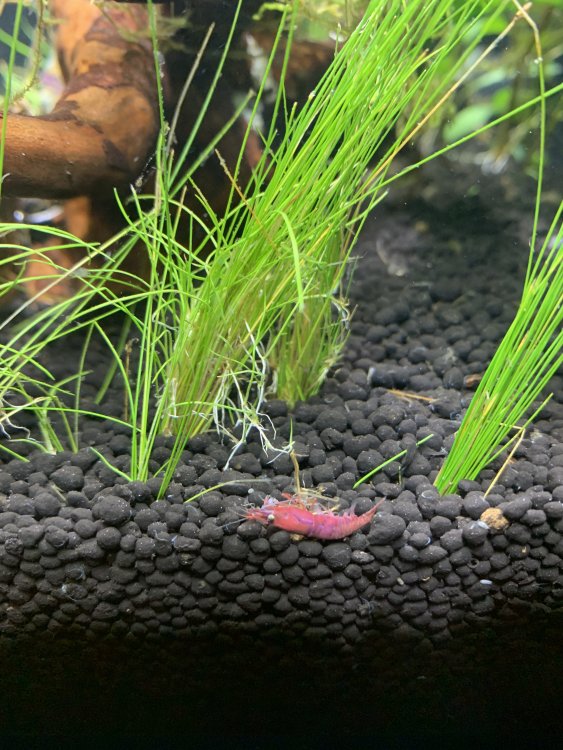
0 pointsI just got my shrimp on Thursday in the mail and they have been doing good. They are eating and pretty active. Today I noticed a dead shrimp. Is it normal? Does it look like anything was wrong? I have hard water so they shouldn’t have any molting issues.
 0 points