

Leaderboard
-

s1l3nt
Members1Points116Posts -

Dean
Members1Points2627Posts
Popular Content
Showing content with the highest reputation on 12/14/17 in Articles
-
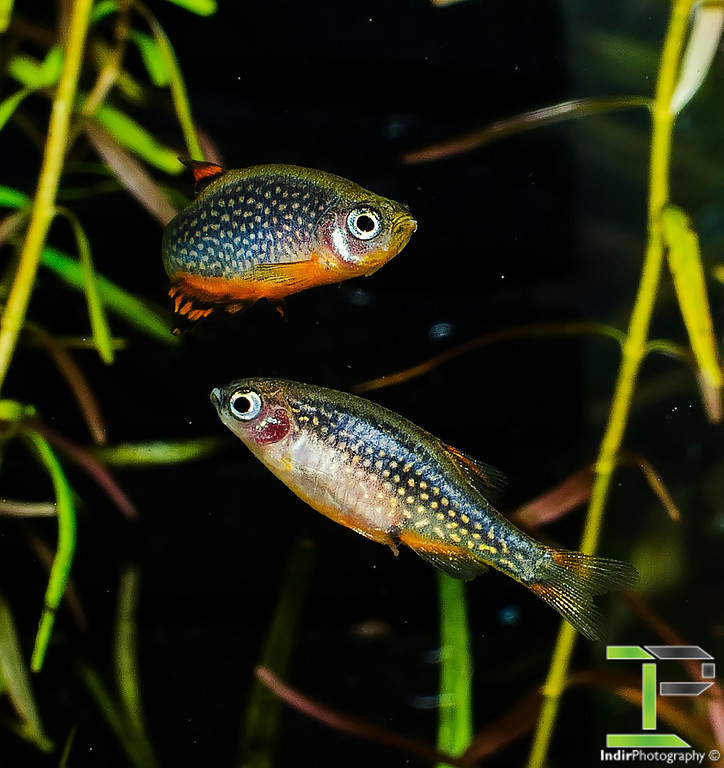 Breeding Celestial Pearl Danios (Also known as Galaxy Rasboras) Firstly I will start by saying that these are a fantastic little fish that show no aggression to any other species nor within their own species. Males will spar with each other sometimes and often display to females, no damage is ever done. They are shrimp friendly, but will take down shrimplets if they get hungry. So they can be added to a mature and established shrimp community tank to ensure maximum shrimp numbers surviving also. These fish prefer a nice planted tank with a dark substrate, this helps reduce skittishness and bring out their colour even better, it also gives refuge for fry that will pop up in the display tank! Feeding Celestial Pearl Danios will need to be fed small foods, due to their small mouth size. Though they are always excited to see live black worms (2-3 of these will make them VERY fat). Mine love grindal worms so they get this often, as well as baby brine shrimp and cyclops regularly. They will readily take dry foods of small size, I have had great success with Sera Vipagran Baby. To keep them in shape for breeding on a regular basis, I feed them twice a day with baby brine shrimp and a higher protein food like grindal worms, black worms, and so on. I find live high protein foods keep them in better shape and increase egg numbers. Sexing CPD Celestial Pearl Danios are fairly easy to sex, especially when they are of mature/breeding age. Females will have a much rounder body shape, when they are younger they will also have a taller body (older/more mature males develop this also, usually 6+ months old). Females also have a prominent black spot in front of the anal fin, the difference becomes more obvious as they mature more. Males are more slender in the body but will have much better colour in the body and fins, they develop a nice blue to purple colour to the body with nice orange fins and often the under belly too (the under belly colour can also be the case in females though, so isn’t a guarantee). In the below photos you will see the younger male has a slender body and orange under belly, as well as better colour than the female. However, as you can see in the older pair, the male has developed the deep body also and the female has a light orange hue to her under belly. The male in the second photo is a prime candidate for breeding as he is quite nicely coloured and has developed good body/fin shape and colour. Young Pair – Male on the bottom right and female on top left: Older/More Mature Pair – Male on top and female on bottom: Breeding Celestial Pearl Danios will start breeding from as young as 3 months old if fed well and have clean water throughout their short childhood. However, I find they are usually all mature by 4 months old. You will need at least one pair for breeding, however I have better experience breeding a trio as this gives females times to recover between breeding sessions as these fish are “constant” (usually daily) spawners. Spawning is induced by males, where they will hover over a specific area they like (moss, spawning mop, etc) and when a female is nearby they will begin to shake their bodies and flare their fins in hopes of attracting the female. They will do their dance and display, but the spawning comes when the male has his head pointed down and shakes, following the female behind closely. These fish will often spawn in a display tank and you will get fry popping up now and then in a well planted and mature tank. However, celestial pearl danios will readily eat their eggs and fry in my experience so this method will result in minimal fry numbers. There is another option which can work well if you have spare tanks, or enough room to rotate breeders. This method is basically using a bare tank with some java moss and keeping a trio in here for a 5 to 7 days, then moving them to another tank while the eggs hatch in the first tank. Then you keep repeating this process until you have enough fry or forever if you have the space… I have not tried this method myself, but have heard of others using this method with success. I personally don’t have the tank space for this method. The final method which has worked the best for me has been a dedicated breeding tank. In this tank all I have is a sponge filter and an acrylic yarn spawning mop (make sure it is 100% acrylic otherwise it will eventually rot in the tank). I keep a trio of my best fish in here, one male and two females. The male I use is the “older” pair from the photos above for his colour and body shape, as well as two nicely coloured and sized females. I call this the “permanent breeding factory”, because I am able to get on average 20 eggs per day with this method. To collect the eggs in the factory, I use a turkey baster purchased on eBay. I stop the sponge filter and after about 5 minutes or so when everything has settled down I slowly lift the spawning mop up and shake the mop, to make this easy I tied a long piece of yarn which comes out of the tank onto the lid for easy lifting without having to drop my arm into the tank. I then use a light on the front half of the tank, placing the light from the side helps in seeing the eggs easier as does a dark base (my tanks have black bottom panels). Using the turkey baster I suck the eggs up and collect them in a plastic cup for later use. With the eggs in the cup I then fill the cup most of the way and use an air stone on a very low bubble rate to keep circulation over the eggs to prevent fungus. Another option is to put the eggs in a fine meshed breeder box or poke some tiny holes into the cup and float it in the tank to keep fresh water circulating over the eggs. Eggs take about 3-4 days to hatch on average, and the fry will now be wrigglers which cannot really swim yet and are not ready to be fed. This wriggler stage will take about 3-5 days before they are free swimming. They will often be holding onto the side of the cup, or laying on the base. This is nothing to worry about. Once fry are free swimming they will be quite small and very thin in body thickness. You will need very small foods to have the best success, such as paramecium, spirulina powder, fry powder foods like sera micron and so on. I find that I get a MUCH better survival and growth rate when the fry are fed live foods so I only use paramecium for feeding them. The fry will need about 10-15 days before they can readily eat baby brine shrimp, I don’t bother with foods larger than paramecium until this stage mainly because micro worms and similar are a pain to keep going and requite too much maintenance. Once the fry are on baby brine shrimp, they will grow much quicker. Around the 5-6 week mark, I start introducing sera vipagran baby or similar small sized foods. I however prefer to give them live foods more than dry foods as I find the fry grow much quicker and are healthier and develop colour earlier. Fry will grow fairly quickly and at the 6 week mark will be around the 15mm mark and should be showing some slight purple/blue to the body and their golden spots should be readily visible. From this point on the fry will slow down their growth as they reach their adult size but colour will come in much quicker. By the 12 week mark the fish should be very close to looking like full grown adults, with the deep orange colour developing quickly after this point. Fish should also be reasonably easy to sex from this point on as the body shape has already developed and the colours are coming through quickly. Now I hope you enjoy the photos of the fry below, which should help you gauge age and so on of your fry! As a comparison, the first two photos are of fish the same age but the first shot is of a fry fed solely dry foods like spirulina powder and similar from hatch while the second photo is a fry fed on live foods from hatching. Young fry (most likely female) at 12 weeks old – Fed solely on dry foods from hatching. Young Female Fry at 12 weeks old – Fed on live foods, with dry food at the later stage in life Most likely a nice young female, but could be a male. Young pair of CPD, approximately 7-8 weeks old. Young female, approximately 7-8 weeks old Thank you for reading along and I hope you find the information useful, or at least enjoyed the article!1 point
 -
1 pointThese are some of the more common creatures you may find in your aquarium and a little info about them. A healthy ecosystem contains many life forms and not all creatures found in your aquarium are a problem, in fact many are a sign of a well established and healthy tank/ ecosystem. So before you go starting a chemical war with them, take the time to know what it is you are looking at and if they are actually a problem. Will cause problems for juvenile shrimp in aquariums Damsel fly nymph (Odonata Zygoptera ) Size range 15 - 40mm Damselfly Nymphs are easily recognized by their three long tail-like gills at the end of their slender bodies that grow between 16 and 33 mm. They have great vision, due to their large compound eyes. Damselfly Nymphs have extendable jaws that fold up under their head and legs close behind their head. Damselfly Nymphs are predators that feed mostly on other water insects, but they can also be cannibals. Larger species of Damselfly Nymphs can feed on small fish. They catch their food with a toothed lower lip, called a labium. When a small insect comes near, the nymph will shoot out its lower lip to grab its prey. Dragon fly nymph (Odonata Anisoptera ) Size range 20 - 50mm Dragonfly Nymphs are short and wide growing 18-49 mm long. They have six legs located near the head, wing pads, and internal gills. Dragonfly Nymphs are predators that feed mostly on other water insects, but they can also be cannibals. Larger species of Dragonfly Nymphs can feed on small fish. They catch their food with a toothed lower lip, called a labium. When a small insect comes near, the nymph will shoot out its lower lip to grab its prey. Fresh water bristle worm (Annelida Polychaeta ) Size range 1- 100mm Each Bristle worm has characteristic bristles that are found lining the exterior of their white or pink body. They typically grow between 1 and 100 mm, but have been known to grow up to 150 mm in length. Freshwater Bristle worms can be found in silt substrates and among debris or detritus in ponds, lakes, streams and rivers. They use their two tentacles to capture food or detritus floating by and transport it along cilia to the mouth. May cause problems for juvenile shrimp if in high numbers Planaria or flat worm (scientific name) Size range 0.5 - 15mm Planarians are usually between 3 to 15 mm with a triangular head that contains two eye spots. The colors vary from white, grey, brown, and black. The mouth is located on the underside of the worm halfway down towards its tail. Planarians suck up seed shrimp, clam shrimp, water fleas, and dead animals using a straw like appendage that extends from their stomaches. Planarians can regenerate many of their body parts, including their heads! Hydra (phylum Cnidaria) Size range 0.2 - 15mm Hydra has a tubular body up to 10mm long when extended, secured by a simple adhesive foot called the basal disc. At the free end of the body is a mouth opening surrounded by one to twelve thin, mobile tentacles. Each tentacle, or cnida (plural: cnidae), is clothed with highly specialized stinging cells called cnidocytes. Cnidocytes contain specialized structures called nematocysts, which look like miniature light bulbs with a coiled thread inside. At the narrow outer edge of the cnidocyte is a short trigger hair called a cnidocil. Upon contact with prey, the contents of the nematocyst are explosively discharged, firing a dart-like thread containing neurotoxins into whatever triggered the release which can paralyze the prey, especially if many hundreds of nematocysts are fired.Hydra mainly feed on small aquatic invertebrates such as Daphnia and Cyclops. Not a problem Nematodes (scientific name?) Size range 0.01 - 10mm Nematode species are very difficult to distinguish; over 28,000 have been described, of which over 16,000 are parasitic. The total number of nematode species has been estimated to be about 1 million. Unlike cnidarians and flatworms, nematodes have tubular digestive systems with openings at both ends. Nematodes are slender worms, typically less than 2.5 mm (0.10 in) long. The smallest nematodes are microscopic, while free-living species can reach as much as 5 cm (2.0 in), and some parasitic species are larger still, reaching over a meter in length. The body is often ornamented with ridges, rings, bristles, or other distinctive structures. Tubifex (tubificid annelids) Size range 10 - 50mm Tubifex worms feed on decaying organic matter, detritus, and vegetable matter, which is commonly available in sewage/stormwater drains. Tubifex worms are hermaphroditic: each individual has both male (testes) and female (ovaries) organs in the same animals. These minute reproductive organs are attached to the ventral side of the body wall in the celomic cavity. In mature specimens, the reproductive organs are clearly found on the ventral side of the body. Seed Shrimp (Ostracoda) Size range 0.2 - 30mm The body of an ostracod is encased by two valves, superficially resembling the shell of a clam. A distinction is made between the valve (hard parts) and the body with its appendages (soft parts). In most ostracods, eggs are either laid directly into the water as plankton, or are attached to vegetation or the substratum. However, in some species, the eggs are brooded inside the shell, giving them a greater degree of protection. The eggs hatch into nauplius larvae, which already have a hard shell. Daphnia (Branchiopoda Cladocera) Size range 0.2 - 5mm Daphnia are small, planktonic crustaceans, between 0.2 and 5 mm in length. Daphnia are members of the order Cladocera, and are one of the several small aquatic crustaceans commonly called water fleas because of their saltatory swimming style. They live in various aquatic environments ranging from acidic swamps to freshwater lakes, ponds, streams and rivers. Cyclops, Copepods (Maxillopoda Cyclopoida) Size range 0.5 - 5mm Cyclops or water flea is one of the most common genera of freshwater copepods, comprising over 400 species. Cyclops individuals may range from 0.5 - 5 mm long and are clearly divided into two sections. The broadly oval front section comprises the head and the first five thoracic segments. The hind part is considerably slimmer and is made up of the sixth thoracic segment and the four legless pleonic segments. Two caudal appendages project from the rear. Although they may be difficult to observe, Cyclops has 5 pairs of legs. The long first antennae, 2 in number, are used by the males for gripping the females during mating. Afterwards, the female carries the eggs in two small sacs on her body. The larvae, or nauplii, are free-swimming and unsegmented. Freshwater Limpet (scientific name) Size range 0.5 - 5mm Limpet is a common name for a number of different groups of sea snails and freshwater (aquatic gastropod molluscs). The common name is applied to those snails that have a simple shell which is broadly conical in shape, and either is not spirally coiled, or appears not to be coiled in the adult snail. In other words the shell of all limpets is shaped more or less like that of most true limpets. Rotifers (scientific name) Size range Small. Rotifers have bilateral symmetry and a variety of different shapes. The body of a rotifer is divided into a head, trunk, and foot, and is typically somewhat cylindrical. Rotifers eat particulate organic detritus, dead bacteria, algae, and protozoans. They eat particles up to 10 micrometres in size. Like crustaceans, rotifers contribute to nutrient recycling. For this reason, they are used in fish tanks to help clean the water, to prevent clouds of waste matter. Rotifers affect the species composition of algae in ecosystems through their choice in grazing. Rotifers may be in competition with cladocera and copepods for phytoplanktonic food sources. Rotifers are dioecious and reproduce sexually or parthenogenetically. They are sexually, with the females always being larger than the males. In some species, this is relatively mild, but in others the female may be up to ten times the size of the male. In parthenogenetic species, males may be present only at certain times of the year, or absent altogether. Most information collected from http://en.wikipedia.org/wiki/Main_Page Also a great poster for identifying many of the water creatures1 point