

Leaderboard
-

Madmerv
Members2Points219Posts -

ineke
HOF Member1Points9026Posts -
JacksonL
Members1Points129Posts -

BlueBolts
Members1Points5650Posts
Popular Content
Showing content with the highest reputation on 05/23/17 in Posts
-
1 point
-
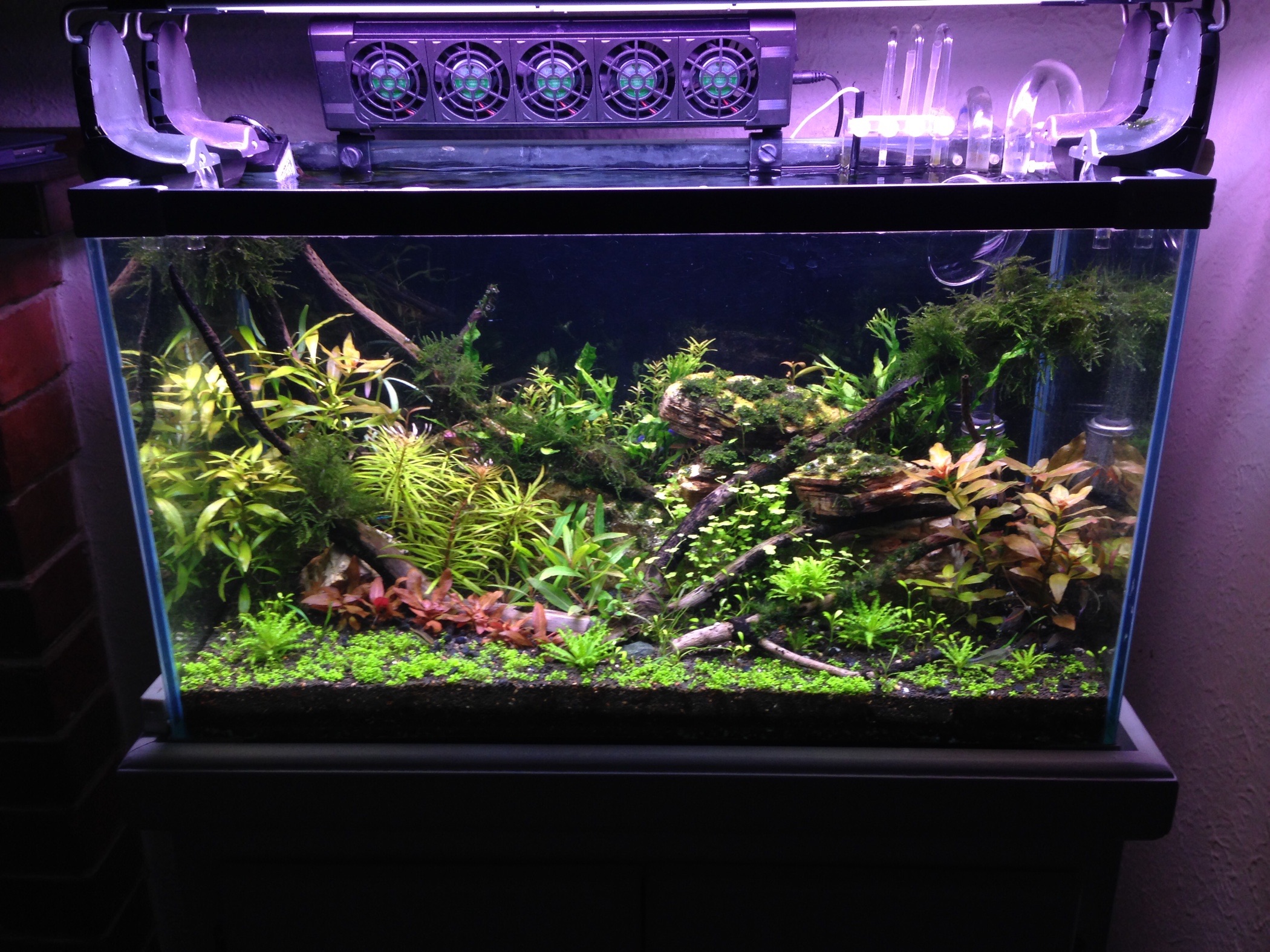
How about something like this. From my tank after it was just set up. _MG_3959 by Merv Hall, on Flickr1 point
-
1 pointI have been using the new formula since late last year in my room. Once it's cycled it's great. It does have a very strong smell I must say. I used it in 2 tanks in my lounge room and hubby kept asking what the strong smell was - it didn't matter when I only used it in the shrimp room because the door was kept closed so he didn't notice it! I take my first reading on day 3 now. The new benibachi can take a long time to cycle compared to the old one. This wasn't just 1 tank I have put the new one into 13 tanks - they were all mature tanks , I basically just replaced the substrate and put everything except the shrimp straight back into the tanks. The canisters and sponges were mature and I use about half of my old water. It's not a management issue it's definitely the new formula. I used to love the fact that with the old formula it took no longer than 3 days before I could put the shrimp back in, especially when you consider the number of shrimp I keep/ kept . I could change my whole room in a matter of 2 weeks but now I have to do a couple of tanks at a time . I don't use the bacteria products so much just Dr Tim's Pro biotics and Seachem stability - I didn't even use them before when it only took such a short time but now I like to use these 2 to help it along. I still prefer the benibachi despite the longer cycle. I have used ADA Malaysia, Elos and Fluval Stratum - they all have a long cycle time too.1 point
-
1 point
-
1 pointDean's uses Ec & I use TDS to calculate the purity of our water. There's a mix of information and reference to water quality using Ec & TDS, and I appreciate many hobbyist maybe confused to which "pen" to buy, or if they've already bought a TDS pen, regret the fact as reference is made to Ec .... Please take note of the bold words/sentences .... Total Dissolved Solids (TDS) is the best measurement of the nutrient concentration of a hydroponic solution. To estimate TDS, one can use a meter that measures the Electric Conductivity (EC) of a solution, and convert the number to TDS in parts per million (ppm). Many meters will do this conversion. Total dissolved solids (TDS) is typically expressed in parts per million (ppm). Electrical Conductivity (EC) is expressed in siemens per centimeter (s/cm) or milliseimens per centimeter(ms/cm). For convenience, EC measurements often are converted to TDS units (ppm) by the meter. The meter cannot directly measure TDS as described above, and instead uses a linear conversion factor to calculate it. The meter uses an approximate conversion factor, because the exact composition of the mix is not known. Conversion factors range from .50 to .72, *depending on the meter manufacturer, which approximates a TDS calculation from the meter’s measurement of EC. * All ppm pens actually measure the value based on EC and then convert the EC value to display the ppm value, having different conversion factors between differing manufacturers is why we have this problem communicating nutrient measurements between one another. The issue is that different ppm pen manufacturers use different conversion factors to calculate the ppm they display. All ppm (TDS, Total Dissolved Solids) pens actually measure in EC or CF and run a conversion program to display the reading in ppm's. There are three conversion factors which various manufacturers use for displaying ppm's... USA 1 ms/cm (EC 1.0 or CF 10) = 500 ppm European 1 ms/cm (EC 1.0 or CF 10) = 640 ppm Australian 1 ms/cm (EC 1.0 or CF 10) = 700 ppm For example, Hanna, Milwaukee 1 ms/cm (EC 1.0 or CF 10) = 500 ppm Eutech 1 ms/cm (EC 1.0 or CF 10) = 640 ppm Truncheon 1 ms/cm (EC 1.0 or CF 10) = 700 ppm When reporting your PPM in a thread, please give the conversion factor your meter uses. For example: 550 PPM @0.7 or give the reading in EC, which should be the same meter to meter. SUMMARY Although TDS also measure organics etc.... all TDS pens are manufactured to calculate the Ec, and uses a mathematical formula (factor of 0.5, 0.64 or 0.7) to convert the reading to TDS. So all we need to know is the pen's conversion factor. i.e. I have two pens, the 1st calculates Ec/TDS and uses a conversion factor of 0.5 (125 ppm = 250 ms), the 2nd calculates TDS ONLY and as it's manufactured in Europe, uses a coversion of 0.64 (160 ppm = 250 ms). In conclusion, there's no difference whatsoever if you have a TDS or Ec pen......just need to find the right conversion factor, and apply it.1 point