

Leaderboard
-

revolutionhope
Members2Points1179Posts -

BlueBolts
Members2Points5650Posts -

klsuth12au
Members1Points30Posts -

jc12
Members1Points385Posts
Popular Content
Showing content with the highest reputation on 05/08/17 in Posts
-
1 pointTonight I found I have a significant number of hydra resident in my yellow cherry tank. Luckily the tank is barebottom (no substrate) and the population would be no more than 100 shrimp so I can remove the shrimp and treat the tank. I was reading the recently posted article on combating hydra and it seems I have a few options available to me. I don't mind if I kill all fauna and even bacteria in the tank when I treat it. (I can add filters from other tanks if the nitrifying bacteria in the present ones are wiped out). Ideally I'd like to preserve and not inhibit the algae on the walls of the tank. So anyway I'm hoping someone can offer advice as to what route I should take in my circumstance. Many thanks in advance. [emoji173][emoji111][emoji445] will1 point
-
 1 pointI used benibachi planaria zero the one time I had hydra and they all died with only 1 treatment. I left the shrimp and plants in with no ill effects. I would treat everything you had in the tank as hydra are very good at hiding in and under plants and rocks , driftwood etc. I only ever got hydra when I introduced new plants .1 point
 -
 NoGi thanks again for the help with it. Really appreciate it you did an awesome job bud.1 point
 -
 I thought I'd add this topic to accompany Blue Bolts great thread on correct ratios and dosing of Calcium and Magnesium. http://www.shrimpkeepersforum.com/forum/showthread.php/4383-GH-Ca-MG-Ratio So why is Calcium & Magnesium important to both aquarist who keep fish and those of us who keep shrimp? CALCIUM SULFATE: CaSO4 Calcium sulfate in your aquarium will keep a more stable electrolyte balance (for osmotic function), while magnesium is another important element that works with calcium. A proper amount of Calcium and Magnesium in your aquarium will affect your shrimp or fish health positively, including fish from low pH environments such as Apistos, Discus or German Rams Magnesium and Calcium have been shown to increase resistance to degenerate diseases by lowering the acidity in the body. This will help with prevention of ich and fungus in your fish. Calcium also helps in healing and stress, and without proper calcium levels healing may be difficult or impossible. Calcium is also important and has been shown to both prevent and treat Hole in the Head disease common to cichlids (also referred to as HITH). The addition of antibiotics (such as Tetracycline) will lower calcium absorption, while the presence of correct amounts of calcium in the aquarium water will considerable reduce the toxic side effects of Malachite Green which is why a GH (for freshwater calcium measurement) of 100 ppm (for freshwater) is SO VERY important to ich treatment. Calcium can adversely affect the kH of a discus aquarium when combined with sodium carbonates or bi carbonates, which is generally kept at a pH below 6.5. Not that calcium has a direct impact on raising or lowering kH, but that it assists in buffering the water to avoid swings in kH and thus pH. I have successfully used sources of calcium in discus (low pH) aquariums by using a mix of RO (Reverse Osmosis) water and tap water (dilution will vary depending on your tap and tank water parameters). Then add electrolytes/mineralsto the RO water and add peat to the filters. This method has been used successfully with discus and calcium added with no pH climb. The peat will leach minerals into the water that will bond with the Carbonate thereby preventing it from bonding to the “H+†ion, thereby lowering KH and subsequently pH. This is a good method for planted tanks as the nutrients can also be used by plants. Calcium sulfate is soluble in water. However, it's solubility is extremely poor. Only a small amount will dissolve, and this will take place extremely slowly over time. To improve solubility, use a mortar & pestle to crush into a fine powder before adding to water. Calcium is particularly important to the average shrimp and invertebrate keeper. Calcium plays a huge role in Osmoregulation. And as such plays a big role in assisting the shrimp's moulting cycle. Ever have shrimp die during a failed moult? Check the Calcium levels in your water. MAGNESIUM Magnesium is important for proper osmotic functions in fish and invertebrates. Magnesium is essential for Calcium assimilation, so when magnesium levels are low, the calcium supply becomes exhausted. For this reason, Magnesium is better added in the proper balance with calcium (which both are essential to each other for proper utilisation). Epsom salts that contain magnesium sulfate, are best used for therapeutic reasons such as to aid in flushing the system as it aids in and speeds osmotic function, and helps to move fluids out of the body. Sulfates, one of the major components of Epsom Salt, have been shown effective in improving nutrient absorption and toxin elimination. Magnesium, the other major component of Epsom Salt, plays a role in the activity of many enzymes. Also note that Epsom salts (MgSO4) do NOT evaporate or decompose, so only add more after water changes. Where to Buy: Calcium Sulfate CaSO4 can be purchase from Aqua Green Aquotix online store (aquariumonlinestore.com.au) Ace Chem (http://www.acechem.com.au) - bulk orders Magnesium Sulfate can be purchased from Aquotix online store (aquariumonlinestore.com.au) Bunnings (Manutec Epsom Salt) Big W (Manutec Epsom Salt) Ace Chem (http://www.acechem.com.au) - bulk orders If there are more sources, let me know and I'll update the list.1 point
 -
1 pointGenetic defects tend to be avoided within shrimp forums, as we tend to ignore this issue, and just appreciate the fact that we have these shrimps, and are successful in raising them.....often the responsibility for genetic defects is neglected. Breeders should relinquish selling deformed offspring, and/or genetically weak shrimps. We should as a responsible shrimp community accept opinions and discussions of shrimp deformity, as we are often biased with our own. It may seem impossible to many shrimp keepers in Australia to cull say a Bluebolt, that have a deformity, but especially with our small gene pool. I feel this is an important aspect that we should as a responsible Shrimp community adhere to. Some common deformities... 1. Balloon Head - the head area is abnormally grown and round (half moon). (Pic 1) Note the antenna. 2. Open Skirt - the first segment of the shrimp is slimmer than usual (Pic 2) Note the antenna. 3. Hunchback - deformed body shape: comes with a kink in the middle of the shrimp (Pic 3) Pic 1 Pic 2 Pic 3 As always, please add any comments/discussions to this thread.1 point
-
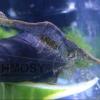 1 pointTwo points I'd like to raise. 1: Deformities don't just occur in high grade shrimp, so all shrimp keepers should be on the watch and responsible. Exhibit A from an earlier thread. Note the upturned rostrum. 2: I think deformities should be culled as early as possible. Why? Deformities can often be passed on to subsequent generations. Your deformed shrimp only has to breed once and the deformity can pop up again in its offspring. Worse, if the genetic problem is recessive, the genes can lay dormant and pop up again later, causing the deformities in generations long after you noticed the originator and culled it.1 point