

Leaderboard
-
revolutionhope
Members2Points1179Posts -

gtippitt
Members1Points24Posts -

jayc
Moderators1Points6248Posts -

Baccus
Members1Points1365Posts
Popular Content
Showing content with the highest reputation on 05/07/17 in Posts
-
Do any of you notice that your Neo's swim in circles around their tank? The colony of Neo's I bought have tripled their numbers in the past few weeks, from about 60 to 200+, with lots of new babies. Their tank is a 20 gallon long that is about 70*30*30cm. The water current in the tank is a very gentle flow from the top at one end to the bottom at the opposite end. Whenever I sit and watch them, about half are always swimming clockwise around the tank keeping next to the sides. They are semi-evenly spaced from top to bottom, with a few more at medium depth than at the top and bottom. They are also evenly spaced out in the parade, with equal numbers going left to right at the rear of the tank as there are going right to left at the front of the tank. Occasionally a single shrimp will swim a short distance in the opposite direction to the parade, but these are normally just swimming a short distance from one plant to another to graze. The half that are not on parade will be either grazing on plants, eating at the large mussel shell where I drop their pellets, or hiding away in some hiding place. The size participants in the parade also seem normally distributed from the largest to tiny babies. As the parade adds and loses members over time, they remind me of line changes during an ice hockey match. Some leave parade to eat or rest, while others join in swimming along. The larger shrimp swim faster than the babies, but they otherwise keep a fairly orderly circle going about the same speed. It's not a breeding behavior, as the the parade consists of males and females with eggs at varying degrees of development. If anyone has noticed their shrimp swimming like this, I would love to hear about it. Especially since many of you are in the southern hemisphere, I wondered if they swim the other direction perhaps. I live in the US. I've watched and my shrimp always go clockwise whether the weather is a clear day with high atmospheric pressure or raining with low pressure.1 point
-
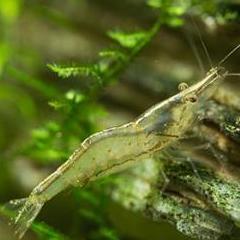 Planorbidae make up a significant portion of aquaitic pulmonate gastropods. In Australia alone, there are over 20 species group taxa that have been described. Their common name, ramshorn snails, comes from the spiral shape of their shells, which looks like a ram’s horn. Ramshorn snails come in a wide range of colours, including red, brown and black, and they can even be shimmery and translucent in colour. Because of the unique design on their shells and their colour, they can be a welcomed addition to an aquarium, offering vibrant colour and interest. However, oftentimes, these snails inadvertently appear in aquariums, hitchhiking on the live plants and/or accessories that have been transferred from one tank to another. If there is enough food available, these snails can quickly breed and take over an aquarium; but, if they are properly maintained, they can be a welcomed addition, even if their presence was not intended. These snails eat food that is leftover in the water, dead plant material and algae, and as such, they can help to maintain the health and appearance of an aquarium. Maintaining Ramshorn Snails Whether you are interested in adding ramshorn snails to your aquarium or they have taken up residence unexpectedly and you decide that you want to keep them, it’s important to understand how to properly maintain them, which fortunately, is easy to do. They do well in aquariums of various sizes. They are also very adaptable, which means that they can do well in various types of water conditions, though they prefer water that is filtered. Additionally, they do best in tanks that do not undergo sudden changes in their condition. These snails consume algae and food remnants from fish, but they prefer to eat dying and dead plant matter that is shed from live plants. They will also eat dead fish, shrimp or other snails. Things to Avoid If you are interested in maintaining Ramshorn snails in your aquarium, you should be aware that there are species of fish that will eat them. The most common predators of Ramshorn snails include bettas, loaches and dwarf puffer fish. Assassin snails will also prey on these snails. Live Plants Some people claim that Ramshorn snails destroy their live plants, while others have reported they do not cause any issues. However, in most cases, they do very little damage to live plants, but if a large amount of them are present and there are delicate plants in the aquarium, such as Water Sprite and Cabomba, they can do damage. Behaviour Ramshorn snails are peaceful and non-aggressive. They will not cause issues with fish, shrimp or other types of snails in an aquarium. They spend their time moving about the tank eating and adding interesting colour, texture and dimension to an aquarium. References Arctos. (n.d.). Retrieved May 7, 2017, from http://arctos.database.museum/name/Planorbidae Brown, D. S. (2001). Freshwater snails of the genus Gyraulus (Planorbidae) in Australia: taxa of the mainland. Molluscan Research, 21(1), 17-107. doi:10.1080/13235818.2001.10673736 Image credit - @Paul Minett View full article1 point
 -
I wonder if the shrimp would "settle" more if they had more thick plant cover like java moss or even some long eloda or similar tall growing bushy plant. I don't know if you hold with lay lines but scientists have discovered that cows grazing will almost always face in the one direction (north- south) and if they are near high energy power lines which interfere with magnetic fields the cows will be more hickilde-picklede (in other words all over the place). People have also noticed health issues and strange behaviours in fish that had a lot of electrical currents near their tanks, possibly caused by electrical wires that are hidden in the walls. So I wonder if something similar is happening with your shrimp, some sort of electrical/ magnetic field that is disturbing the shrimp.1 point
-
You have well trained shrimp there. Can't say I have seen shrimp in my tank do that.1 point
-
 1 pointThanks. Hi i keep pintos, TB, OEBT , steel blues and YKK. I'll post pics when I get time, new job and reading posts on here filling my time at minute. anyway great forum1 point
 -
Hi all, thought i'd post a quick description of my experience with the fluval q2 "quiet pump" the pumps have 2 outputs and a great flow-rate for the price, i bought one of these and it was extremely quiet - i was very impressed, a few weeks later i got another one, fantastic! a few weeks later again and the older one had started vibrating and rattling, shortly after then so did the second quiet pump. I read up about it and saw someone mention something in another forum about how they discovered a loose screw inside the pump, i intended to take mine apart and look for said "loose screw" but didn't get around to it yet and have just put up with the noise. anyway i have since discovered 2 of the main screws on the bottom that hold the unit together had fallen out completely on one of them, and 1 screw has also fallen out on the other unit. im quite disappointed - i haven't gotten around to trying to fix the units yet and i'm optimistic that i can figure out how to "shut them up" but i'm still not happy that they have failed to meet expectations 1-2 months after purchase ! BY COMPARISON - my older schego m2k3 and WS series pump are incredible - soooo so quiet still, @ineke (and others) had recommended the schego brand in a thread here and i'm glad i followed their advice initially before i took my chance on the fluval pumps - i will stick with schego in future - well worth the extra cost for the low-noise and the quality! love n peace will1 point
-
 1 pointAt the request of a member here, I'm posting how I set up my air supply for my fish/shrimp room. I run a 55LPM Kamir air pump. From that I used the rubber elbow hose supplied with the pump to attach to a 19mm barb irrigation piece, then into 20mm PVC pipe. I placed a T piece above this to create a loop using the 20mm PVC pipe, with a PVC elbow in each corner of the room. Running the pipe in a loop ensures pressure is equal in all areas of the pipe. note that the pump is on a shelf up high, higher than the water level in the majority of my tanks. This prevents back siphoning when the power goes out, and I've seen a few air pumps filled with water when this precaution hasn't been taken. Don't trust oneway valves either, seen too many fail to ever trust one. From the 20mm pipe, I used 4mm threaded irrigation taps so I could connect standard airlines. Note I used threaded, not barbed, taps. The reason is that the threaded taps can be installed easily with no leaks, simply use a 3 to 3.5mm drill bit (test it on a scrap piece of PVC pipe first) to drill holes into the PVC pipe, then simply screw the taps in. The PVC is soft enough for the taps to screw in and forms a tight seal. I grouped my outlets because I have racks and need to have the outlets at either end of the racks for easy access. I used hooks and cable ties to hold the pipe close to the roof because I wanted it to be easy to dismantle.1 point