
Leaderboard
-
NoGi
HOF Member5Points5858Posts -

jayc
Moderators4Points6248Posts -
travellife
Members2Points36Posts -

Madmerv
Members2Points219Posts
Popular Content
Showing content with the highest reputation on 12/05/16 in Posts
-
Congratulations to @Madmerv for the following entry: Get in touch with @newbreed for your prize. Thanks to all that entered.3 points
-
Wow. I'm stoked as i normally dont win things (well i normally dont enter things) and there was some stiff competition. Thank you.2 points
-
 1 pointSKF Aquatics (Shrimp Keepers Forum) welcomes Ann. Please feel free to browse around and get to know others. If you have any questions please don't hesitate to ask. View Member regards, skfadmin1 point
 -
 1 point
 -
LOL no, just the one pen, it's the box lid. ?1 point
-
 Wow thats so cool, @NoGi Thank you for appreciating my hard work and hours of design. So much great stuff there, Looks like maybe a ph meter hiding behind the tds pen, Awesome, My shrimp and I are very greatful. Ive never tried any of those products so Im very excited, Have a Merry Christmas everyone. Ill be signing up as a supporting member soon, When I do I'll better explain those builds and upload the rest of the build pics, Just like me cutting and drilling glass and stuff like that, The making of my sump and everything else with full instructions and "Do's and don'ts" Or Ill start new "How to" for it in DIY. Thanks again.1 point
 -
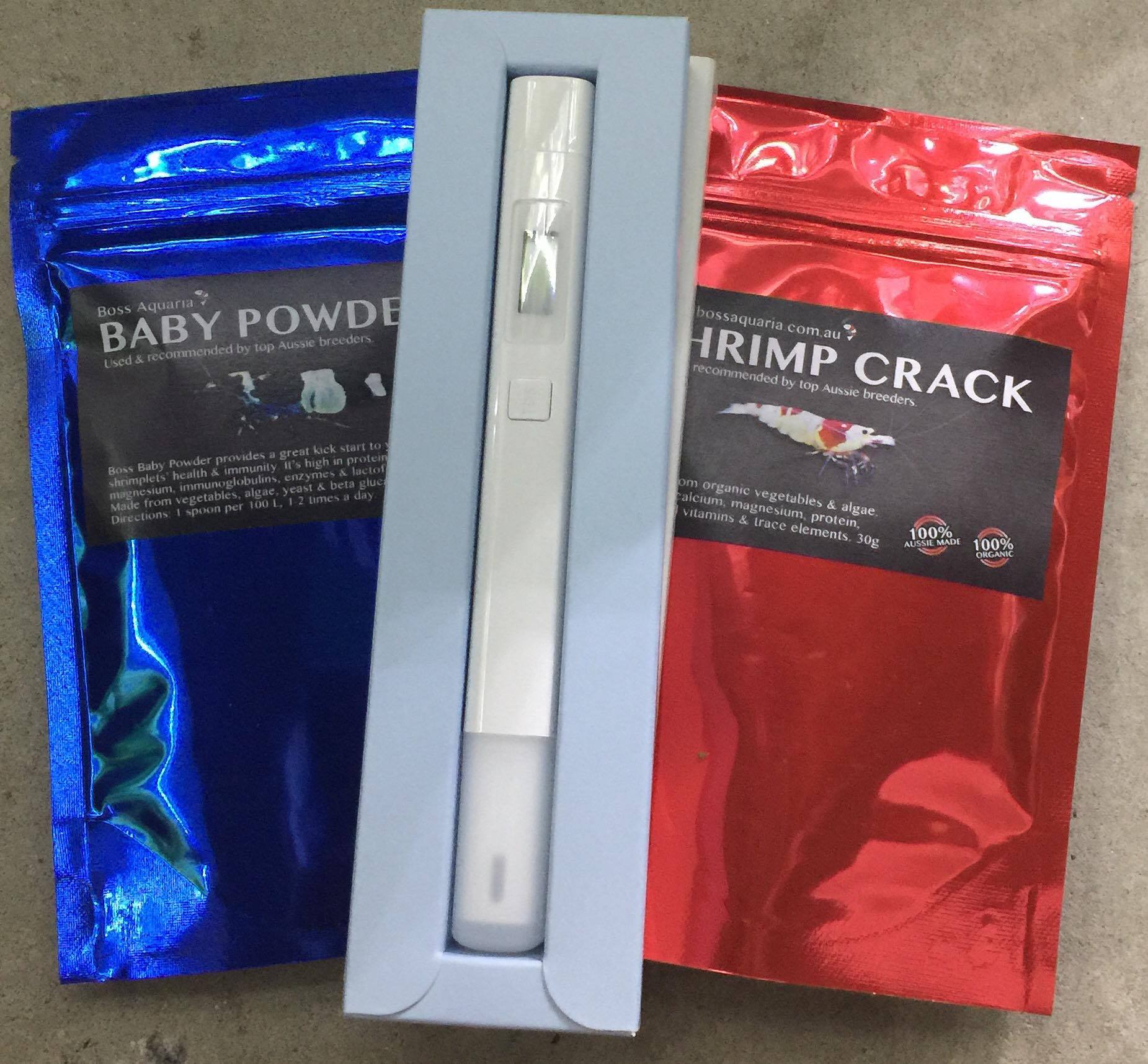
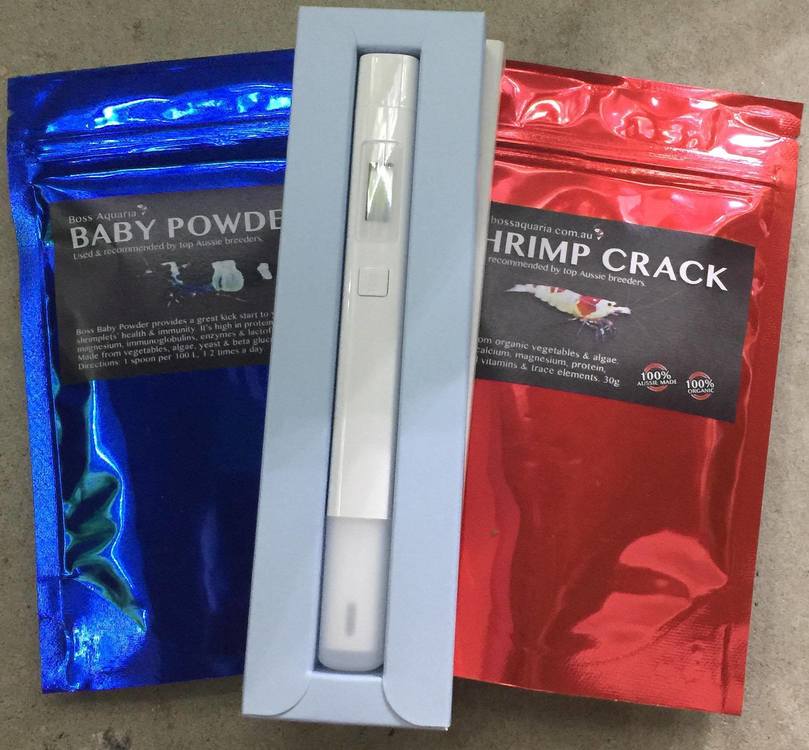
Being the season to be jolly and in conjunction with our gracious competition sponsor @newbreed, we have decided to award one more winner. @Zebra takes this honour for his guidance and input into the winning build from @Madmerv as well as his own awesome design and build: Congrats mate, Newbreed Aquatics has generously donated the following pack for you: Shrimp Crack Baby powder & Xiaomi TDS Pen For everyone else, a timely reminder to support our sponsors as they do a fair bit for the forum behind the scenes.
 1 point
 -
 1 point
 -
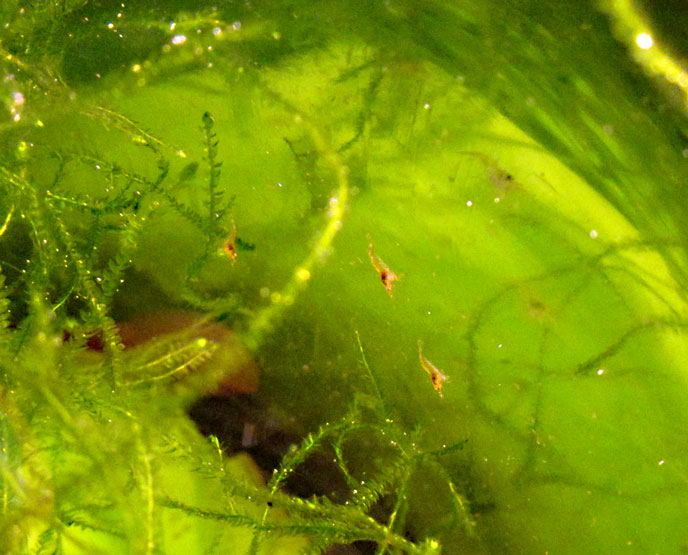
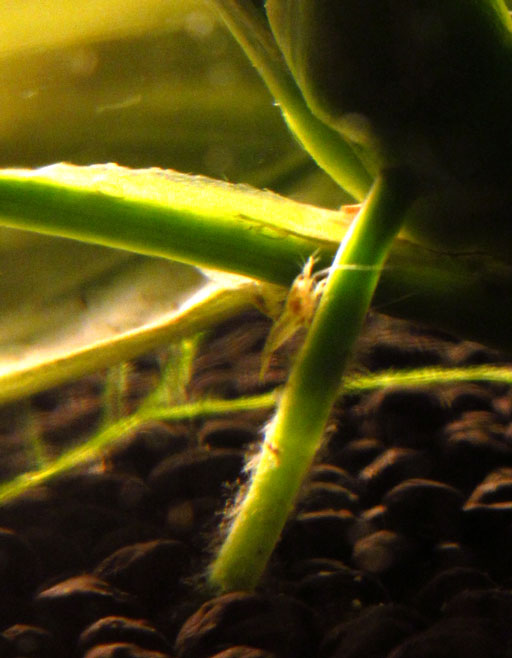
1 pointThanks Jarad. The babies are a treat to watch, they travel in packs up and down the water column grazing on the java moss. Very cool, I think I'm hooked!1 point
-
You'll be even more stoked when you get those prizes. The Benibachi soil is great. The different variety of foods will ensure your shrimps are getting the best foods. And that Xiaomi TDS meter looks very slick. If you don't already have a TDS meter, this will come in very handy.1 point
-
1 point
-
Thank you for your guidance with the BGA, I'm sure glad I didn't add those leaves to the shrimp vase. I'll remove the BGA covered leaves from my Betta's tank. I just started getting a patch of it on the gravel in my 3-1/2 year old Fluval Spec V aquarium. I need to read up on what causes it to grow, I've never encountered it before. Thinking it could be light related cause. I just supplemented the stock light in the Fluval with a Chihiros Series A LED, very bright even on low settings. I have a small pinpoint LED light directed at the Wisteria in the betta's tank. I don't see the molting anymore today and I notice the babies congregated on the substrate grazing. They sure get around, up and down in the vase, kinda cute they way they move in packs. The shrimp glass vase is pretty thick, 1/4", makes it hard to shoot thru with a handheld point and shoot so please excuse the fuzzy photos.
 1 point
 -
 1 point
 -
Yeah, would love to see a picture of what you are attempting.1 point
-
1 pointpH Pens MUST be stored wet with the storage solution. Never let it dry out. That is why you are calibrating so often. Here are some guidelines taken from Hanna Instruments: Guidelines for pH Electrode Maintenance and Use The life of a pH electrode is not infinite. A number of factors can affect the life span of a pH electrode. The higher the temperature that the electrode is used at, the more extreme the pH, how often the bulb dries out and needs to be rehydrated, how roughly it is used; all these factors and more will shorten the life span of a pH electrode. An electrode that is well maintained and cared for can last many years, one that is not well maintained will last anywhere from just a couple of months to 1-2 years. Following the guidelines outlines below will help to get the most from a pH electrode. 1. Hydration of the glass bulb A very thin layer of water forms on the pH glass sensor. This layer is known as the hydrated layer. A pH electrode is an electrochemical sensor that generates a voltage that is read by a voltmeter. A probe that has a hydrated layer will generate a different voltage in a pH buffer than one that doesn’t. So calibrating a dry electrode will cause inaccurate readings when taking measurements as the hydration layer is formed. A dry probe needs to be hydrated before calibration. The hydrated layer takes 3-4 hours to form when a probe is placed into storage solution. 2. Hydration of the junction Every combination pH electrode has a junction. A junction is a barrier between the internal reference wire and the sample that is measured. The reference cell has a salt solution that leaks through the junction as part of the electrical circuit. If a probe is dry the salt will precipitate in the junction causing to be clogged. The pH readings will be erratic. A dry probe needs to have the junction hydrated to work properly. 3. Fill Solution Level for Refillable pH Electrodes pH electrodes that are refillable need to have their electrolyte (salt) level checked. The probe should be filled when the level falls below ½” from the fill hole opening. Having enough fill solution ensures that, for a single junction electrode, the reference wire is in solution. A proper level also allows for adequate head pressure to force electrolyte through the junction. 4. Remove/Loosen Reference Fill Cap When in Use In order to create head pressure the fill cap must be loosened or removed from the top of the electrode. Removing/loosening the reference fill cap allows for air to enter into the reference cell. The solution within the probe will want to flow through the junction resulting in increased stability when taking a reading. Note: Single junction and double junction electrodes use different fill solutions. An explanation of the difference can be found here (hyperlink to single junction versus double junction page). 5. Calibration Buffers Fresh calibration solution should be used when calibrating a pH electrode. All pH measurements are based on the pH calibration solution as a reference point. The pH calibration buffer is a water-based solution that will change over time. This is especially true with pH 10.01 buffer that will actually decrease in pH as atmospheric carbon dioxide enters the solution. Bottles of buffer should be replaced after they have been opened for 6 months. Never pour calibration buffer back into the bottle. 6. Calibration of the pH Electrode The pH electrode should be rinsed in purified water (RO, DI, or distilled) before placing in any pH calibration buffer. This will reduce the chance of contaminating the buffer. A best practice would be to use two beakers/containers for each calibration buffer. The process would be to rinse the pH electrode with purified water then rinse the probe in one of the beakers with the buffer then place the probe in the second beaker with buffer. This procedure would be repeated for multiple calibration points. For two point calibration the pH buffers used should bracket the expected pH reading. For example I expect a pH 5 reading then the pH electrode should be calibrated in pH 7 and pH 4 buffers. 7. Cleaning a pH Electrode The pH electrode should be cleaned periodically. A coating will form on the glass bulb that will cause errors in measurements and drifting/erratic readings. A typical cleaning procedure is to place the electrode in a cleaning solution for 15 minutes. After that the probe is rinsed with purified water and then placed in storage solution for at least 2-3 hours before using. It is important to note that there are many different types of cleaning solutions available based on the application. Solutions include ones for proteins, inorganics, food and wine stains to name just a few. 8. Storage of the pH electrode The pH electrode bulb and junction needs to be kept hydrated. With benchtop meters a small amount of storage solution is placed in a beaker. With the probe lowered into the beaker the junction should be covered. For portable meters a small amount of storage solution is placed in the protective cap and the cap placed on the probe. NEVER STORE THE pH ELECTRODE IN PURIFIED WATER Storing the pH electrode in purified water (RO, DI, or distilled) will shorten the life of your pH electrode. The reference cell has a high salt solution. Placing the probe in purified water will cause the salt to diffuse out and the water to go in. Storage solution is not only formulated to maintain the reference salt concentration but also has chemicals to keep bacteria and fungus from growing. If storage solution is not available then use pH 4 buffer. 9. Tips Salt crystals around the fill cap of a refillable pH electrode or by the protective cap placed over the bulb are normal to see. Just rinse with water to remove the salt build up. Any air bubbles in the pH bulb or by the junction need to be removed. Gently shake the pH electrode like a spirit filled thermometer to displace the air bubble. Never wipe the pH electrode with a cloth or any other type of material. Any static formed will harm the electrode. Do not expose to high temperatures (>150 oF/65 oC) unless the probe is designed for it. Always rinse the probe with purified water to clean of contaminants before, during and after use. Calibrate frequently. Some guidelines to follow: Periodic user (1-2 times per month) – calibrate the day of use Weekly user (1-2 times per week) – calibrate the day of use Daily user (1-2 times per day) – calibrate the day of use Daily user (>2 times per day) – calibrate every 4-6 hours1 point