
Leaderboard
-
fishmosy
Members5Points4594Posts -

Zebra
Members1Points294Posts -
NoGi
HOF Member1Points5858Posts -
jc12
Members1Points385Posts
Popular Content
Showing content with the highest reputation on 11/29/16 in Posts
-
 1 pointSqueeze some gunk from the filter media from the community team into the shrimp tank that is cycling.1 point
 -
1 pointHow often the chiller comes on would depend on a few other factors e.g. ambient temperature would play an important role i.e. if the chiller is located in an open area vs. a semi closed environment like a cabinet. In an open environment, hot air can be effective exhausted away and fresh cool air is drawn in whereas in a semi closed environment, the warm air would be re-circulated through the unit thus not very effective at cooling and would either kick in for a longer time or kick in more frequently. Also, there should be a mesh screen at the air intake side of the chiller. Make sure you clean it out often so it is not clogged. This should also help with drawing in fresh cool air. Resun kicks in at 2 degrees while Hailea kicks in at 1 degree so go for a Hailea chiller if you really want to keep the temperature difference to a minimal.1 point
-
Nice write up @fishmosy Also eucalypts or as they are known over seas "water guzzling aliens" have a very strong capillary action in their wood, so strong it actually draws trace amounts of metals even gold from the ground up into the wood and leaves. There's a nice Ficus Pumila (creeping fig) growing up the light frame now and the leaves from it dry and fall into the tank naturally now, I was going to take them out to start cause I've read they are poisonous to pets but the shrimp eat them like crazy so. The eucalypt and banksia leaves are just for smaller organisms to feed on creating biofilm etc and a more natural look, the Bankia leaves last a long time too which is good. I don't think there's really any eacayptus leaves in the tank anymore but the wood is still eucalypt. I used eucalypts to start only for their anti bacterial properties, especially with my zebras, but yeah all this has just been my theories haha they are not my favourite leaf from my trials though. I like cherry guava leaves best for shrimp and their look. :) Built a diy light for the top tank out of spare glass and recycled LED strips :) And got the sump I'm going to use installed under the whole thing, I'm going to start a photobucket account or something so I can post links to all these build pics :) it's looking pretty dope now, getting a little bit out of hand though haha still haven the gotten a refund or replacement for those mesh shrimp guards so it's a little bit ghetto ATM Just cutting and glueing the glass for the sump baffles now.1 point
-
Yes eucalyptus leaves contain little oil 'glands' that are used by the tree to stop their leaves being eaten by herbivores such as insects. The oil in these glands is not reabsorbed by the tree when the leaf dies or senesces, so the oils are still there when the leaf drops to the ground and/or into water. This is why when you crush a dry eucalypt leaf, it still smells like a eucalpyt leaf. Our research indicates that shrimp (Paratya) do not eat the eucalpyt leaves, and this is most likely because of the chemicals in the leaves. When we made a chemical extract of the eucalpyt leaves and coated it onto a spinach leaf, the shrimp did not eat the treated spinach, but ate the control spinach that didnt have the extract. Other studies that have tested if eucalyptus leaves are eaten by other shrimp in South America where eucalypts have been introduced have also found they do not eat the eucalypt leaves. Interestingly some aquatic insect larvae in Australia have evolved methods of using the leaves without rupturing the oil glands. They basically eat around the glands. The reason why the herbivores (ie. Insects) avoid eating leaves that are protected by chemicals is because it reduces their performance. For example, it might slow down their growth, make them produce less young or even cause them to be infertile. So it makes sense for them to eat something else, even if that something else is less nutritious. Now this is important when it comes to thinking about what happens when aquatic organisms eat the leaves that fall from trees growing along the edge of waterways, aka riparian vegetation. Firstly the chemicals generally arent re-absorbed by the tree, they remain in the leaves when they die. Secondly, those chemicals are likely to do the same thing to shrimp and aquatic insects that eat the leaves as what they do to terrestrial insects that try to eat the leaf when it is alive. Hence it is not a good idea to use any leaf from a tree that produces a strong chemical defence to feed your shrimp. There are many alternatives which have been tested and are known to be safe in aquariums. You'll notice that most of these leaves come from trees that do not produce chemicals to deter herbivores as their primary defence, instead relying on other primary defences such as little hairs (think stinging nettle) or other methods of outwitting herbivores, such as fast growth and quick maturity and flowering (think spinach). Mulberry leaves are a favourite of mine, and I highly recommend them. My understanding is that the oils produced by eucalypts can kill bacteria in some situations, but I'm not aware of any information regarding if or how this may occur in aquariums. I suggest always play it safe, and if in doubt, leave it out. @Zebra I'm interested to know what the Banksia leaves are like. I would have thought they were very tough, so not really suited for shrimp.1 point
-
 Looks great@Zebra - I'm closely following your native zeb progress and cheering you on at every step! :-) Please do keep the updates coming.. Can i ask what you know about using eucalyptus leaf litter or wood? I seem to remember@fishmosy saying one of his students did a trial involving eucalyptus leaves and shrimp and found that they didn't eat them but I'm a bit vague about it. Is it possible eucalyptus could have a negative effect on the nitrifying bacteria or other beneficials also? (Not a scientist just a random thought!) [emoji111] [emoji173] Will1 point
 -
Unfortunately their price does not reflect the difficulty in keeping them. good luck with them.1 point
-
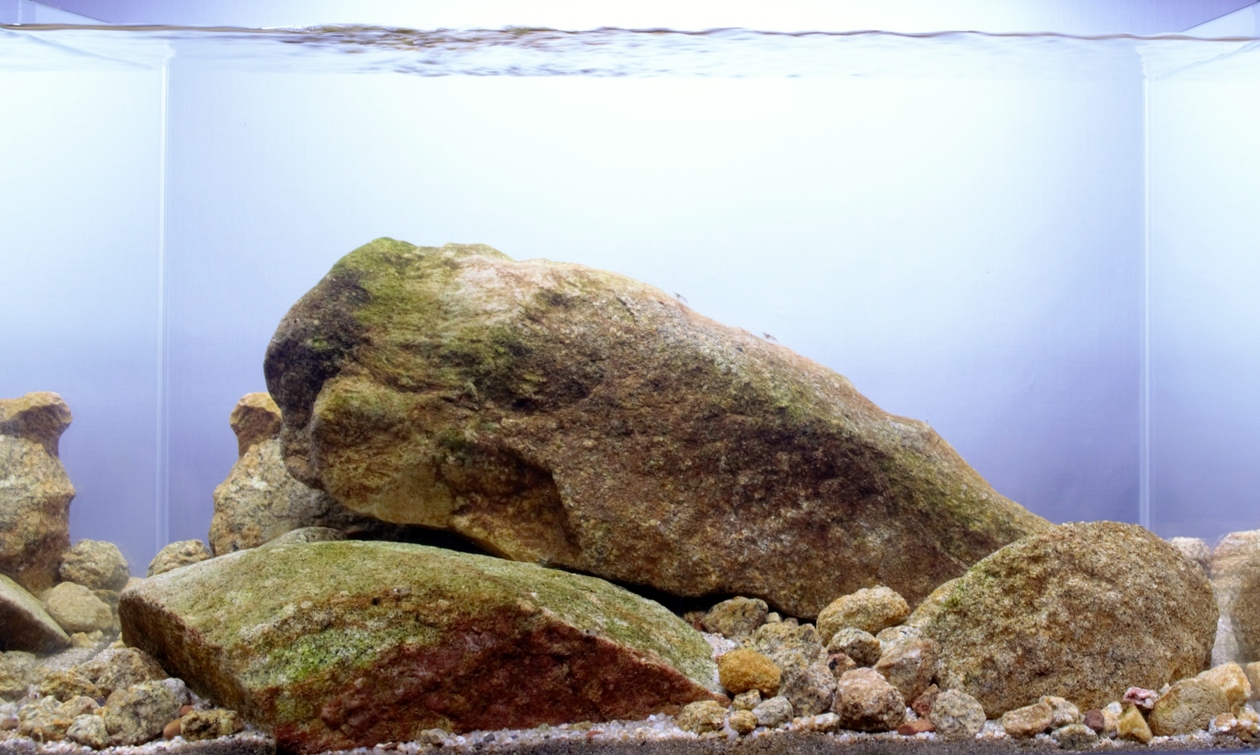
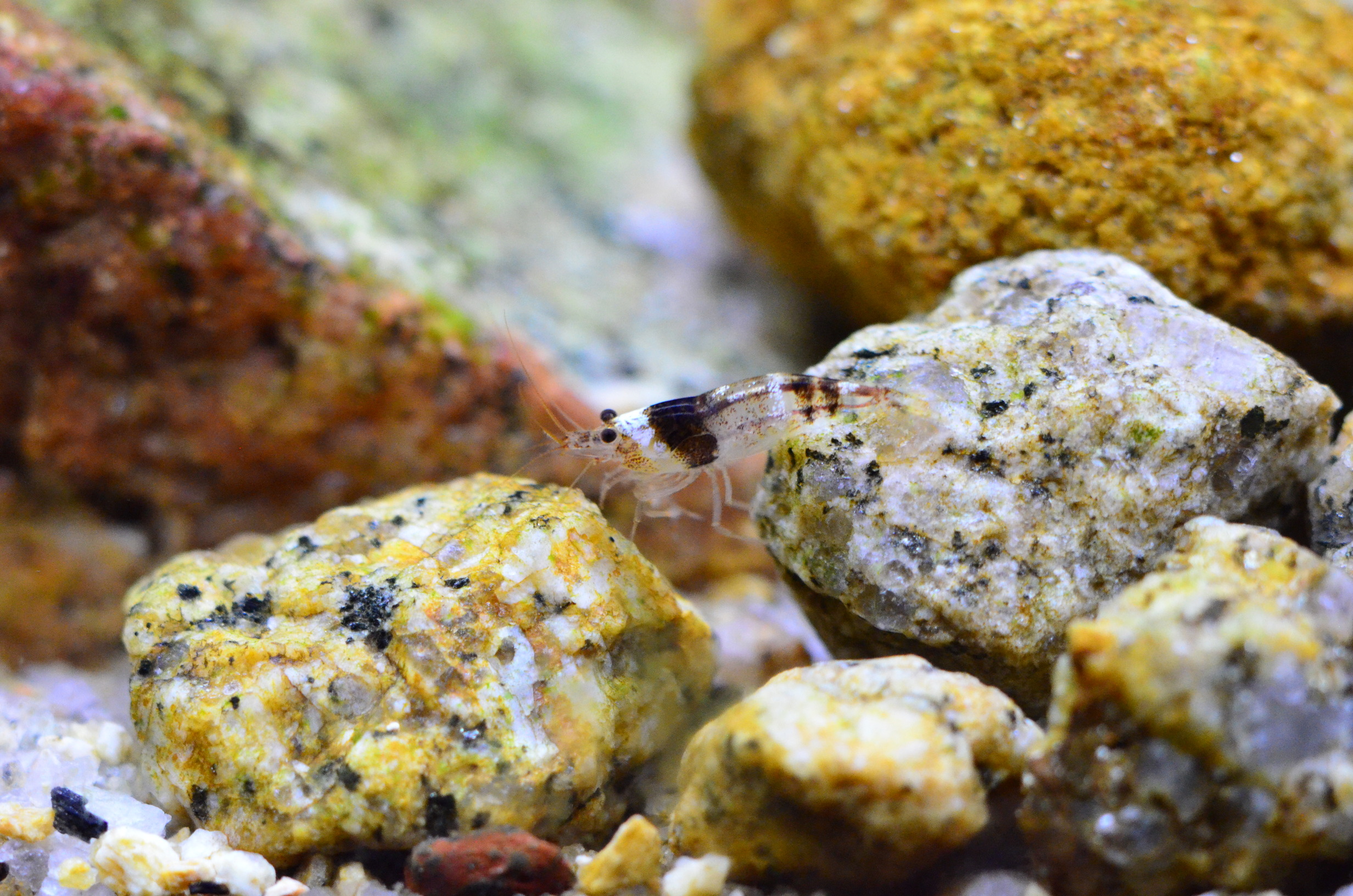
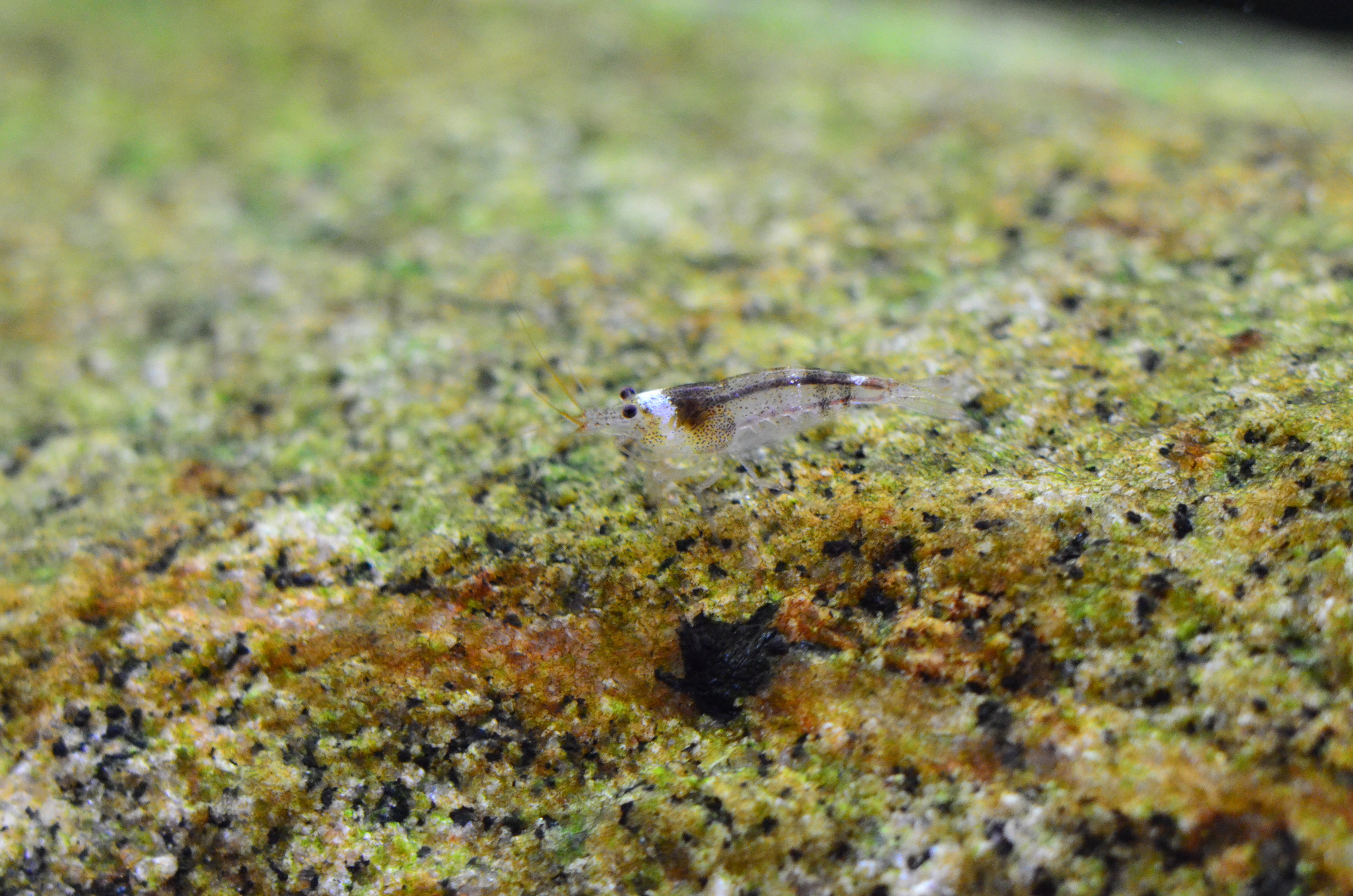
The above are photos from early September. The colony is currently doing well. I haven't seen any deaths since I started the tank, not to say they haven't been occurring though, but certainly no large die offs. The juvies in the above pics are getting close to adult size now. I'm currently playing around with protein levels in order to get some more berried females as I've only been feeding fairly low protein foods for the past month or two. I've tried feeding frozen spirulina brineshrimp and saw a moult but no eggs. I'm reluctant to try bloodworm until I get the TDS a bit lower (its currently 25) as I want the shrimp in the best of health before I introduce something that could spike the bacteria count and/or nitrogen levels in the tank. One or two feedings of bloodworm over two weeks has been enough to kickstart breeding in my CRS and Bloody Mary colonies so I'm hoping the same will happen with the zebs.1 point
-
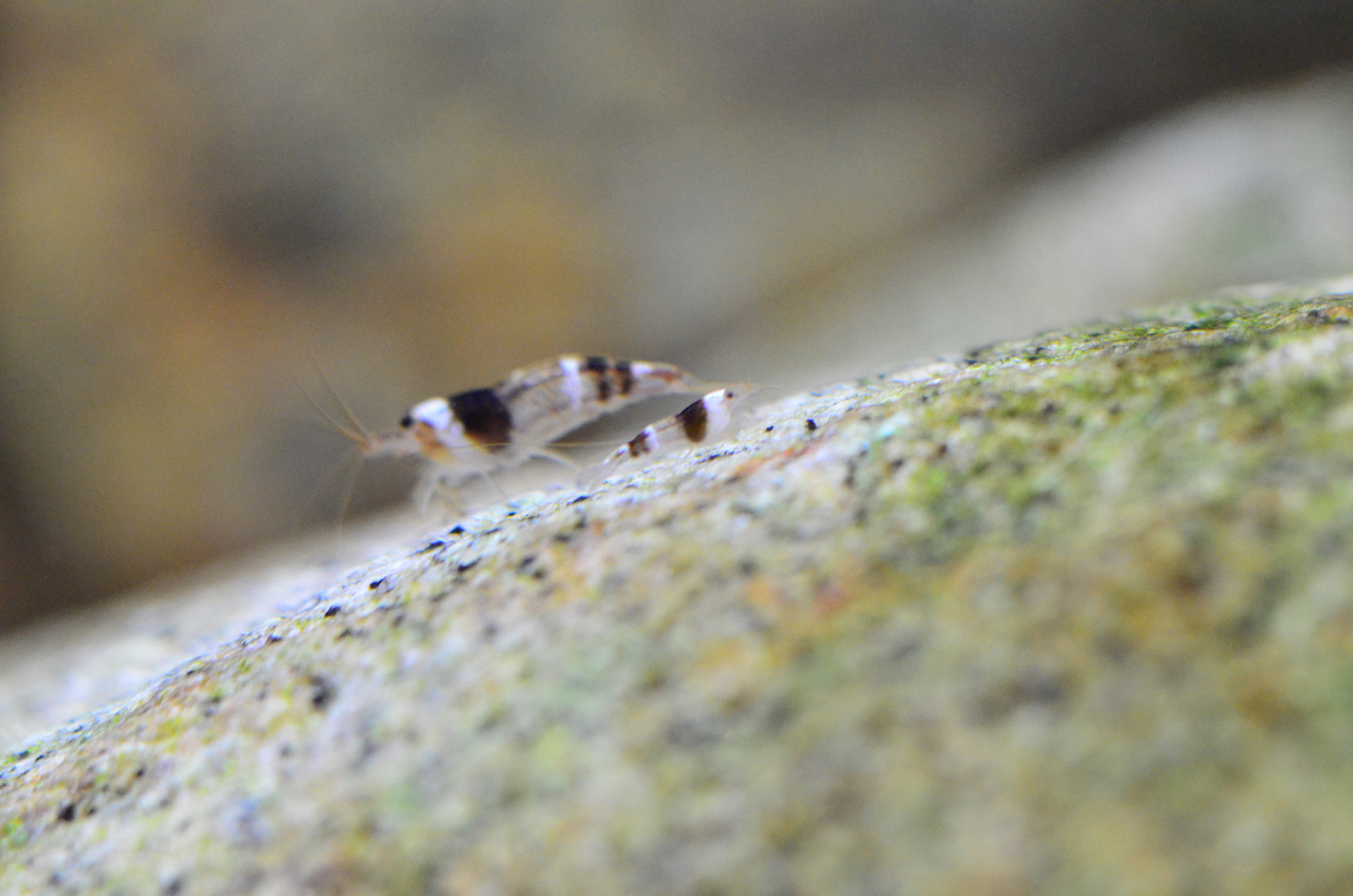
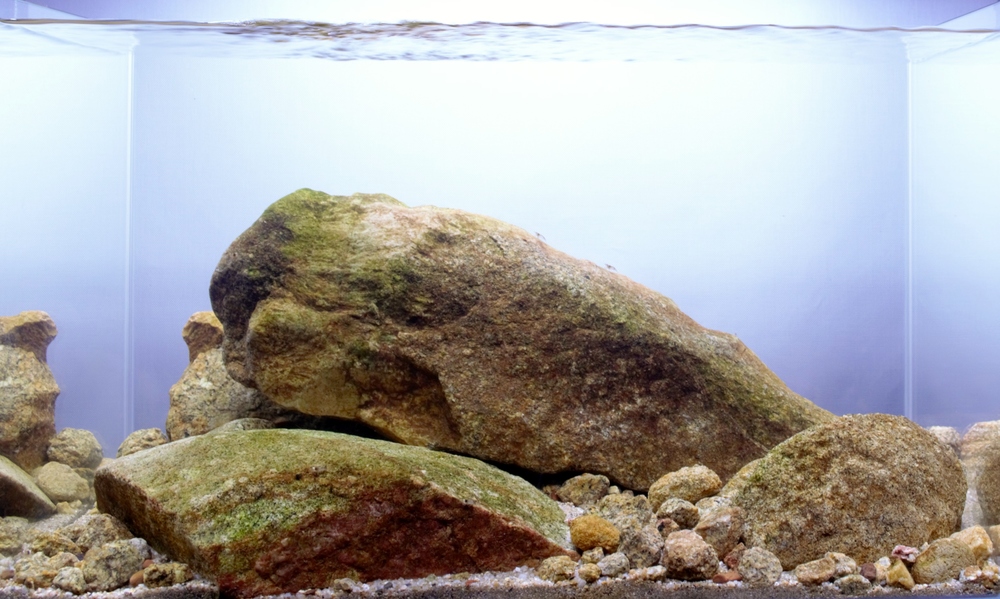
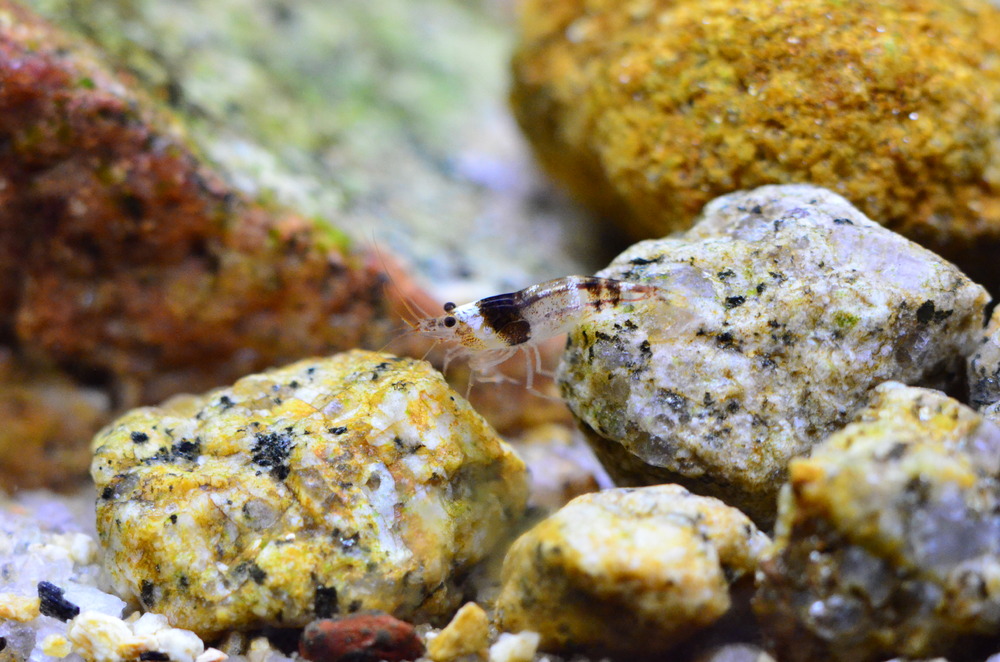
Here is a coupe of shots that didn't make the final cut
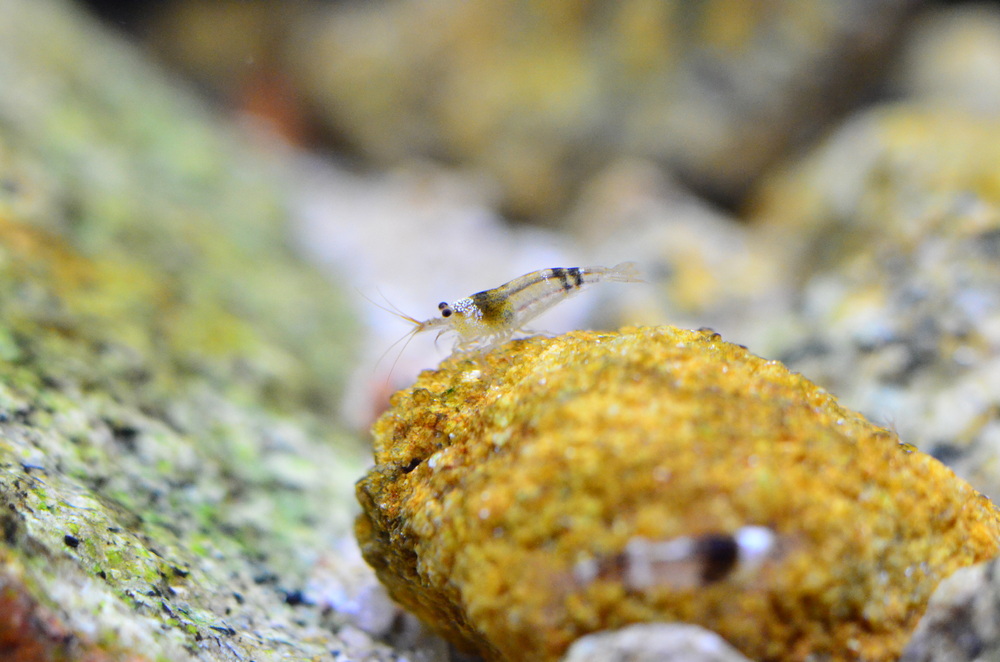
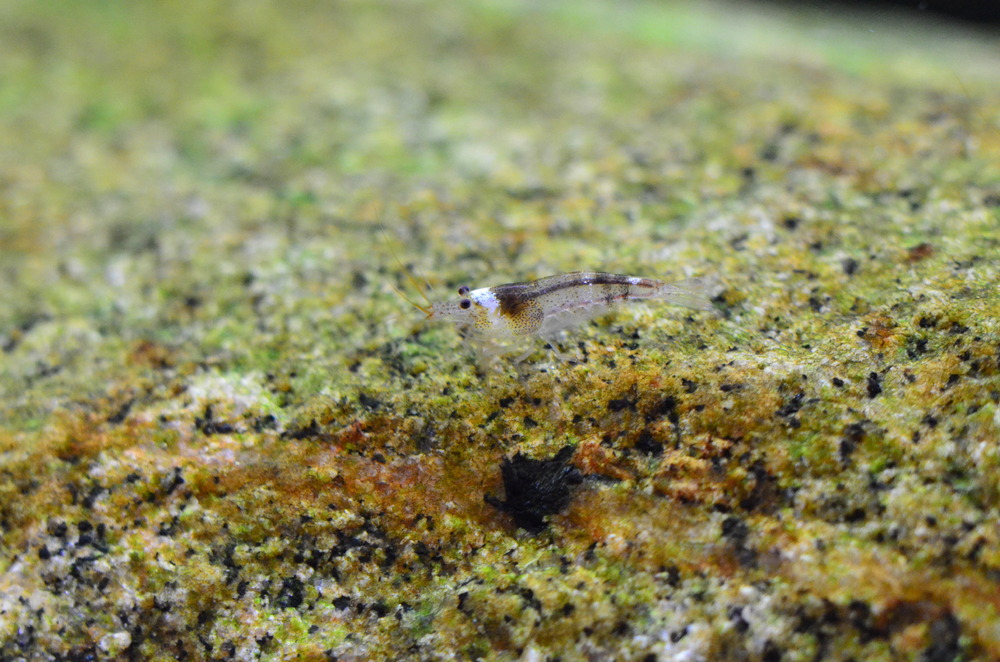
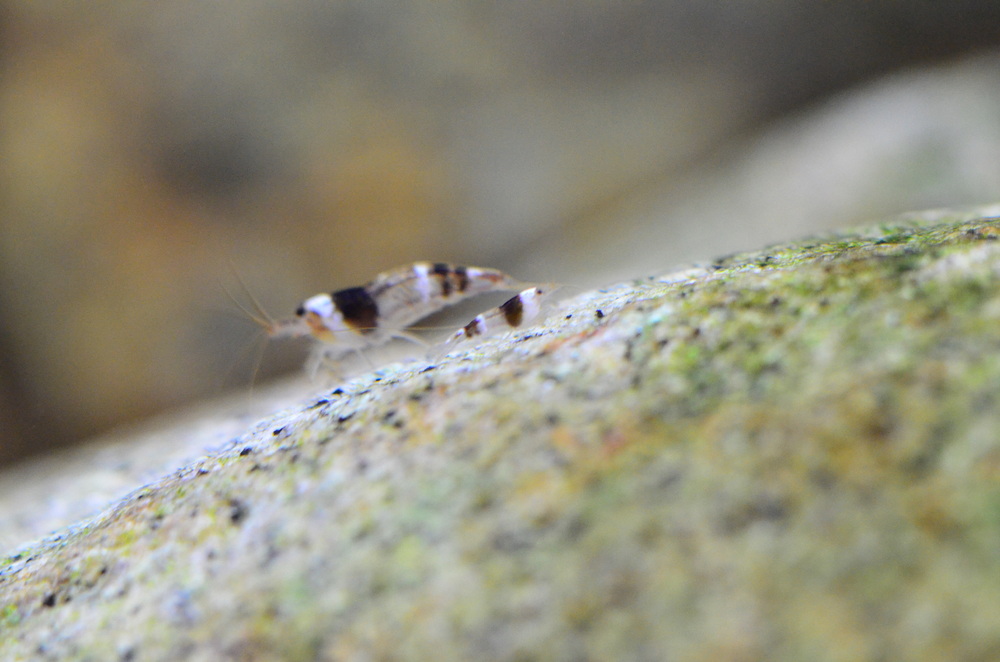
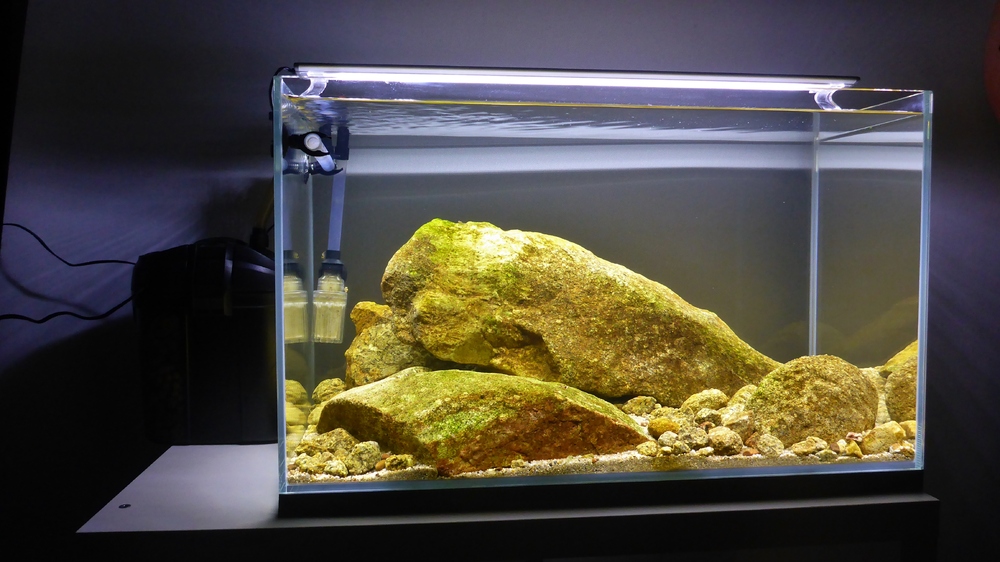 1 point
 -
The other thing I have been asked about is feeding. And this relates far more to water parameters than you might think. Firstly in tanks with inert substrate, food is going to be the major contributor to increases in TDS. More food equals greater increases in TDS. As we know, zebs like low TDS. I minimise any increases in TDS caused by food by: - Feeding only every two or three days, although 1 mulberry leaf is always available and replaced when it is completely consumed - feeding small amounts which are totally consumed overnight (excluding snow which tends to be consumed over several days) - feeding foods that are low in protein (Benibachi kale pellets, Boss Aquaria Snow). Proteins are high in nitrogen. If the food rots, the proteins decompose straight to ammonia. When the shrimp eat and use the proteins, they release the nitrogen stored in the proteins as wastes. This increases the TDS of the tank, but also exposes the shrimp to 'high' levels of nitrogenous wastes. Nitrogenous wastes are not detectable in the water of their natural habitats so any level where these are detected is really too high.1 point