

Leaderboard
-
Disciple
Platinum Members6Points2092Posts -
fishmosy
Members5Points4594Posts -

jayc
Moderators4Points6248Posts -

OzShrimp
Members4Points4102Posts
Popular Content
Showing content with the highest reputation on 08/24/15 in Posts
-
 4 points4 points
4 points
4 points4 points
4 points 3 pointsThe bag is almost empty. I can say that this is for sure one of their favourite foods.3 points
3 pointsnope, no damage at all. Might be a different type of sock so worth testing with yours first. Yeah me too.3 points
2 points
3 pointsThe bag is almost empty. I can say that this is for sure one of their favourite foods.3 points
3 pointsnope, no damage at all. Might be a different type of sock so worth testing with yours first. Yeah me too.3 points
2 points 2 pointsVery sensible indeed. Haha. It is surprising how everything adds up though. I keep a running total of my rack build and to date, it is coming close to $1,000. Having said this, the tanks and bulkheads alone were almost $500, and the primer and paint were about $100. Those were the big ticket items for me. I could still sleep at night but glad my wife is not on this forum though. She probably wouldn't sleep too well if she reads this.2 points
 2 points
 1 pointWith such a great number of hobbyist joining the forum, thought I'd start a thread on some basic shrimp maintenance/breeding advise and techniques I'm guided with..... Water Parameters (WP) is critical, so depending on the shrimp type, do some research and ensure your tanks (WP) are within the recommended range. There are extreme cases (i.e. PH at 5 or 7.5 where CRS are successfully kept/bred, but on avg. these WP are theoretically a good starting point.... Caridina (CRS, CBS, SW/GB, TB*, Tiger**..) PH - 6.4 KH - 0-2 GH - 4-6 TDS - 100-200 Temp - 21-23 *TB (KK, WR & BB) - Some breeders prefer a slightly lower PH (5.6 - 6.2) for Taiwan Bee **Tigers - Some breeders prefer a slightly higher PH (7-7.4), KH - 2-8 and GH - 6-10 for Tigers Neocaridina (All colour variants of Cherry Shrimp) PH - 6.4 KH - 0-2 GH - 4-6 TDS - 100-200 Temp - 21-23 There's several thread on the forum with regards to soil type/recommendations, filters, chillers etc, so I'll just focus on the "day to day" maintenance and breeding habits I practice religiously... * Weekly water change (WC) is beneficial to even the best filtered system. I only do a 5-10% weekly WC per week, just to "freshen" the water. Add minerals like salty shrimp, mineral powder etc... On each WC. * The quality and consistency of Tap water varies. Reverse Osmosis (RO) water is recommended, to avoid any imbalances/pitfalls that can occur. Control what goes into your tank, to ensure minimal unexpected deaths. * Ensure a varied diet of commercial and fresh food to your shrimps, including. Powdered food to feed your shrimplets.. I daily feed all my shrimp, and depending on stock levels and shrimplets, two feelings per days are done. * Do water top ups caused by evaporation. I use straight RO water to top up all my tanks. * filter maintenance is done every 6-8 weeks for all my nano tanks, and 8-12 weeks for my breeding racks. This ensure the filters/bacteria is running efficiently. Ensure the filters are only rinsed off with the tanks water...do not over clean, and or use tap water, as this will kill the beneficial bacteria. * On a established system, ensure your nitrates are kept below 20ppm. Low nitrates do promote breeding ! Other notable mentions.. *Shrimp consume their exoskeleton that they shed during molting. This is a a rich source of essential minerals for the shrimp, so do leave them there for their consumption. *Iodine supplement is not necessary as freshwater crustaceans obtain iodine from their food. *Metals like zinc, lead, and elemental copper, are toxic for shrimps and will kill them. *Majority of fish feed on shrimps. Although through clever aquascaping, a co-existance can prevail, But it really depends on the seriousness you take your shrimps/hobby, i.e selective breeding program's, exotic shrimps ... *Hiding spots/shelters are important especially in periods of molting. Shelters can be bought or created via aquascaping. *Avoid chemical, and short term solutions...i.e. PH Up/Down.....I personally don't use ferts, and anything chemical.... *During our summer periods, have a Plan B even if you are running chillers. Have some RO ice blocks in the fridge for emergencies.. *Observe your shrimps, and develop an eye to notice any changes in their behaviour. This may highlight some potential issues before it becomes real issues. *Shrimps require oxygen rich waters. Ensure ample aeration, surface agitation etc... *PATIENCE IS KEY Mother Nature, whether purely natural or influenced by us do throw all of us a "curve ball"... So don't be discourage, get advise and share the grief with this forum, as your experience will help others.... No doubt, there's '000's of other advise, so please do add it onto this thread.......1 point
 The 2016 shrimp championships will be in March 2016. More details to come. Any business or person wishing to get involved please email [email protected] Will update this post as details come to hand.1 point
 1 point1 point
My new favorite quote from @Shrimpy Daddy "LOL!!! You want me to take out my full gear and shoot tonight?"1 point
1 pointPlease vote for the questions that you would like to be asked. Thanks.1 point
1 point1 point
My new favorite quote from @Shrimpy Daddy "LOL!!! You want me to take out my full gear and shoot tonight?"1 point
1 pointPlease vote for the questions that you would like to be asked. Thanks.1 point 1 pointin lieu of this information. id like to rephrase my suggestions as a single question - can you describe the technical details of how you setup your aquariums for breeding? For example - plants/mosses, substrate/buffer, remineralisation of water, size of tank, filtration and media used, WC regime, WP testing frequency, stocking density, lighting, redundancy/backup systems and maintenance schedule? how's that for u Dman? it does technically now fit the criteria of being one question? :-) love n peace will1 point
1 point
It looks like an amphipod. Definitely not a dragonfly larvae. http://australianmuseum.net.au/uploads/journals/17867/354_complete.pdf1 point
1 pointin lieu of this information. id like to rephrase my suggestions as a single question - can you describe the technical details of how you setup your aquariums for breeding? For example - plants/mosses, substrate/buffer, remineralisation of water, size of tank, filtration and media used, WC regime, WP testing frequency, stocking density, lighting, redundancy/backup systems and maintenance schedule? how's that for u Dman? it does technically now fit the criteria of being one question? :-) love n peace will1 point
1 point
It looks like an amphipod. Definitely not a dragonfly larvae. http://australianmuseum.net.au/uploads/journals/17867/354_complete.pdf1 point 1 point
1 point
1 pointMy bet is on Potassium deficiency as well. This macro nutrient is always the first to be depleted. A properly maintained shrimp tank is unlikely to be deficient in Mg. That is, as long as you follow the Ca:Mg ratio of roughly 3:1 or 4:1. Which is usually achieved with Salty Shrimp or similar remineralising mixes. Iron is a micro nutrient, and is only needed in very small quantities. That's why my DIY remineralising mix is the way it is. Ca, Mg, K, small amount of trace/micro nutrients. It's in no way designed to fertilise and sustain a lush forest in a shirmp tank. But it's enough to sustain a low tech shrimp tank with mosses and buces and anubias.1 point
Sounds like that is what Abhishek means. Using the RO waste water for Neocaridina. Never thought of using RO waste water. Definitely check GH/KH. The problem with tap water is all the chemicals used in it. The TDS might be 150, but it's made up of a concentration of the chemicals found in tap water. Not Ca:Mg alone. ChlorineFluorine compounds (flouride)Trihalomethanes (THMs)Salts of:arsenicradiumaluminiumcopperleadmercurycadmiumbariumHormonesNitratesThis is just some of the contents in tapwater, and will be in higher concentrations in the RO waste water. That's probably why it's not a good idea to use it.1 point
1 pointthanks for those pics buck, how long did it take you to work out what plumbing pieces etc you needed and was it easy? What sort of price did it cost you to set up the plumbing aspect of the filtration?1 point
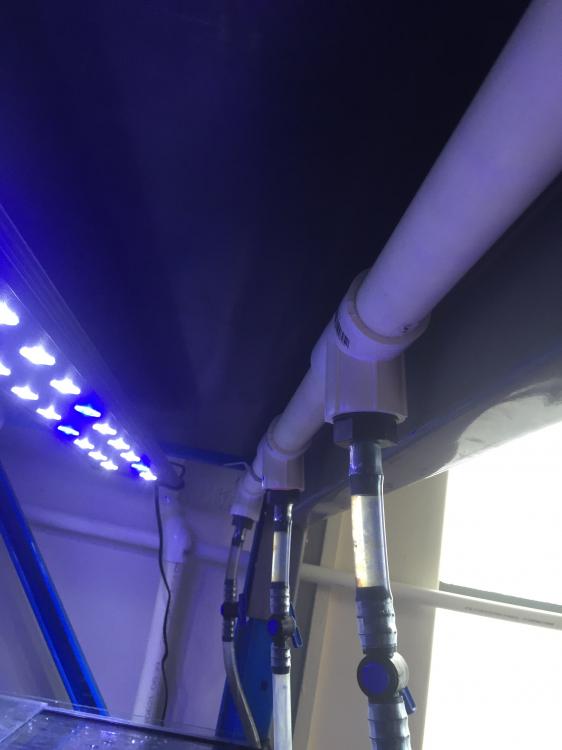
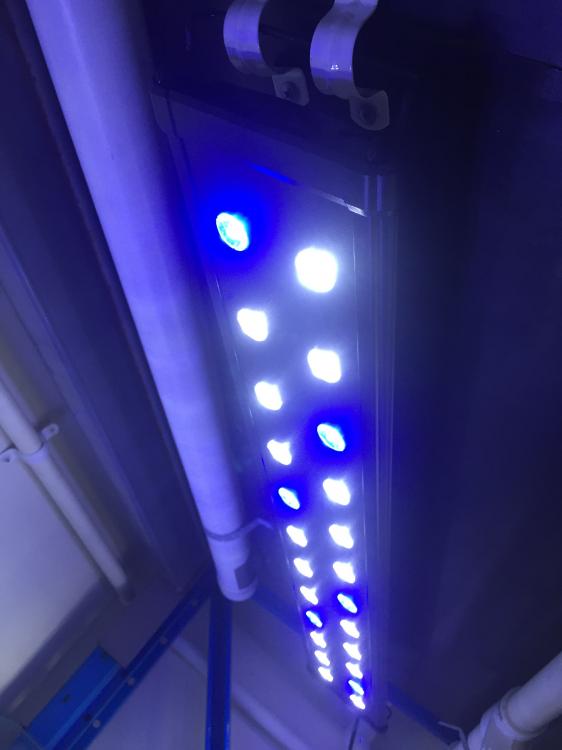
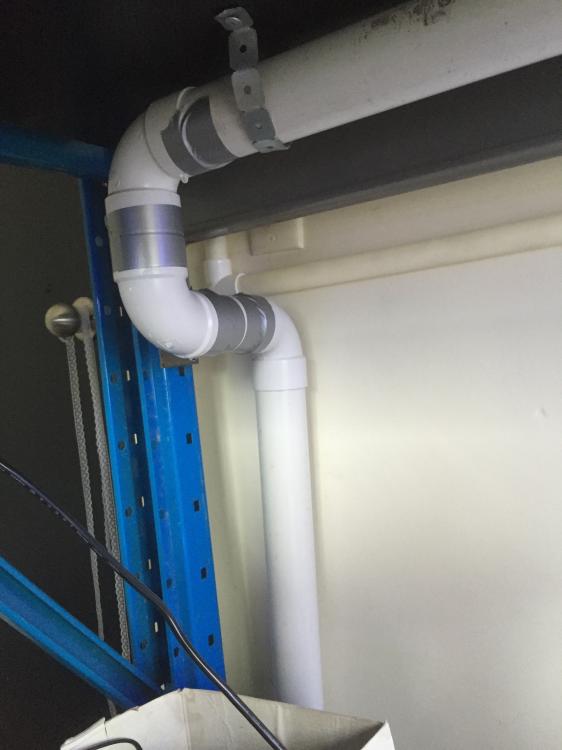
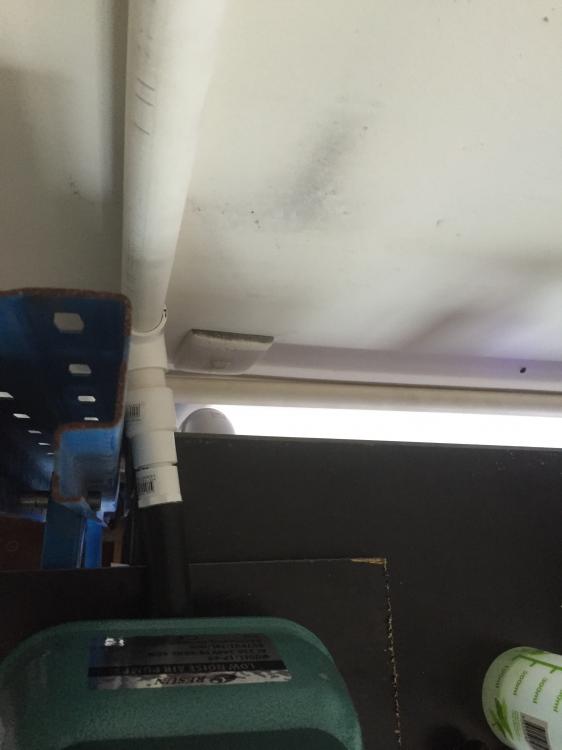
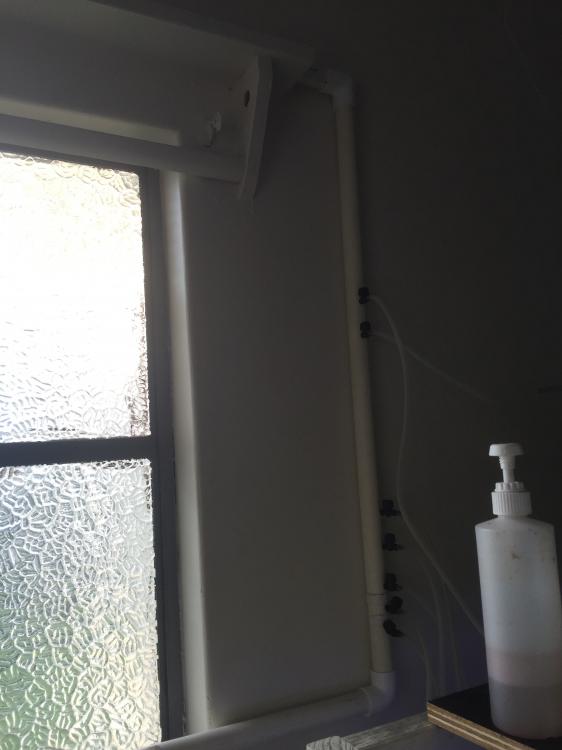
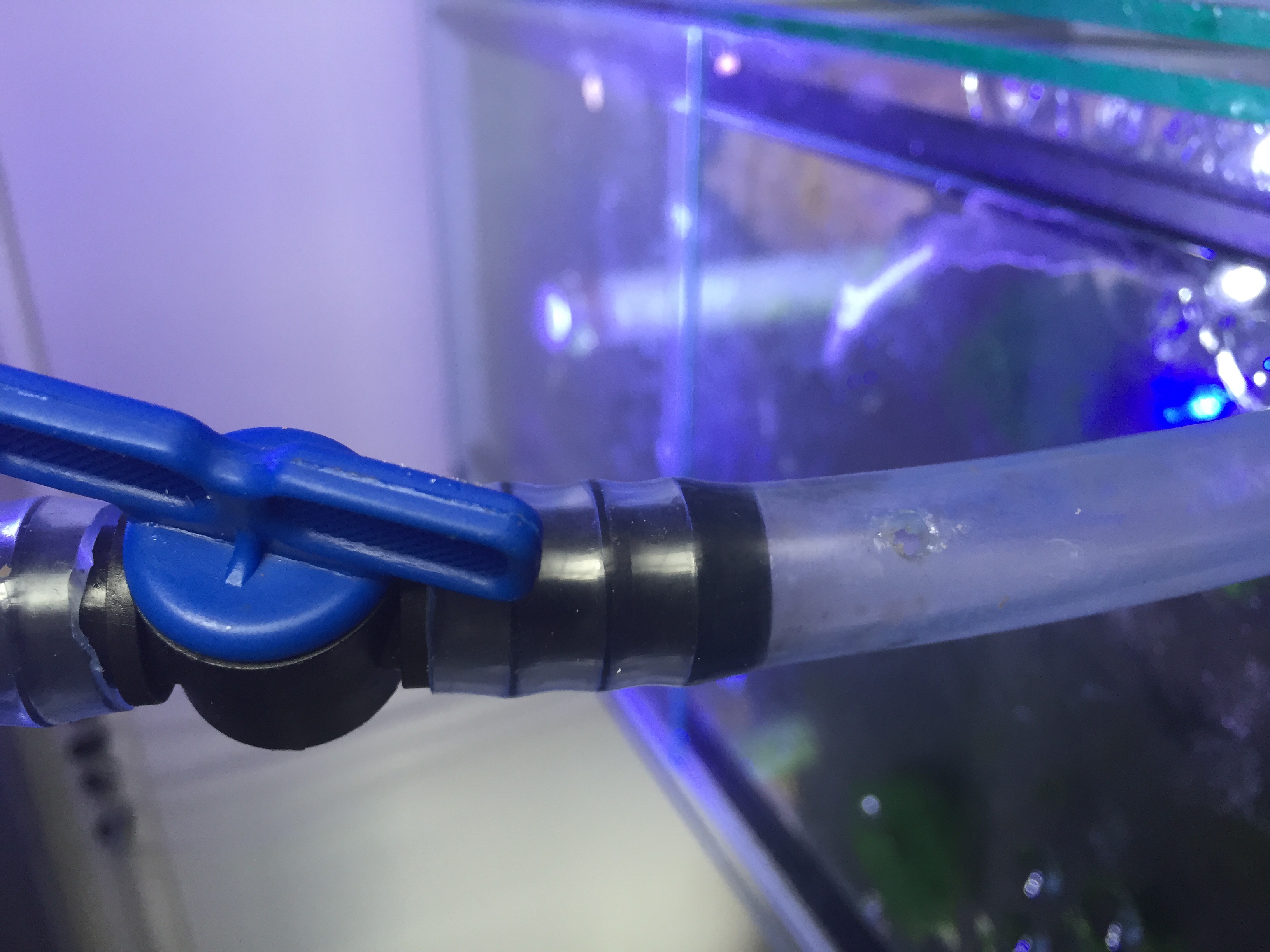
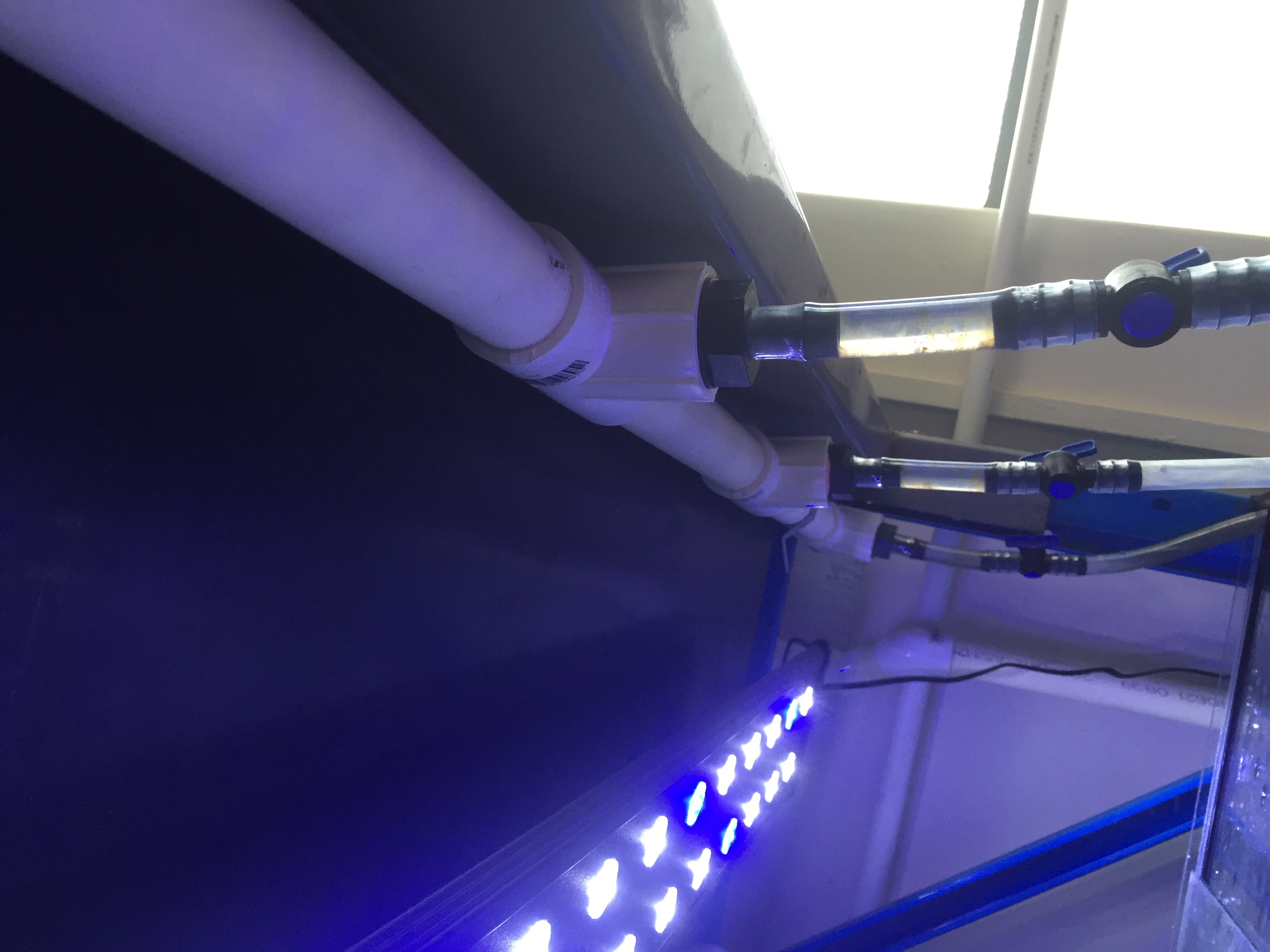
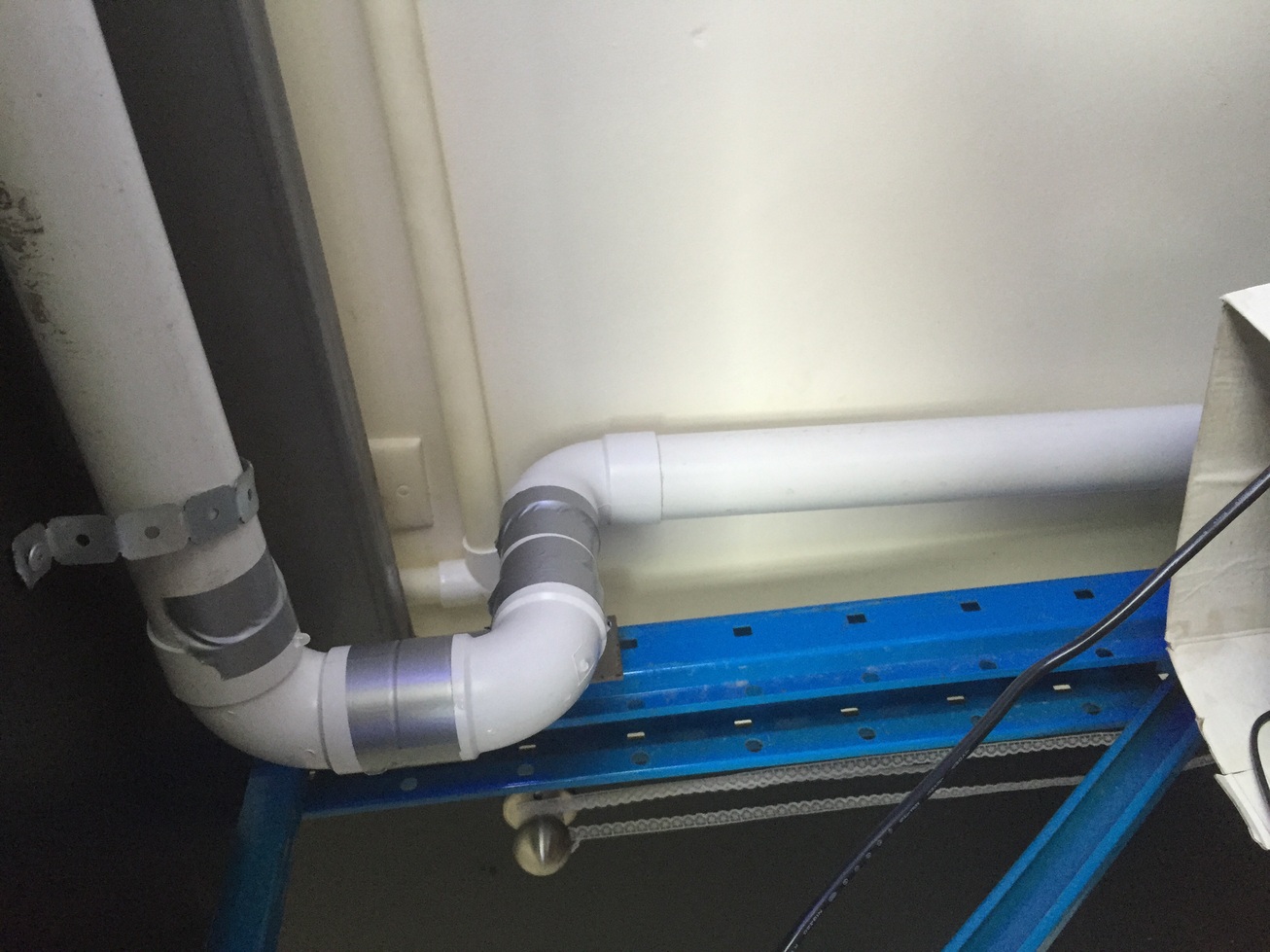
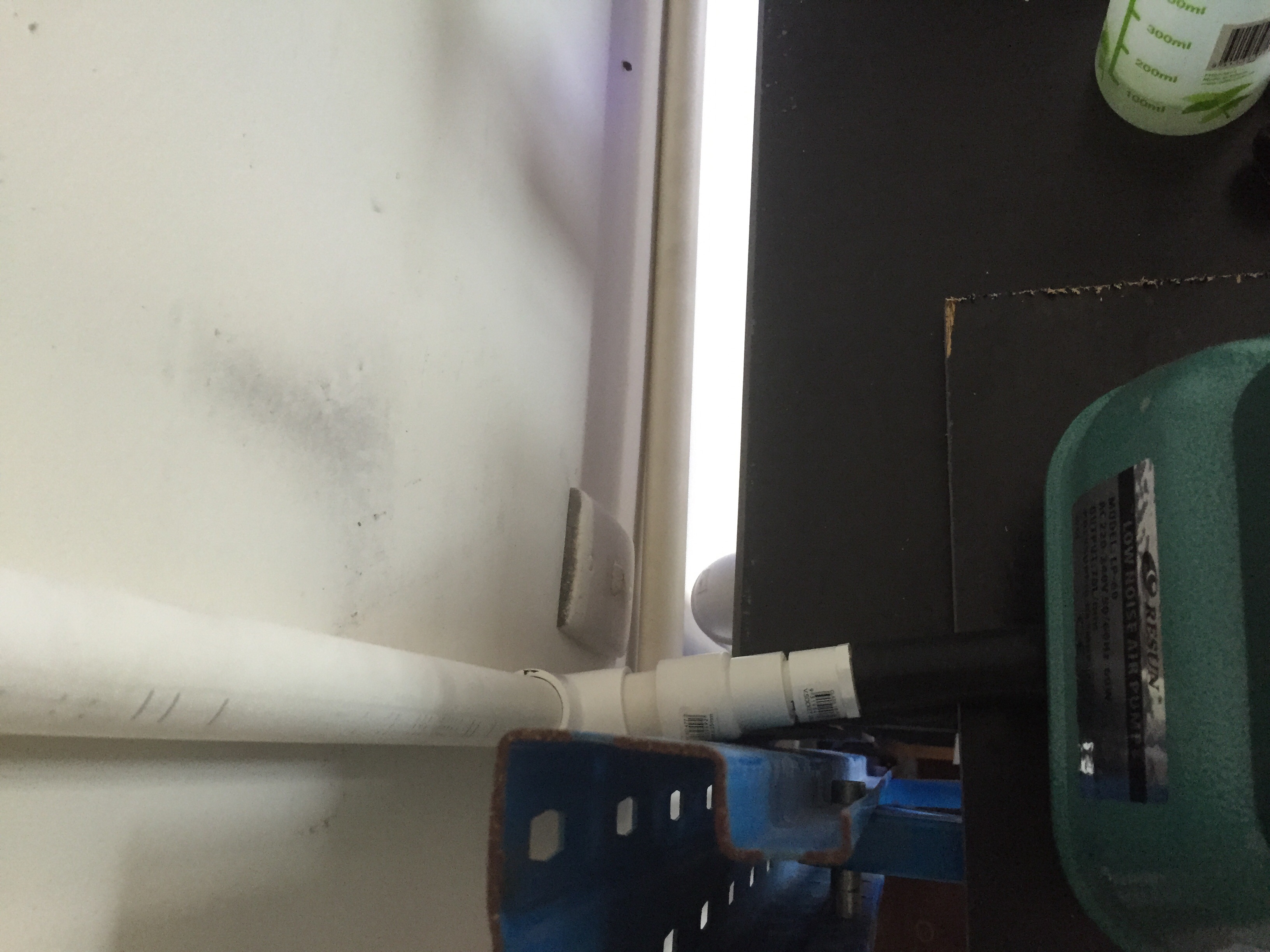
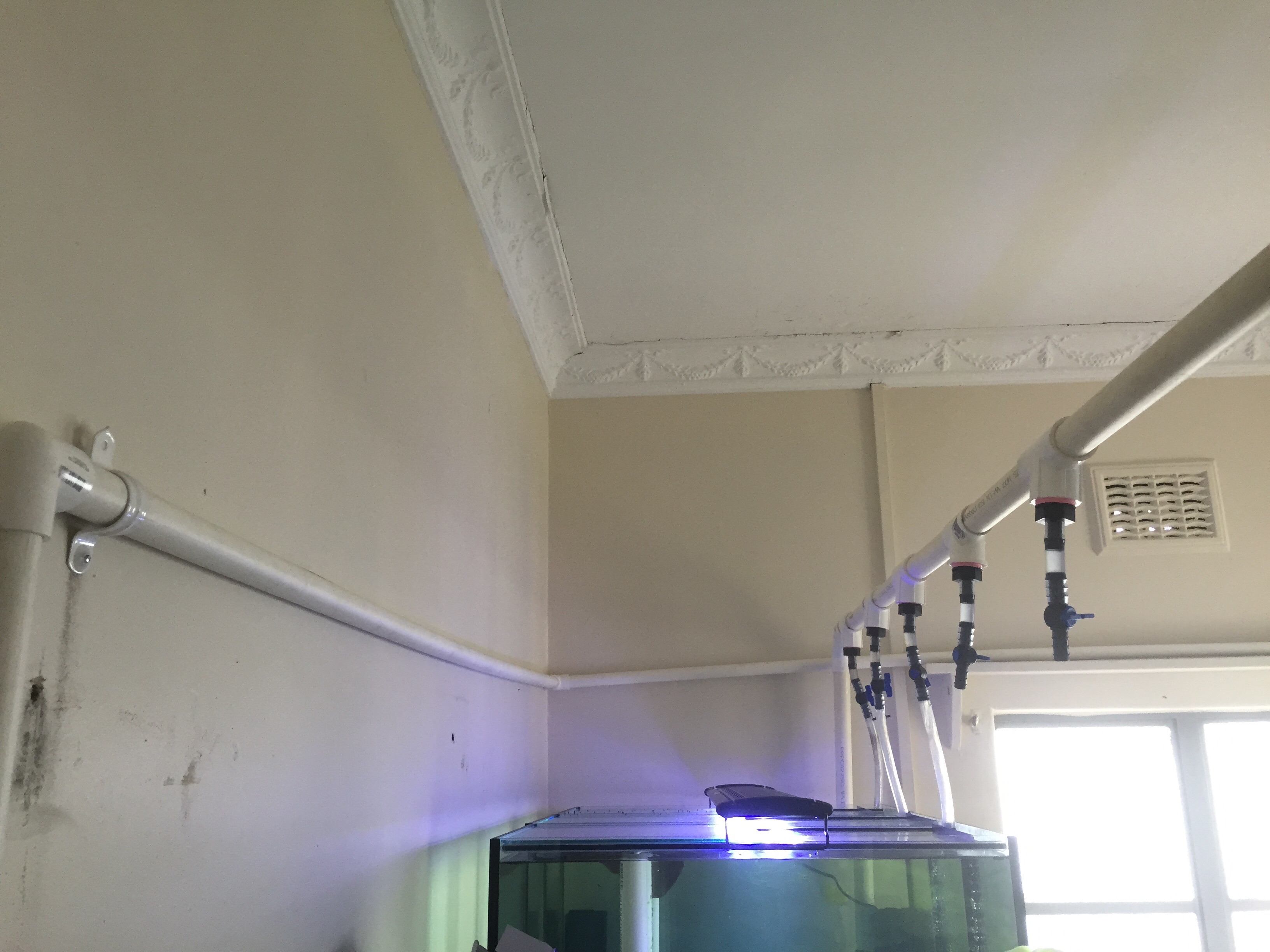
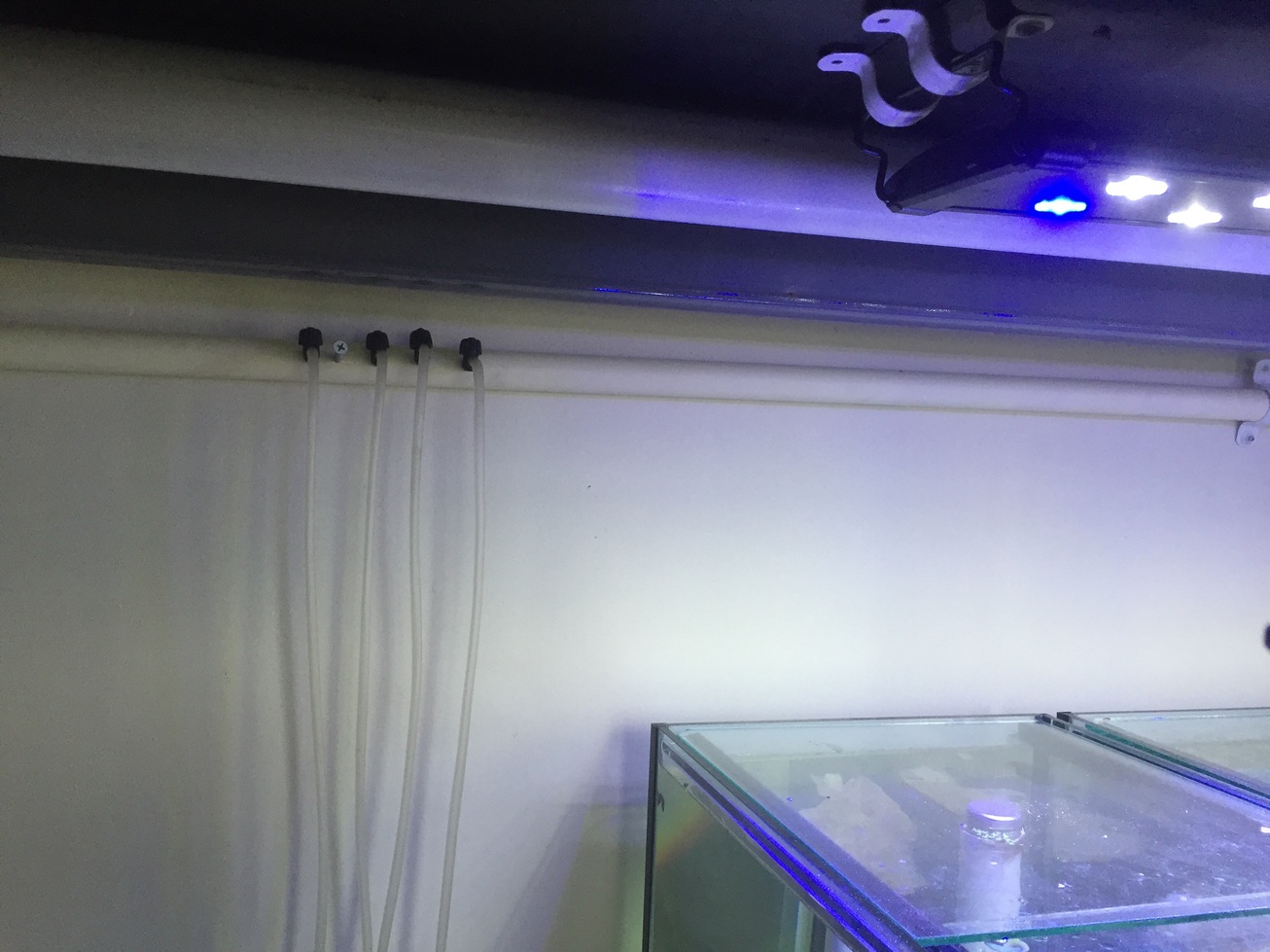
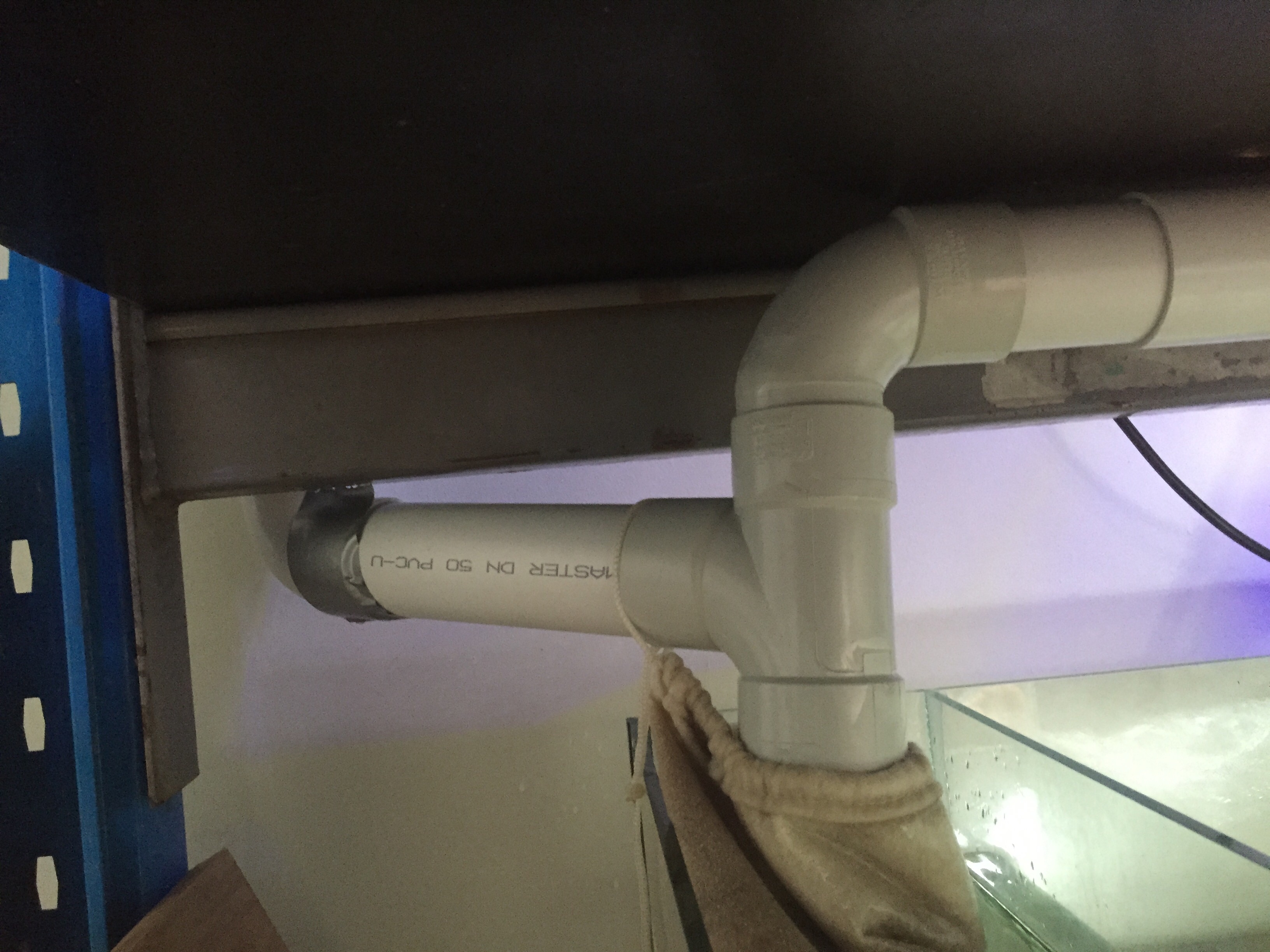
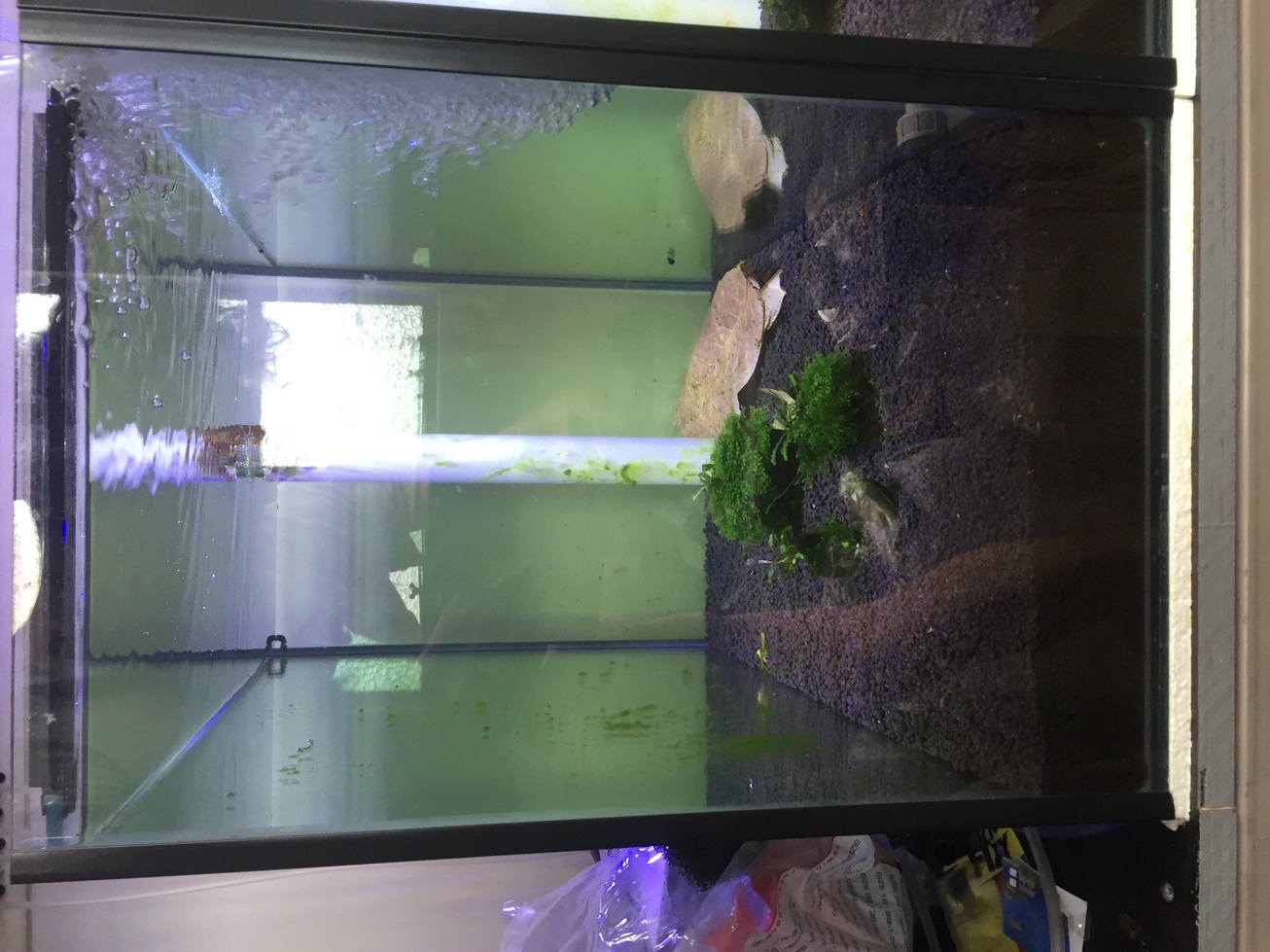
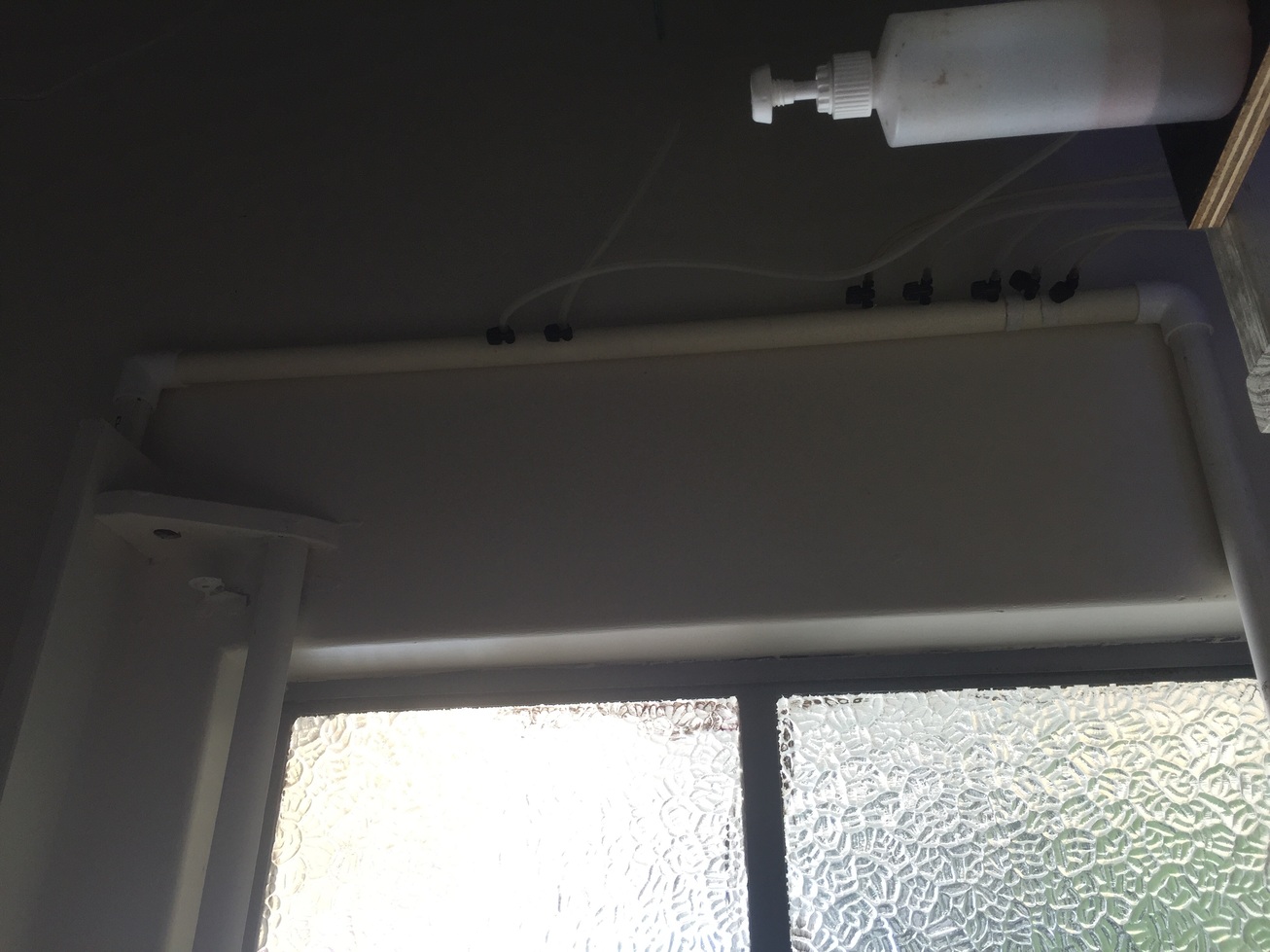
1 pointI put little holes in the returns to push air through, like a Venturi kind of thing. I’ve found that after doing this I can increase the flow and it doesn’t blast the aqua soil every were, it seems to slow it down. The only issue I have had is one of them likes to spit water, so I’ve had to put a little airline tap on it. the little aire hole give this effect on the return water when it enters the tank yeah thats duct tape, i didnt want to glue them so...yeahhhhh i have the air running around the room in a loop, i was told this would cause even preasure though the system. as you can see i have room for 2 extra tanks in this pic,the bottom is the same, i plumed them in from the start to save time later.
1 point
1 point1 point
1 pointMy bet is on Potassium deficiency as well. This macro nutrient is always the first to be depleted. A properly maintained shrimp tank is unlikely to be deficient in Mg. That is, as long as you follow the Ca:Mg ratio of roughly 3:1 or 4:1. Which is usually achieved with Salty Shrimp or similar remineralising mixes. Iron is a micro nutrient, and is only needed in very small quantities. That's why my DIY remineralising mix is the way it is. Ca, Mg, K, small amount of trace/micro nutrients. It's in no way designed to fertilise and sustain a lush forest in a shirmp tank. But it's enough to sustain a low tech shrimp tank with mosses and buces and anubias.1 point
Sounds like that is what Abhishek means. Using the RO waste water for Neocaridina. Never thought of using RO waste water. Definitely check GH/KH. The problem with tap water is all the chemicals used in it. The TDS might be 150, but it's made up of a concentration of the chemicals found in tap water. Not Ca:Mg alone. ChlorineFluorine compounds (flouride)Trihalomethanes (THMs)Salts of:arsenicradiumaluminiumcopperleadmercurycadmiumbariumHormonesNitratesThis is just some of the contents in tapwater, and will be in higher concentrations in the RO waste water. That's probably why it's not a good idea to use it.1 point
1 pointthanks for those pics buck, how long did it take you to work out what plumbing pieces etc you needed and was it easy? What sort of price did it cost you to set up the plumbing aspect of the filtration?1 point
1 pointI put little holes in the returns to push air through, like a Venturi kind of thing. I’ve found that after doing this I can increase the flow and it doesn’t blast the aqua soil every were, it seems to slow it down. The only issue I have had is one of them likes to spit water, so I’ve had to put a little airline tap on it. the little aire hole give this effect on the return water when it enters the tank yeah thats duct tape, i didnt want to glue them so...yeahhhhh i have the air running around the room in a loop, i was told this would cause even preasure though the system. as you can see i have room for 2 extra tanks in this pic,the bottom is the same, i plumed them in from the start to save time later.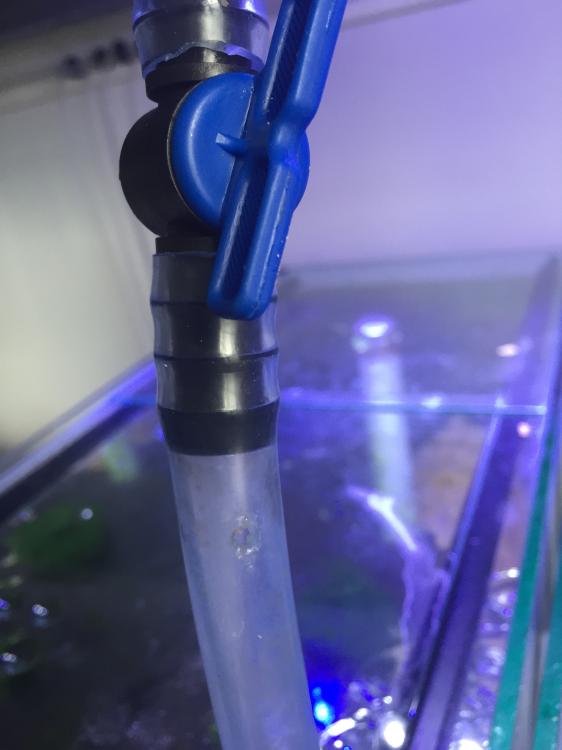
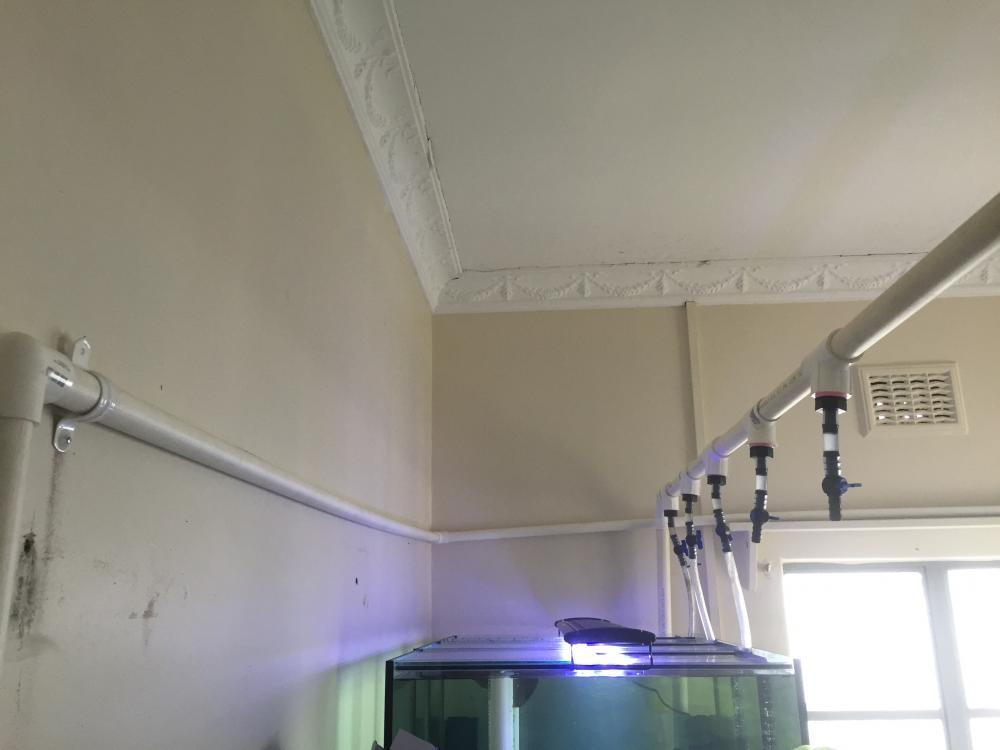
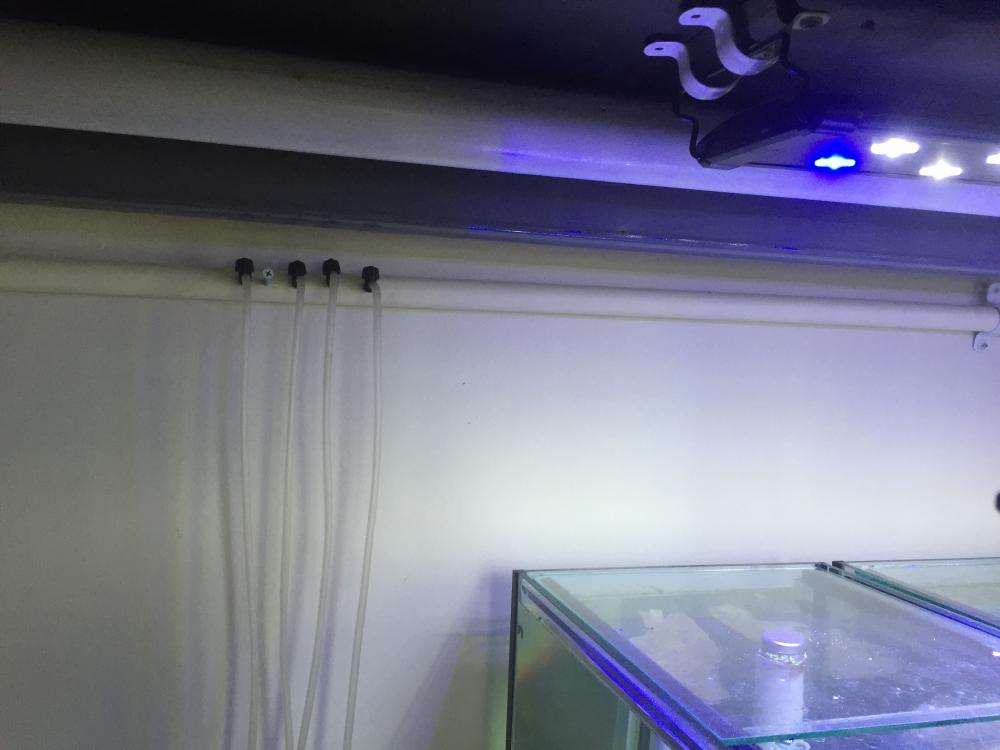
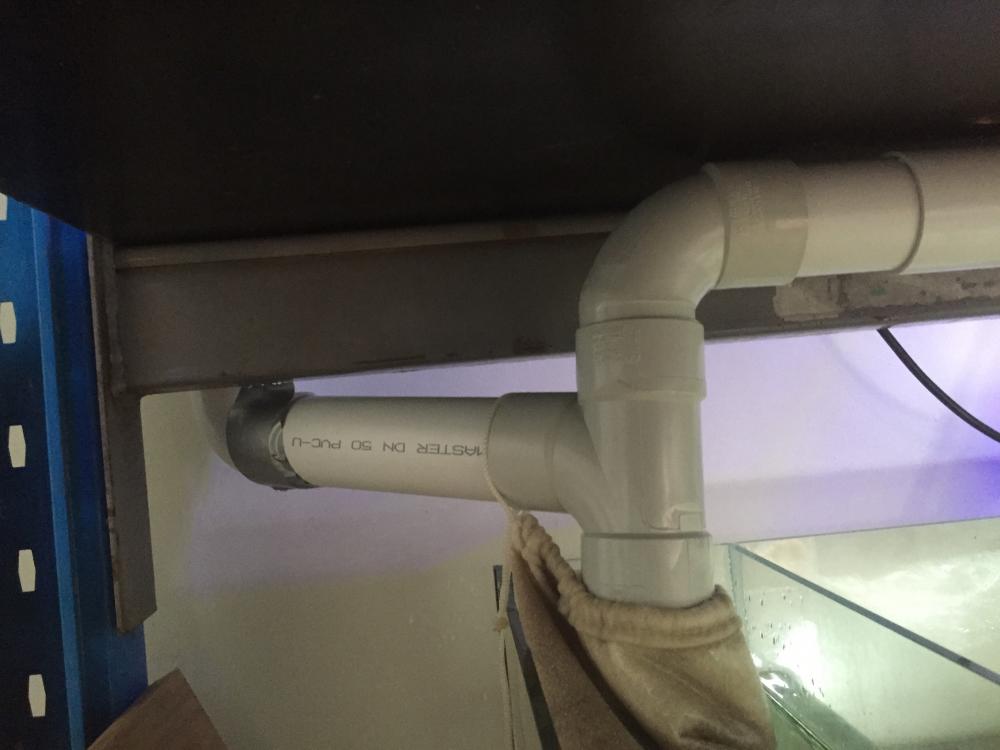
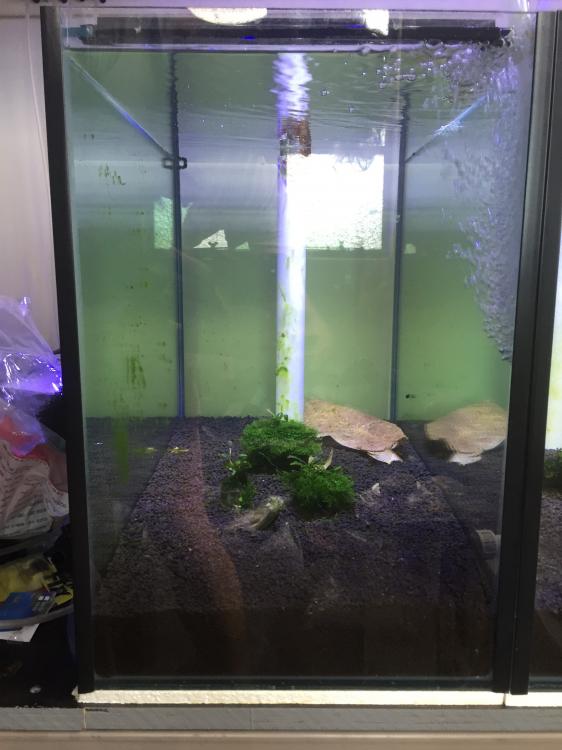
 1 point
thing is they're mostly short sharp and shiny just take a few seconds :-) i could be wrong but my guess is that a lot of other people might be interested in hearing the basic technical detail of how top breeders run their tanks?1 point
1 point
1 pointthing is they're mostly short sharp and shiny just take a few seconds :-) i could be wrong but my guess is that a lot of other people might be interested in hearing the basic technical detail of how top breeders run their tanks?1 point Man I am REALLY liking this set up. You have me really really tempted to build myself a rack and make it all pretty like this so i can 'acquire' some living room space in our next place rather than just the garage hahaha :D The air circuit looks great. and those valves look very neat and professional! Well done.Following along the rest of the way :)If you want to kick start the cycle you can run the sponge filters all together in your other tank (or in the sump with the rams) and leave them running until you get everything set up, tested and ready to move stock over. I assume this is probably 2 weeks away to being fully set up and running so you should have the sponges cycled and ready to go by then again, saving you time ;)1 point
1 point1 point
In reference to the conversation that started in this thread ... http://shrimpkeepersforum.com/forum/index.php/topic/7693-prevent-algae-going-everywhere/?view=getnewpost where Ozshrimp mentioned that he had to dispose of a plant due to it being infested with algae ... I have started this thread in the hopes of helping others who might have the same issue. Have you ever had a prized plant that was infested with algae? The algae has grown in between your plant and has become one big mass of algae and plant. To the point of not knowing where the plant started and where the algae ended? Where manual removal is too difficult, and futile cause the algae just grows back, and where spot dosing with Excel/glut/Dino spit would kill sensitive plants like mosses, pellia or fissiden? Using regular algaecides on plants will kill delicate and sensitive plants like pellia and mosses. Well, I have found one product to be different. And I have tested it with great success with my own algae infested plants. I have mini pellia that had Staghorn algae and BBA growing through it. My Peacock moss was also infested with Staghorn. Manually pulling it out was destroying my delicate mini pellia. And it was fuitle ... the algae would just grow back in a matter of days. I had to researched a better way of treating algae, that had interwoven itself into the mini pellia. The moss, I wasn't too fussed about. But pellia is more precious to me. I came across a product that showed promise. Searching for local retailers brought me to two. And by luck both are SKF sponsors !!! Cha-ching! What's this product? EasyLife AlgExit. Notice it will treat filamentous algae - that's the staghorn, hair and string algae, Brush and beard algae. Notice also that it says it is safe on plants and shrimp. I can personally vouch for the safe with shrimp and plants statement, within reason. It is safe with higher order leafy plants. It is also safe with delicate mosses, pellia and fissidens AS LONG AS you don't use too much of the product and leave the plants soaking in it for longer than 3 days. How do I know this? Well I tested the limits, so you don't have to. (Warning: Do NOT follow this example - it is a test of limits to see what dosage will harm plants) I put in a small bunch of mini pellia into a plastic container, with just enough water to cover the plant ... approx 100ml of water. In this container I added 1ml of AlgExit. Left it for 5 days. Please note the dosage according to the instructions is 10ml per 100Litres. Or 1ml per 10L. So 1ml of AlgExit in 100ml of water is many times over the dosage. (anyone want to try calculating how many times over?) Inadvertently, a shrimplet (1mm) came along with the ride in the plant. Didn't notice it until about 15-30 minutes into the treatment. The shrimplet was removed from the container, and survives to this day. At this crazy overdose levels and 5 days of treatment the mini pellia is now showing signs of not surviving. It's back in my tank now, to see if it pulls through. Needless to say, the algae on that test plant was all dead. (End of warning. Recommended treatment method follows below) However, with more reasonable levels of dosage my mosses and mini pellia will survive even harsh dosage treatments. The following is proof. Mini pellia that was treated about 2 months ago. Not a sign of BBA, brush algae or staghorn. The plant is very much alive and thriving. This is a more recent treatment. Started 6 days ago. I had algae growing on the stainless steel mesh as well as in the mini pellia. Notice the algae is now purple? This will turn white in a few days and die off. the shrimp will graze on it too. But the pellia is unharmed. Same plant, another view. Notice the purple bits in between the Pellia? That's the dying algae, but the pellia itself is a lush green. I have managed to clear it out/eradicate/kill the algae within 3days, without killing the mini pellia. This is the treatment method. 1) Remove the plant for treatment into a bucket. 2) Add enough water to cover the plant. Make a note of the amount of water used. 3) Add up to 10 times the dosage. Recommended dosage was too slow. 4) Keep the algae infested plant in AlgExit for no more than 3 days. 5) Remove and rinse with clean water. 6) Return to tank and observe the algae. If it has not changed colour in the next day or two, return to the treatment bucket for another day or 2. Repeat from step 5 until algae changes colour. eg. I use a 1Litre container for mini pellia, it's only a small plant. I'd add 500ml of water and 1ml of AlgExit. (yes it's more than the recommendation above, but I'm a Pro at it now ) I remove after 3 days , and that is what you see in the picture above. All the algae has turned purple on the steel mesh. You can treat it in the tank, but you'd have to use more of the product. And I suggest following the manufacturers dosage. But this method will treat the algae infected plant in a targeted approach without impacting the main tank, at a much faster rate. You can get the Easy Life AlgExit from our favourite sponsors Age of Aquariums and Tech Den. Hope you found this useful. If it saves you from throwing away a plant, let me know. I get encouragement that I have helped someone else, and we get confirmation it works.1 point
Man I am REALLY liking this set up. You have me really really tempted to build myself a rack and make it all pretty like this so i can 'acquire' some living room space in our next place rather than just the garage hahaha :D The air circuit looks great. and those valves look very neat and professional! Well done.Following along the rest of the way :)If you want to kick start the cycle you can run the sponge filters all together in your other tank (or in the sump with the rams) and leave them running until you get everything set up, tested and ready to move stock over. I assume this is probably 2 weeks away to being fully set up and running so you should have the sponges cycled and ready to go by then again, saving you time ;)1 point
1 point1 point
In reference to the conversation that started in this thread ... http://shrimpkeepersforum.com/forum/index.php/topic/7693-prevent-algae-going-everywhere/?view=getnewpost where Ozshrimp mentioned that he had to dispose of a plant due to it being infested with algae ... I have started this thread in the hopes of helping others who might have the same issue. Have you ever had a prized plant that was infested with algae? The algae has grown in between your plant and has become one big mass of algae and plant. To the point of not knowing where the plant started and where the algae ended? Where manual removal is too difficult, and futile cause the algae just grows back, and where spot dosing with Excel/glut/Dino spit would kill sensitive plants like mosses, pellia or fissiden? Using regular algaecides on plants will kill delicate and sensitive plants like pellia and mosses. Well, I have found one product to be different. And I have tested it with great success with my own algae infested plants. I have mini pellia that had Staghorn algae and BBA growing through it. My Peacock moss was also infested with Staghorn. Manually pulling it out was destroying my delicate mini pellia. And it was fuitle ... the algae would just grow back in a matter of days. I had to researched a better way of treating algae, that had interwoven itself into the mini pellia. The moss, I wasn't too fussed about. But pellia is more precious to me. I came across a product that showed promise. Searching for local retailers brought me to two. And by luck both are SKF sponsors !!! Cha-ching! What's this product? EasyLife AlgExit. Notice it will treat filamentous algae - that's the staghorn, hair and string algae, Brush and beard algae. Notice also that it says it is safe on plants and shrimp. I can personally vouch for the safe with shrimp and plants statement, within reason. It is safe with higher order leafy plants. It is also safe with delicate mosses, pellia and fissidens AS LONG AS you don't use too much of the product and leave the plants soaking in it for longer than 3 days. How do I know this? Well I tested the limits, so you don't have to. (Warning: Do NOT follow this example - it is a test of limits to see what dosage will harm plants) I put in a small bunch of mini pellia into a plastic container, with just enough water to cover the plant ... approx 100ml of water. In this container I added 1ml of AlgExit. Left it for 5 days. Please note the dosage according to the instructions is 10ml per 100Litres. Or 1ml per 10L. So 1ml of AlgExit in 100ml of water is many times over the dosage. (anyone want to try calculating how many times over?) Inadvertently, a shrimplet (1mm) came along with the ride in the plant. Didn't notice it until about 15-30 minutes into the treatment. The shrimplet was removed from the container, and survives to this day. At this crazy overdose levels and 5 days of treatment the mini pellia is now showing signs of not surviving. It's back in my tank now, to see if it pulls through. Needless to say, the algae on that test plant was all dead. (End of warning. Recommended treatment method follows below) However, with more reasonable levels of dosage my mosses and mini pellia will survive even harsh dosage treatments. The following is proof. Mini pellia that was treated about 2 months ago. Not a sign of BBA, brush algae or staghorn. The plant is very much alive and thriving. This is a more recent treatment. Started 6 days ago. I had algae growing on the stainless steel mesh as well as in the mini pellia. Notice the algae is now purple? This will turn white in a few days and die off. the shrimp will graze on it too. But the pellia is unharmed. Same plant, another view. Notice the purple bits in between the Pellia? That's the dying algae, but the pellia itself is a lush green. I have managed to clear it out/eradicate/kill the algae within 3days, without killing the mini pellia. This is the treatment method. 1) Remove the plant for treatment into a bucket. 2) Add enough water to cover the plant. Make a note of the amount of water used. 3) Add up to 10 times the dosage. Recommended dosage was too slow. 4) Keep the algae infested plant in AlgExit for no more than 3 days. 5) Remove and rinse with clean water. 6) Return to tank and observe the algae. If it has not changed colour in the next day or two, return to the treatment bucket for another day or 2. Repeat from step 5 until algae changes colour. eg. I use a 1Litre container for mini pellia, it's only a small plant. I'd add 500ml of water and 1ml of AlgExit. (yes it's more than the recommendation above, but I'm a Pro at it now ) I remove after 3 days , and that is what you see in the picture above. All the algae has turned purple on the steel mesh. You can treat it in the tank, but you'd have to use more of the product. And I suggest following the manufacturers dosage. But this method will treat the algae infected plant in a targeted approach without impacting the main tank, at a much faster rate. You can get the Easy Life AlgExit from our favourite sponsors Age of Aquariums and Tech Den. Hope you found this useful. If it saves you from throwing away a plant, let me know. I get encouragement that I have helped someone else, and we get confirmation it works.1 point

Account
Navigation
Search
Configure browser push notifications
Chrome (Android)
- Tap the lock icon next to the address bar.
- Tap Permissions → Notifications.
- Adjust your preference.
Chrome (Desktop)
- Click the padlock icon in the address bar.
- Select Site settings.
- Find Notifications and adjust your preference.
Safari (iOS 16.4+)
- Ensure the site is installed via Add to Home Screen.
- Open Settings App → Notifications.
- Find your app name and adjust your preference.
Safari (macOS)
- Go to Safari → Preferences.
- Click the Websites tab.
- Select Notifications in the sidebar.
- Find this website and adjust your preference.
Edge (Android)
- Tap the lock icon next to the address bar.
- Tap Permissions.
- Find Notifications and adjust your preference.
Edge (Desktop)
- Click the padlock icon in the address bar.
- Click Permissions for this site.
- Find Notifications and adjust your preference.
Firefox (Android)
- Go to Settings → Site permissions.
- Tap Notifications.
- Find this site in the list and adjust your preference.
Firefox (Desktop)
- Open Firefox Settings.
- Search for Notifications.
- Find this site in the list and adjust your preference.