
Leaderboard
-

jayc
Moderators5Points6248Posts -
fishmosy
Members2Points4594Posts -

northboy
Members2Points1978Posts -
NoGi
HOF Member1Points5858Posts
Popular Content
Showing content with the highest reputation on 05/28/15 in Posts
-
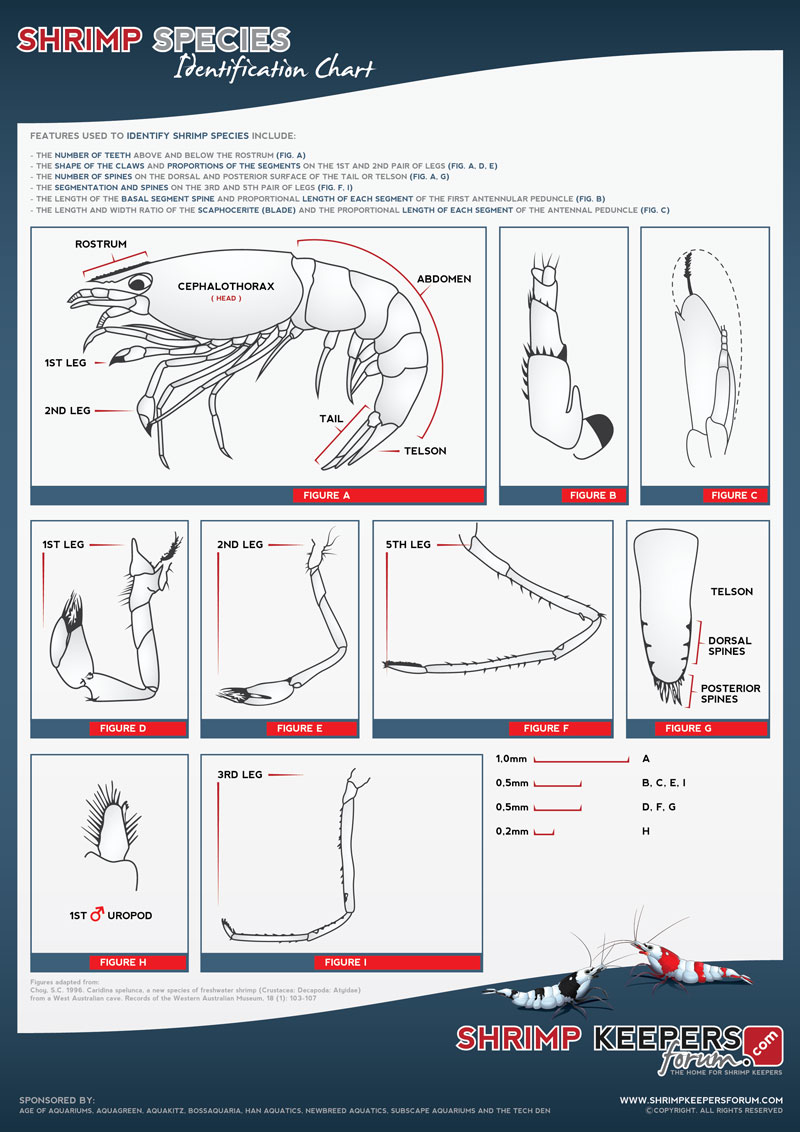
2 pointsThis is a chart to show how shrimp from the Caridina group are identified. As I have banged on about for ever, it is not colour used for the ID of shrimp with the exception on the Crystal and Cherry types that we/ Humans have changed them from there wild forms to improve the colour, there colour is the defining way to ID them and not body features, where as body features are used to ID all wild types of shrimp. Colour in wild types can vary so greatly, both with in areas and populations, water conditions can have a huge effect of the colour of shrimp populations in the wild, along with many other factors. There is more information to be placed with this chart, it is to give every one a insight into the ID of shrimp and our native shrimp foremost as colour is always used to try to ID them and it don't work because of the ability of natives to vary colour. Bob2 points
-
I've just made myself a homemade food for the shrimps that they seem to love. The little buggers have completely swarmed the piece I threw in. Yes it's a bit of a teaser. More to come later. I'll share the ingredients.1 point
-
There are other sources of Calcium for your shrimp apart from dosing Calcium sulfate or dropping shells and cuttlefish bones into the water column. These sources come from the foods we feed the shrimp. These are all natural sources of food, so should be okay to feed your shrimp, just be careful you wash them properly and ensure no fertiliser/chemical residue is on the veg/fruit. If you grow it yourself, you will be sure of what was sprayed on the plants. Here is a list of vegetables and fruits by mg of Calcium content per 100gm of food. Vegetable (mg Ca) Arrowhead 1 Chives (per tablespoon) 2 Peppers, Sweet 6 Alfalfa sprouts 10 Pumpkin leaves 15 Asparagus 14-28 Coriander (cilantro) 16 Chard, Swiss 18 Radish seed sprouts 19 Lettuce, Cos, Romaine 20 Lettuce, Romaine (100g) 20 Squash, Zucchini 20 Jerusalem artichoke 21 Pumpkin 24 Endive 26 Squash, Summer 26 Cauliflower 28 Purslane 28 Radishes 28 Carrots 30 Eggplant 30 Cabbage 32 New Zealand Spinach 32 Kohlrabi 34 Lettuce, Looseleaf 38 Peas, Green 36 Turnips 39 Cress, garden 40 Watercress 40 Broccoli 42 Mung bean sprouts 42 Celery 44 Beet greens 46 Snap beans 46 Parsnips 47 Spinach 56 Mustard Greens 58 Green Onions 60 Peas, Edible pod 62 Rutabagas 65 Celeriac 68 Chinese cabbage 74 Parsley 78 Salsify 80 Borage (Starflower) 82 Okra 82 Kale 94 Lettuce, Iceberg 102 Dandelion greens 103 Turnip Greens 105 Kale, Scotch 137 Chicory greens 180 Mulberry Leaves ~200 Collard Greens 218 Fruits mg Ca Plum 4 Peach 5 Nectarine 5 Casaba Melon 5 Blueberries 6 Honeydew Melon 6 Banana 6 Cranberries 7 Apple(with skin) 7 Pineapple 7 Persimmon 8 Watermelon 8 Mango 10 Grapes 11 Cantaloupe 11 Pear 11 Grapefruit, Red & Pink 11 Grapefruit, White 12 Apricots 14 Tangerine 14 Strawberries 14 Sweet Cherries 15 Raspberries 22 Papaya 24 Lemon (peeled) 26 Kiwi fruit 26 Blackberries 32 Lime 33 Orange 40 Seedless Raisins 49 Just a word of caution. These foods contain Phosphorous and could have an ill effect on your water quality. It might even cause an algal bloom if the levels of phosphorous become too high. Common sense applies when feeding ... not too much too often, and if there are any leftovers, remove it. For those Phosphorous conscious people out there, this is a table of Calcium to Phosphorous ratio: Calcium:Phosphorus Ratio - Vegetables 14.5:1 -- Collards 10.0:1 -- Mulberry Leaves 7.5:1 -- Spinach, Mustard 4.5:1 -- Turnip Greens 4.3:1 -- Lambsquarters 3.2:1 -- Dill Weed 3.0:1 -- Beet Greens 2.8:1 -- Dandelion Greens 2.8:1 -- Chinese Cabbage (pak-choi) 2.7:1 -- Lettuce, LooseLeaf 2.4:1 -- Mustard Greens 2.4:1 -- Parsley 2.4:1 -- Kale 2.1:1 -- Chicory Greens 2.0:1 -- Spinach 2.0:1 -- Watercress 2.0:1 -- Cabbage 1.9:1 -- Endive 1.6:1 -- Celery 1.5:1 -- Purslane 1.4:1 -- Cilantro 1.4:1 -- Lettuce, Butterhead 1.3:1 -- Okra 1.1:1 -- Swiss Chard 1.1:1 -- Turnip 1.1:1 -- Chard, Swiss 1.0:1 -- Squash (winter, all varieties) 1.0:1 -- Green Beans 0.8:1 -- Lettuce, Romaine 0.8:1 -- Sweet Potato 0.8:1 -- Rutabaga 0.7:1 -- Broccoli 0.7:1 -- Cucumber (with skin) 0.6:1 -- Carrots 0.6:1 -- Squash (summer, all varieties) 0.6:1 -- Carrots, Baby 0.6:1 -- Brussels Sprouts 0.5:1 -- Cauliflower 0.5:1 -- Kohlrabi 0.5:1 -- Pumpkin 0.5:1 -- Alfalfa Sprouts 0.5:1 -- Parsnips 0.5:1 -- Peppers,Green 0.5:1 -- Peppers,Red 0.4:1 -- Sweet Potato Leaves 0.4:1 -- Beets 0.4:1 -- Asparagus 0.2:1 -- Tomato .02:1 -- Corn, White Calcium:Phosphorus Ratio - Fruits 4.8:1 -- Papaya 2.9:1 -- Orange 1.8:1 -- Lime 1.8:1 -- Raspberries 1.6:1 -- Lemon (no peel) 1.5:1 -- Blackberries 1.5:1 -- Grapefruit, White 1.2:1 -- Grapefruit, Pink and Red 1.2:1 -- Tangerine 1.0:1 -- Pineapple 1.0:1 -- Pear 1.0:1 -- Apple (with Skin) 0.9:1 -- Mango 0.9:1 -- Watermelon 0.8:1 -- Cherries, Sweet 0.8:1 -- Grapes 0.8:1 -- Cranberries 0.7:1 -- Casaba Melon 0.7:1 -- Apricots 0.7:1 -- Kiwi 0.7:1 -- Strawberries 0.6:1 -- Cantaloupe 0.6:1 -- Honeydew Melon 0.6:1 -- Blueberries 0.5:1 -- Persimmon, Japanese 0.5:1 -- Raisins, Seedless 0.4:1 -- Peach 0.4:1 -- Plum 0.3:1 -- Nectarine 0.3:1 -- Banana So Collards are a good choice as they have a high Calcium to Phosphorous ratio While Bananas are not such a good choice as they a low Calcium to Phosphorous ratio.1 point
-
1 point1 point
1 pointThis new forum looks good. But will take some time to get used to. Loving the extra capabilities of the editor though. new emoticons TABLES !!! bullet points. This version of the editor is sooo much better. Time to go back to my old posts and spruce them up a bit.1 point
 1 pointI'm using my culled Blue Body Carbon's to achieve a more luminous/florescent blue with my blue cherry program Colony producing predominantly blue cherry's BUT, with different intensity's....so still a long journey ahead :-)1 point
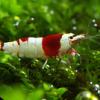 1 pointIt's been long time ago that I showed you my first PRL. Meanwhile, they are divided into four Tanks. The offspring grows . Greeting Lars1 point
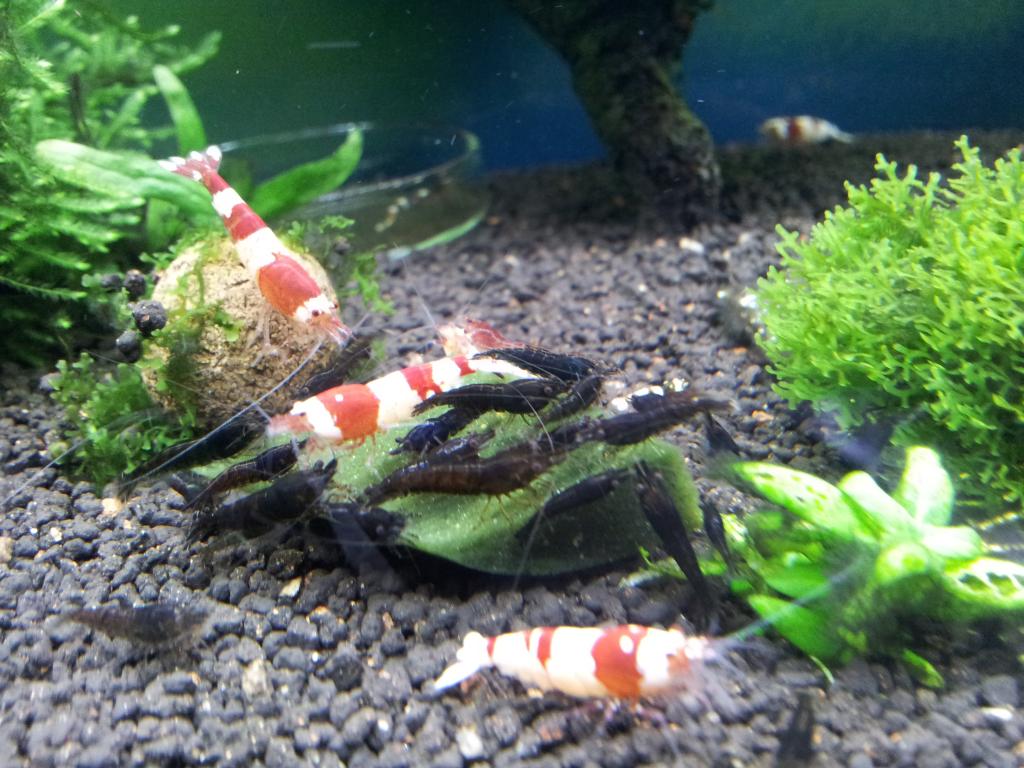
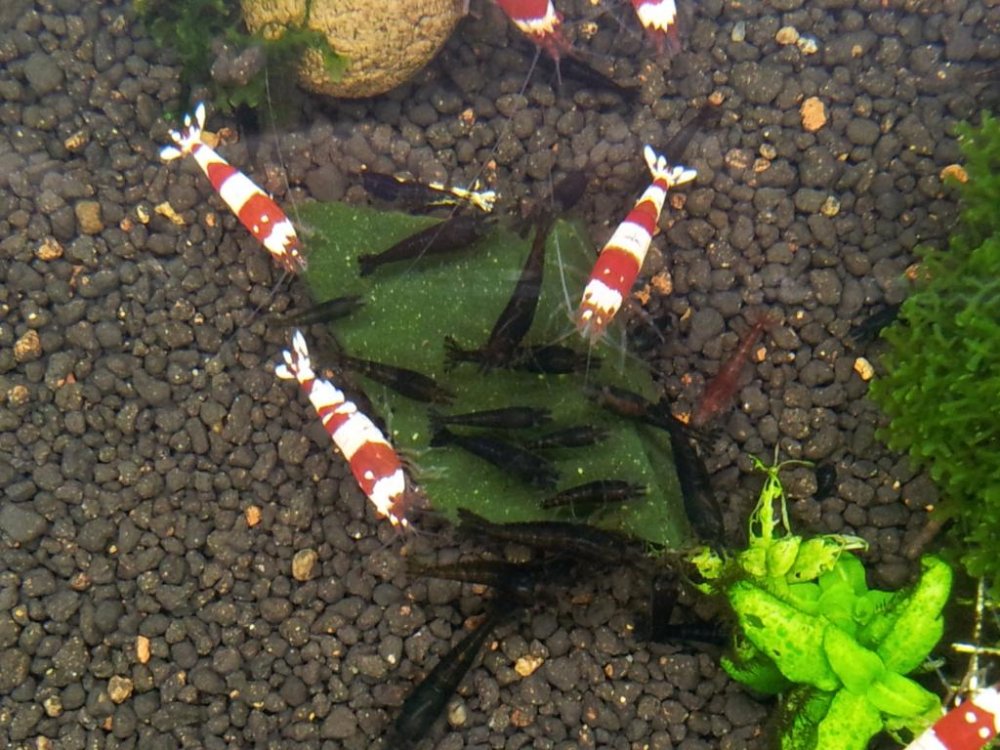
 OK, you asked for it, you got it...... Forgive the camera/skill.... Made a fresh batch using the same recipe I listed above. Only this time I pureed the dry ingredients in with the shrimp and 4oz of water (didnt have pulverize the bee pollen this way, it just disolved). Wound up with a thick syrup, about the consistency of chocolate syrup, this way. I then blended the cooked agar solution into it and spread it out on the cookie sheet. After the gel set, about 10 minutes, I scored it with the Onion Holder. Press down somewhat firm and it cuts about 90% and 100% through, but the scored pieces break easily once frozen. This was right after putting it in, the frenzy got more intense with each passing minute. The frenzy continues:1 point
Finally managed to get pictures of the shrimp enjoying their new food...
OK, you asked for it, you got it...... Forgive the camera/skill.... Made a fresh batch using the same recipe I listed above. Only this time I pureed the dry ingredients in with the shrimp and 4oz of water (didnt have pulverize the bee pollen this way, it just disolved). Wound up with a thick syrup, about the consistency of chocolate syrup, this way. I then blended the cooked agar solution into it and spread it out on the cookie sheet. After the gel set, about 10 minutes, I scored it with the Onion Holder. Press down somewhat firm and it cuts about 90% and 100% through, but the scored pieces break easily once frozen. This was right after putting it in, the frenzy got more intense with each passing minute. The frenzy continues:1 point
Finally managed to get pictures of the shrimp enjoying their new food...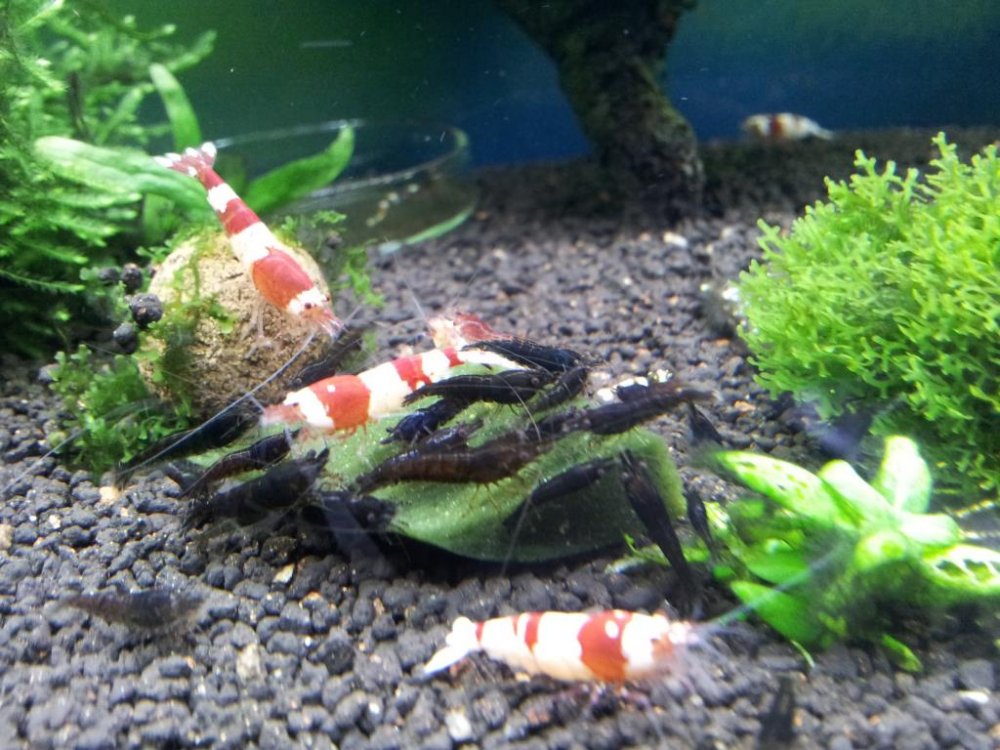
 1 point
The story behind it... I have long known the benefits of Chlorella for shrimp. So I bought 250gm of Chlorella powder from Squiggle on Dec 3 last year. Up until now I have been trying to figure out the best way of feeding Chlorella powder to the shrimp. If I sprinkled it in the water it would literally turn the tank green like it was algae infested, not a good look and not the best way of feeding. So up till this weekend I have been digging into ways to feeding Chlorella, and I drew on a few inspirations - Fishmosy's biofilm alternative http://shrimpkeepersforum.com/forum/index.php/topic/7770-biofilm-alternative/ And Repashy Gel premixes. If I could get the Chlorella powder in a gel like substance for the shrimp like what fishmosy did with Spirulina, it would be my goal. So the question was what to use to hold the Chlorella powder. Then I drew on the idea of the repashy gel. Jelly was what it looked like to me. But Jelly and gelatin is no good for shrimp. Gelatin is animal based. So the next best option was ... AGAR AGAR !!! The more research I did on agar agar, the more convinced I was that this was the perfect vessel to hold all kinds of Shrimpy foods that we can feed our beloved pets. Agar is a gelling agent extracted from red algae (perfect). It's easy to work with (awesome). It's easy to find and it's cheap (perfect, kaching). It's all organic (you beaut). Ingredients: 1 teaspoon of agar agar powder (2gm). 350ml water. Chlorella powder 3 teaspoons. Bee Pollen 1 teaspoon. You can find agar agar powder in most Asian supermarkets, some health food shops, maybe even coles and woolies. Please buy only agar that has no other additives like sugar, flavouring, or colouring. Method: Add water and agar agar powder into a pot, and bring to a low boil. Stir constantly or the agar with stick to the pot. Keep heat low to med. Heat until all sign of the agar powder is dissolved (approx 5 minutes on low-med heat). Pour into a shallow and flat container (for ease of cutting later) Let it cool for 4-5 minutes. Crush the bee pollen in a mortar & pestle. Then sprinkle in the Chlorella powder and Bee Pollen into the container. The agar would not have set yet. Use a utensil of your choice to stir in the Chlorella powder and Bee Pollen, taking care to smooth out any lumps of Chlorella powder and Bee Pollen. Let it set in the fridge for 30 minutes. Cut a small square of the Chlorella powder and Bee Pollen Agar, and drop in the tank. Sit back and watch the shrimp swarm it. Note: does not pollute the tank either. I have since learnt that you can get a Spirulina, Chlorella, and Wheatgrass supergreen powder mix at health food shops. A small bottle is all that's needed ( I think it was about $16-$18). You could use this and create a really Super green food with Bee Pollen. Otherwise you can shout out to Squiggle for some. He will charge you appropriately. The original plan was to include Astaxanthin, but I could not find powder that was economical enough. But there is SOOOOOO much nutrition in Chlorella powder and Bee Pollen alone that this exercise was worth it. And seeing how much the shrimp are enjoying it ... priceless. If I can get pics, I'll post it tomorrow. Hope you have a go at it yourself. Version 2 will include Astaxanthin as the colour enhancer. So I am still looking for affordable astaxanthin powder. Cheers.1 point
1 point
The story behind it... I have long known the benefits of Chlorella for shrimp. So I bought 250gm of Chlorella powder from Squiggle on Dec 3 last year. Up until now I have been trying to figure out the best way of feeding Chlorella powder to the shrimp. If I sprinkled it in the water it would literally turn the tank green like it was algae infested, not a good look and not the best way of feeding. So up till this weekend I have been digging into ways to feeding Chlorella, and I drew on a few inspirations - Fishmosy's biofilm alternative http://shrimpkeepersforum.com/forum/index.php/topic/7770-biofilm-alternative/ And Repashy Gel premixes. If I could get the Chlorella powder in a gel like substance for the shrimp like what fishmosy did with Spirulina, it would be my goal. So the question was what to use to hold the Chlorella powder. Then I drew on the idea of the repashy gel. Jelly was what it looked like to me. But Jelly and gelatin is no good for shrimp. Gelatin is animal based. So the next best option was ... AGAR AGAR !!! The more research I did on agar agar, the more convinced I was that this was the perfect vessel to hold all kinds of Shrimpy foods that we can feed our beloved pets. Agar is a gelling agent extracted from red algae (perfect). It's easy to work with (awesome). It's easy to find and it's cheap (perfect, kaching). It's all organic (you beaut). Ingredients: 1 teaspoon of agar agar powder (2gm). 350ml water. Chlorella powder 3 teaspoons. Bee Pollen 1 teaspoon. You can find agar agar powder in most Asian supermarkets, some health food shops, maybe even coles and woolies. Please buy only agar that has no other additives like sugar, flavouring, or colouring. Method: Add water and agar agar powder into a pot, and bring to a low boil. Stir constantly or the agar with stick to the pot. Keep heat low to med. Heat until all sign of the agar powder is dissolved (approx 5 minutes on low-med heat). Pour into a shallow and flat container (for ease of cutting later) Let it cool for 4-5 minutes. Crush the bee pollen in a mortar & pestle. Then sprinkle in the Chlorella powder and Bee Pollen into the container. The agar would not have set yet. Use a utensil of your choice to stir in the Chlorella powder and Bee Pollen, taking care to smooth out any lumps of Chlorella powder and Bee Pollen. Let it set in the fridge for 30 minutes. Cut a small square of the Chlorella powder and Bee Pollen Agar, and drop in the tank. Sit back and watch the shrimp swarm it. Note: does not pollute the tank either. I have since learnt that you can get a Spirulina, Chlorella, and Wheatgrass supergreen powder mix at health food shops. A small bottle is all that's needed ( I think it was about $16-$18). You could use this and create a really Super green food with Bee Pollen. Otherwise you can shout out to Squiggle for some. He will charge you appropriately. The original plan was to include Astaxanthin, but I could not find powder that was economical enough. But there is SOOOOOO much nutrition in Chlorella powder and Bee Pollen alone that this exercise was worth it. And seeing how much the shrimp are enjoying it ... priceless. If I can get pics, I'll post it tomorrow. Hope you have a go at it yourself. Version 2 will include Astaxanthin as the colour enhancer. So I am still looking for affordable astaxanthin powder. Cheers.1 point 1 pointI was wondering how many people are keeping pure tigers? Since the Tiger shrimp has been classified as Caridina mariae I am more interested in keeping them then before. With everybodies love affairs with pintos I hope there are still some pure tigers around in the Australian hobby.1 point
1 pointThanks Bob. You could do it yourself if you have a microscope. Simply scrape some biofilm onto a slide and stick it under the scope. If you dont have one, you could borrow mine. I'll post pictures of some biofilm (marine, but has similar organisms to freshwater) once I get back to work so you can get an idea of what to look for. It is my understanding that nerites feed almost exclusively on biofilm/algae. You could simply use biofilm to feed them. i'll post pictures of how we grow biofilm at work, and how I've adapted this technique to growing biofilm for my pleco fry. I wouldn't worry too much about trying to grow biofilm that matches what you find in the wild. As I've said above, biofilm is so variable that I believe grazers don't target a specific organism or group of organisms (e.g, diatoms, or algae) but eat the whole biofilm and digest what they can/want/need out of it. That said, some organisms in biofilm can be harmful or won't be eaten. For example we try to avoid having filamentous algae in the biofilm for our urchins as it overgrows the urchins, smothering them. Another option is to make a biofilm substitute. Mix either gellitine or agar (I prefer agar as it tends to be more stable) with spirilina , blended green vegetables, some meat (prawn or white fleshed fish works well), nori or combinations thereof, then spread it onto rocks/wood and allow to set. Spirilina is a green microalgae famous for its (possible?) health benefits i.e. superfood as its very high in nutrients. Its sold in a dried powder form in health food stores or over the net. Some people simply use spirilina only in the biofilm supplement for algae eaters like fry whiptails (fish), but that can get a bit expensive. Its probably a toss-up as to whether the nerites will eat it but certainly worth a try. Do you know if the nerites produce swimming larvae or fully formed juveniles? Do they require fresh or brackish water? If its free swimming larvae, let me know as I may be able to give you some tips from our experience with marine invertebrate larvae (urchins, starfish, fish).1 point
1 pointThere are very few stupid questions, yours isn't one of them. In the context of aquarium keeping, Biofilm is a collection of bacteria, diatoms, algae, fungi and other multi-cellular organisms that form a layer on any surface submerged in water (including seawater). Biofilms form because macro-molecules (e.g. Sugars, proteins) attach to surfaces because surfaces (at the molecular level) are polar (i.e. have positive and negatively charged areas). And bacteria are the first to attach to these surfaces to make use of these molecules. The bacteria make the surfaces attractive for settlement of other organisms. Each surface also has a unique biofilm depending on what molecules, bacteria or other organisms attach to it. This is more than the average shrimp keeper needs to know. The important thing shrimp keepers need to know is that shrimp eat this biofilm and it forms an important part of their diet. Hence why we feed our shrimp IAL and similar leaves, because as these leaves break down their surfaces are colonised by micro-organisms which the shrimp eat.1 point
1 pointI was wondering how many people are keeping pure tigers? Since the Tiger shrimp has been classified as Caridina mariae I am more interested in keeping them then before. With everybodies love affairs with pintos I hope there are still some pure tigers around in the Australian hobby.1 point
1 pointThanks Bob. You could do it yourself if you have a microscope. Simply scrape some biofilm onto a slide and stick it under the scope. If you dont have one, you could borrow mine. I'll post pictures of some biofilm (marine, but has similar organisms to freshwater) once I get back to work so you can get an idea of what to look for. It is my understanding that nerites feed almost exclusively on biofilm/algae. You could simply use biofilm to feed them. i'll post pictures of how we grow biofilm at work, and how I've adapted this technique to growing biofilm for my pleco fry. I wouldn't worry too much about trying to grow biofilm that matches what you find in the wild. As I've said above, biofilm is so variable that I believe grazers don't target a specific organism or group of organisms (e.g, diatoms, or algae) but eat the whole biofilm and digest what they can/want/need out of it. That said, some organisms in biofilm can be harmful or won't be eaten. For example we try to avoid having filamentous algae in the biofilm for our urchins as it overgrows the urchins, smothering them. Another option is to make a biofilm substitute. Mix either gellitine or agar (I prefer agar as it tends to be more stable) with spirilina , blended green vegetables, some meat (prawn or white fleshed fish works well), nori or combinations thereof, then spread it onto rocks/wood and allow to set. Spirilina is a green microalgae famous for its (possible?) health benefits i.e. superfood as its very high in nutrients. Its sold in a dried powder form in health food stores or over the net. Some people simply use spirilina only in the biofilm supplement for algae eaters like fry whiptails (fish), but that can get a bit expensive. Its probably a toss-up as to whether the nerites will eat it but certainly worth a try. Do you know if the nerites produce swimming larvae or fully formed juveniles? Do they require fresh or brackish water? If its free swimming larvae, let me know as I may be able to give you some tips from our experience with marine invertebrate larvae (urchins, starfish, fish).1 point
1 pointThere are very few stupid questions, yours isn't one of them. In the context of aquarium keeping, Biofilm is a collection of bacteria, diatoms, algae, fungi and other multi-cellular organisms that form a layer on any surface submerged in water (including seawater). Biofilms form because macro-molecules (e.g. Sugars, proteins) attach to surfaces because surfaces (at the molecular level) are polar (i.e. have positive and negatively charged areas). And bacteria are the first to attach to these surfaces to make use of these molecules. The bacteria make the surfaces attractive for settlement of other organisms. Each surface also has a unique biofilm depending on what molecules, bacteria or other organisms attach to it. This is more than the average shrimp keeper needs to know. The important thing shrimp keepers need to know is that shrimp eat this biofilm and it forms an important part of their diet. Hence why we feed our shrimp IAL and similar leaves, because as these leaves break down their surfaces are colonised by micro-organisms which the shrimp eat.1 point