
Leaderboard
-

newbreed
Members5Points3152Posts -
inverted
Members3Points605Posts -
Shrimpy Daddy
Premium Members2Points388Posts -
Disciple
Platinum Members2Points2092Posts
Popular Content
Showing content with the highest reputation on 04/08/15 in Posts
-
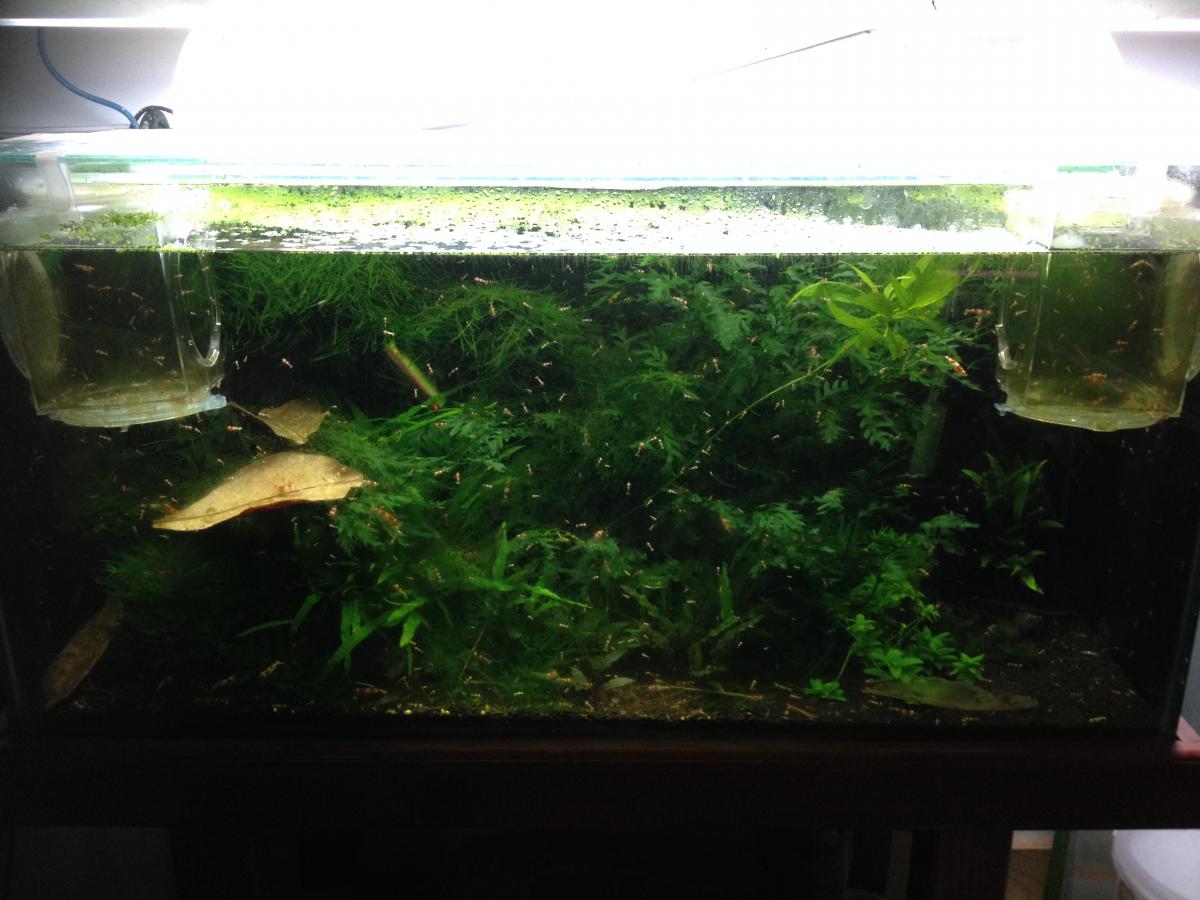
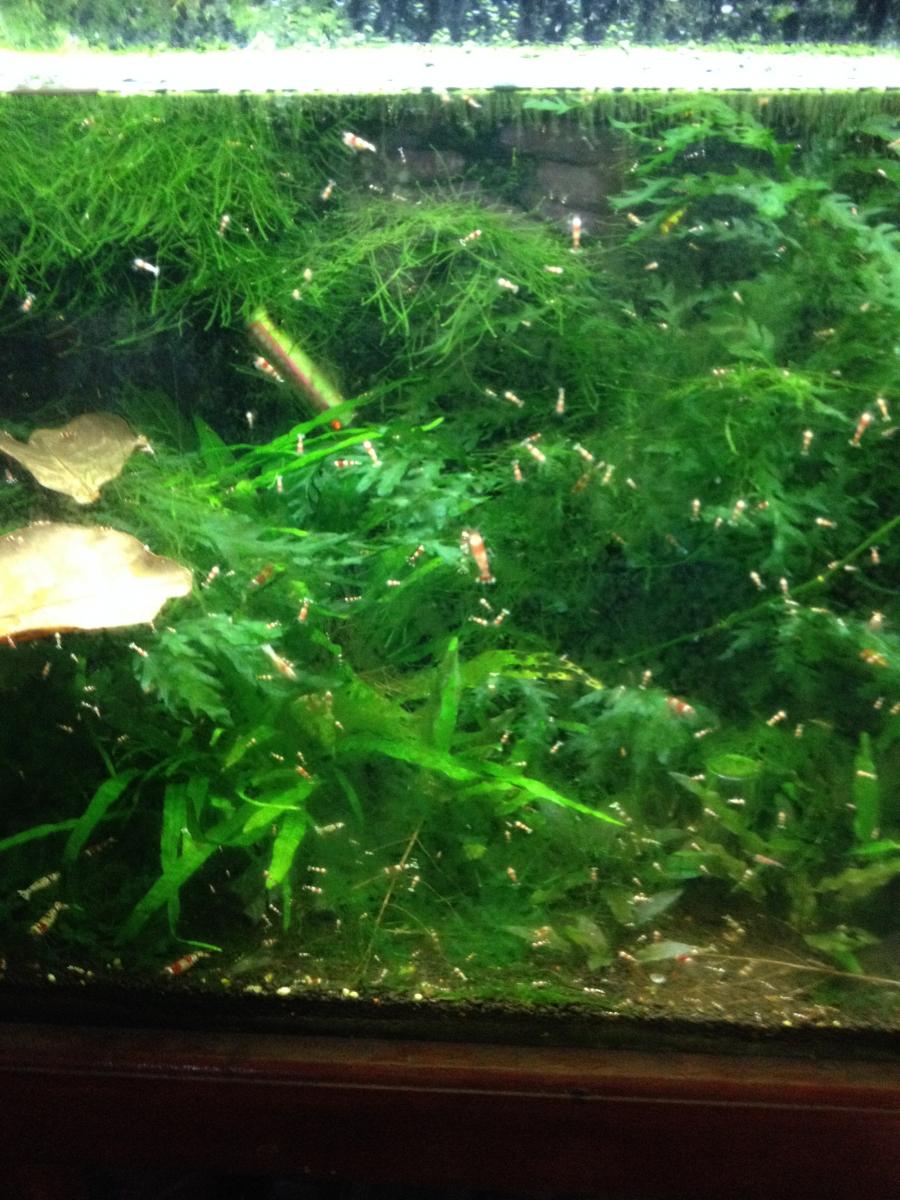
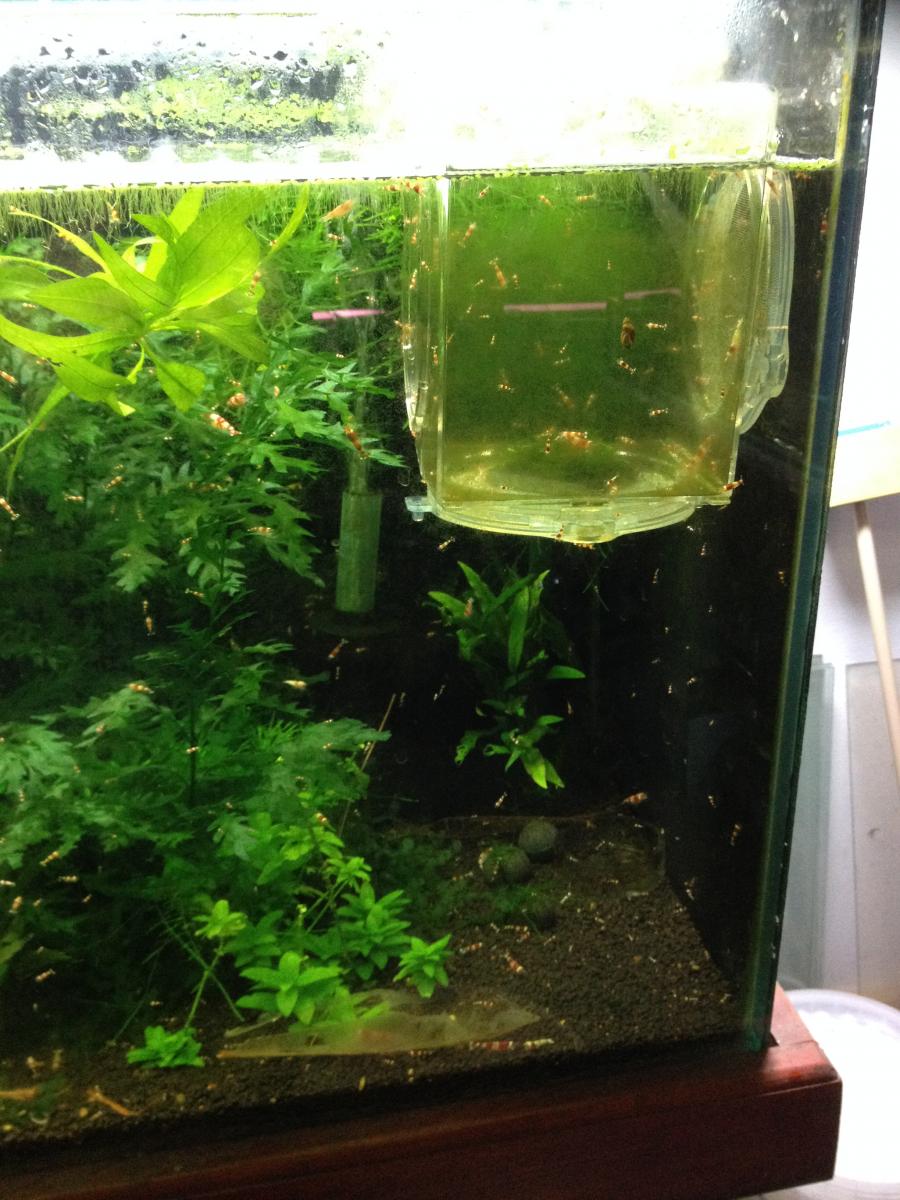
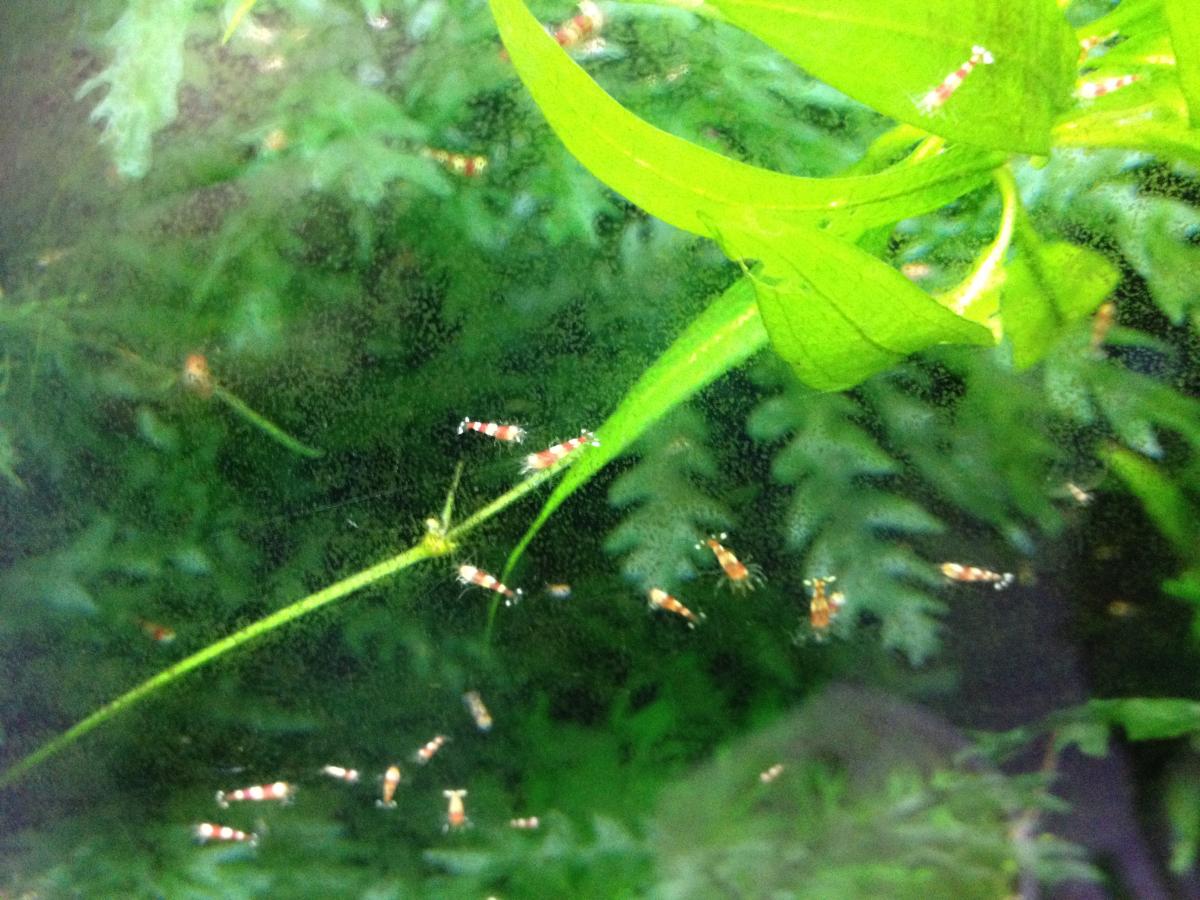
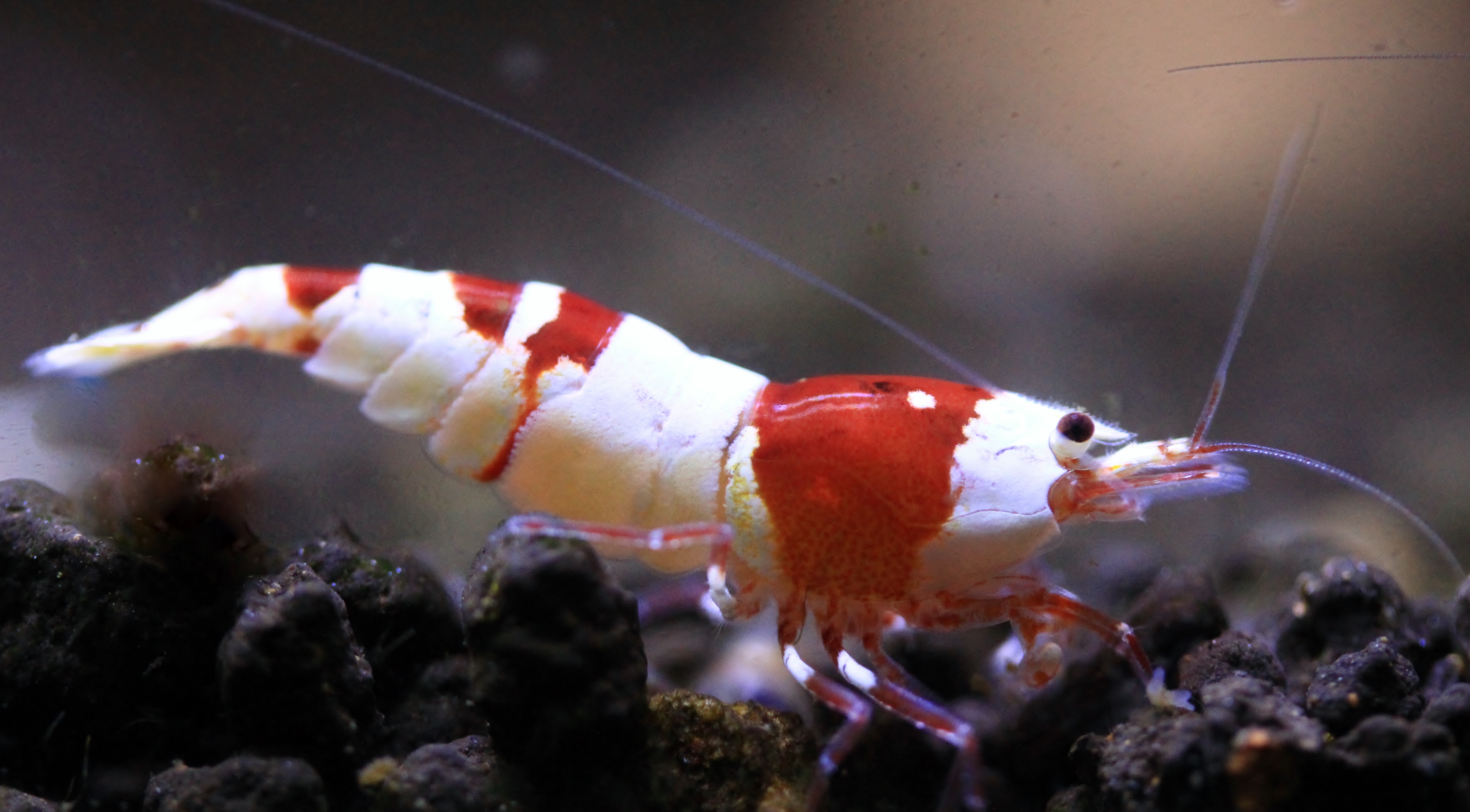
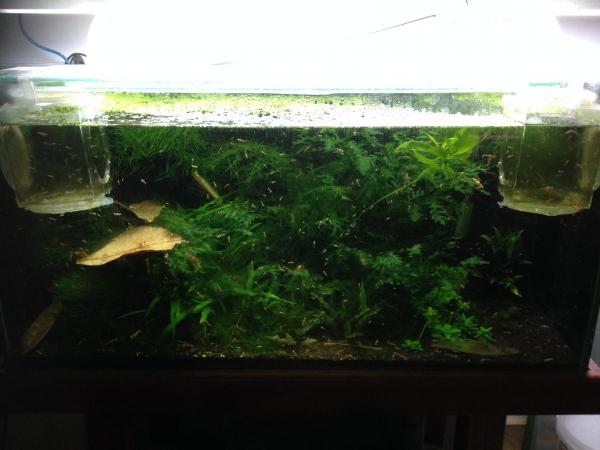
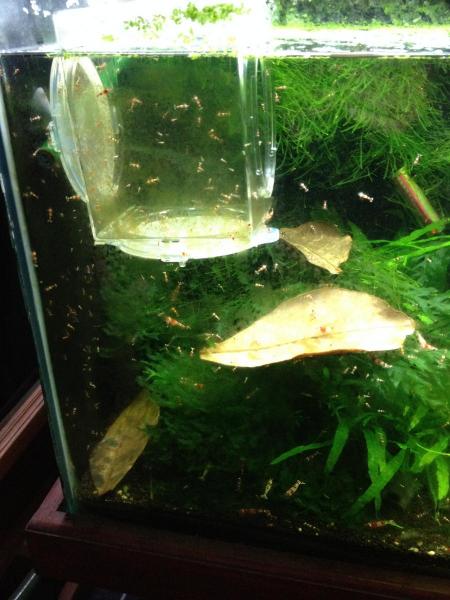
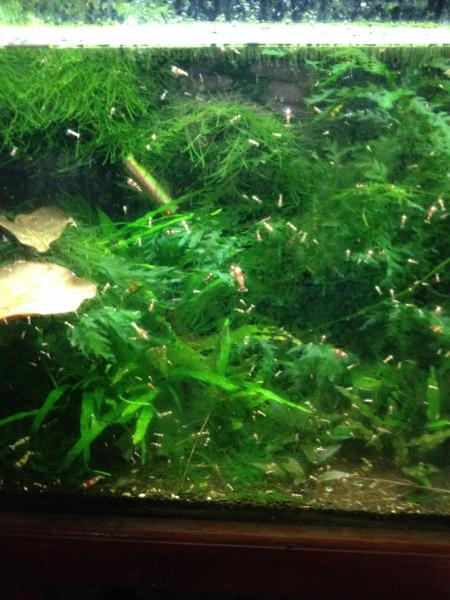
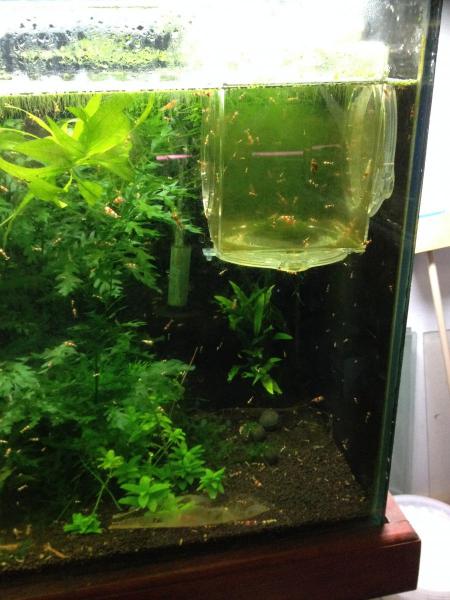
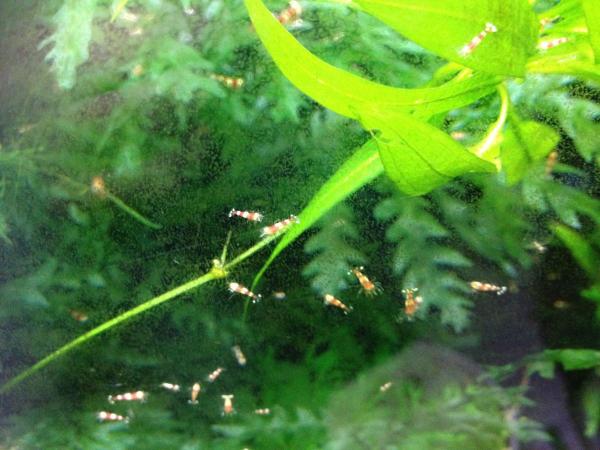
Just an update!! Took some pics on the weekend, not too high quality but good enough to show these CRS don't stop reproducing!! Its hard to imagine, looking at the tank, that it started with only 15 shrimp. It's a good reminder that you don't have to start with big numbers to get a colony going with time. Thanks for the positive feedback everyone. Just glad you can all appreciate it as much as I do!!
 2 points
 -
You can always have a combination of both. I have my bolbitis on driftwood with subwassertang and needle leaf Java tied too. My peacock has grown up the wall and gives a different look/perspective. Most of the mosses do well in low light so will still thrive under shade of bolbitis. Flame moss is a favourite of mine, and my shrimplets, as it has a different growth habit and is a little more interesting. Before ripping your current setup down, maybe just consider adding to what you already have?!? Sure it'll be great however you decide to go. But when in doubt just ask yourself "what would perplex do?" Lol1 point
-
 1 point
 -
 i know you just want to copy me and start again, you can just admit that Mr Crabs but yea if your not happy with the tank, just start again, its what i did, but if it goes bad, im done lol1 point
 -
Welcome to the CRS family wot_fan!! They look like wonderful founders for your colony. I look forward to lots of updates on this thread. Great you have been getting great advice to start you off too!! Enjoy! Also, Shrimpy Daddy, it would be great to have a list of good shops to visit from a first hand perspective. Don't need to list URLs, names and address would work, people can always google from there. This would be a great resource for us shrimp tourists!!!1 point
-
1 pointLooking good!! Exciting times that things are starting to cycle well!1 point
-
 Just a bit bored of the mosses I have, Peacock, Christmas and Subwassertang, think I'll just take 'em out and sell 'em off.1 point
 -
1 pointIf your not selective breeding a planted jungle should make a really good home . Put a small amount of soil or plant substrate under a sand cap.1 point
-
Do it!..... It looked really nice before...... Maybe a Dutch?1 point
-
 1 pointNot necessarily. If you boil the leaves first, that should remove a lot of the tannins. Likewise you could use activated carbon or other chemical absorption media in your filter.1 point
 -
 1 point
 -
 1 pointI've seen a reference that Caridina mccullochi is the same as C. indistincta but can't find it now. The closest I can find is that Tim Page puts it in the C. indistincta complex and they may be the same. Yes you're right EarthyGeo, I can't imagine any others than those 3 in SA. They are certainly widespread in the Vic Murray drainage and the Paratya and Macro are common. If anyone goes looking you'll need a hand lens or similar to distinguish Paratya from Caridina - the Paratya have supraorbital spines and Fishmosy has good illustrations on his thread in the Paratya section of SKF. The Caridina won't be common.1 point
 -
1 point1 point
 1 pointAny shrimp will be good for algae control, so long as you don't feed them to much or they wont work as hard, they will supply a small amount of CO2 for the moss to, with just a few shrimp I would not even run the filter, there will be enough gas exchange for the shrimp. I have a few static tanks with shrimp and plant in and they do fine, natural light to but shaded. Bob1 point
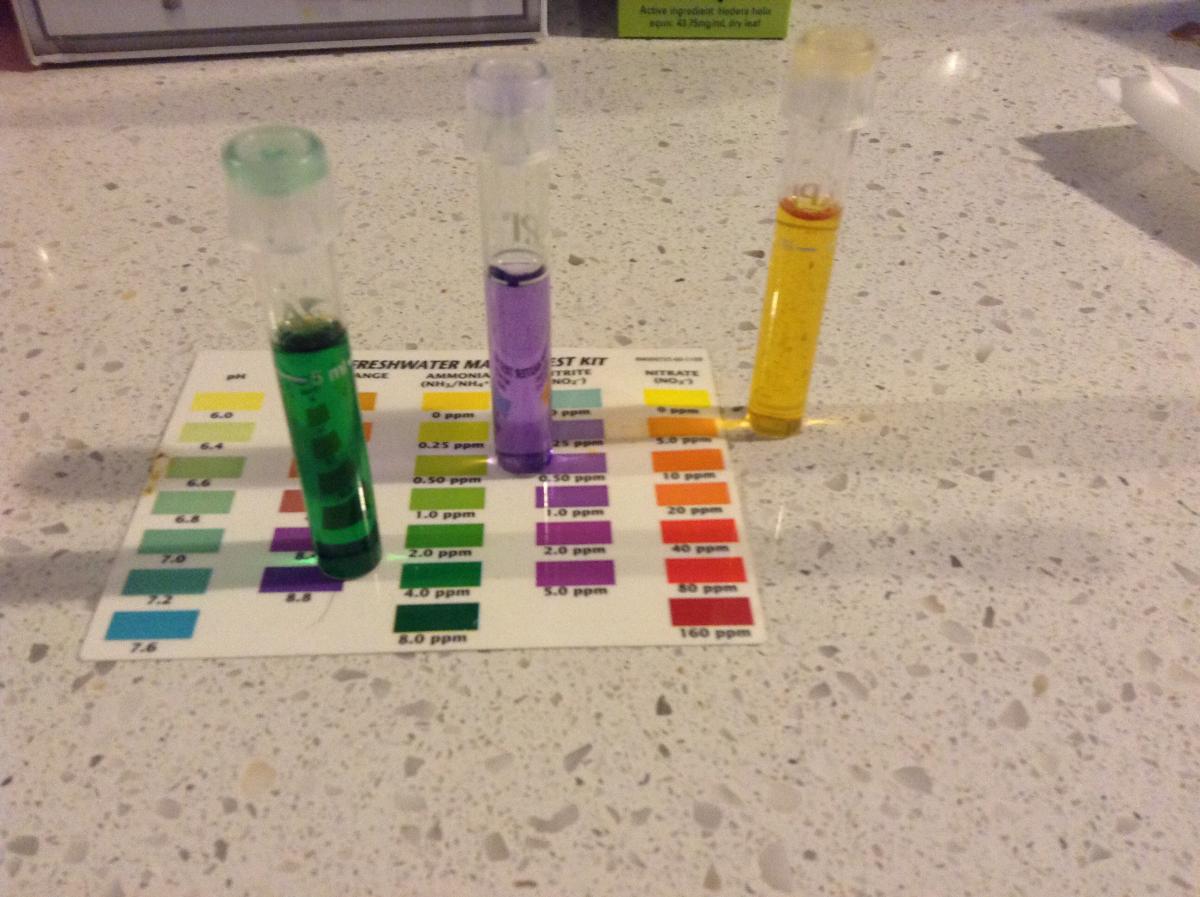
1 pointDay 16 cycle After thinking I had somehow stalled the cycle i did a 10% water change and I have finally found nitrites and nitrates showing up. I also tested the gh and kh. Gh looked like it changed at 4 but definitely 5 and the kh changed at 1. My Tds was 135 a couple of days ago but since the nitrites and nitrates appeared it has jumped to 155. I found this interesting as I have not added anything to the tank since the cycle started. Just wondering if the increase in tds is actually the nitrites and nitrates showing up? I also wanted to increase the gh to 5 but would like my tds to stay around 150. I guess once my cycle it complete I'll have to do a large water change with ro water. I was also trying to work out my calcium ratio but it seems that the calcium tester changes colour after one drop so I'll need to get my self a bigger vial so I can get a more accurate reading. So it looks like I am halfway there next update I will be setting up my air pump to run my sponge filters!
1 pointAny shrimp will be good for algae control, so long as you don't feed them to much or they wont work as hard, they will supply a small amount of CO2 for the moss to, with just a few shrimp I would not even run the filter, there will be enough gas exchange for the shrimp. I have a few static tanks with shrimp and plant in and they do fine, natural light to but shaded. Bob1 point
1 pointDay 16 cycle After thinking I had somehow stalled the cycle i did a 10% water change and I have finally found nitrites and nitrates showing up. I also tested the gh and kh. Gh looked like it changed at 4 but definitely 5 and the kh changed at 1. My Tds was 135 a couple of days ago but since the nitrites and nitrates appeared it has jumped to 155. I found this interesting as I have not added anything to the tank since the cycle started. Just wondering if the increase in tds is actually the nitrites and nitrates showing up? I also wanted to increase the gh to 5 but would like my tds to stay around 150. I guess once my cycle it complete I'll have to do a large water change with ro water. I was also trying to work out my calcium ratio but it seems that the calcium tester changes colour after one drop so I'll need to get my self a bigger vial so I can get a more accurate reading. So it looks like I am halfway there next update I will be setting up my air pump to run my sponge filters!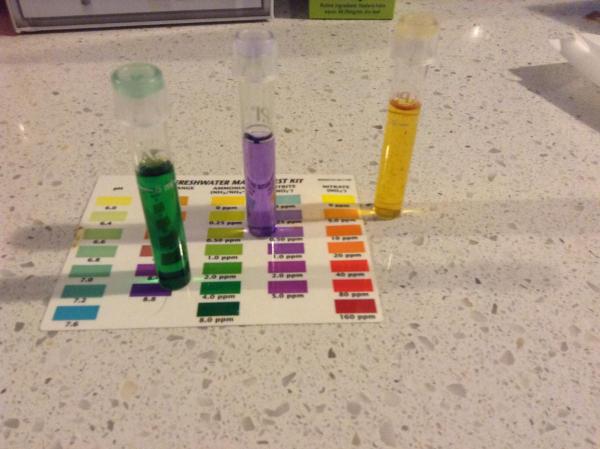 1 point
 1 pointNot sure how long his been holding but his still going. We've never tried stripping, they swallow eggs/fry when freaked out so no worth the risk. Betta dennisyongi seem to be getting very fat so hopefully they get lucky soon. Betta raja are getting really feisty. Betta ocellata have been sparring which is a good sign. Betta hendra are growing nicely still. Betta enisae tank needs to be drilled ready for sumping so happy they are all just chilling out together. Betta smaragdina have one very dominant boy, tanks a mix of self bred, imported, and bred by friends. Really need more tanks for them. Have a tank of betta krataios were holding for a friend, lovely little guys. Think that's everything we have now. Sumps hopefully set up in 3-4 weeks Time, which will mean crazy filtration for water quality, and can start hardcore live food feeding.1 point
 1 pointFrom what I can gather; you'll find Paratya australiensis, Caridina mccullochi and Macrobrachium australiense - all seem to be widespread in the Murray system across a few states. P. australiensis is more widespread. I don't know much about distribution, but it is something I'm interested in. And it seems not a lot is known about how large these populations are or how far they extend. I've been doing some digging around in Australian ecology journals, with not a lot of luck.1 point
 1 pointA nice water change and add some bloodworms or something super high in protein :) That's what I do1 point
 Thank for the input Anaeflurane & kizshrimp. I will give it a try in my TB tank. Have a Redwine TBM born yesterday who can be the test subject1 point
 Looks fantastic. This is my next step down the track and i too will be asking thousands of questions! Keep the pics coming.1 point
1 pointNo joke you give a lot of great advise all the time. We are lucky to have you and all the other knowledgeable ppl that contribute to this forum.1 point
Looks fantastic. This is my next step down the track and i too will be asking thousands of questions! Keep the pics coming.1 point
1 pointNo joke you give a lot of great advise all the time. We are lucky to have you and all the other knowledgeable ppl that contribute to this forum.1 point Beautiful shrimps, and that colony is getting huge! Congrats!1 point
 1 pointI know Slate is inert for sure. A compressed and hardened clay. Lava Rock or Unzan rock as Takashi Amano calls it is also an igneous inert rock. Depending on where they were collected, the colour varies from dark brown/black to a red colour. Ohko dragonstone, I have heard, is hardened clay - so this will be ok as well and will not raise water parameters (but I haven't got one to test). Seiryu as mentioned isn't suitable and will change water parameters. But I'm not convinced all seiryu are equal. The real seiryu is a Metamorphic Rock from Japan. With their high demand around the world for aquascaping, they are now illegal to export from Japan. If they are not exporting it anymore, then what are the stones labelled seiryu really? Most of the Seiryu stones being sold outside of Japan are typically Ryouh Stones and are just commonly misidentified. However, even real Seiryu stones will definitely raise your pH and gH depending on how many per litre you have added into your tank. Ryouh stone looks very similar to Seiryu. A lot come from China, some from Japan. But many countries have rocks that can be considered to be ryouh, but obviously they call it a different name. Ryuoh Stones are limestones and they are a metamorphic type of rock, so they will raise your pH over time. Limestones are full of calcium and will leech into the water overtime raising TDS, GH, KH and pH. Yingshi, I believe this is the same type of rock as Ryouh, but from China. So same explanation as above. Manten Stones are an igneous rock that are created from the magma of a volcano. The name was introduced by Takashi Amano. Just because Takashi san named it doesn't mean that this type of Igneous rock isn't found elsewhere in the world. If you live near a mountain that is considered a dormant volcano, it could be your best bet in getting some free Manten Stones for your aquascape. Unfortunately, they don't occur naturally in Oz. The problem is Manten type rocks do get misclassified all the time. So my advice is to test it anyway if you think you have manten rocks. Soak them in a bucket of water, test the parameters. Then test them again after a week. A real Manten rock, being volcanic in origin, will not raise your water parameters. Then there is a similar stone to Manten called Yamaya that is used in aquascaping a lot. For filler or for borders. They are generally small pieces, so they don't get used as a main feature. Aquascapers use this rock to fill gaps in driftwood, or to prop other rocks up, or as borders to larger rocks to draw attention to those feature rocks. Again this is an Igneous, volcanic rock, that will not change water parameters. Then there is Petrified Wood which is typically an inert igneous rock. But depending on where it has come from and what rocks it was petrified in, they can raise pH. So again best to test this one just to be sure. I've come to a personal conclusion that it's too difficult building an Iwagumi style tank for shrimps. The constant battle with water parameters goes against the stability concept for shrimps. Simple low demand plants and substrate is so much simpler. But that's just me, I have too many tanks to fuss over and I'm lazy.1 point
1 pointIf you want a tank that is easy to cull but yet provide shrimp to hide and walk around, you may want to consider my approach for non-CO2-injected tank. My approach is have a lot of big rocks with 20% slow growing plant that does not attract gunk (usually I use bucephalandra and anubias). In this way, you can see all shrimps from top-view but yet they have a lot of places to walk and hide. Below are pictures of two of my such tanks: Not sure you could find petrified wood (fossilised wood) in AU. If you can, there are some highly porous petrified wood that shrimp loves them. The rocks in my first picture is one of them; it is a type of partial petrified wood. For the bacteria bloom, it should be too much organics. Put in some Purigen and it will clear it for you. 70cm height cabinet is too low to have double layer. Hence, trickle filter will be out for you. You don't necessarily need to follow my sump design. My sump design will require addition pump for pumping water to the filter compartment. Most people will design the overflow pipe going to the filtration compartment. I prefer mine is because I am able to have higher speed of water going to the filtration chamber and configure the return pump to pump slower water. No good or bad with both design. Just that I am a person who like to fine tune every component, which is why I opted for that design. ;) Regarding the shrimp type you intended to keep, I will suggest keeping the BB with KK, instead of KK or WR. BB breed with KK will give you shadow KK or BB with black colour (similar to hinomaru/mosura KK). If you keep KK with WR, you will end up with the lowest denominator, which is brown-based shrimp. The protest is gone. Actually, it is not as bad as what being broadcast on the news. News always blow things up to zest up the news. :( However, I will not suggest you to go to the HK Disneyland for the following two reasons: It is very small and lame. If you been to Disneyland in other country, you will be utterly disappointed. During holiday season (now till Lunar New Year), there will be a lot of mainlander tourist. These people do not have the culture to queue up. Hence, they will spoil your holiday mood.1 point
1 pointYou are welcome and thanks for writing me such a detail reply. The bigger floor area theory is assuming the shrimp will pick on the substrate. What I had been observing is that it works better to have more space for microbial and zooplankton to hide; this is the reason why some strong shrimp will dig deeply into the substrate. Hence, it is not necessary to have large surface area. I did aquascaping for all my tanks. Surprising, they love to pick on porous rocks and driftwood more than on the substrate, except when I am feeding them powder food. If space is a constraint for you, then there is nothing much you can do. ;) Are you planning to have those shrimp only tank with just substrate and a few mosses? If yes, you may want to hear my recent experience. Recently I setup a tank that has a little aquascaping but it is kind of "open concept". My shrimps hate it. It is like there is no place that they can rest and feel safe. End up, all of them will go to some corner of the tank to rest or sometime hide under the shade of the water outlet. As such, I am concluding tank that is too open is not conducive to shrimp. End up, I think I will tear it down and redesign the scape. Below is the tank design they hated very much: I have this problem of treating my shrimps like my pet, such as dog or cat. Hence, I will try to give them the best life. As such, I may be overly pampering them when compared to other people. LOL!!! Regarding the overflow, I forgot to mention something. Are you placing this tank is living room or somewhere noise is a concern? Overflow can get pretty noisy. One way to reduce the noise is to add a ball-valve to the overflow. Add it where it will be parallel to the water level. Leverage on the ball-valve to control the flow rate such that the water level reaches about half of the hole. In this way, you will be able to cut away 90% of the noise. By the way, be it the overflow is from bottom or from the back, you will still need removable coarse sponge to cover the hole. Last time I only cover my overflow with mesh. End up, I get like 50 babies/teenage shrimps in my filter sock every week. LOL!!! For the outlet, make sure it is facing away from the overflow. In this way, the water will circulate nicely from the top and down then back to the overflow. In addition, you need to make it moveable such that you can adjust the up and down angle freely. This will help you to adjust the angle of the water stream so that it achieve the maximum water surface agitation. With slow water speed, the water surface agitation is not meant for aerating the water (you need to add air-pump & air-stone in the sump), it is more for removing bio film. Usually with overflow, it will skim the biofilm. However for shrimp tank case, we need to cover the overflow with something (I suggested coarse sponge) to prevent shrimp swimming into the overflow. Once the overflow has less than 2cm width, the biofilm will not be able to be skimmed. Sounds good on your ATO plan. Just make sure you get a reliable solenoid. ;) Here is a picture of the front-side view of the sump tank but I think can't see much (Ignore the activated carbon. I usually use activated carbon during cycling): Here is a picture of the sump without water: By the way, how tall is your cabinet? If it is very tall, you can consider building a trickle filter. Basically, you will have 2 levels of sump tank (totally segregated). First level is the trickle filter and the second level is the consolidation/reservoir sump tank. The good thing for trickle filter is that all the filter media are not submerged, thus less waste material will be dissolved into the water. In addition, it helps to aerate the water too.1 point
1 pointI know Slate is inert for sure. A compressed and hardened clay. Lava Rock or Unzan rock as Takashi Amano calls it is also an igneous inert rock. Depending on where they were collected, the colour varies from dark brown/black to a red colour. Ohko dragonstone, I have heard, is hardened clay - so this will be ok as well and will not raise water parameters (but I haven't got one to test). Seiryu as mentioned isn't suitable and will change water parameters. But I'm not convinced all seiryu are equal. The real seiryu is a Metamorphic Rock from Japan. With their high demand around the world for aquascaping, they are now illegal to export from Japan. If they are not exporting it anymore, then what are the stones labelled seiryu really? Most of the Seiryu stones being sold outside of Japan are typically Ryouh Stones and are just commonly misidentified. However, even real Seiryu stones will definitely raise your pH and gH depending on how many per litre you have added into your tank. Ryouh stone looks very similar to Seiryu. A lot come from China, some from Japan. But many countries have rocks that can be considered to be ryouh, but obviously they call it a different name. Ryuoh Stones are limestones and they are a metamorphic type of rock, so they will raise your pH over time. Limestones are full of calcium and will leech into the water overtime raising TDS, GH, KH and pH. Yingshi, I believe this is the same type of rock as Ryouh, but from China. So same explanation as above. Manten Stones are an igneous rock that are created from the magma of a volcano. The name was introduced by Takashi Amano. Just because Takashi san named it doesn't mean that this type of Igneous rock isn't found elsewhere in the world. If you live near a mountain that is considered a dormant volcano, it could be your best bet in getting some free Manten Stones for your aquascape. Unfortunately, they don't occur naturally in Oz. The problem is Manten type rocks do get misclassified all the time. So my advice is to test it anyway if you think you have manten rocks. Soak them in a bucket of water, test the parameters. Then test them again after a week. A real Manten rock, being volcanic in origin, will not raise your water parameters. Then there is a similar stone to Manten called Yamaya that is used in aquascaping a lot. For filler or for borders. They are generally small pieces, so they don't get used as a main feature. Aquascapers use this rock to fill gaps in driftwood, or to prop other rocks up, or as borders to larger rocks to draw attention to those feature rocks. Again this is an Igneous, volcanic rock, that will not change water parameters. Then there is Petrified Wood which is typically an inert igneous rock. But depending on where it has come from and what rocks it was petrified in, they can raise pH. So again best to test this one just to be sure. I've come to a personal conclusion that it's too difficult building an Iwagumi style tank for shrimps. The constant battle with water parameters goes against the stability concept for shrimps. Simple low demand plants and substrate is so much simpler. But that's just me, I have too many tanks to fuss over and I'm lazy.1 point
1 pointIf you want a tank that is easy to cull but yet provide shrimp to hide and walk around, you may want to consider my approach for non-CO2-injected tank. My approach is have a lot of big rocks with 20% slow growing plant that does not attract gunk (usually I use bucephalandra and anubias). In this way, you can see all shrimps from top-view but yet they have a lot of places to walk and hide. Below are pictures of two of my such tanks: Not sure you could find petrified wood (fossilised wood) in AU. If you can, there are some highly porous petrified wood that shrimp loves them. The rocks in my first picture is one of them; it is a type of partial petrified wood. For the bacteria bloom, it should be too much organics. Put in some Purigen and it will clear it for you. 70cm height cabinet is too low to have double layer. Hence, trickle filter will be out for you. You don't necessarily need to follow my sump design. My sump design will require addition pump for pumping water to the filter compartment. Most people will design the overflow pipe going to the filtration compartment. I prefer mine is because I am able to have higher speed of water going to the filtration chamber and configure the return pump to pump slower water. No good or bad with both design. Just that I am a person who like to fine tune every component, which is why I opted for that design. ;) Regarding the shrimp type you intended to keep, I will suggest keeping the BB with KK, instead of KK or WR. BB breed with KK will give you shadow KK or BB with black colour (similar to hinomaru/mosura KK). If you keep KK with WR, you will end up with the lowest denominator, which is brown-based shrimp. The protest is gone. Actually, it is not as bad as what being broadcast on the news. News always blow things up to zest up the news. :( However, I will not suggest you to go to the HK Disneyland for the following two reasons: It is very small and lame. If you been to Disneyland in other country, you will be utterly disappointed. During holiday season (now till Lunar New Year), there will be a lot of mainlander tourist. These people do not have the culture to queue up. Hence, they will spoil your holiday mood.1 point
1 pointYou are welcome and thanks for writing me such a detail reply. The bigger floor area theory is assuming the shrimp will pick on the substrate. What I had been observing is that it works better to have more space for microbial and zooplankton to hide; this is the reason why some strong shrimp will dig deeply into the substrate. Hence, it is not necessary to have large surface area. I did aquascaping for all my tanks. Surprising, they love to pick on porous rocks and driftwood more than on the substrate, except when I am feeding them powder food. If space is a constraint for you, then there is nothing much you can do. ;) Are you planning to have those shrimp only tank with just substrate and a few mosses? If yes, you may want to hear my recent experience. Recently I setup a tank that has a little aquascaping but it is kind of "open concept". My shrimps hate it. It is like there is no place that they can rest and feel safe. End up, all of them will go to some corner of the tank to rest or sometime hide under the shade of the water outlet. As such, I am concluding tank that is too open is not conducive to shrimp. End up, I think I will tear it down and redesign the scape. Below is the tank design they hated very much: I have this problem of treating my shrimps like my pet, such as dog or cat. Hence, I will try to give them the best life. As such, I may be overly pampering them when compared to other people. LOL!!! Regarding the overflow, I forgot to mention something. Are you placing this tank is living room or somewhere noise is a concern? Overflow can get pretty noisy. One way to reduce the noise is to add a ball-valve to the overflow. Add it where it will be parallel to the water level. Leverage on the ball-valve to control the flow rate such that the water level reaches about half of the hole. In this way, you will be able to cut away 90% of the noise. By the way, be it the overflow is from bottom or from the back, you will still need removable coarse sponge to cover the hole. Last time I only cover my overflow with mesh. End up, I get like 50 babies/teenage shrimps in my filter sock every week. LOL!!! For the outlet, make sure it is facing away from the overflow. In this way, the water will circulate nicely from the top and down then back to the overflow. In addition, you need to make it moveable such that you can adjust the up and down angle freely. This will help you to adjust the angle of the water stream so that it achieve the maximum water surface agitation. With slow water speed, the water surface agitation is not meant for aerating the water (you need to add air-pump & air-stone in the sump), it is more for removing bio film. Usually with overflow, it will skim the biofilm. However for shrimp tank case, we need to cover the overflow with something (I suggested coarse sponge) to prevent shrimp swimming into the overflow. Once the overflow has less than 2cm width, the biofilm will not be able to be skimmed. Sounds good on your ATO plan. Just make sure you get a reliable solenoid. ;) Here is a picture of the front-side view of the sump tank but I think can't see much (Ignore the activated carbon. I usually use activated carbon during cycling): Here is a picture of the sump without water: By the way, how tall is your cabinet? If it is very tall, you can consider building a trickle filter. Basically, you will have 2 levels of sump tank (totally segregated). First level is the trickle filter and the second level is the consolidation/reservoir sump tank. The good thing for trickle filter is that all the filter media are not submerged, thus less waste material will be dissolved into the water. In addition, it helps to aerate the water too.1 point