
Leaderboard
-
fishmosy
Members3Points4594Posts -

kizshrimp
Members2Points506Posts -
KillieOrCory
Members2Points645Posts -

warren63
Members1Points253Posts
Popular Content
Showing content with the highest reputation on 12/04/14 in Posts
-
2 pointsI'll get pics of mine up soon. One thing I have noticed is that some of the names of buces being sold have been twisted alot lately. I think it happens through simple mistakes but also laziness. I've seen a few sold (not on SKF) without a name because they had forgotten it. No doubt the buyer will want to have a name, so they will probably pick a name that looks close or worse make one up. In my opinion, thats pretty slack. Its not too hard to write down the name of the plant when you get it. In fact I will show you the system I use in addition to recording the names so that I can always ID my buce. I've also seen instances where two names are used to describe one thing. For example, velvet tricolour. Velvet is one type, tricolour is another. Because buces are so awesome, I would hate to see people being put off buying them because they have a repu tation for being mis-ID'd, which is what I see happening if this kind of thing continuing. My point is, I want to be able to buy a velvet, and know I'm getting a velvet. Rant over.2 points
-
 1 pointIn this topic I will post the quality characteristics of Pure Red Line shrimp, how I believe they should be. Most of them are commonly accepted and some of them are personal preferences. I will show you examples of colored legs, white and red density, body, tail, antenna's and more. We'll kick of with the obvious: pure white. The white of a PRL should be pure white. Very bright, but also soft like silk. This has less to do with the thickness. It should not have any yellow or pink tint. For example: Yellow tint: Pink tint: And finally the pure white as I like it: I admit that lightning is a little to bright on this picture, but believe me this is one piece with nice clear white in real life. And another picture of this piece: Next time I will show you examples of leg coloration! Any questions or requests for the next post, feel free to ask.1 point
 -
1 pointI was wondering how many people are keeping pure tigers? Since the Tiger shrimp has been classified as Caridina mariae I am more interested in keeping them then before. With everybodies love affairs with pintos I hope there are still some pure tigers around in the Australian hobby.1 point
-
 1 pointIt's new. There's a thread in the general discussion area http://shrimpkeepersforum.com/forum/index.php/topic/7939-caridina-cantonensis-gets-a-new-name/1 point
 -
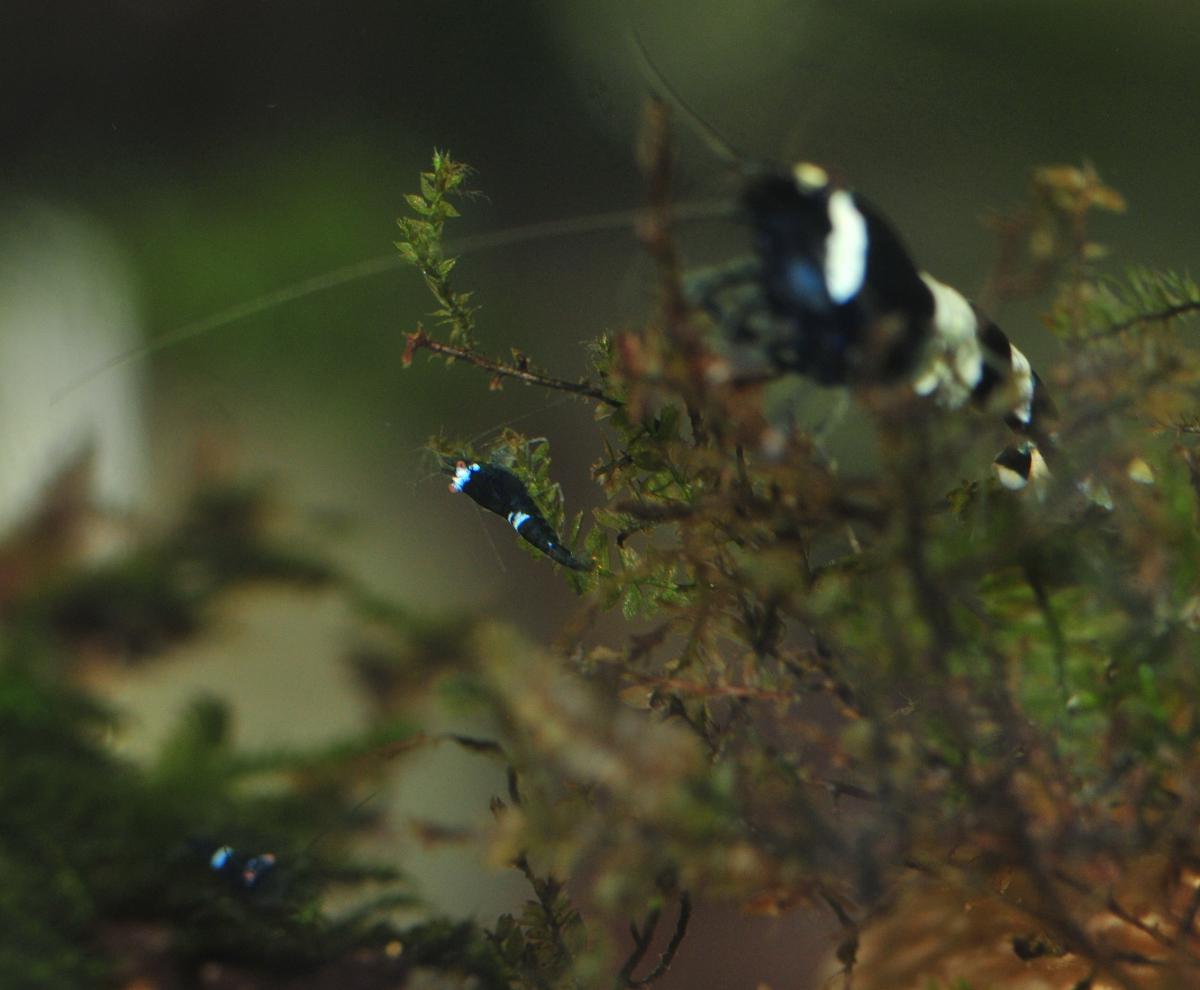
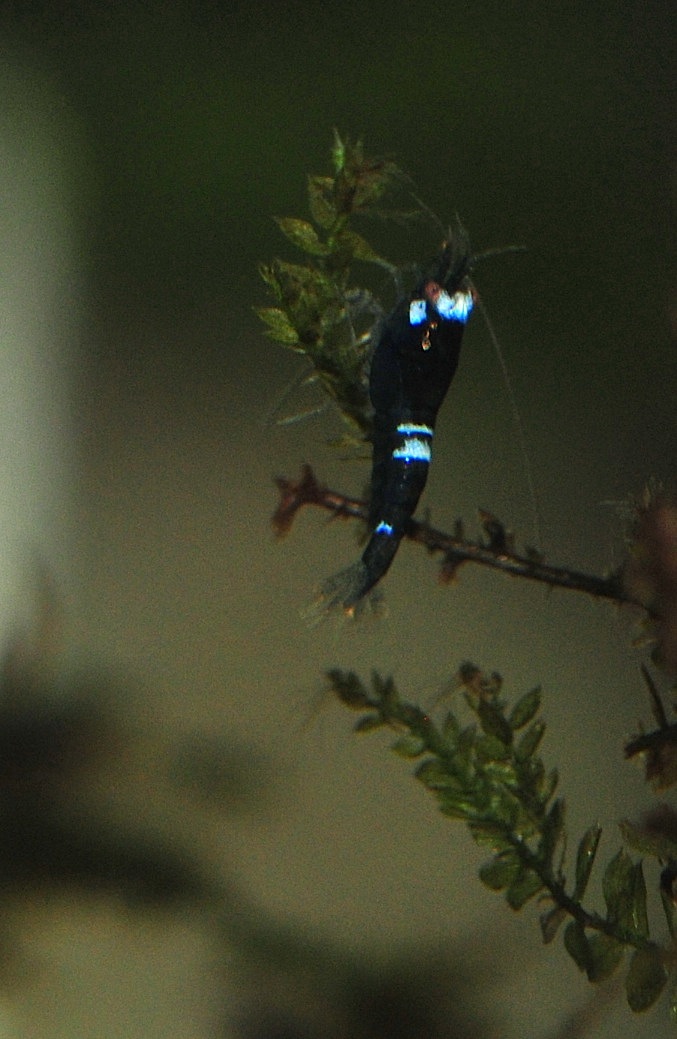
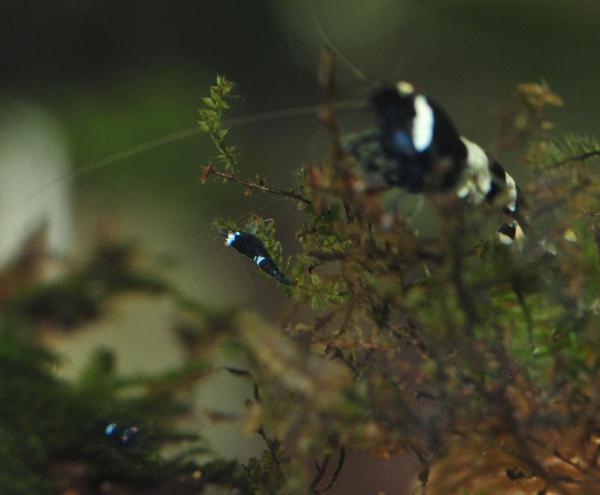
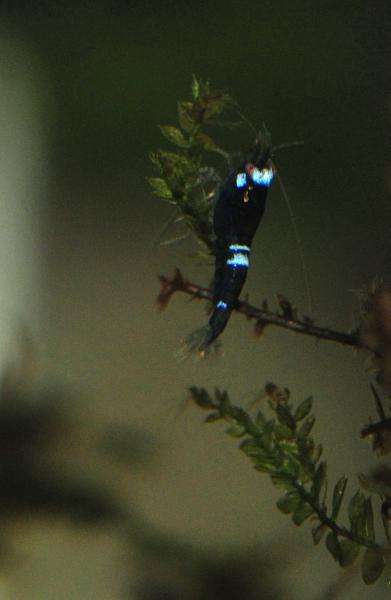
1 pointThanks guys! Pretty soon after my first post I was able to quickly get a couple of better shots of one of the baby KKs. They're visibly grown and becoming more adventurous now, so if I took some time out to sit in there with the camera I'd probably get plenty of chances with baby shrimp near the front glass. A young adult Panda with 2 babies: and a close up: Hope you like them, cheers!
 1 point
 -
 1 pointI do the same as Newbreed describes, except I place more stringent conditions to drip acclimatising the new shrimp I introduce. Test TDS, pH and GH of the original water it came in. I then drip acclimatise for 10 hours <-- slower rate of change. Keep an eye on the external bucket or breeder box, ensuring it's not too hot (summer) or too cold (winter). The bucket with the new shrimp is in a blacked out environment <-- ie. no bright lights An air stone pumping air is included for my extended acclimatising duration. At around the 8 hour mark, I will test the water the shrimp is in to ensure that TDS now closely matches the tank water. pH and GH should be very close by this time when 2-3 times the amount of tank water is now in the bucket with the new shrimp. If TDS is not close to the tank water at the 8hr mark, I'll increase drip rate for the next 2 hours. I pay more attention to matching TDS than any other parameter when I drip acclimatise shrimp. I've adopted this for any new fish I get as well. I believe the pH shock people talk about when introducing fish to new tanks, is really TDS shock. The last time I bought a fish from the fish store, the water from the LFS was 7-ish pH. But guess what, the TDS was a ridiculous 400+. By comparison, my amazonian tank pH was 6.8, with a TDS of 160 - 165. Guess which parameter would be the "shock"? It's not a once off occurrence, I'm convinced most LFS don't test TDS in their own tanks.1 point
 -
1 point
-
1 pointIve been told you need green water to raise the shrimplets. Good luck and keep us updated1 point
-
Cool. I can pass on the paper to whoever is interested once I get a copy.1 point
-
 1 pointI've been photographing the riffles again (and I have finally worked out how to attach the gallery photos to a thread! Yay! )1 point