
Leaderboard
-

jayc
Moderators2Points6248Posts -

ellasfish
Members1Points52Posts -

ineke
HOF Member1Points9026Posts -

BlueBolts
Members1Points5650Posts
Popular Content
Showing content with the highest reputation on 07/19/14 in Posts
-
1 pointIt was only a matter of time before somebody came up with the idea of bottling the qualities of Catappa leaves in liquid form. And it looks like Easy-Life have done it first. Catappa leaves, also known as Indian Almond Leaves (IAL) or Ketapang isn’t specifically used as an agent to reduce pH. Although it does assist in reducing pH, it’s the medicinal properties that is marketed as its main advantages. The tree is known to produce a poison in its leaves and sap to defend against insect parasites. When the dried leaves falls into the river, a strong brown dye is given off. The dye is full of organic acids like humic and tannins. These lower the pH of the water, absorb harmful chemicals and help create a soothing and calm environment for the fish. They also have anti-bacterial properties. The catappa tree is a big 'pagoda-shaped' tree with distinctly tiered branching. The origin of the tree is in Malaya. A noted peculiarity of this species is the tendency for its leaves to turn bright red and fall - a rarity in the tropics where most trees remain evergreen throughout the year. The bark, fruit and leaves of the tree have traditionally been used to treat various ailments ranging from skin disease, headaches, dysentery and colic. The Easy Life product also claims to lower germ density (yes), prevent fungal infections (yes), improve growth (maybe) and prevent slime coat issues, stimulate vitality and colour of fish and shrimp (in fish it often does, yes. But yet to be confirmed for shrimp). A bit about the benefits of Blackwater, Humic and Fulvic acids needs to be discussed first. The breakdown of the IAL leaves as it decays produces the organic acids Fulvic and Humic. It benefits not only fish, or shrimp but also plants. Organic acids like these assist in modifying the pH of a substrate/soil to change the valence state of iron, calcium, magnesium, molybdenum, copper, manganese, zinc, cobalt, and nickel in hydroponic, aka emerged culture, submerged culture and terrestrial/traditional horticulture to increase solubility of those elements. The plants can take up these minerals more readily. Not to mention that the blackwater extract in itself contains some trace minerals as natural fertiliser. If it makes minerals more soluble for plants, I believe, it will for shrimps as well. But this is just my opinion, nothing scientific. Note: blackwater extract doesn't provide minerals and nutrients to the shrimp directly, but is helps keep the minerals already in your tank in a soluble form that assists the shrimp in absorption of these minerals through the shrimp’s gills. Fulvic acid, and Humic acids seem to have certain antibacterial qualities as well. It can assist in preventing bacterial outbreaks. Particularly during the warmer months of Summer. Fulvic Acid is said to absorb or neutralise harmful toxins. I can't prove it. Just listing one of the possible benefits. But IAL (Ketapang/Catappa) extract has been used to treat Hole in the head disease in discus with more instances of positive results then negative. So it must be doing something. Helps soften Hard water (GH). Making it ideal for Amazonian fishes and Caridinia shrimp that we keep. Helps reduce pH (Note: this assumes KH is under control, as it does not specifically reduce KH). Another often unspoken benefit of blackwater, is that the increase in humic & fulvic acids in the tannin, often triggers spawning behaviours in fish and shrimp. As the rains fall, they wash through the decaying vegetation close to the banks on the rivers, into the water. The increased levels of these organic acids is detected by the fish or shrimp and they sense the onslaught of the rainy season and start spawning. It makes sense for aquatic creatures to time their spawn to these times of increased humic/fulvic acid periods. As we have seen from the benefits above; antibacterial, antifungal properties keep the eggs from being susceptible to pathogens. Blackwater extract behaves very similarly to the Catappa leaves in all aspects, except in a liquid form. However, about the only drawback keeping everyone from diving into using such a great product is the fact that blackwater extract can make your tank water go … well … black! It’s unsightly to some aquarist. The brown tanned coloured water is a by product of all blackwater extract products – until now! The Easy-Life Catappa-X is, instead, a clear liquid. Easy Life Catappa-X is a product of Netherlands. Comes in sizes from 100ml, 250ml, 500ml and 1L. For a product that aims it’s marketing differentiation to be a blackwater extract without the black stain, it’s ironically packaged in a black bottle. I guess, it’s what’s inside the bottle that counts and we should not judge the product by it’s bottle alone. The liquid is clear as mentioned, with a slight yellow tint. There is absolutely no smell to it. But don’t ask me about it’s taste ☺ Blackwater extract on the other hand has an earthy, organic smell. Under normal dosages I could not detect any change to pH, TDS, GH or KH readings. I used the API test kits and a HM Digital AquaPro AP-2 TDS pen for these measurements. The dosage levels for Easy life Catappa-X is at a rate of 10ml per 100L weekly (or 1ml per 10L). Which is a lot more concentrated than normal Blackwater extract. So a smaller bottle will last as long as some larger Blackwater extract products. The Catappa-X bottle comes with a handy measuring cup that is stored on the bottle cap, so you won’t need to go hunting for one each time you need to use the product. There are no known side effects of over dosing blackwater extract, IAL, fulvic or humic acids. So apart from dropping the pH lower than what you want it to be, the product is very safe to use especially if you follow the dosing instructions. As with all additives to a shrimp/fish tank, the usual caution applies in adding things too fast. Take it slow when mixing in the Catappa-X. Always dilute it in tank water before dripping it in or adding it slowly. Avoid dumping Catappa-X or any other additives into a shrimp tank in one go. So even if you do overdose Catappa-X slightly, there is no need to worry about your livestock. Advantages A liquid application means you can add it into the tank for instant effect. You don’t need to wait for the Catappa leaves to breakdown. No more bits of rotting leaves to clog your filter intake. Sure the shrimp don’t get to eat the decaying leaves, but then there are other things that can be fed to the shrimp. This product certainly suits aquarist with tanks in a formal area, where the unsightly look of rotting leaves or brown water need to be kept to a minimum. It is beneficial for freshwater fish and shrimps, and planted tanks. I have used this on my Amazonian fish tank that have Discus, Apistogrammas, Cardinal Tetras, Corydoras julii, Otocinclus and Beckfords Pencilfish. I have also used it in my tank with Fundulopanchax gardneri N’sukka Killifish. And I have used Catappa-X on my Red Cherry, Crystal Red and Crystal Black shrimp tanks. There have been no signs of ill effects to date with any of the above fish and shrimp. In fact, all fish and shrimp are looking active and brightly coloured. My Killifish spawned 2 days ago, eggs all over the plants and tank glass. This occurred after adding Catappa-X for 3 days prior to that. It could have been a coincidence, as she was full of eggs already. But the extra fulvic/humic acids from the Catappa-X might have triggered a spawning response by simulating the start of the rainy season. For those who want the benefit of Catappa and blackwater extract without the physical presence of leaves or bark or brown tanned water, then make your life easy with Easy-Life Catappa-X. Price: $19.49 (250ml), $33.95 (500ml) and $47.95 (1L). More info from www.thetechden.com.au Don’t forget Tech Den has been generous enough to give SKF members a further 10% discount if you apply the skf code at checkout.1 point
-
1 point
-
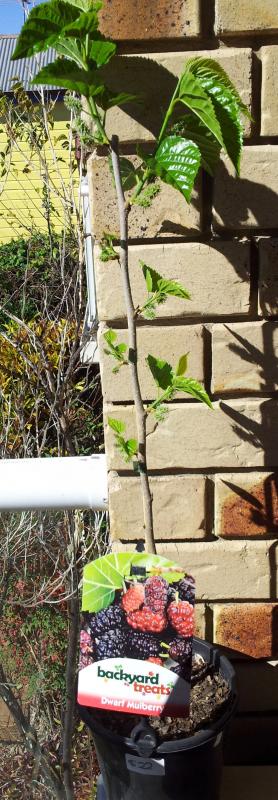
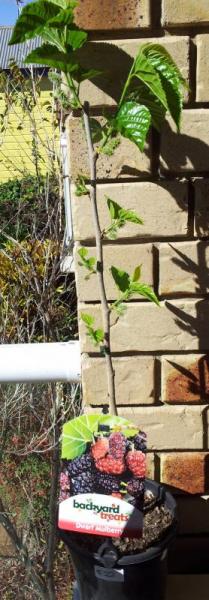
I thought I had a lifetime supply of mulberry leaves as my neighbour had a big tree that hang over the fence, until one morning I heard a lot of chain sawing going... yes they chop down the mulberry tree and all the trees in there backyard. I told my friend of my despair to which she quipped "Why don't you buy a dwarf mulberry tree" Since I live in a unit with a sunny balcony that was perfect. So to those that occasional ask Where can I get mulberry leaves this is your answer. Leaves for Shrimpies, Mulberry pie for me.
 1 point
 -
Mulberry trees are easy to propagate. Just take a cutting and stick in potting mix. If they aren't dwarf trees they can be repotted for about 10 years until they get too big for you then sell them on and stick in some new cuttings. Berries take a few years but leaves start straight away. I have 10 in pots and hope to be able to feed my shrimp from them. They are only a few months old but I got some leaves before it got too cold.1 point
-
 I actually did a change over about 3 weeks to R/O from normal tap. What you need to do is remove all your shrimp and put them in a bucket with your current tank water. If you have sponge filters put them in the bucket along with some plants if your able to remove them. . Drain your tank as much as possible, personally i drained mine to about 25% (just to the filter inlet) cause my canister is a pain in the ass to restart due to my filter system set up. Once our R.O water is good to go refill your tank, then place lower the water in you bucket until you the water level is just about the height of the shrimp then you will want to slow drip acclimate your shrimp over a few hours. I gravity drained water from my tank through air hose and used an air control valve on the end to adjust the drop rate. Each 45mins - hr i would increase the drop rate as you have to factor in that due to minimal water you are at risk of water temp fluctuations. When your confident they are acclimated scoop them out with net and put them in your tank :) edit: its a good time to rescape your tank whilst your water level is down if its what you been wanting to do! :P1 point